
It happens in seconds. A toddler wanders into the bedroom, spots a colorful bottle on the nightstand, and pops the cap off. By the time you hear the click, it might be too late. Accidental pediatric medication overdose is not just a scary story; it is a leading cause of emergency room visits for children under five. In fact, data from the Centers for Disease Control and Prevention (CDC) shows that unsupervised medication exposures peaked at 76,000 emergency department visits in 2010. While numbers have dropped since then thanks to better safety measures, the risk remains high because young children explore the world by putting things in their mouths.
You don’t need to be a negligent parent to face this crisis. Most accidents happen when caregivers are distracted, medications are stored improperly, or dosing instructions are confusing. The good news? You can drastically reduce these risks by understanding how the PROTECT Initiative works and applying its three-pronged strategy to your home today.
Understanding the Risk: Why Children Are Vulnerable
To prevent overdose, you first need to understand why it happens. The primary victims are children under the age of five. At this developmental stage, curiosity outweighs caution. They touch, taste, and test boundaries. According to Penn State Health’s Medication Safety Program, this natural behavior makes them uniquely susceptible to accidental ingestion.
The types of medications involved vary, but some stand out. Liquid acetaminophen and diphenhydramine (an antihistamine) accounted for over 44 percent of cases in recent CDC surveillance data. Why these two? Acetaminophen is often sweetened and comes in small, easy-to-open bottles. Diphenhydramine is highly potent in small volumes. Even a few milliliters can cause serious harm in a small child.
Another major factor is confusion. Parents often mix up infant formulas with children’s formulas. Infant acetaminophen is twice as concentrated as the standard children’s version. If you use the same spoon for both without adjusting the volume, you can accidentally double the dose. This isn’t about bad parenting; it’s about inconsistent labeling and human error.
The PROTECT Initiative: A Three-Pronged Defense
In response to rising overdose rates, the CDC launched the PRevention of Overdoses and Treatment Errors in Children Taskforce (PROTECT) Initiative in 2008. Led by Dr. Michael Bell, deputy director of the CDC’s Division of Healthcare Quality Promotion, this public-private partnership brings together pharmaceutical companies, packaging experts, and healthcare providers. Their goal is simple: stop overdoses before they start.
The initiative relies on three specific strategies:
- Packaging Improvements: Enhancing child-resistant caps and introducing flow restrictors in liquid medications to slow down pouring.
- Error Prevention: Standardizing labels to use milliliters (mL) instead of teaspoons or tablespoons, reducing measurement errors.
- Education: Promoting the "Up and Away and Out of Sight" campaign to teach caregivers where and how to store medicines safely.
This approach has worked. Between 2010 and 2020, pediatric medication-related emergency visits dropped by 25 percent. But we aren’t done yet. The Healthy People 2030 objective aims for another 10 percent reduction, meaning every household needs to stay vigilant.
Safe Storage: More Than Just High Shelves
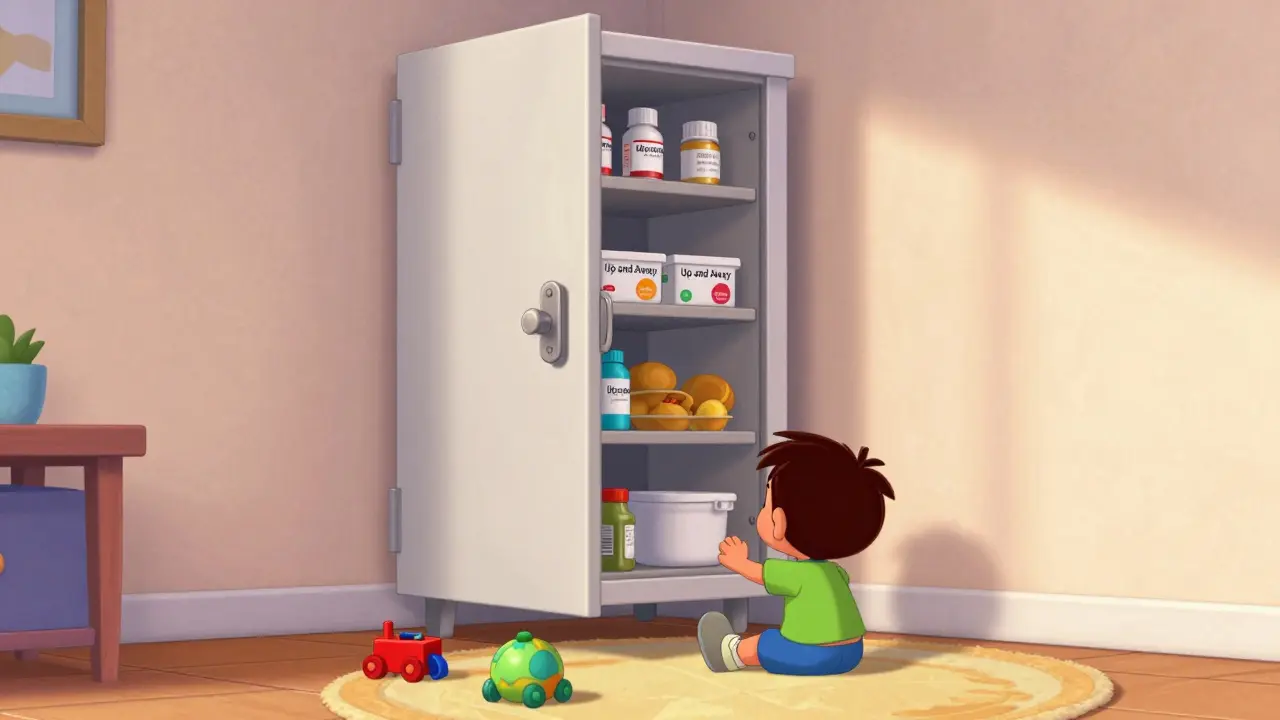
Many parents think keeping medicine on a high shelf is enough. It’s not. Toddlers climb chairs, reach for objects, and ask for help opening things. The PROTECT Initiative recommends storing all medications in locked cabinets that are at least four feet off the ground. This height ensures that even if a child climbs, they cannot reach the contents.
Here’s a checklist for safe storage:
- Keep all meds in their original containers with child-resistant caps securely fastened.
- Use a locked box or cabinet specifically for medications.
- Store medicines away from food, snacks, and toys to avoid confusion.
- Return medications to storage immediately after use-never leave them on counters, nightstands, or tables.
One Reddit user shared a harrowing story: their two-year-old accessed blood pressure pills left on a nightstand after a doctor’s visit. The lesson was clear: convenience kills. Always prioritize security over speed.
Dosing Accuracy: Ditch the Kitchen Spoon
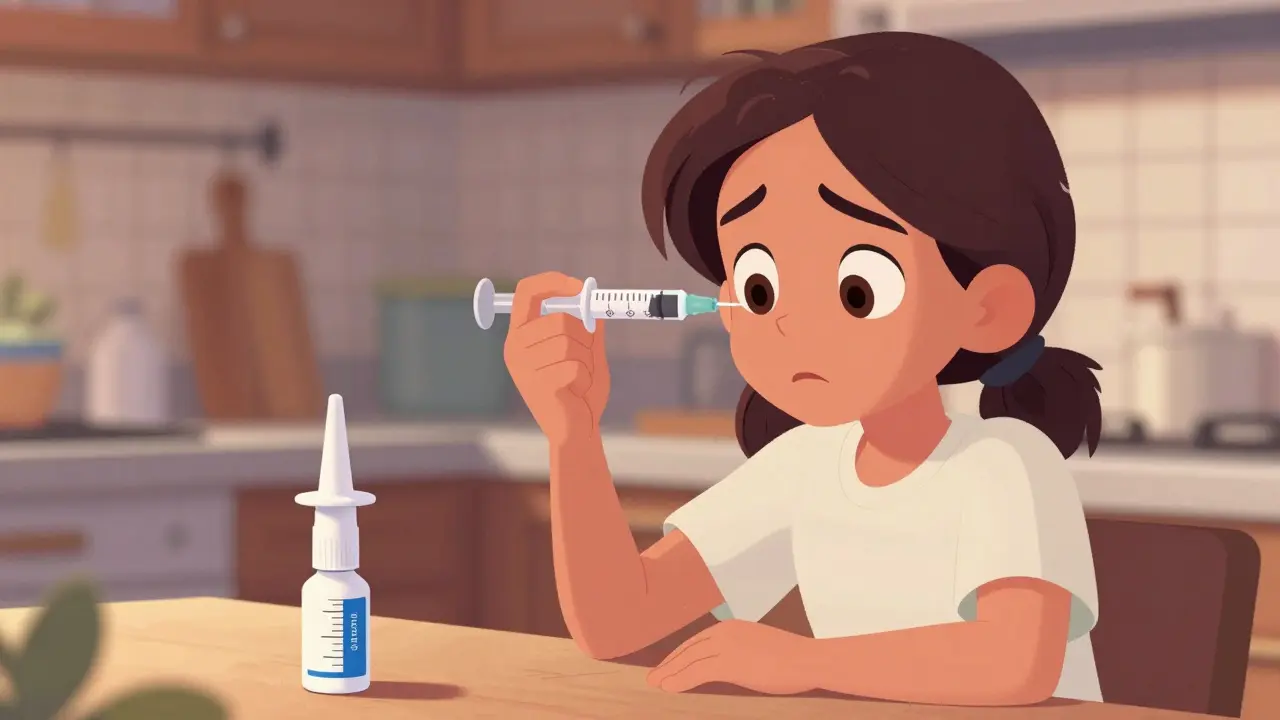
If you’re giving liquid medicine, throw away the kitchen spoon. Household spoons vary wildly in size-one teaspoon might hold 4 mL, another 6 mL. This inconsistency leads to dangerous dosing errors. Instead, always use the dosing device provided with the medication, such as an oral syringe or dosing cup marked in milliliters.
Research published in *Pediatrics* found that 40 percent of parents make at least one dosing error when administering liquid medications. Common mistakes include:
- Using a tablespoon instead of a teaspoon.
- Misreading the meniscus (the curve of the liquid) in a dosing cup.
- Confusing different concentrations of the same drug (e.g., infant vs. children’s acetaminophen).
To avoid these pitfalls, measure the dose at eye level. For syringes, pull the plunger to the exact mL mark. Double-check the label every time. And remember: "child-resistant" does not mean "child-proof." About 10 percent of children can open child-resistant packaging by age 42 months, according to Consumer Product Safety Commission tests.
Recognizing and Responding to an Overdose
Despite best efforts, accidents happen. Knowing what to do can save a life. Signs of medication overdose in children include:
- Extreme drowsiness or difficulty waking up.
- Vomiting or nausea.
- Rapid or shallow breathing.
- Seizures or tremors.
- Unresponsiveness.
If you suspect an overdose, act immediately:
- Call Poison Control at 1-800-222-1222 (in the U.S.) or your local emergency number.
- Do not induce vomiting unless instructed by a professional.
- Have the medication bottle ready to provide details like name, strength, and amount ingested.
- If the child is unconscious or not breathing, begin CPR if trained and call 911.
For opioid overdoses, which are increasingly common due to post-surgical prescriptions, having naloxone on hand is critical. Naloxone reverses opioid effects quickly. The American Academy of Pediatrics now recommends co-prescribing naloxone with opioids for children. Intranasal naloxone is easy to administer-even untrained caregivers can use it effectively.
Disposal: Preventing Future Accidents
Unused medications are a hidden danger. Leftover antibiotics, painkillers, or cold remedies sitting in your cabinet invite future mistakes. Dispose of them properly through take-back programs offered by pharmacies or law enforcement agencies. If no take-back option exists, follow FDA guidelines: mix meds with undesirable substances like coffee grounds or cat litter, seal them in a bag, and throw them in the trash. Never flush medications unless specifically instructed to do so on the label.
| Strategy | Effectiveness | Implementation Tip |
|---|---|---|
| Child-Resistant Caps | Reduces access by ~50% | Ensure caps click shut firmly every time. |
| Liquid Flow Restrictors | Slows pouring speed significantly | Check if your liquid meds have this feature; request it if not. |
| mL-Only Labeling | Eliminates spoon-measurement errors | Always use the included dosing device marked in mL. |
| Locked Storage | Nearly eliminates unauthorized access | Install locks on cabinets at least 4 feet high. |
| Naloxone Availability | Reverses opioid overdose within minutes | Ask your doctor for a prescription if using opioids. |
Empowering Caregivers Through Education
Knowledge is your best defense. Talk to your pediatrician about safe medication practices during well-child visits. Only 63 percent of pediatricians consistently discuss storage and disposal, so bring it up yourself. Ask questions like:
- Is this medication available in a child-resistant package?
- What are the signs of overdose for this specific drug?
- Should I keep naloxone at home?
Additionally, educate older siblings and babysitters. They may not realize the dangers of leaving meds within reach. Create a household rule: all medicines go back in the locked cabinet immediately after use.
Technology is also helping. Smart dispensers like Hero Health’s automated system remind users when to take meds and lock out others. However, these remain expensive and inaccessible to many families. Stick to proven methods: secure storage, accurate dosing, and proper disposal.
What should I do if my child swallows a pill?
Call Poison Control immediately at 1-800-222-1222. Have the medication bottle ready to provide details. Do not induce vomiting unless told to do so by a professional. Monitor your child closely for symptoms like drowsiness or vomiting.
Are child-resistant caps really effective?
Yes, they reduce access by about 50 percent. However, they are not foolproof. About 10 percent of children can open them by age 42 months. Always store medications in locked cabinets for maximum safety.
How do I dispose of unused medications safely?
Use a drug take-back program if available. If not, mix the meds with coffee grounds or cat litter, seal them in a bag, and throw them in the trash. Never flush unless the label explicitly says to do so.
Why is using milliliters (mL) better than teaspoons?
Kitchen spoons vary in size, leading to inaccurate doses. Milliliter markings on dosing devices are standardized, ensuring precise measurements. This reduces the risk of under- or overdosing.
Should I keep naloxone at home?
If your child is prescribed opioids, yes. Naloxone can reverse an opioid overdose quickly. Ask your doctor for a prescription and learn how to administer it. It’s especially important given the rise in pediatric opioid prescriptions.
What are the signs of a medication overdose in children?
Signs include extreme drowsiness, vomiting, rapid or shallow breathing, seizures, and unresponsiveness. If you notice any of these, call Poison Control or emergency services immediately.
How can I prevent confusion between infant and children’s medications?
Always read the label carefully. Infant formulas are more concentrated. Use only the dosing device provided with each specific product. Consider keeping infant and children’s versions in separate locations to avoid mix-ups.
Where can I find more information on medication safety?
Visit the CDC’s PROTECT Initiative website or consult resources from the American Academy of Pediatrics. Local poison control centers also offer guidance tailored to your region.