Most people think a bad cough means they need antibiotics. But if you’ve been coughing for a week or more with no fever, no chest pain, and no trouble breathing, you probably have acute bronchitis-and antibiotics won’t fix it. In fact, they might make things worse.
What Exactly Is Acute Bronchitis?
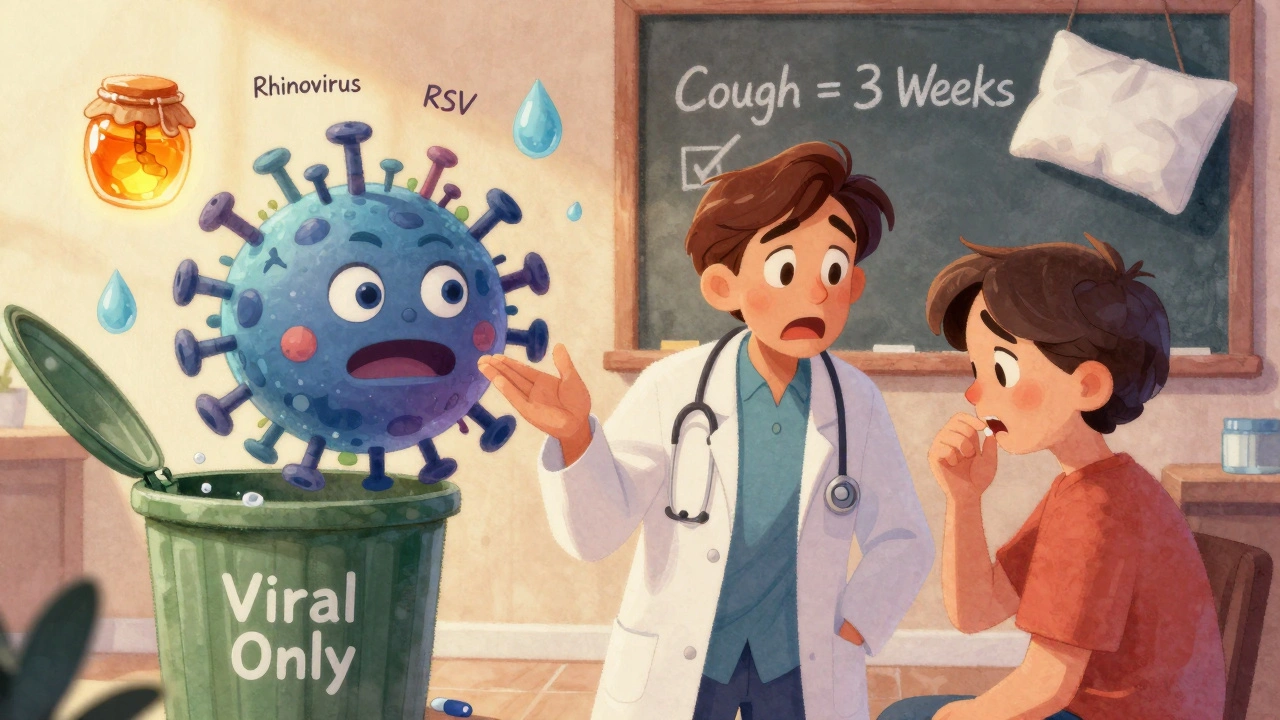
Acute bronchitis is a short-term inflammation of the bronchial tubes, the airways that carry air to your lungs. It’s not pneumonia. It’s not the flu. It’s usually a virus-often the same ones that give you a cold. Rhinovirus, coronavirus, flu, and RSV are the usual suspects. You catch it the same way you catch a cold: through coughs, sneezes, or touching contaminated surfaces. The main symptom? A cough. It can start dry and scratchy, then turn wet with mucus. Some people feel tired, have a low-grade fever, or get a sore throat. But here’s the thing: if you’re not struggling to breathe, your temperature isn’t over 38°C, and your lungs sound clear when a doctor listens to them, you don’t have pneumonia. You have bronchitis. And here’s what most people don’t realize: the cough lasts longer than you think. Half of people are still coughing after 10 days. A quarter are coughing at two weeks. One in ten are coughing at three weeks. That’s not a sign it’s getting worse. That’s just how long it takes for your airways to heal after a virus.Why Antibiotics Don’t Work (and Why They’re Dangerous)
About 90 to 95% of acute bronchitis cases are caused by viruses. Antibiotics kill bacteria. They do nothing to viruses. Giving them to someone with viral bronchitis is like using a hammer to fix a leaky faucet. A major Cochrane review of nearly 6,000 patients found antibiotics only cut cough duration by about 0.6 days-less than half a day. That’s not meaningful. Meanwhile, antibiotics come with side effects: diarrhea, nausea, rashes, yeast infections. For every 14 people given antibiotics for bronchitis, one has an adverse reaction. Worse, every unnecessary antibiotic increases the risk of antibiotic resistance. The CDC says respiratory infections like bronchitis are behind 46 million unnecessary antibiotic prescriptions in the U.S. each year. That’s contributing to 2.8 million antibiotic-resistant infections and 35,000 deaths annually. You’re not just risking your own health-you’re risking everyone’s. Doctors know this. Guidelines from the American Academy of Family Physicians, the American College of Chest Physicians, and the CDC all say: don’t prescribe antibiotics for uncomplicated acute bronchitis. Yet in 2022, over half of patients still got them. In some parts of the country, it’s as high as 78%. Why? Because patients expect them. Because it’s faster than explaining why they’re not needed.What Actually Helps: Evidence-Based Cough Care
If antibiotics won’t help, what will? The goal isn’t to stop the cough overnight-it’s to make it bearable while your body heals.- Rest. Your immune system needs energy. Skip the gym, skip the late nights, and let yourself sleep.
- Hydrate. Drink 8-10 glasses of water a day. Water thins mucus so it’s easier to clear. Warm tea, broth, or even just plain water helps.
- Humidify. Use a cool-mist humidifier or breathe steam from a bowl of hot water (keep your face at a safe distance). Moist air soothes irritated airways.
- Manage pain and fever. Ibuprofen (Advil) or acetaminophen (Tylenol) can help with discomfort. Don’t exceed 3,000 mg of acetaminophen a day unless your doctor says otherwise.
What About Cough Medicines?
Not all cough meds are equal. Some work. Most don’t.- Honey. For adults and kids over 1 year old, honey is one of the best options. A 2018 study in JAMA Pediatrics showed it worked as well as dextromethorphan (a common cough suppressant) and better than nothing. Try 1-2 teaspoons before bed. It helps reduce nighttime coughing and improves sleep. Never give honey to babies under 1 year-it can cause botulism.
- Dextromethorphan. Found in many OTC cough syrups, it has modest effects. It might reduce cough frequency slightly, but not enough to make a big difference. Stick to the dose: 15-30 mg every 6-8 hours, max 120 mg a day.
- Guaifenesin. This expectorant is supposed to loosen mucus. But studies are mixed. Some show benefit. Most don’t. It’s not harmful, but don’t expect miracles.
- Inhaled bronchodilators (like albuterol). Only help if you’re wheezing. If your cough is dry and you’re not wheezing, they won’t help-and they can cause shakiness, rapid heartbeat, or anxiety.
- Codeine and opioids. These are banned for children under 12 and discouraged for adults. They’re not safer or more effective than honey or dextromethorphan, and they carry addiction risks.
How to Talk to Your Doctor
It’s hard to walk into a clinic feeling awful and hear “no antibiotics.” But here’s how to make that conversation easier:- Ask: “Is this likely viral or bacterial?”
- Ask: “How long should I expect this cough to last?”
- Ask: “What can I do to feel better without antibiotics?”
- Ask: “Could I get a delayed prescription? If I’m not better in 3 days, or if I get worse, can I fill this then?”
When to Worry: Red Flags
Most cases of acute bronchitis resolve on their own. But watch for these signs:- Fever over 38°C lasting more than 2 days
- Cough lasting longer than 3 weeks
- Coughing up blood
- Shortness of breath or wheezing that gets worse
- Chills, night sweats, or unexplained weight loss
- Underlying lung disease like asthma or COPD
The Bigger Picture: Why This Matters
Acute bronchitis is one of the most common reasons people see a doctor. But it’s also one of the biggest drivers of antibiotic overuse. The Choosing Wisely campaign, backed by top medical groups, says: “Don’t prescribe antibiotics for acute bronchitis.” That’s not a suggestion-it’s a standard. The goal isn’t to leave you suffering. It’s to treat you wisely. By avoiding unnecessary antibiotics, we protect yourself, your family, and your community from drug-resistant superbugs. And by using proven remedies-rest, fluids, honey, and time-we give your body what it actually needs to heal.What’s Next?
Researchers are looking at new options. One promising study-the BREATHE trial-is testing ivy leaf extract for cough relief. Results are expected soon. In the meantime, the American Academy of Family Physicians is pushing for a 2026 goal: reduce inappropriate antibiotic prescribing for bronchitis to under 20%. That’s not just a number. It’s a public health win.Is acute bronchitis contagious?
Yes, if it’s caused by a virus-which it usually is. You can spread the virus through coughing, sneezing, or touching surfaces after wiping your nose. Wash your hands, cover your mouth, and avoid close contact with others while you’re coughing, especially in the first few days.
Can I get bronchitis more than once a year?
Yes. Some people, especially those with weakened immune systems, smokers, or people exposed to air pollution or irritants, get acute bronchitis more often. If you have more than three episodes a year, talk to your doctor. You might have an underlying condition like asthma or chronic bronchitis.
Does smoking make bronchitis worse?
Absolutely. Smoking damages the lining of your airways and makes it harder for your body to clear mucus and fight infection. If you smoke and get bronchitis, your cough will last longer, you’re more likely to get it again, and you increase your risk of developing chronic bronchitis or COPD.
Is a chest X-ray needed to diagnose bronchitis?
No. In most cases, a doctor can diagnose acute bronchitis based on symptoms and a physical exam. X-rays are only used if there’s suspicion of pneumonia, like high fever, fast breathing, or abnormal lung sounds. Unnecessary X-rays expose you to radiation and add cost without benefit.
Can I use essential oils or home remedies like garlic or vinegar?
There’s no solid evidence that essential oils, garlic, or vinegar help treat bronchitis. Some people feel better using steam with eucalyptus, but that’s likely because of the humid air-not the oil. Be cautious: essential oils can irritate airways, especially in children. Stick to proven methods: rest, fluids, honey, and time.
Why does my cough get worse at night?
Lying down lets mucus pool in your throat, triggering coughing. Also, your airways naturally narrow a bit at night. Elevating your head with an extra pillow and using a humidifier can help. Honey before bed has been shown to reduce nighttime coughing better than most medicines.
How do I know if it’s bronchitis or just a cold?
A cold usually starts with a runny nose, sore throat, and mild cough that improves in a few days. Bronchitis often starts like a cold but then the cough becomes the main symptom and lasts longer-usually more than a week. If your cough is the worst part and lasts over 10 days, it’s likely bronchitis.
Comments
Constantine Vigderman
Bro i had this cough for 3 weeks and i was ready to drag my ass to the ER thinking i had pneumonia 😅 but then i read this and was like... wait, maybe i just have bronchitis? no antibiotics needed? mind blown. i drank honey like it was maple syrup and slept like a rock. still coughing but at least i'm not popping pills like candy now.
On December 13, 2025 AT 04:31
Rawlson King
Antibiotics for bronchitis is like using a chainsaw to cut butter. The medical community has been screaming this for decades and yet people still demand them like they're candy at a Halloween party. This post is a public service.
On December 13, 2025 AT 23:38
Cole Newman
lol i went to my doc last week and asked for antibiotics and he just laughed and gave me a cup of tea. said if i wasn't wheezing or spitting blood i was fine. i was pissed at first but now i'm kinda proud i didn't take 'em. my cough's still there but my gut's happy and i didn't get that nasty diarrhea from the last time i took amoxicillin. thanks for the reminder.
On December 15, 2025 AT 05:48
Casey Mellish
As an Aussie who's seen too many Americans rush to the pharmacy for antibiotics like it's a sale on toilet paper, I can confirm: rest, fluids, honey, and time are the holy trinity here. We don't have the same antibiotic overuse crisis here, but we're not immune. Honey before bed? Game changer. I've been recommending it to every coughing mate since 2019. Also, never underestimate the healing power of a good nap.
On December 16, 2025 AT 22:04
kevin moranga
Man, I used to be one of those people who thought if you coughed for more than three days you needed a prescription. I've had bronchitis twice now, and honestly? The second time I just followed this exact advice - honey, humidifier, extra pillows, zero antibiotics - and I felt way better mentally knowing I wasn't poisoning my body or contributing to superbugs. It's wild how much we've been lied to about this. Doctors are pressured, patients are scared, and we all end up stuck in this cycle. But you know what? Choosing to wait? That's actually brave. And it works. I'm still coughing, but I'm not scared. I'm just... healing.
On December 17, 2025 AT 04:30
Emily Haworth
ok but what if the antibiotics were secretly being used to track us? like the CDC is using the prescriptions to build a health database and sell it to big pharma? i heard someone on a podcast say they're putting microchips in the pills now. i didn't take mine. i drank raw garlic and prayed. my cough is gone. also i think my wifi is spying on me.
On December 17, 2025 AT 08:27
Tom Zerkoff
It is imperative to underscore the public health implications of inappropriate antibiotic prescribing. The data cited in this post are not merely anecdotal but are supported by robust meta-analyses from the Cochrane Collaboration and endorsed by the CDC, AAFP, and ACCP. The persistence of this practice reflects a systemic failure in patient-provider communication and medical education. Delayed prescribing, as proposed, represents a clinically sound and ethically responsible intervention that aligns with evidence-based guidelines.
On December 17, 2025 AT 17:39
Yatendra S
we are all just temporary vessels of dust and breath. the cough? it is not an enemy. it is the body whispering, 'i am still here.' antibiotics are a modern god we built to satisfy our fear of silence. but the airways heal in their own time, in their own rhythm. honey is not medicine. it is a gift from bees who know more about healing than we do. rest is not laziness. it is reverence.
On December 18, 2025 AT 13:24
Himmat Singh
While the post presents a compelling argument based on current guidelines, it fails to acknowledge the clinical reality that bacterial co-infections do occur, particularly in elderly or immunocompromised patients. Furthermore, the assertion that 90–95% of cases are viral is statistically derived from Western populations and may not be generalizable to regions with higher rates of atypical pathogens. The blanket dismissal of antibiotics may, in some cases, constitute medical negligence.
On December 19, 2025 AT 09:59
Alvin Montanez
Look, I get it. You're tired. You want a quick fix. You don't want to sit around for three weeks hacking your lungs out. But here's the truth: you're not special. Your cough isn't unique. Your body isn't broken. You're just sick. And the reason you keep getting sick? Because you don't rest. You keep going to work. You keep drinking coffee. You keep scrolling. You keep ignoring your body until it screams. And then you demand a pill. You're not a victim of bad medicine - you're a victim of your own impatience. Stop blaming doctors. Start listening to your body. And for God's sake, stop sharing your germs on the subway.
On December 21, 2025 AT 03:30
Lara Tobin
i just wanted to say thank you for writing this. i've been coughing for 12 days and felt so guilty for not being 'productive' enough. reading this made me feel like it's okay to just... be sick. i've been drinking tea and sleeping 10 hours a night and it actually feels better than when i was forcing myself to work. i cried a little. this post was gentle in a world that isn't.
On December 21, 2025 AT 19:42
Jamie Clark
People still think doctors are magic wizards who wave wands and cure everything overnight. Newsflash: medicine isn't about making you feel better in 24 hours - it's about not killing you long-term. Antibiotics for bronchitis is like giving a drowning man a better swimsuit. The real tragedy isn't the cough. It's that we've turned healthcare into a consumer transaction. You don't pay for healing. You pay for the illusion of control. And that illusion is killing us.
On December 23, 2025 AT 04:54
Tyrone Marshall
Let me tell you something - I used to be a skeptic. Thought honey was for kids, rest was for lazy people, and antibiotics were just... insurance. Then my daughter got bronchitis. We did the honey, the humidifier, the extra pillows. No meds. She slept. She drank. She coughed. And three weeks later, she was back to running around like a maniac. No side effects. No resistance. Just healing. That’s when I realized: sometimes the most powerful thing you can do is nothing. Not because you're giving up - but because you're trusting your body. And that’s not weakness. That’s wisdom.
On December 24, 2025 AT 07:28