
For the estimated 339 million people worldwide living with asthma, a chronic respiratory condition characterized by inflamed and narrowed airways, breathing is often a daily negotiation. But when outdoor air turns toxic, that negotiation becomes a fight for survival. Air pollution isn't just an environmental nuisance; it is a direct trigger for inflammation, medication spikes, and emergency hospital visits. You don’t have to wait for policy changes to protect your lungs. By understanding exactly how pollutants interact with your body and implementing specific, science-backed exposure reduction strategies, you can significantly lower your risk of severe attacks.
The connection between dirty air and wheezing is well-documented. Pollutants like particulate matter (PM2.5), nitrogen dioxide (NO2), and ozone (O3) penetrate deep into the lung tissue. They don’t just irritate the surface; they trigger an immune response that swells the airway lining. A 2024 systematic review confirmed that reducing exposure to these pollutants directly improves Asthma Control Test (ACT) scores. In one study, patients who used mobile alerts to avoid high-pollution days saw their ACT scores jump from 20.0 to 21.5 over eight weeks. That might sound like a small number, but in clinical terms, it represents a meaningful shift from uncontrolled to well-controlled symptoms. The goal here isn’t perfection-it’s damage control through smart avoidance.
Reading the Air Quality Index Like a Pro
The first line of defense is knowing what’s in the air before you step outside. Most people ignore the Air Quality Index (AQI), a standardized scale that translates complex pollutant data into easy-to-understand numbers. It shouldn’t be ignored. The EPA’s AirNow.gov platform provides real-time data, but you need to know which numbers actually demand action.
You don’t need to memorize every threshold, but you should understand the critical zones:
- AQI 51-100 (Moderate): Air quality is acceptable. However, if you are sensitive, consider reducing prolonged outdoor exertion on these days.
- AQI 101-150 (Unhealthy for Sensitive Groups): This is the danger zone for asthmatics. Reduce prolonged outdoor activities immediately. Keep windows closed.
- AQI 151-200 (Unhealthy): Avoid all prolonged outdoor exertion. If you must go out, limit time spent outdoors to minutes, not hours.
- AQI 201-300 (Very Unhealthy): Stay indoors. Seal your home. Use air purifiers. Do not exercise outside.
Many users report checking apps like AirVisual or PurpleAir to adjust their routines. One user noted that checking levels before walks reduced their daughter’s rescue inhaler use by nearly half over six months. The key is consistency. Checking the AQI once a week isn’t enough; make it part of your morning routine, like brushing your teeth.
Creating a Clean Indoor Sanctuary
If outdoor air is hostile, your home must be a sanctuary. However, simply closing windows isn’t always enough. During wildfire events, indoor PM2.5 levels can reach 60-80% of outdoor levels within an hour, even with HVAC systems running on recirculation. To truly clean your air, you need mechanical filtration.
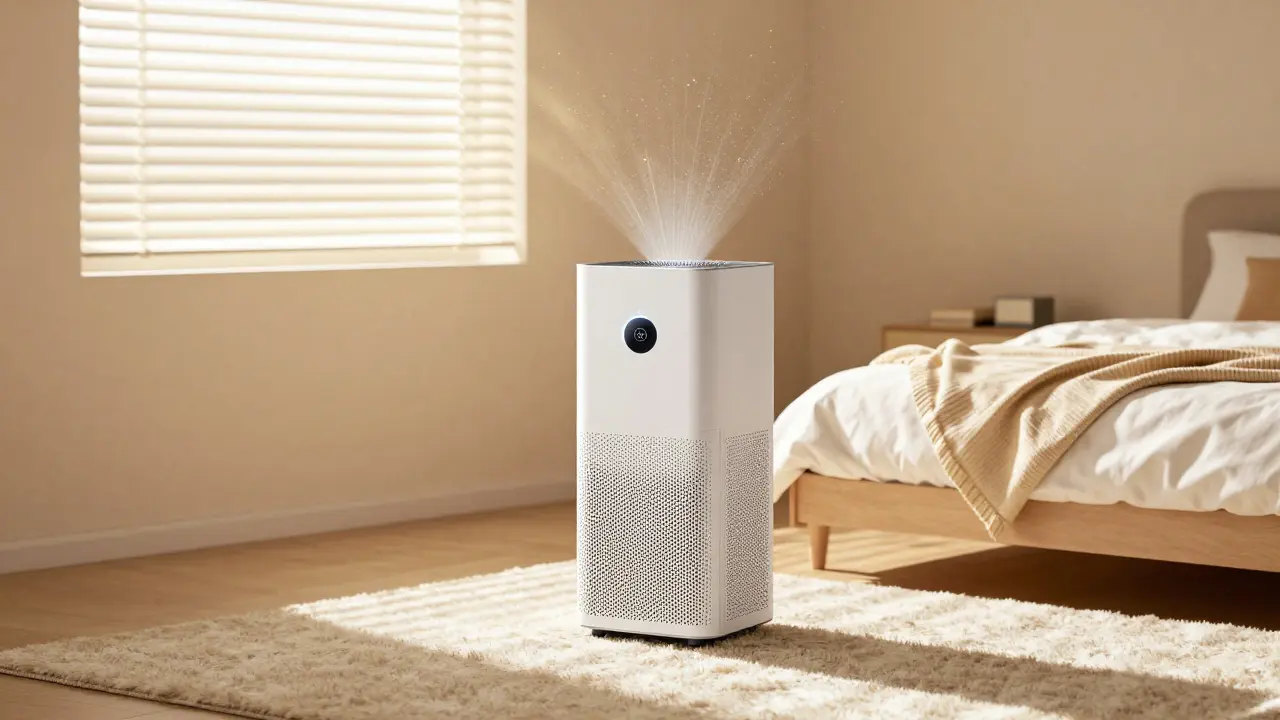
The gold standard is HEPA filters, High-Efficiency Particulate Air filters that capture 99.97% of particles as small as 0.3 microns. When shopping for a portable air cleaner, ignore marketing fluff and look for the Clean Air Delivery Rate (CADR). The Association of Home Appliance Manufacturers recommends a CADR equal to at least two-thirds of your room’s square footage. For a 300-square-foot bedroom, you need a CADR of at least 200. A popular model, the Coway Airmega 400, costs around $700 but has been credited by users with cutting nighttime inhaler use from four times a week to just one or two.
Placement matters more than price. Energy Star guidelines state that placing purifiers against walls reduces effectiveness by 30-50%. Place them in the center of the room, away from obstructions. Also, replace filters on schedule. Only 43% of users do this correctly. A clogged filter doesn’t clean air; it recirculates dust. Budget $20-$100 every three to six months for replacements.
| Solution | Effectiveness | Cost Range | Maintenance |
|---|---|---|---|
| Portable HEPA Purifier | Reduces PM2.5 by 55-67% | $50 - $800 | Filter replacement every 3-6 months |
| HVAC MERV 13-16 Filter | Captures fine particles system-wide | $20 - $100 per filter | Replace every 1-3 months |
| N95 Respirator | 95% filtration efficiency (if fitted properly) | $1 - $3 per unit | Single-use or limited reuse |
| Dehumidifier | Reduces mold/dust mites (humidity 30-50%) | $100 - $300 annual operation | Empty tank regularly |
Behavioral Adjustments and Personal Protection
Technology helps, but behavior drives results. Dr. Juan Celedón, Chief of Pediatric Pulmonology at Children's Hospital of Pittsburgh, emphasizes that individual actions combined with government efforts yield the best outcomes. On an individual level, this means timing your life around the air.
Ozone levels typically peak in the afternoon on hot, sunny days. Plan outdoor exercises for early morning or late evening when levels drop. Nitrogen dioxide, largely from vehicle exhaust, is highest near busy roads during rush hour. If you live near a highway, keep windows closed during these peaks.
What about masks? The CDC recommends N95 respirators for wildfire smoke. They filter 95% of airborne particles. However, Dr. John Balmes of UCSF warns that masks provide incomplete protection and can create a false sense of security, especially for children who often wear them improperly. If you must wear one, ensure a tight seal. Gaps render the mask useless. For most asthmatics, avoiding the source is safer than relying on imperfect filtration.

Policy and Community-Level Interventions
You can’t control traffic emissions alone, but you can advocate for change. Policy-level interventions have shown dramatic results. London’s Ultra Low Emission Zone reduced childhood asthma hospitalizations by 11.9% in its first two years. In the U.S., cities are implementing school siting guidelines that require new schools to be at least 500 feet from major roadways.
School-based interventions are particularly effective. Relocating bus parking zones and enforcing anti-idling policies reduced indoor PM2.5 levels by 22-35% in Massachusetts schools. Parents reported a 41% drop in asthma-related absences after these changes. If you have children, ask your school district about their air quality plan. Are buses idling near playgrounds? Is the HVAC system filtered with MERV 13+ filters?
At a national level, the EPA’s National Ambient Air Quality Standards (NAAQS) set limits for pollutants. As of 2023, the annual PM2.5 standard was 12 μg/m³. The American Thoracic Society argues this is too lenient, recommending 8 μg/m³ annually. Stricter standards mean cleaner air for everyone. Support local candidates who prioritize clean transit and industrial emission controls. California’s $1.5 billion investment in electric school buses aims to reduce children’s exposure to traffic pollutants by up to 60% by 2035.
Overcoming Barriers to Implementation
Knowing what to do is different from doing it. A 2022 survey found that while 68% of asthma patients check air quality regularly, only 32% consistently modify their activities. Why? Work obligations, childcare responsibilities, and cost.
If you work construction or outdoors, staying indoors isn’t an option. In these cases, maximize personal protection. Wear a properly fitted N95 mask. Take breaks in clean-air shelters if available. Communicate with your employer about health accommodations. Many companies now offer wellness programs that include air quality monitoring.
Cost is another barrier. High-end purifiers are expensive. Start small. Buy one HEPA filter for your bedroom, where you spend eight hours a night. Better sleep means less inflammation. Use free resources like the EPA’s AirNow app instead of paid subscriptions. Join local advocacy groups to push for policy changes that benefit the whole community, not just those who can afford private solutions.
Education is also a hurdle. Understanding CFM (cubic feet per minute) and CADR takes time. The EPA offers free online training modules that take about 45 minutes. Spend that hour. It’s cheaper than an ER visit.
How quickly does air pollution affect asthma symptoms?
Symptoms can appear within minutes to hours of exposure, depending on the pollutant and individual sensitivity. Ozone and NO2 often cause immediate irritation, while PM2.5 may lead to delayed inflammation and worsening control over several days.
Is it safe to exercise outdoors when the AQI is moderate?
For most people, yes. However, if you have asthma, monitor your body. If you experience coughing or shortness of breath, stop immediately. Consider exercising indoors or during times when AQI is lower, such as early morning.
Do air purifiers remove odors and gases?
Standard HEPA filters remove particles, not gases. To remove odors and volatile organic compounds (VOCs), look for purifiers with activated carbon filters. Ensure the carbon layer is substantial, not just a thin pre-filter.
Can opening windows help clear indoor air?
Only if outdoor air quality is better than indoor. Check the AQI first. If outdoor levels are high, opening windows will worsen indoor conditions. Keep windows closed and use recirculation mode on your HVAC system during pollution events.
What is the difference between PM2.5 and PM10?
PM2.5 refers to particles smaller than 2.5 microns, which can penetrate deep into the lungs and bloodstream. PM10 includes larger particles up to 10 microns, which mostly affect the upper airways. Both are harmful, but PM2.5 poses a greater systemic risk for asthmatics.