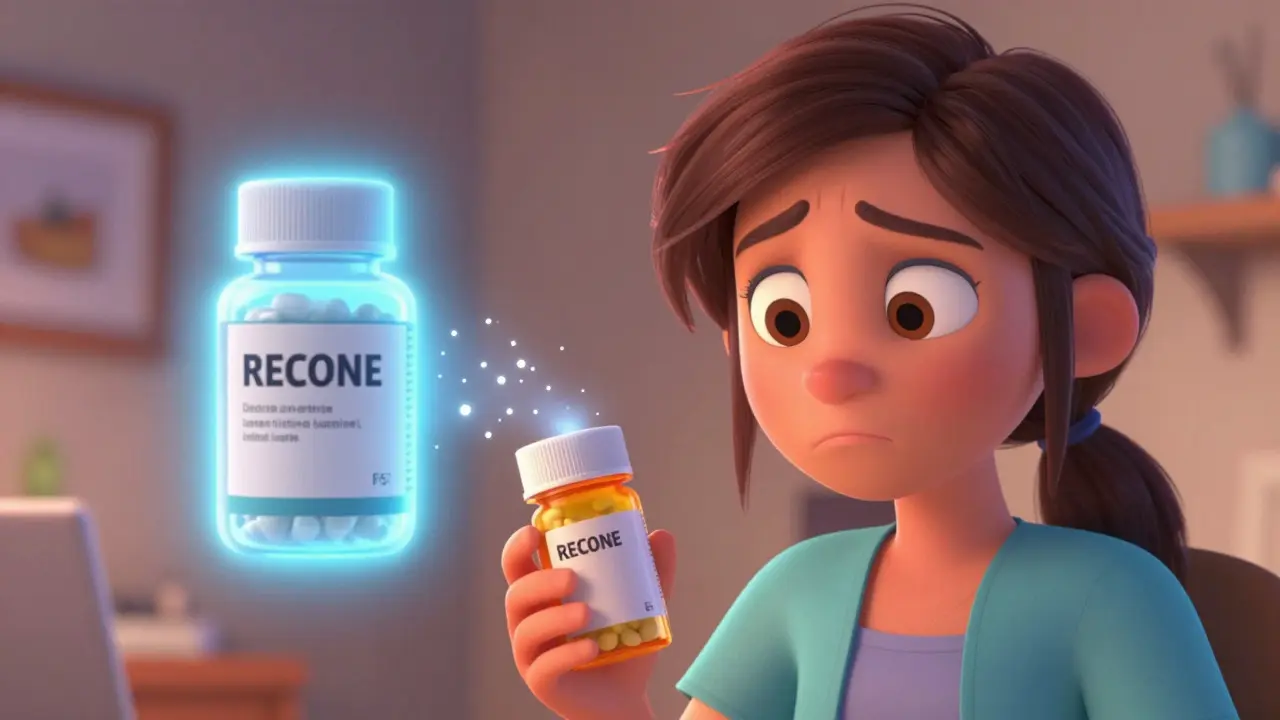
You take your morning pill. It’s the same medication you’ve been prescribed for years, just a different bottle from the pharmacy. But within thirty minutes, your throat feels tight, and hives break out on your neck. You didn’t change your diet, your routine, or the active drug itself-so what happened? For many patients, the culprit isn’t the medicine itself but the inactive ingredients hidden inside generic formulations.
We often assume that because a generic drug contains the same active pharmaceutical ingredient (API) as its brand-name counterpart, it is biologically identical in every way. While regulatory bodies like the Food and Drug Administration (FDA) mandate that generics demonstrate bioequivalence within an 80-125% range of the brand-name drug’s pharmacokinetic profile, they do not require the inactive components to match. These fillers, binders, dyes, and preservatives are the silent variables that can trigger unexpected allergic reactions in susceptible individuals.
The Hidden Triggers: Inactive Ingredients vs. Active Drugs
To understand why a reaction occurs, we need to separate the active drug from the vehicle that delivers it. The active ingredient is the molecule that treats your condition. The inactive ingredients hold the tablet together, control how quickly it dissolves, or provide color and flavor. According to the American Academy of Allergy, Asthma & Immunology (AAAAI), approximately 5-10% of adverse reactions to generic medications are directly attributable to these non-active components rather than the therapeutic agent itself.
A 2021 study published in the Journal of Allergy and Clinical Immunology highlighted this discrepancy, finding that 7.3% of patients with documented drug allergies experienced reactions specifically to generic formulations due to inactive ingredient differences. The most common offenders include:
- Lactose: Present in 28% of oral generics, problematic for those with lactose intolerance or milk protein allergy.
- Gluten: Found in 12% of generics, posing risks for celiac disease patients.
- Tartrazine (FD&C Yellow No. 5): A dye used in 15% of liquid generics, known to trigger histamine responses.
- Peanut Oil: Used in 8% of injectable generics, a critical concern for severe nut allergies.
Consider the case of magnesium stearate, a common binder. Researchers at the University of California, San Francisco’s Drug Allergy Center documented seventeen patients who safely tolerated brand-name amoxicillin but reacted to generic versions solely due to variations in magnesium stearate content. This illustrates that even minor chemical differences in excipients can provoke significant immune responses.
Recognizing Symptoms: From Mild Rash to Anaphylaxis
Allergic reactions manifest differently depending on severity and individual physiology. Recognizing the signs early is crucial for preventing escalation. The American College of Allergy, Asthma & Immunology categorizes these reactions into mild, moderate, and severe tiers.
| Severity Level | Common Symptoms | Frequency Data |
|---|---|---|
| Mild | Localized rash, itching, minor hives | Rash reported in 68% of mild cases; itching in 57% |
| Moderate | Wheezing, nausea/vomiting, facial swelling | Wheezing in 31%; facial swelling in 29% |
| Severe (Anaphylaxis) | Throat tightness, hypotension, respiratory distress | Throat tightness in 87%; respiratory distress in 92% |
Timing also plays a critical role. Data indicates that 43% of severe reactions develop within fifteen minutes of ingestion, while another 38% appear between fifteen and sixty minutes. However, delayed hypersensitivity reactions can take several hours to manifest, often complicating the diagnosis. If you experience persistent hives lasting more than six hours, moderate facial swelling, or gastrointestinal symptoms that do not resolve within two hours, contact your healthcare provider immediately.

When to Seek Emergency Medical Care
Not all reactions require a trip to the emergency room, but knowing when to act fast can save your life. The National Institute of Allergy and Infectious Diseases (NIAID) updated their criteria in 2021, specifying clear thresholds for immediate intervention. You should use epinephrine and call emergency services if you experience:
- Respiratory Compromise: Wheezing, stridor (high-pitched breathing sound), or a respiratory rate exceeding 30 breaths per minute.
- Cardiovascular Instability: Systolic blood pressure dropping below 90 mmHg, a decrease of more than 30% from your baseline, or fainting (syncope).
- Multi-System Involvement: Simultaneous symptoms affecting two or more body systems, such as skin hives combined with vomiting.
The Food Allergy Research & Education (FARE) organization emphasizes that 91% of anaphylaxis cases involving medication require epinephrine administration within five to fifteen minutes of symptom onset for optimal outcomes. Delaying treatment allows the inflammatory cascade to worsen, potentially leading to airway closure or shock. Even if symptoms seem mild initially, the rapid progression of anaphylaxis means that caution is always preferable to hesitation.
Proactive Management: Your Role in Safety
Prevention starts with awareness. The American Pharmacists Association reports that 41% of pharmacists encounter at least one patient per month experiencing reactions linked to inactive ingredients. Yet, many patients remain unaware of what is inside their pills. Here is how you can take control:
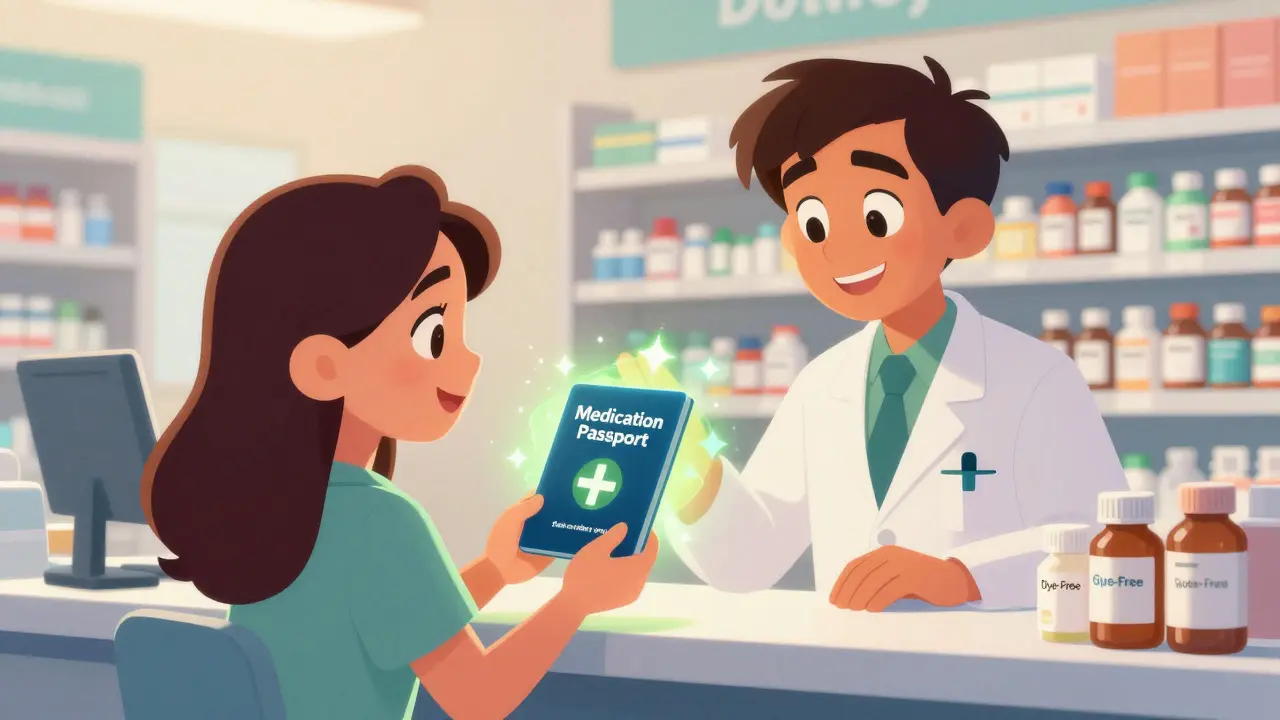
First, maintain a "medication allergy passport." This document should list not just the drugs you are allergic to, but the specific inactive ingredients that cause problems. A 2022 pilot study showed this simple practice reduces adverse drug events by 29%. When picking up a prescription, ask your pharmacist to review the inactive ingredient list against your passport. Resources like the FDA’s Inactive Ingredient Database catalog over 1,200 substances, providing transparency on what manufacturers use.
Second, request specialized formulations when available. Approximately 38% of major generic manufacturers now offer "dye-free," "gluten-free," or "lactose-free" versions of common medications. If you have a known sensitivity to tartrazine, explicitly ask for a dye-free alternative. This small step can prevent the discomfort and risk associated with unnecessary exposure.
Finally, consider formal allergy testing. Dr. Kimberly Blumenthal of Massachusetts General Hospital notes that 90% of patients labeled as penicillin-allergic can safely take the drug after proper evaluation. Testing costs between $350 and $600 but prevents thousands of dollars in unnecessary alternative medication costs annually. More importantly, it clarifies whether you are reacting to the antibiotic itself or an inactive filler, allowing you to safely use cheaper, effective generics in the future.
Navigating Healthcare Provider Communication
Effective communication with your doctors and pharmacists is vital. The American Medical Association’s 2022 guidance recommends that physicians document not just the drug name but the specific formulation (brand or generic) and the suspected inactive ingredient when recording allergies. This precision has been shown to reduce inappropriate avoidance of essential medications by 37%.
If you react to a generic, do not simply stop taking it without consulting your provider. Instead, report the reaction details: timing, symptoms, and the specific manufacturer if known. This data helps build a clearer picture of your sensitivities. With generic medications representing 90% of all prescriptions filled in the United States, understanding your unique reaction patterns ensures you stay safe without sacrificing access to affordable care.
Are generic drugs less safe than brand-name drugs?
No, generic drugs are equally safe and effective regarding their active ingredients. The FDA requires them to be bioequivalent to brand-name drugs. However, because they may contain different inactive ingredients (fillers, dyes, binders), individuals with specific allergies to these non-active components may experience reactions that did not occur with the brand-name version.
How quickly do allergic reactions to generics typically appear?
Most severe reactions develop within 15 minutes of ingestion, with another 38% occurring between 15 and 60 minutes. However, delayed hypersensitivity reactions can take several hours to manifest. If you experience any new symptoms after starting a generic, monitor yourself closely for at least an hour.
What should I do if I suspect a reaction to an inactive ingredient?
Stop taking the medication and contact your healthcare provider. Document the specific generic manufacturer and symptoms. Your doctor may recommend switching to a different generic manufacturer, returning to the brand-name drug, or undergoing allergy testing to identify the specific inactive ingredient causing the issue.
Can I ask my pharmacist for a dye-free generic option?
Yes. Many major generic manufacturers now produce dye-free, gluten-free, or lactose-free formulations. About 38% of manufacturers offer these specialized versions. Explicitly requesting these options can help avoid reactions to common allergens like tartrazine or lactose.
Is it worth getting tested for drug allergies?
Yes, especially if you have been labeled as allergic to a commonly prescribed drug like penicillin. Studies show that 90% of patients labeled as penicillin-allergic can safely take the drug after proper evaluation. Testing costs $350-$600 but can save money on expensive alternatives and ensure you receive the most effective treatment.