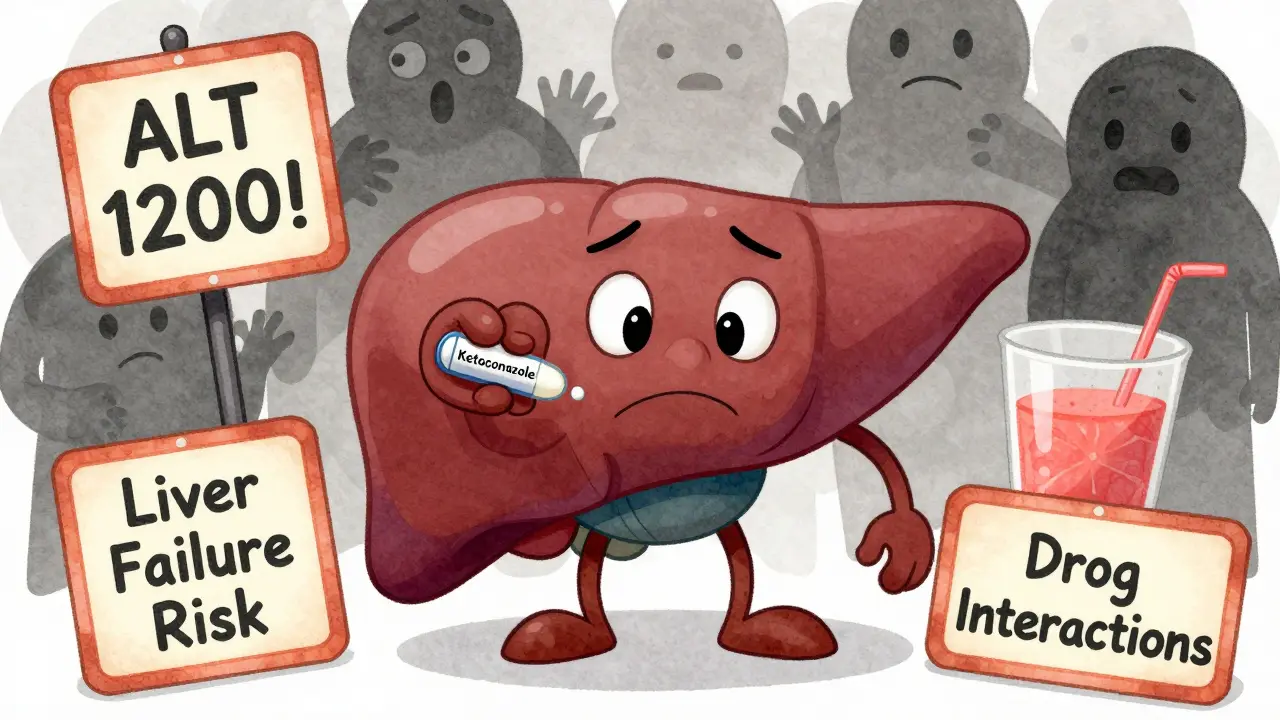
When you take an antifungal for a stubborn nail infection or a systemic fungal illness, you’re not just fighting fungus-you’re putting your liver on the line. Many people assume these drugs are safe because they’re prescribed by doctors, but the truth is, some antifungals carry serious risks of liver injury, and those risks don’t always show up until it’s too late.
Why Antifungals Can Hurt Your Liver
Antifungals aren’t like antibiotics. They’re designed to attack living organisms that are surprisingly similar to human cells. That’s why they’re effective-but also why they can accidentally damage your liver. The liver processes these drugs, and in some cases, the breakdown products become toxic. This isn’t rare. Between 2004 and 2021, the FDA recorded over 4,000 reports of liver injury linked to antifungals. Ketoconazole, itraconazole, and voriconazole are the biggest culprits.Ketoconazole, once a go-to for fungal infections, was pulled from most markets because it caused severe liver damage in about 1 in 500 users. One patient in a Reddit thread reported ALT levels over 1,200 U/L-normal is under 56. That’s not a typo. That’s liver failure territory. Even though it’s rarely used now, its legacy still haunts prescribing habits.
Voriconazole and itraconazole are still common, especially in hospitals. But they’re not harmless. Studies show voriconazole causes liver enzyme spikes in up to 20% of patients on long-term therapy. The damage often shows up between weeks 2 and 8. Symptoms? Fatigue, nausea, dark urine, yellowing skin. Many patients ignore these signs, thinking it’s just the infection or stress. By the time they get tested, the damage is advanced.
Who’s at Highest Risk?
Not everyone reacts the same way. Certain groups are far more vulnerable:- People over 65: Liver function slows with age. Older adults are nearly 8 times more likely to suffer antifungal-induced liver injury than younger patients.
- Those with existing liver disease: Even mild fatty liver or hepatitis increases risk. Some antifungals are outright banned in these patients.
- People on multiple medications: Antifungals interact with dozens of common drugs-statins, blood thinners, antidepressants, even heartburn pills. These interactions can spike drug levels in the blood, overwhelming the liver.
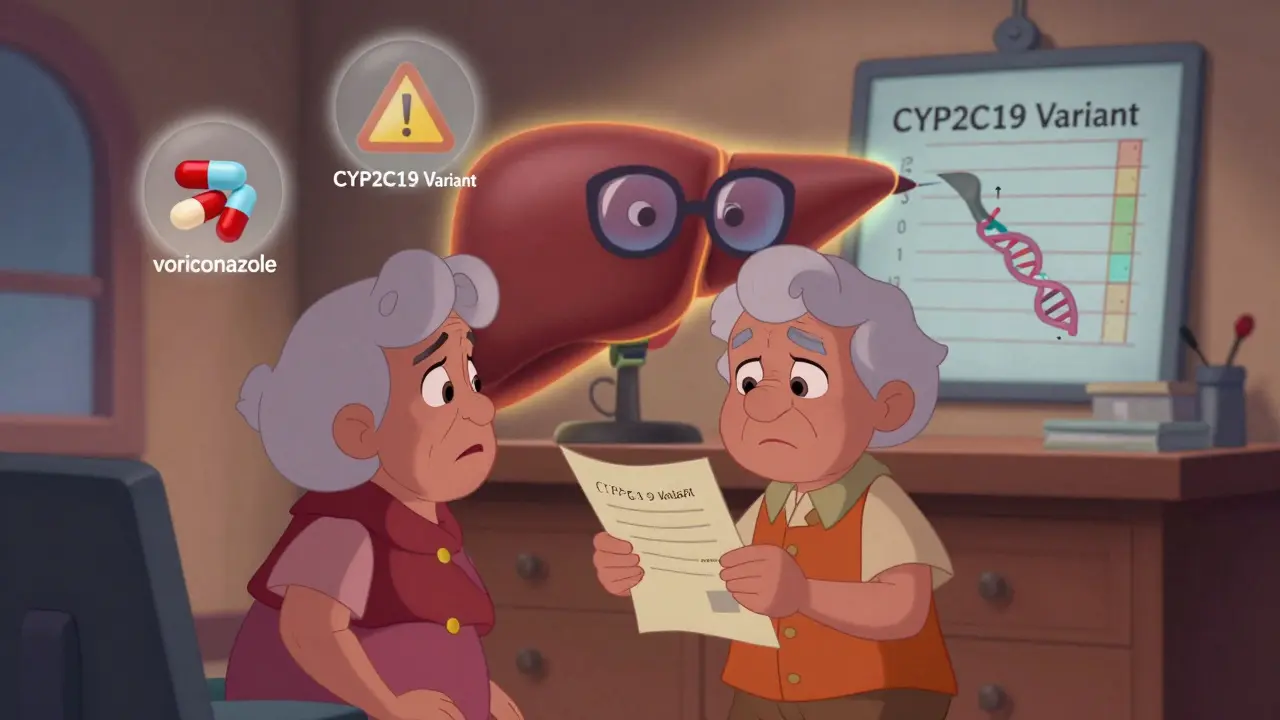
- People with CYP2C19 gene variants: A 2022 study found that certain genetic differences make voriconazole 3.7 times more likely to cause liver damage. This isn’t theoretical-it’s measurable and preventable with genetic testing.
Terbinafine, often used for toenail fungus, gets a bad rap too. It’s marketed as safer, and yes, it causes liver injury in only 0.1% of users. But that’s still 1 in 1,000. And when it hits, it can be severe. The FDA requires a black box warning on terbinafine packaging for this reason. Most patients don’t know about it until they’re told to stop taking it after a routine blood test.
Drug Interactions You Can’t Afford to Ignore
Antifungals don’t just sit in your liver-they change how your body handles other drugs. Azoles like fluconazole, itraconazole, and voriconazole block key liver enzymes (CYP3A4 and CYP2C19) that break down medications. That means:- Statins like simvastatin can build up to toxic levels, causing muscle breakdown and kidney failure.
- Warfarin can spike, leading to dangerous bleeding.
- Some antidepressants and anti-anxiety meds can become overactive, causing confusion, dizziness, or seizures.
- Even over-the-counter drugs like omeprazole (Prilosec) can interact, raising the risk of liver stress.
One real case from a UK hospital involved a 72-year-old man on warfarin for atrial fibrillation. He was prescribed fluconazole for a yeast infection. Two weeks later, he was rushed to the ER with a bleeding ulcer. His INR-a measure of blood clotting-had jumped from 2.5 to 11.3. He survived, but barely. His doctor hadn’t checked his meds list.
The European Association for the Study of the Liver says this: Never start an azole without reviewing every medication the patient is taking. That includes supplements. St. John’s Wort, garlic pills, grapefruit juice-they all mess with liver enzymes too.
What Doctors Should Be Doing (But Often Don’t)
The Infectious Diseases Society of America (IDSA) has clear guidelines:- Baseline liver tests before starting any systemic antifungal.
- Weekly blood tests for the first month if you’re on ketoconazole, itraconazole, or voriconazole.
- Biweekly checks after that.
- Stop the drug if ALT or AST levels hit 3x the normal limit with symptoms, or 5x without symptoms.
But here’s the problem: most primary care doctors don’t follow this. A 2020 study found only 37% of doctors ordered liver tests for patients on terbinafine for nail fungus. Why? Because they think it’s “just a fungus.” But fungal infections aren’t always harmless. And neither are the drugs used to treat them.
Even worse, patients aren’t told what to watch for. Symptoms like fatigue, loss of appetite, or mild abdominal pain are dismissed as stress or aging. But they’re the first red flags. By the time jaundice shows up, the liver is already struggling.
How Echinocandins Fit In (And Why They’re Not Perfect)
Echinocandins-caspofungin, micafungin, anidulafungin-are often seen as the “safe” alternative. They’re given in hospitals for serious infections like candidemia. But recent data challenges that assumption.A 2022 analysis of real-world data found echinocandins had higher rates of liver injury than azoles. How? Because they’re used in sicker patients-those already with liver failure, sepsis, or organ transplants. It’s not that echinocandins are more toxic; it’s that they’re given to people whose livers are already broken.
Still, micafungin stands out. It has the cleanest safety profile among echinocandins. Anidulafungin, despite being widely used, showed the highest death rate among patients who developed liver injury-50%. That’s not because it’s poison. It’s because it’s often the last resort.
For invasive fungal infections, echinocandins are now first-line in 68% of cases. That’s good. But it doesn’t mean you skip monitoring. Liver tests are still required.

What You Should Do If You’re Taking an Antifungal
If you’re on an antifungal, here’s your action plan:- Ask for baseline liver tests. Don’t wait. Get ALT, AST, bilirubin, and alkaline phosphatase checked before you start.
- Know your meds list. Bring a full list of everything you take-prescription, OTC, supplements-to your doctor. Ask: “Could this interact with my antifungal?”
- Watch for symptoms. Unexplained fatigue, nausea, dark urine, pale stools, or right-side abdominal pain? Call your doctor. Don’t wait for your next appointment.
- Get retested. If you’re on itraconazole or voriconazole, expect weekly blood work for the first month. If you’re on terbinafine, get tested at 4-6 weeks.
- Don’t drink alcohol. It adds extra stress to your liver. Even one drink a day can increase your risk.
If you’re taking terbinafine for nail fungus and your doctor doesn’t mention liver tests, ask. It’s your right. And if you’re on ketoconazole-stop. It’s not approved for most uses anymore. If your doctor still prescribes it, get a second opinion.
The Future: Safer Antifungals Are Coming
The good news? The next generation of antifungals is being built with liver safety as a top priority. Drugs like olorofim and ibrexafungerp are in trials-and early results show 78% fewer liver enzyme spikes than older azoles. The FDA is also using AI to scan adverse event reports faster, spotting patterns before they become epidemics.Genetic testing for CYP2C19 variants is becoming more accessible. In the next 2-3 years, it could become standard before prescribing voriconazole. Imagine knowing your risk before you even take the first pill.
For now, though, the old rules still apply: Know your drug. Know your liver. And never assume safety just because it’s prescribed.
Can antifungals cause permanent liver damage?
Yes, in rare cases. Most liver injury from antifungals is reversible if caught early-stop the drug, and the liver repairs itself over weeks or months. But if damage is severe or ignored, it can lead to acute liver failure requiring a transplant. Ketoconazole and voriconazole have been linked to cases where patients needed transplants after delayed diagnosis.
Is fluconazole safer than other azoles?
Yes, fluconazole has the lowest risk of liver injury among azoles. It’s often preferred for less severe infections like vaginal yeast or oral thrush. But it’s not risk-free. Long-term use (over 2 weeks) or use in people with existing liver disease still requires monitoring. Don’t assume it’s completely safe.
Should I get genetic testing before taking voriconazole?
If you’re going to be on voriconazole long-term-especially if you’re elderly, have liver disease, or are on other meds-it’s worth asking. A 2022 study found that people with certain CYP2C19 gene variants are nearly 4 times more likely to develop liver injury. Testing isn’t routine yet, but it’s becoming more available and could prevent serious harm.
How often should liver tests be done during antifungal treatment?
For high-risk drugs like ketoconazole, itraconazole, or voriconazole: baseline test, then weekly for the first month, then every two weeks. For terbinafine: test at 4-6 weeks, then every 4-8 weeks if treatment lasts longer than 8 weeks. Fluconazole only needs monitoring if used over 2 weeks or if you have liver issues.
Can I take antifungals if I have fatty liver disease?
It depends. Mild fatty liver doesn’t always rule out antifungals, but it increases risk. Doctors will usually avoid ketoconazole entirely and may choose micafungin or fluconazole instead. Liver tests are mandatory. Never self-prescribe or use leftover antifungals if you have liver disease.
Are over-the-counter antifungals safe for the liver?
Topical creams and sprays (like clotrimazole or miconazole) are generally safe-they don’t enter the bloodstream in significant amounts. But oral antifungals sold without a prescription (like terbinafine tablets) carry real liver risks. Even though they’re OTC, they require the same monitoring as prescription versions. Don’t underestimate them.