
Antihistamine Comparison & Dosing Guide
Cetirizine (Zyrtec)
Moderate Drowsiness RiskFexofenadine (Allegra)
Very Low Drowsiness RiskDiphenhydramine (Benadryl)
High Drowsiness RiskSafe Dosage Escalation Calculator
According to the 2023 International Consensus on Urticaria Guidelines, second-generation antihistamines can be safely increased up to four times the standard dose under medical supervision.
Calculated Daily Dose
-
-
That sudden, intense itch. The red, raised welts appearing out of nowhere on your arms or back. If you’ve ever dealt with hives, also known as urticaria, which are red, itchy skin welts caused by histamine release from mast cells during allergic reactions, you know the frustration is real. You reach for an antihistamine, hoping for relief, but then comes the side effect that ruins your day: drowsiness. Or worse, the medication just doesn’t work anymore.
You are not alone in this struggle. Approximately 20% of people worldwide will develop hives at some point in their lives. For about 1% of us, those hives stick around for more than six weeks, a condition known as chronic spontaneous urticaria (CSU). This article breaks down why standard antihistamines sometimes fail, how to manage the dreaded sleepiness, and what modern medicine offers when pills stop working.
Why Antihistamines Are the First Line of Defense
To understand why we take these pills, we have to look at what’s happening under your skin. When your body perceives a threat-whether it’s pollen, stress, heat, or an unknown trigger-cells called mast cells release a chemical called histamine. Histamine binds to receptors on your nerve endings and blood vessels, causing swelling, redness, and that maddening itch.
Antihistamines are medications designed to block these H1 receptors, preventing histamine from doing its damage. They don’t cure the underlying cause of the hive outbreak; they simply stop the symptom signal. Think of it like putting a mute button on a loud alarm rather than fixing the fire that triggered it.
The history of these drugs is fascinating. In the 1940s, researchers like Daniel Bovet developed the first generation of antihistamines. Bovet actually won the Nobel Prize in Physiology or Medicine in 1957 for this work. These early drugs, such as diphenhydramine (Benadryl), were groundbreaking but came with a heavy price tag: severe drowsiness. By the 1980s and 1990s, pharmaceutical companies engineered second-generation antihistamines like cetirizine (Zyrtec), loratadine (Claritin), and fexofenadine (Allegra). These newer molecules were designed specifically to stay out of the brain, reducing sedation while keeping the itching at bay.
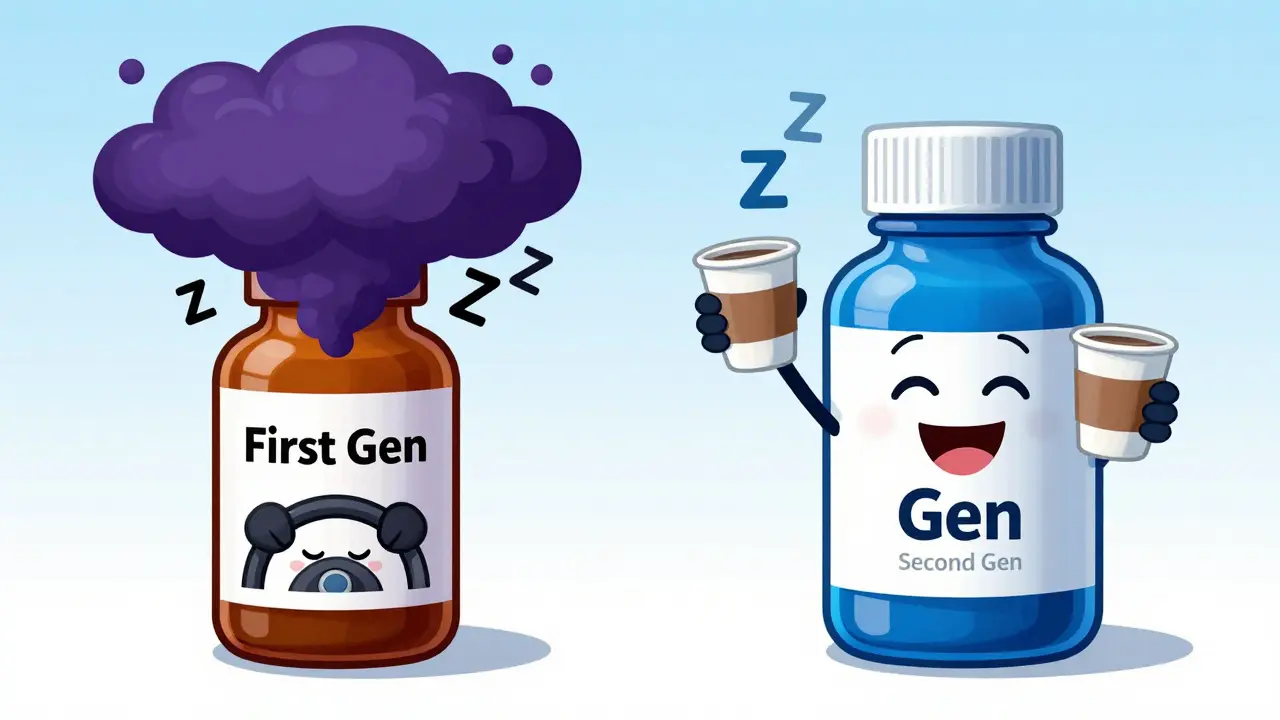
The Drowsiness Dilemma: First vs. Second Generation
If you’re taking an antihistamine for hives, the type matters immensely for your daily life. Here is the hard truth about drowsiness:
- First-generation antihistamines (like diphenhydramine) cross the blood-brain barrier easily. According to data from the Mayo Clinic, about 50% of users experience significant drowsiness. They also impair cognitive function and driving ability similarly to alcohol.
- Second-generation antihistamines are much safer for daytime use. A 2021 review in the Journal of Allergy and Clinical Immunology found that only 10-15% of users report drowsiness with these options.
| Medication (Generic) | Generation | Drowsiness Risk | Peak Effect Time | Standard Adult Dose |
|---|---|---|---|---|
| Cetirizine (Zyrtec) | Second | Moderate (10-15%) | 1 hour | 10 mg daily |
| Loratadine (Claritin) | Second | Low (<5%) | 1.3 hours | 10 mg daily |
| Fexofenadine (Allegra) | Second | Very Low (<5%) | 2.6 hours | 180 mg daily |
| Diphenhydramine (Benadryl) | First | High (~50%) | 1-2 hours | 25-50 mg every 4-6 hrs |
Even among second-generation options, there are differences. Cetirizine is often cited as the most effective for stopping the itch, with one 2021 trial showing a 78% symptom reduction compared to 65% for loratadine. However, it carries a slightly higher risk of drowsiness than fexofenadine. If you need to drive or operate machinery, fexofenadine showed better cognitive performance metrics in studies, with only 8% impairment on driving simulations versus 15% for cetirizine.
When Standard Doses Fail: The Power of Escalation
Here is where many patients get stuck. You take one Zyrtec a day, and the hives keep coming. It feels like the medicine isn’t working. But clinical guidelines tell a different story.
According to the 2023 International Consensus on Urticaria Guidelines, standard-dose antihistamines only control symptoms in about 43% of chronic urticaria patients. That means more than half of people need more help. The good news? You can safely increase the dose.
Dr. Marcus Maurer, Director of the Urticaria Center of Reference and Excellence in Berlin, explains that dose escalation up to four times the standard amount is safe and effective for approximately 30% of refractory patients. So, if 10mg of cetirizine isn’t cutting it, your doctor might recommend 40mg daily. This is a common strategy now, supported by Grade A recommendations from the European Academy of Allergy and Clinical Immunology.
However, there are limits. Dr. Janet Rotter of the American Academy of Allergy, Asthma & Immunology cautions that going beyond four times the standard dose lacks robust evidence and should be done under specialist care due to potential cardiac risks, such as QT prolongation, though this is rare (affecting about 0.2% of patients).
Beyond Pills: Biologics and Advanced Alternatives
If you’re taking four times the recommended dose of antihistamines and still breaking out in hives, it’s time to talk to an allergist or dermatologist about advanced therapies. The landscape has changed dramatically in the last decade.
The gold standard for antihistamine-refractory hives is Omalizumab (brand name Xolair), a monoclonal antibody approved by the FDA in 2014 specifically for chronic spontaneous urticaria. Unlike antihistamines, which block symptoms, omalizumab targets IgE antibodies, essentially turning down the volume on the immune system’s overreaction. A 2022 study in JAMA Dermatology found that omalizumab achieves complete symptom control in 58% of patients who failed antihistamines.
The downside? Cost and administration. Omalizumab requires monthly injections and can cost upwards of $3,200 per dose without insurance coverage, compared to roughly $15 a month for generic cetirizine. However, for patients whose quality of life is severely impacted, the investment is often worth it.
There is hope on the horizon too. Ligelizumab, another biologic, received FDA Breakthrough Therapy designation in March 2023. Phase 2b trials showed a 51% complete response rate, outperforming omalizumab’s 26% in head-to-head comparisons. While full approval is pending phase 3 results expected in mid-2025, this signals a future with even more potent, targeted treatments.
Another alternative is cyclosporine, an immunosuppressant. A 2020 Cochrane review noted it has 65% efficacy in refractory cases. But it comes with serious risks, including a 15% incidence of kidney function decline, so it’s usually reserved for short-term use when biologics aren’t an option.

Practical Tips for Managing Hives Daily
Medication is only part of the puzzle. How you manage your daily routine can significantly impact your success rate. Here are actionable steps based on patient data and clinical advice:
- Take Medication Daily, Not As-Needed: A 2009 study in Clinical and Experimental Dermatology found that scheduled dosing provided 63% better symptom control than taking pills only when hives appeared. Keep histamine levels suppressed proactively.
- Track Your Triggers: 78% of patients who kept symptom diaries identified triggers that helped improve management. Common culprits include NSAIDs (like ibuprofen), stress, and heat. Apps like Hive Wise can help automate this tracking.
- Watch for Autoimmune Links: Patients with autoimmune conditions, such as thyroid disease, report 3.2x higher treatment failure rates with standard antihistamines. If you have other autoimmune issues, discuss this with your doctor early.
- Avoid First-Gen Meds During the Day: Save diphenhydramine for nighttime if sleep disruption is an issue, but rely on non-sedating options for daytime protection.
Conclusion: Finding Your Balance
Dealing with hives is a marathon, not a sprint. While second-generation antihistamines remain the first line of defense for most people, they are not a one-size-fits-all solution. Understanding that dose escalation is a valid, safe step-and knowing when to pivot to biologics like omalizumab-can save you months of unnecessary suffering. Don’t settle for “just living with it.” Modern medicine offers powerful tools to reclaim your comfort.
Is it safe to take double or quadruple doses of antihistamines?
Yes, according to the 2023 International Consensus on Urticaria Guidelines, increasing the dose of second-generation antihistamines up to four times the standard amount is considered safe for most patients. For example, taking 40mg of cetirizine instead of 10mg. However, this should be done under medical supervision to monitor for rare side effects like heart rhythm changes.
Which antihistamine is least likely to make me sleepy?
Fexofenadine (Allegra) is generally considered the least sedating option among second-generation antihistamines. Studies show it causes cognitive impairment in only about 8% of users during driving simulations, compared to higher rates for cetirizine. Loratadine (Claritin) is also very low-risk for drowsiness.
What if antihistamines don't work for my hives?
If high-dose antihistamines fail, the next step is typically biologic therapy, specifically omalizumab (Xolair). It is an injectable medication that targets IgE antibodies and provides complete symptom control in nearly 60% of patients who do not respond to pills. Other options include cyclosporine, though it has more significant side effects.
Should I take antihistamines only when I have hives or every day?
For chronic hives, daily scheduled dosing is far more effective than taking medication only when symptoms appear. Research shows scheduled dosing provides 63% better symptom control because it keeps histamine receptors blocked consistently, preventing the flare-up before it starts.
Are there new treatments for hives coming soon?
Yes, ligelizumab is a promising new biologic that received FDA Breakthrough Therapy designation in 2023. Early trials showed it was more effective than current standards, with a 51% complete response rate. Phase 3 trials are ongoing, with results expected in mid-2025.