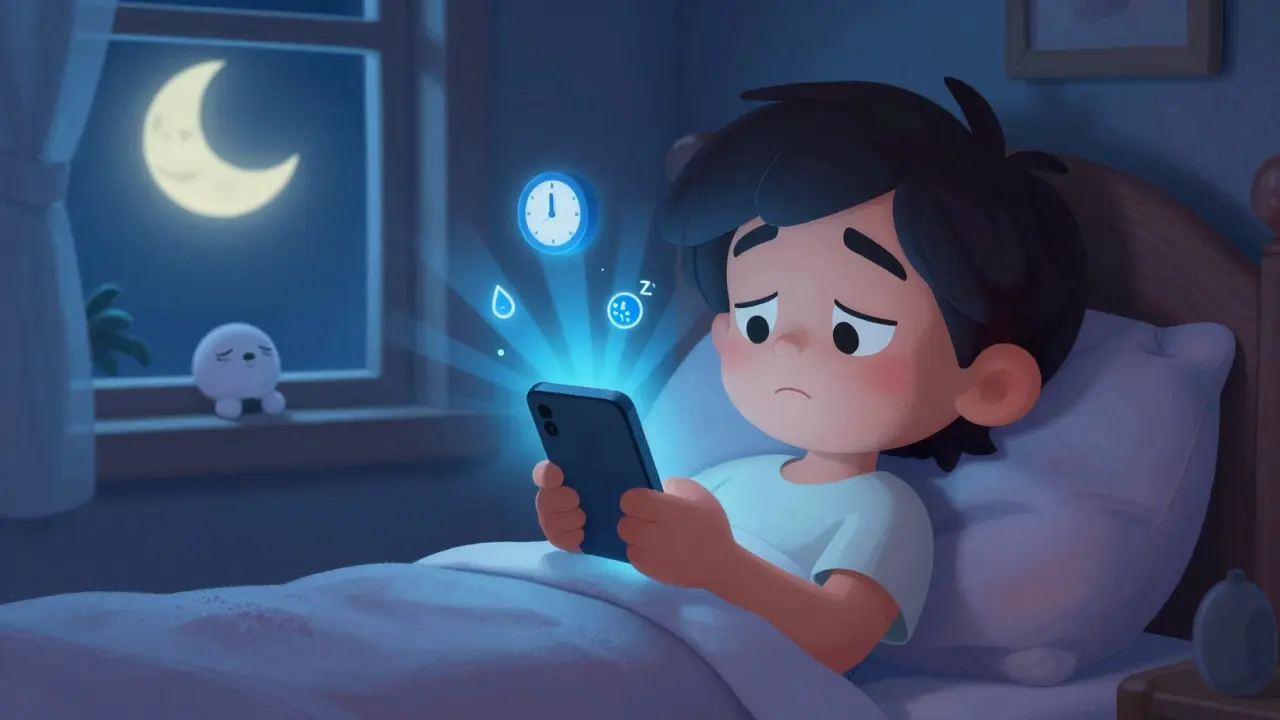
Ever feel like your eyes are tired, dry, or burning after staring at your phone or laptop for hours? You’re not imagining it. Millions of people report these symptoms every day, and blue light from screens is a big part of why. But here’s the twist: blue light isn’t the villain everyone says it is. Some experts say it’s harmless. Others say it’s slowly damaging your eyes. The truth? It’s somewhere in between - and what you do every day matters more than any filter you buy.
What Exactly Is Blue Light?
Blue light isn’t just from screens. It’s part of natural sunlight, and it’s the reason the sky looks blue. But the kind we’re worried about? That’s the high-energy visible (HEV) light between 415 and 455 nanometers - the short-wavelength, high-energy portion of the spectrum. This is the light that reaches deep into your eye, past the cornea and lens, and hits your retina. Studies show it can trigger oxidative stress in eye cells. One 2018 NIH study found that just 24 hours of exposure to 450 nm blue light at moderate intensity reduced human corneal cell viability by nearly 40%. That’s not a guess - it’s lab-tested data. But here’s the catch: your phone doesn’t emit that level of intensity. The real issue isn’t just the light itself - it’s how long you’re exposed to it, especially at night. When you’re scrolling in bed, your brain doesn’t know it’s not daytime. Blue light suppresses melatonin, the hormone that tells your body it’s time to sleep. Harvard research found that 6.5 hours of blue light at night delayed melatonin release by over an hour compared to green light. That’s why you feel wired even when you’re exhausted.Do Blue Light Glasses Actually Help?
The market for blue light glasses exploded. In 2022, global sales hit $3.12 billion. Brands like Eyezen claim to block 20% of blue light. But Consumer Reports tested them - and found most only block 12%. That’s not nothing, but it’s far from the 65-100% claimed by amber-tinted versions. Amber lenses do block more blue light. A 2022 University of Manchester study showed they cut out nearly all blue wavelengths. But they also turn your screen yellow. For graphic designers, photographers, or anyone who needs accurate color, that’s a dealbreaker. One photographer on DPReview said it ruined his ability to judge skin tones. And here’s the kicker: a 2021 study in Contact Lens and Anterior Eye found that while these glasses reduced visual fatigue by 22% during two hours of screen use, they didn’t help with dry eyes at all. And then there’s the American Academy of Ophthalmology. They’ve been clear since 2022: There’s no scientific evidence that blue light from screens damages your eyes. They don’t recommend the glasses. So why do so many people swear by them? Because they’re not fixing your eyes - they’re fixing your sleep. If you wear amber lenses at night, you’re reducing the light that tricks your brain into staying awake. That’s why 63% of Reddit users who tried them reported better sleep. It’s not magic. It’s biology.Software Filters: Night Mode and f.lux
Built-in features like Night Shift (iOS) or Night Light (Windows) are better than nothing. They reduce blue light by 10-20%. But here’s the problem: they don’t touch the most harmful range - 415 to 455 nm. The International Commission on Illumination calls this the “peak hazard” band. Most software filters don’t touch it. They just make things a little warmer. Apple’s iOS 17.4, released in March 2024, changed that. It now uses ambient light sensors to adjust color temperature dynamically. Independent testing by DisplayMate found it reduced melatonin suppression by 37% compared to older versions. That’s a real improvement. But again - it’s not a cure. It’s a tool. And here’s what most people miss: software filters only work if you turn them on early enough. The University of Toronto found that turning on night mode two hours before bed boosted melatonin by 58%. If you wait until 11 p.m., you’re already late.What Actually Works: Habits Over Gadgets
Let’s cut through the noise. The most effective way to protect your eyes isn’t buying glasses or filters. It’s changing how you use your devices. Start with the 20-20-20 rule. Every 20 minutes, look at something 20 feet away for 20 seconds. Sounds simple? A 2021 study in Optometry and Vision Science found it reduced eye strain by over 53%. That’s not a rumor - it’s measurable. People who followed this rule reported fewer headaches, less blurred vision, and less dryness. Why does it work? Because your eyes aren’t designed to focus on one thing for hours. When you stare at a screen, your eyes are constantly adjusting - and getting tired. Looking away lets them relax. It’s like stretching after sitting too long. Then there’s brightness. If your screen is brighter than your room, your eyes are working overtime. The Lighting Research Center found that matching screen brightness to ambient light (300-500 lux) cut discomfort by 41%. That means dimming your screen at night - not just changing color, but lowering intensity. Distance matters too. Holding your phone 12 inches away forces your eyes to focus harder than holding it 20 inches away. The American Optometric Association says that’s a 3.7 diopter difference - enough to cause strain. Keep tablets and laptops at arm’s length. Use a stand if you need to.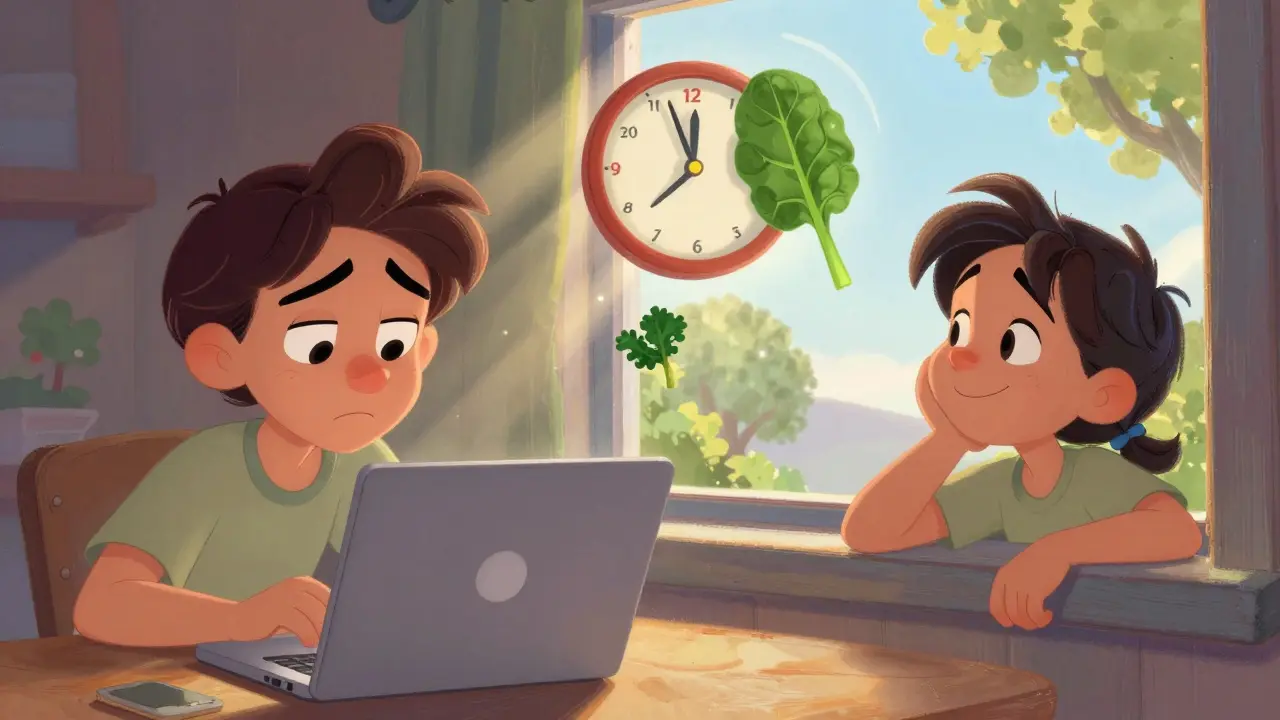
What About Supplements?
You’ve probably seen ads for lutein and zeaxanthin - nutrients found in leafy greens that supposedly protect your eyes. There’s truth here. A February 2024 study in Nature Communications showed that taking 10 mg of lutein and 2 mg of zeaxanthin daily increased macular pigment density by 0.12. That’s equivalent to wearing 25% blue light-blocking lenses. It’s not instant. It takes weeks. But it’s a natural, internal shield. You don’t need pills. Eat spinach, kale, broccoli, eggs, and corn. That’s how humans got protection for millennia - through food. Supplements help if your diet is lacking. But they’re not a magic fix.Why Most People Fail
The biggest reason people don’t see results? Inconsistency. They turn on night mode on their phone but not their laptop. They wear blue light glasses during the day, then go back to scrolling in bed with full brightness. They buy the glasses, then forget to use them. A 2022 survey found that 68% of users who tried blue light management failed because they didn’t apply it across all devices. If you’re using your phone, tablet, and computer, all of them need to be set up. One device left on bright light undoes the others. And then there’s the social factor. Amber lenses look odd in meetings. People stare. You feel self-conscious. So you take them off. That’s why software filters - even imperfect ones - often win in the long run. They’re invisible. You don’t have to explain them.The Future: Hardware That Doesn’t Need Glasses
The real shift isn’t in glasses - it’s in screens. OLED displays from Samsung and Apple are now built to reduce blue light at the source. New models cut emissions in the 415-455 nm range by 30-40% without changing color. That’s a game-changer. It means in a few years, you won’t need to buy filters. Your screen will do it for you. Corning’s prototype quantum dot lenses can filter 45% of blue light without color distortion. That’s the holy grail. And by 2025, Samsung plans to roll out adaptive filters that reduce blue light by 50% with less than 2% color shift. That’s not science fiction - it’s engineering in motion. The market for blue light glasses is already shrinking. IDC predicts a 18% annual drop in sales from 2025 to 2028. Why? Because the solution is moving from your nose to your screen.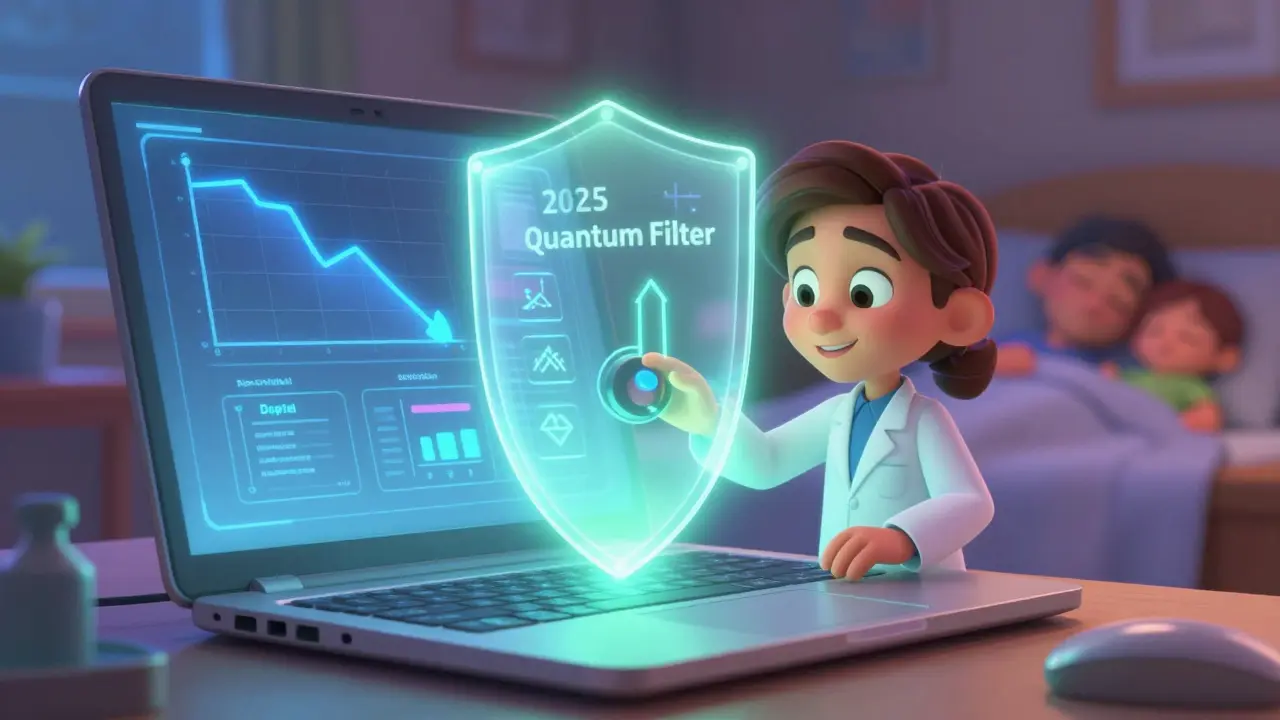
What Should You Do Right Now?
Forget the hype. Here’s what actually helps, based on real data:- Use the 20-20-20 rule religiously. Set a timer if you have to.
- Turn on night mode two hours before bed - on every device.
- Keep your screen brightness close to your room lighting. No more staring at a bright screen in a dark room.
- Hold your phone or tablet at least 20 inches away. Use a stand.
- Eat more leafy greens. No supplements needed unless your doctor says so.
- If you have trouble sleeping, try amber glasses at night - but don’t expect them to fix eye strain during the day.
Is Blue Light Really Dangerous?
The science is split. The NIH says yes - prolonged exposure to short-wave blue light can damage cells. The American Academy of Ophthalmology says no - there’s no proof screens cause permanent harm. The truth? It’s not black and white. Blue light at night? Definitely disrupts sleep. That’s settled science. Blue light during the day? It’s mostly harmless - unless you’re staring at a screen for 10 hours straight without blinking. That’s when you get dry eyes, headaches, and blurred vision. But those are symptoms of overuse, not blue light poisoning. The real danger isn’t the light. It’s the habit. Sitting still. Not blinking. Not looking away. That’s what’s hurting you.Do blue light glasses help with eye strain?
Blue light glasses may help reduce eye strain for some people, especially if worn at night to improve sleep. But studies show they don’t significantly reduce symptoms like dry eyes or blurred vision during the day. The 20-20-20 rule and proper screen brightness are far more effective. Some users report relief, but others notice no difference - or even color distortion that makes tasks harder.
Is blue light from screens harmful to my eyes?
There’s no solid evidence that blue light from phones or computers causes permanent eye damage like macular degeneration. The American Academy of Ophthalmology states this clearly. However, blue light can contribute to digital eye strain - dryness, headaches, and blurred vision - because you blink less and focus intensely for long periods. The bigger issue is sleep disruption, not eye damage.
Should I use night mode on my devices?
Yes - but only if you turn it on early. Research from the University of Toronto shows that turning on night mode two hours before bed increases melatonin production by 58%. If you wait until bedtime, it’s too late. Also, lower screen brightness at night. Night mode alone won’t help if your screen is still too bright.
What’s the best way to reduce blue light without glasses?
Adjust your environment. Keep screens at 20-30 inches away. Match screen brightness to room lighting. Use built-in night modes two hours before bed. Take 20-second breaks every 20 minutes to look at something far away. Eat foods rich in lutein and zeaxanthin - like spinach, kale, and eggs. These steps are more effective than any filter or lens.
Do blue light filters affect sleep quality?
Yes, significantly. Blue light suppresses melatonin, the hormone that helps you fall asleep. Studies show that exposure to blue light at night delays melatonin release by over an hour. Using night mode, reducing screen brightness, and avoiding screens 90 minutes before bed can improve sleep onset and quality. This effect is stronger than any blue light-blocking glasses.