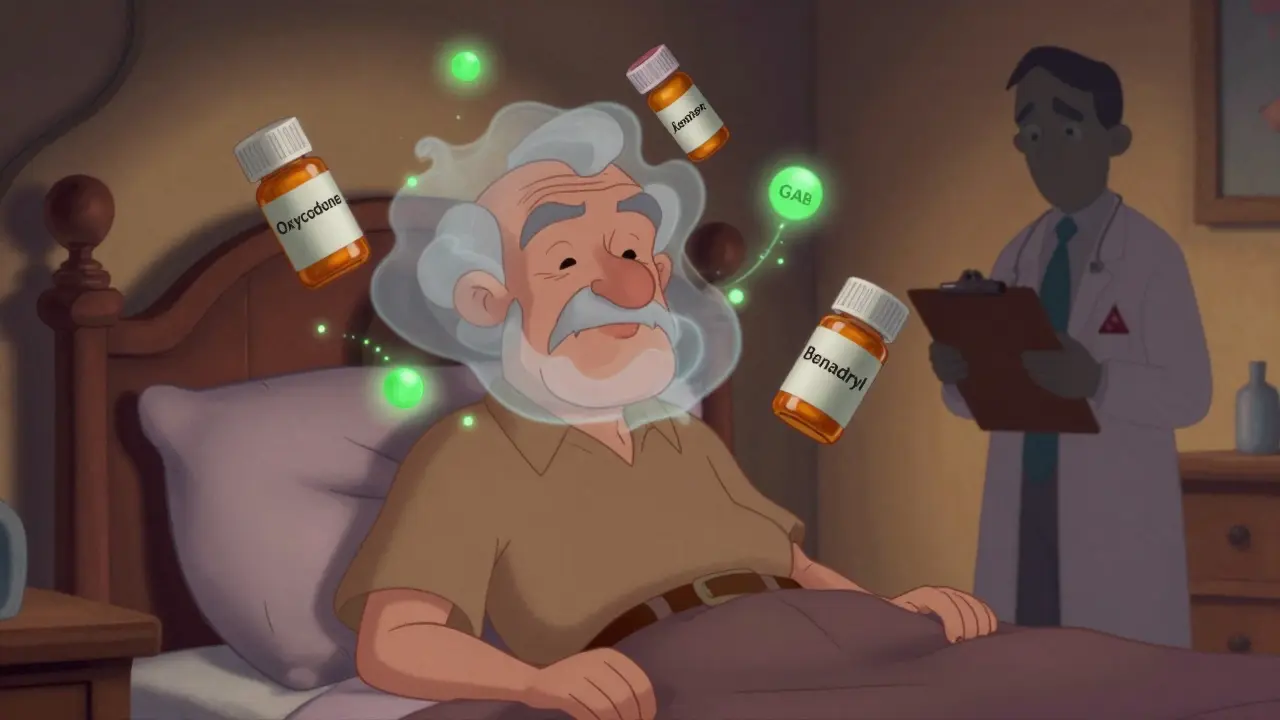
When you take more than one medication that makes you sleepy, the danger doesn’t just add up-it multiplies. This isn’t a hypothetical risk. It’s happening every day in homes, clinics, and emergency rooms across the U.S. and beyond. People are combining opioids like oxycodone with sleep aids like zolpidem, or mixing alcohol with benzodiazepines like Xanax, not because they’re reckless, but because they don’t realize how little it takes to tip into life-threatening territory. The combination of sedating medications is one of the most under-discussed yet deadly patterns in modern medicine.
How Sedating Medications Work Together
Most sedating drugs-whether they’re opioids, benzodiazepines, sleep medications, or even some antidepressants-work by boosting a brain chemical called GABA. This chemical slows down your nervous system, which is why these drugs help with anxiety, insomnia, or pain. But when you take two or more of them at once, they don’t just work side by side. They team up. The result? A much stronger effect than you’d expect from each one alone. This is called synergy.
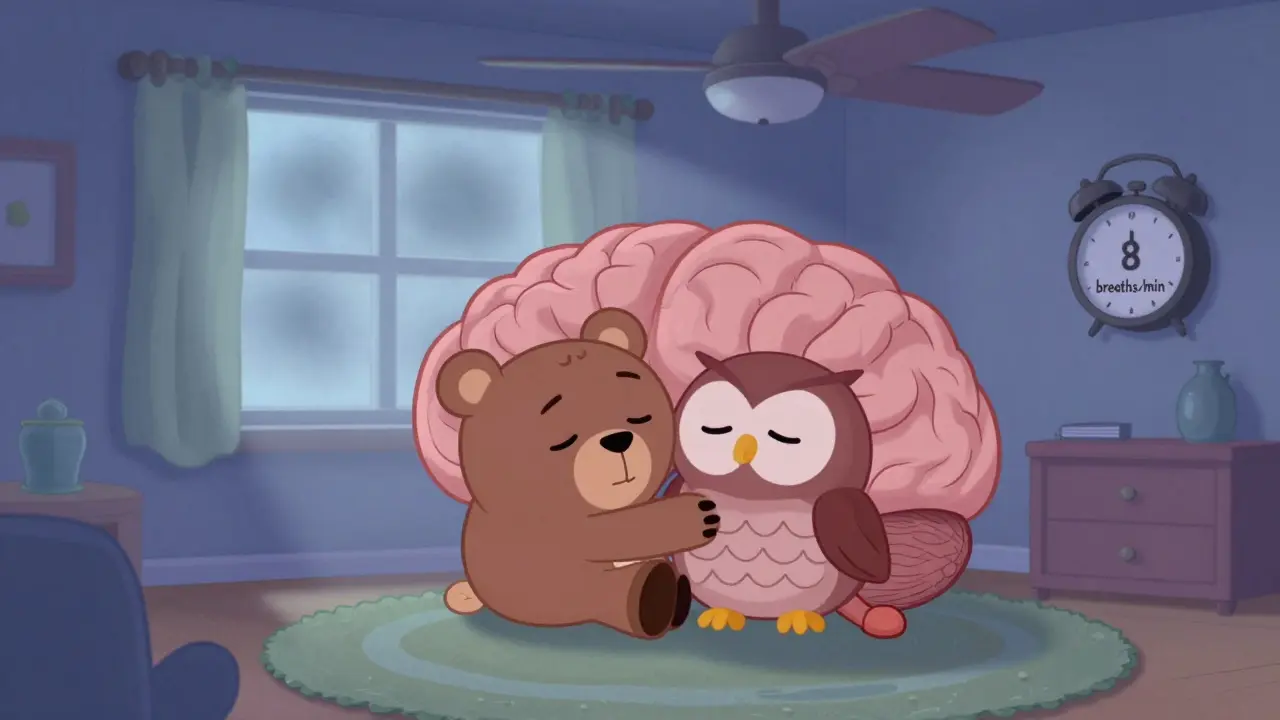
For example, opioids suppress the part of your brain that tells you to breathe. Benzodiazepines make that suppression worse. Together, they can drop your breathing rate below 8 breaths per minute. Normal is 12 to 20. Below 8, your body starts to suffocate quietly-no coughing, no gasping, just fading out. That’s why the opioid-benzodiazepine combination is responsible for nearly one-third of all prescription-related overdose deaths, according to UCLA Health.
Even over-the-counter meds can be dangerous. Diphenhydramine (Benadryl) is a common antihistamine that causes drowsiness. Taken with a sleep pill like Ambien? That’s a double hit to your brain’s alertness centers. A 2022 study found that people who combined these two had a 65% higher chance of falling and breaking a bone, especially if they were over 65.
The Most Dangerous Combinations
Not all sedating combinations are equal in risk. Some are far more lethal than others. Here are the top three most dangerous pairings based on real-world data:
- Opioids + Benzodiazepines: This is the deadliest combo. The FDA issued its first warning in 2016. Since then, research from JAMA Internal Medicine shows patients on both drugs have a 2.5-times higher risk of overdose than those on opioids alone. Fatal overdoses with this combo are 3.86 times more likely.
- Alcohol + Sleep Medications: A single glass of wine with a zolpidem pill can cut your reaction time by 70%. That’s worse than being legally drunk. Many people don’t realize alcohol is a sedative too. It doesn’t matter if it’s beer, wine, or liquor-any amount multiplies the risk.
- SSRIs + MAOIs: These are antidepressants, but when mixed, they can trigger serotonin syndrome. Your body gets flooded with too much serotonin. Symptoms include high fever, shaking, confusion, and rapid heartbeat. About 14-16% of cases lead to hospitalization.
Even combinations you wouldn’t think of are risky. For instance, taking muscle relaxants like cyclobenzaprine with an antipsychotic like quetiapine can cause sudden drops in blood pressure, fainting, or cardiac arrest. These aren’t rare. They’re common enough that emergency rooms see them weekly.
Warning Signs You Can’t Ignore
Most people don’t realize they’re in danger until it’s too late. The signs of dangerous sedation build slowly. They’re easy to miss-especially if you’ve been on the meds for a while. Here’s what to watch for:
- Slowed or shallow breathing (fewer than 12 breaths per minute)
- Unresponsiveness to voice or touch
- Blue lips or fingertips (a sign of low oxygen)
- Confusion, dizziness, or slurred speech that’s worse than usual
- Falling or stumbling without a clear reason
- Gurgling sounds while sleeping (a sign of airway blockage)
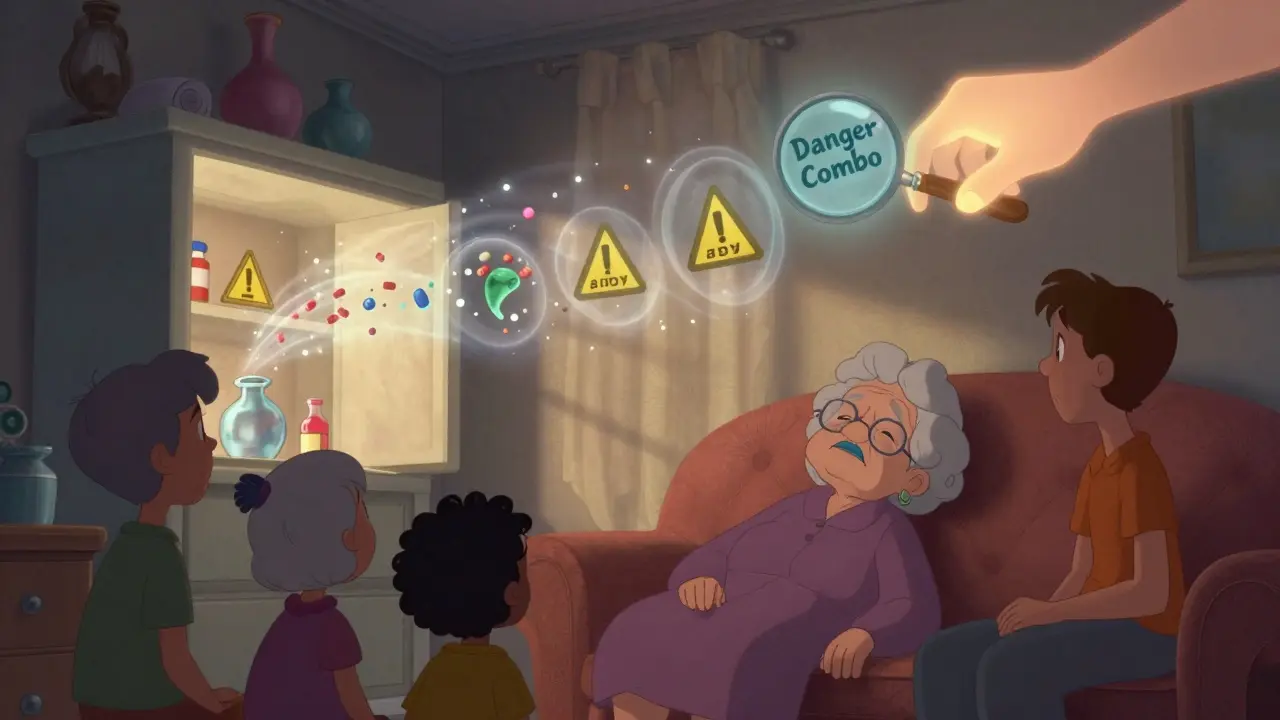
If you see even one of these in yourself or someone else, call 911 immediately. Don’t wait. Don’t assume they’ll wake up on their own. This isn’t just being “really tired.” It’s respiratory failure in progress.
Older adults are especially vulnerable. The American Geriatrics Society Beers Criteria® lists 19 sedating combinations that should be avoided in people over 65. Why? Because aging slows how your body processes drugs. A dose that was safe at 50 can be deadly at 75. Falls from dizziness lead to hip fractures, which often end in long-term care-or death.
Why This Keeps Happening
You’d think doctors would catch this. But they don’t always. A 2020 study in JAMA Network Open found that major electronic health record systems flagged only 17.3% of dangerous sedative combinations. That means in nearly 83% of cases, the computer didn’t warn the doctor. Patients are often prescribed these combinations by different doctors-each unaware of the others’ prescriptions. This is called “doctor shopping,” and it’s not always intentional. Sometimes it’s just poor communication.
Recovery Village data from 2022 showed that 42% of people who overdosed on combined sedatives had gotten prescriptions from three or more doctors in just six months. Many of them were elderly, managing chronic pain, anxiety, and insomnia-all with different specialists. No one was looking at the full picture.
Even when doctors do know, they may not know how to fix it. There’s no universal tool to measure how sedated someone is. Some clinics use one scale. Others use another. Without a standard, risk assessment is guesswork.
What You Can Do
The good news? You have power here. You don’t have to wait for the system to fix itself.
- Keep a written list of every medication you take-including vitamins, supplements, and OTC drugs like melatonin or NyQuil. Bring it to every appointment.
- Ask your pharmacist to review your full list every time you fill a new prescription. Pharmacists are trained to spot interactions.
- Know your opioid dose in morphine milligram equivalents (MME). If you’re on more than 50 MME per day, you’re already at higher risk. Talk to your doctor about lowering it.
- Never mix alcohol with any sedative, even if it’s “just one drink.” The risk isn’t worth it.
- Request a medication review every 3 months if you’re over 65 or taking three or more sedating drugs. The START criteria say this is essential.
There’s also a new tool called DETERMINE, launched in 2022 by the FDA. It uses AI to predict your personal risk of dangerous interactions based on your age, weight, kidney function, and genetic factors. It’s not everywhere yet, but ask your doctor if it’s available.
When to Seek Help
If you’ve been taking multiple sedatives for a while and feel like you’re not yourself-slower, foggy, unsteady-it’s time to talk to your doctor. Don’t stop suddenly. That can cause seizures, hallucinations, or dangerous withdrawal. Safe tapering means reducing one drug at a time, by 10-25% every 1-2 weeks, under supervision. The Beers Criteria recommends no more than 5mg of diazepam (or its equivalent) per day for older adults.
And if you’ve ever had a blackout, fall, or unexplained injury after taking meds-tell your provider. These aren’t accidents. They’re warning signs.
What’s Changing
Things are slowly improving. Since 2012, the number of people prescribed both opioids and benzodiazepines has dropped by 27%. The SUPPORT Act of 2018 forced Medicare plans to screen for these combinations. All 50 states now require e-prescribing for controlled substances, which includes automatic checks for dangerous pairs. And in 2022, the FDA required all opioid and benzodiazepine packages to carry a black box warning-the strongest possible alert.
But the problem isn’t solved. Nearly 9.2 million Americans still get these combinations. And for many, the alternatives are too expensive. A non-sedating pain med might cost $450 a month. A benzodiazepine? $15. That’s not just a financial gap-it’s a life-or-death one.
The future may lie in genetic testing. The NIH is investing $127 million to study how your DNA affects how you process sedatives. In a few years, a simple blood test might tell you if you’re at high risk for overdose from a common combo. Until then, awareness is your best defense.
Can I safely combine sedating medications if my doctor says it’s okay?
Sometimes, yes-but only under strict supervision. A few patients with severe, treatment-resistant anxiety or insomnia may benefit from carefully controlled low-dose combinations. But this is rare. It requires weekly check-ins, regular blood tests, and constant monitoring for side effects. Most doctors avoid it entirely because the risks outweigh the benefits. Never assume it’s safe just because a doctor prescribed it.
What should I do if I suspect someone is overdosing on sedatives?
Call 911 immediately. Do not try to wake them by shaking or slapping. If they’re not breathing or have blue lips, start CPR if you’re trained. If naloxone (Narcan) is available and you know how to use it, administer it-but know that it only works for opioids, not benzodiazepines or alcohol. Emergency responders need to know exactly what drugs were taken.
Are natural sleep aids like melatonin safe to combine with prescription sleep meds?
No. Melatonin is often thought of as harmless, but it’s still a CNS depressant. Combining it with zolpidem, zaleplon, or even trazodone can increase drowsiness, confusion, and fall risk. A 2021 study found that older adults who took melatonin with a sleep pill were 40% more likely to experience nighttime falls than those taking either alone.
Why don’t pharmacies warn me when I pick up a dangerous combination?
Pharmacies are required to screen for interactions, but their systems aren’t perfect. Many still rely on outdated software that misses complex combinations. Also, if prescriptions come from different doctors or pharmacies, the systems don’t talk to each other. Always ask your pharmacist directly. Don’t rely on automated alerts.
Can I just stop taking one of the sedatives on my own?
No. Stopping suddenly, especially benzodiazepines or opioids, can cause seizures, psychosis, or severe withdrawal. Always work with your doctor to taper slowly. Reducing one drug at a time by 10-25% every 1-2 weeks is the safest approach. Your doctor can help you switch to non-sedating alternatives if possible.
Next Steps
If you’re taking more than one sedating medication, make a plan today. Write down every pill, patch, liquid, or supplement you use. Bring it to your next doctor visit. Ask: “Could any of these be dangerous together?” If you’re over 65, request a full medication review. If you’re caring for someone who is, check their medicine cabinet. Look for multiple bottles of sleep aids, painkillers, or anxiety meds. One person’s safety net can be another’s trap. Knowledge isn’t just power-it’s what keeps you breathing.