
Walk into any pharmacy or supermarket, and you’ll see shelves stacked with colorful boxes promising relief from headaches, heartburn, allergies, and colds. These are over-the-counter (OTC) medications, which are pharmaceutical products legally sold directly to consumers without a physician's prescription. They represent the first line of defense for most minor health issues. In fact, according to a 2022 NielsenIQ survey, 81% of American adults reach for an OTC drug as their initial response to symptoms. While they offer incredible convenience and accessibility, there is a widespread misconception that "available without a prescription" means "completely risk-free." This belief contributes to nearly 70% of accidental medication overdoses involving these very products.
Understanding how to use these medicines safely requires more than just reading the front of the box. You need to know what’s inside, how it interacts with your body, and when to stop taking it. This guide breaks down the most common categories of OTC medications, their specific uses, potential side effects, and critical safety information to help you make informed decisions about your health.
Key Takeaways
- Read the Drug Facts Label: Always check the active ingredient list to avoid accidentally doubling up on medications like acetaminophen found in multiple products.
- Know Your Limits: Exceeding the maximum daily dose of pain relievers can cause severe organ damage; for example, liver failure from acetaminophen affects thousands annually.
- Consult Professionals: Pharmacists are highly accessible resources for checking drug interactions, especially if you take other prescriptions or have chronic conditions.
- Avoid Long-Term Use: OTC meds are designed for short-term symptom relief, not for treating chronic underlying conditions without medical supervision.
- Check Age Restrictions: Many cough and cold medications carry strict warnings for children under four and older adults due to increased risks of side effects.
Pain Relievers: Acetaminophen vs. NSAIDs
The pain relief segment dominates the OTC market, accounting for over $38 billion in sales globally. The two main contenders are acetaminophen (commonly known by the brand name Tylenol) and non-steroidal anti-inflammatory drugs (NSAIDs), such as ibuprofen (Advil, Motrin) and naproxen sodium (Aleve).
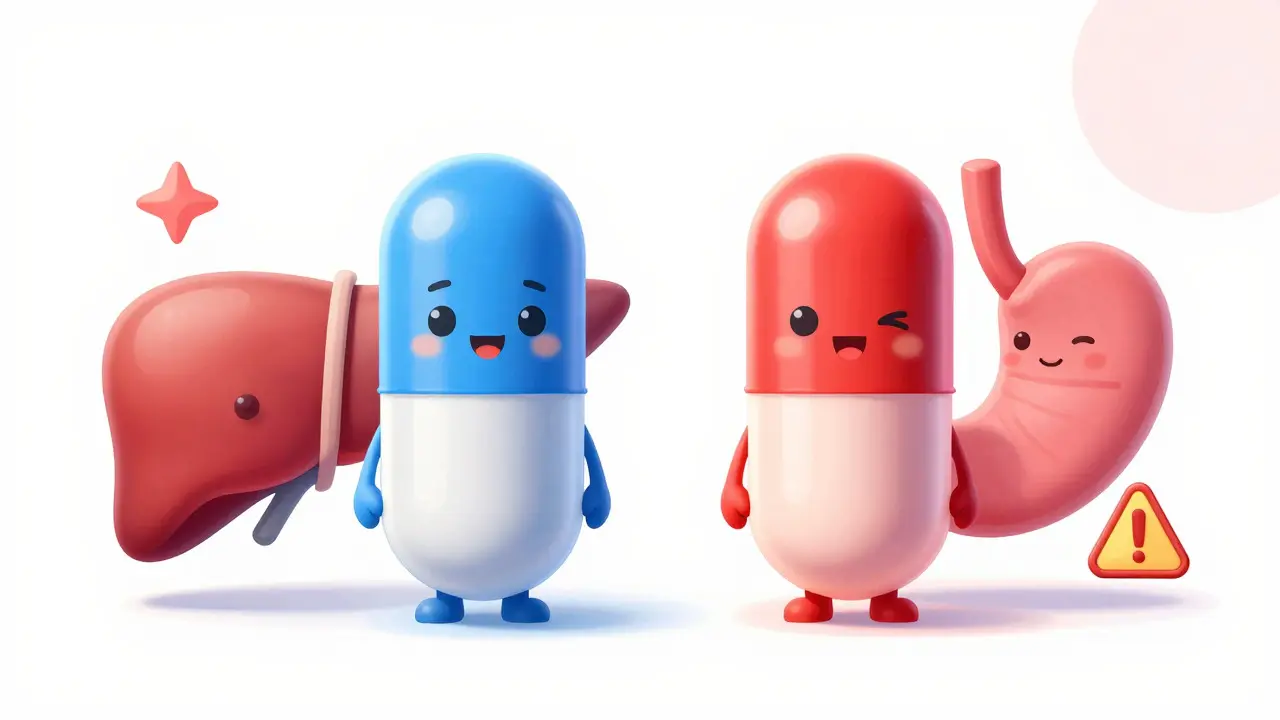
Acetaminophen works primarily in the brain to block pain signals and reduce fever. It is generally safer for the stomach and is the preferred choice for individuals with bleeding disorders or those taking blood thinners. However, it carries a significant risk to the liver. The FDA reports between 15,000 and 18,000 cases of acute liver failure annually in the United States linked to acetaminophen overdose. The maximum safe daily dose for adults is 4,000mg, but many doctors recommend staying below 3,000mg to be safe. A common mistake people make is taking acetaminophen for a headache while also taking a multi-symptom cold medicine that also contains acetaminophen, leading to an accidental overdose.
On the other hand, NSAIDs like ibuprofen and naproxen reduce inflammation, swelling, and pain throughout the body. Ibuprofen is typically dosed at 200-400mg every 4-6 hours, with a maximum daily limit of 1,200mg for OTC use. Naproxen lasts longer, often taken as 220mg every 8-12 hours, with a max of 660mg per day. While effective for muscle strains and arthritis, NSAIDs irritate the stomach lining. A 2021 meta-analysis in the Journal of Clinical Gastroenterology found that NSAIDs increase the risk of gastrointestinal bleeding by 2 to 4 times. If you have a history of ulcers or inflammatory bowel disease, you should avoid NSAIDs unless directed by a doctor.
| Medication Type | Active Ingredient | Best For | Key Risk | Max Daily Dose (Adults) |
|---|---|---|---|---|
| Analgesic | Acetaminophen | Fever, mild pain, bleeding disorders | Liver damage | 4,000mg |
| NSAID | Ibuprofen | Inflammation, muscle pain, fever | Stomach bleeding, kidney stress | 1,200mg |
| NSAID | Naproxen Sodium | Long-lasting pain, arthritis | Stomach irritation, heart risk | 660mg |
Cold, Flu, and Allergy Medications
When winter hits or allergy season begins, OTC cabinets fill up with decongestants, antihistamines, and cough suppressants. It is crucial to distinguish between these because they affect the body differently.
Decongestants, such as pseudoephedrine (Sudafed), shrink swollen nasal tissues to relieve congestion. Pseudoephedrine is often kept behind the pharmacy counter due to regulations, requiring ID purchase limits. It can raise blood pressure and cause insomnia, so hypertensive patients should use caution. An alternative is intranasal corticosteroids like fluticasone (Flonase). According to UpToDate clinical evidence, nasal steroids outperform oral antihistamines for nasal congestion by 35%. They are now available without age restrictions for allergic rhinitis following recent FDA approvals.
For coughs, you have two main options: expectorants and suppressants. Guaifenesin (Mucinex) is an expectorant that thins mucus, making it easier to cough up. Dextromethorphan (Delsym) is a suppressant that blocks the cough reflex in the brain. Dextromethorphan has gained attention for abuse among adolescents, so parents should monitor usage. Note that the FDA mandates "do not use" labels for cough and cold combinations in children under four years old, following historical data showing safety risks in this age group.
Allergy sufferers choose between first-generation and second-generation antihistamines. First-generation drugs like diphenhydramine (Benadryl) are effective but cause significant drowsiness because they cross the blood-brain barrier easily. The Federal Aviation Administration prohibits pilots from flying within 12 hours of taking diphenhydramine due to residual sedation. Second-generation options like loratadine (Claritin) and fexofenadine (Allegra) offer comparable relief with 90% less sedation, making them better for daytime use. However, loratadine requires dose adjustment for patients with severe renal impairment.
Gastrointestinal Treatments
Heartburn and indigestion are incredibly common, leading to high sales of acid reducers. The three main classes are antacids, H2 blockers, and proton pump inhibitors (PPIs).
Antacids, such as calcium carbonate (Tums), neutralize stomach acid immediately. They provide quick relief but wear off fast. H2 blockers like famotidine (Pepcid AC) reduce acid production for several hours and are good for preventing heartburn before meals. Proton pump inhibitors (PPIs) like omeprazole (Prilosec OTC) offer the strongest acid suppression but take a few days to reach full effect. A 2023 study in JAMA Internal Medicine warned that long-term PPI use increases the risk of chronic kidney disease by 20-50%. Therefore, PPIs should only be used for frequent heartburn (occurring two or more days a week) for no more than 14 days at a time without consulting a doctor.
For diarrhea, loperamide (Imodium) slows down gut movement. While effective for acute diarrhea, it should be used with caution in patients with renal impairment. Recent formulations have improved efficacy, but overuse can lead to serious cardiac issues. Always stay hydrated when dealing with gastrointestinal upset, as rehydration is often more critical than stopping the symptoms immediately.

Safety Guidelines and Drug Interactions
The biggest danger with OTC medications is not usually the drug itself, but how it interacts with other substances or pre-existing conditions. Here are critical safety rules to follow.
- Check for Duplicate Ingredients: Many combination products contain acetaminophen, aspirin, or caffeine. Taking a standalone painkiller alongside a cold flu mix can easily push you over the safe daily limit.
- Pregnancy Considerations: The American College of Obstetricians and Gynecologists advises avoiding NSAIDs after 20 weeks of gestation due to potential fetal kidney complications. Acetaminophen remains the generally recommended analgesic during pregnancy, but always consult your obstetrician first.
- Elderly Caution: Older adults metabolize drugs slower. Diphenhydramine, often used as a sleep aid, increases fall risk by 30% in adults over 65, according to JAMA Internal Medicine. Safer alternatives include melatonin or behavioral sleep hygiene changes.
- Storage Matters: Most OTC medications degrade at temperatures above 86°F (30°C). Keep them in a cool, dry place, away from bathroom humidity. Check expiration dates; expired drugs may lose potency or become unsafe.
Pharmacists are an underutilized resource. With 93% of Americans living within five miles of a pharmacy, you have easy access to experts who can check for dangerous interactions between your OTC choices and prescription medications. For instance, combining NSAIDs with certain blood pressure medications can reduce their effectiveness.
When to See a Doctor
OTC medications are designed for self-limiting, minor conditions. They are not cures for chronic diseases. You should seek professional medical advice if:
- Pain persists for more than 10 days despite regular use of pain relievers.
- Fever exceeds 103°F (39.4°C) or lasts more than three days.
- You experience unexplained weight loss, persistent vomiting, or blood in stool.
- Heartburn occurs more than twice a week, which could indicate GERD requiring prescription treatment.
- Allergy symptoms interfere with daily life or sleep despite using non-drowsy antihistamines.
Dr. Robert Graham, Chief of Allergy and Immunology at Lenox Hill Hospital, notes that the misconception that OTC means risk-free leads to inappropriate long-term use. Self-medicating chronic conditions delays proper diagnosis and treatment. Use OTC drugs as a bridge to comfort, not as a permanent solution for unresolved health issues.
Is it safe to take acetaminophen and ibuprofen together?
Yes, for most healthy adults, it is safe to alternate or combine acetaminophen and ibuprofen for pain relief, as they work through different mechanisms. However, you must track the total dosage of each separately to ensure you do not exceed the maximum daily limits (4,000mg for acetaminophen and 1,200mg for ibuprofen). Consult a doctor if you have liver or kidney issues.
Why are some OTC medications behind the counter?
Certain ingredients, like pseudoephedrine, are regulated because they can be used as precursors in the illicit manufacture of methamphetamine. Pharmacies keep these behind the counter to enforce purchase limits and verify identity, though no prescription is required.
Can I give adult OTC medication to my child?
Generally, no. Adult formulations often contain higher concentrations of active ingredients or additional components like alcohol or aspirin that are unsafe for children. Always use pediatric-specific versions and dose based on weight, not just age. Avoid cough and cold combos for children under four entirely.
How long should I use proton pump inhibitors (PPIs)?
OTC PPIs like omeprazole are intended for a 14-day course to treat frequent heartburn. Using them longer than two weeks without medical supervision can mask symptoms of more serious conditions and increase risks of kidney issues, bone fractures, and nutrient deficiencies.
Do OTC medications expire?
Yes, most OTC drugs have an expiration date of 2-3 years from manufacture. After this date, the chemical structure may break down, reducing effectiveness. In rare cases, degraded products can form harmful byproducts. Discard expired medications properly rather than flushing them down the toilet.
Which antihistamine is best for daytime use?
Second-generation antihistamines like loratadine (Claritin), fexofenadine (Allegra), or cetirizine (Zyrtec) are best for daytime use. They provide strong allergy relief with minimal drowsiness compared to first-generation options like diphenhydramine (Benadryl), which significantly impair alertness.