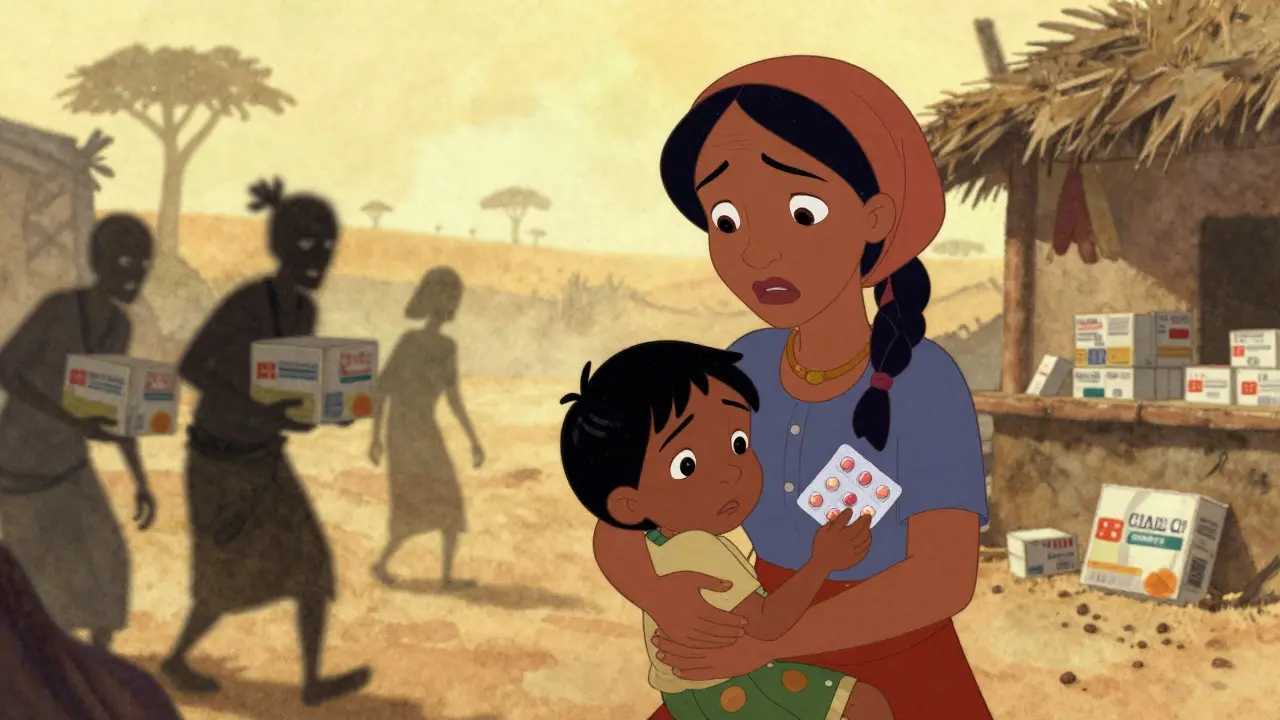
Every year, more than 100,000 children die from pneumonia because the antibiotics they were given had no active ingredient. In sub-Saharan Africa, over 116,000 people die annually from fake antimalarial drugs. These aren’t statistics from a horror movie-they’re real, documented deaths caused by counterfeit medicines flooding the healthcare systems of developing nations.
What Exactly Are Counterfeit Drugs?
Counterfeit drugs look just like the real thing. They come in the same blister packs, same labels, same logos. But inside? They could be chalk, sugar, rat poison, or just plain nothing. The World Health Organization divides them into two categories: substandard and falsified.
Substandard medicines are made by legitimate manufacturers but fail quality checks-maybe they expired, were stored wrong, or got diluted. Falsified ones are outright frauds. Someone deliberately made them to look real, often in secret labs in China, Bangladesh, or Turkey, then shipped them through a chain of middlemen until they ended up in a rural pharmacy in Nigeria or a street vendor in Cambodia.
According to WHO data from 2025, about 1 in 10 medicines in low- and middle-income countries are fake or substandard. In some areas-like border regions in Southeast Asia-that number jumps to 50%. And it’s not just malaria pills. Cancer drugs, heart medications, antibiotics, even insulin are being counterfeited. In 2024, over 2,400 different types of fake medicines were reported across 136 countries.
Why Is This Happening?
The answer is simple: profit. Criminal networks make up to 9,000% markup on fake drugs. A $1 pill that does nothing can be sold for $90. Compare that to legitimate pharmaceuticals, where profit margins are usually under 20%. And the risk? Low. In many countries, getting caught selling fake medicine carries a fine-not jail time.
There’s also demand. In places where real medicines cost 300% to 500% more than fakes, people have no choice. A mother might buy a counterfeit antimalarial because it’s the only one she can afford. She doesn’t know it’s fake. Even pharmacists sometimes don’t know-because the packaging is so good, it passes visual inspection 90% of the time.
Supply chains are another problem. Fake drugs pass through 5 to 7 intermediaries before reaching patients. Each handoff is a chance for substitution. A shipment meant for a hospital in Ghana might get swapped for fakes in a port in Nigeria, then sold as genuine through a local distributor who’s never seen the real product.
The Deadly Consequences
Fake drugs don’t just fail to work-they actively kill.
- 30% contain no active ingredient at all
- 45% have the wrong dosage-too little to help, too much to be safe
- 25% include toxic chemicals like diethylene glycol, which causes kidney failure
In 2012, over 200 people in Lahore, Pakistan died after being given counterfeit heart medication. The pills had 10 times the allowed dose of a toxic ingredient. In 2022, cancer patients across multiple African countries received fake chemotherapy drugs that contained no active compound. Their tumors kept growing. Some died waiting for treatment that never worked.
But the worst damage might be invisible. When antibiotics don’t work because they’re fake, bacteria survive. They adapt. They become resistant. This is how superbugs spread. WHO warns that counterfeit medicines are accelerating antimicrobial resistance-a global crisis that could make simple infections untreatable again.
Who’s Making These Drugs?
China produces 78% of the high-quality counterfeit medicines that look real enough to fool even trained professionals. But they’re not the only players. Bangladesh, Lebanon, Syria, and Turkey have become major hubs for regional distribution. These aren’t small-time operations. They’re organized criminal networks with logistics, packaging plants, and even fake certificates of authenticity.
Some use 3D printing to replicate blister packs with 99% accuracy. Others use AI to generate fake websites and social media ads that look like official pharmacy portals. In 2025, Interpol’s Operation Pangea XVI shut down 13,000 fake online pharmacies-but new ones popped up within days.
Why Can’t Governments Stop This?
Many developing nations lack the resources to enforce drug safety. Regulatory agencies are underfunded, understaffed, and often corrupt. In some countries, inspectors earn less than $200 a month. A counterfeit drug dealer can bribe them easily.
Even when laws exist, they’re not enforced. Only 45 out of 76 countries that signed the Medicrime Convention-a global treaty against fake medicines-have turned it into actual national law. In places like rural Uganda or northern India, there’s no system to check if a drug is real. No barcode scanner. No app. No lab. Just a pharmacy shelf and a prayer.
And when a patient dies from a fake drug? Often, there’s no investigation. No autopsy. No media coverage. The family blames God. The clinic blames the patient. The system moves on.
What’s Being Done?
There are solutions-but they’re not reaching everyone.
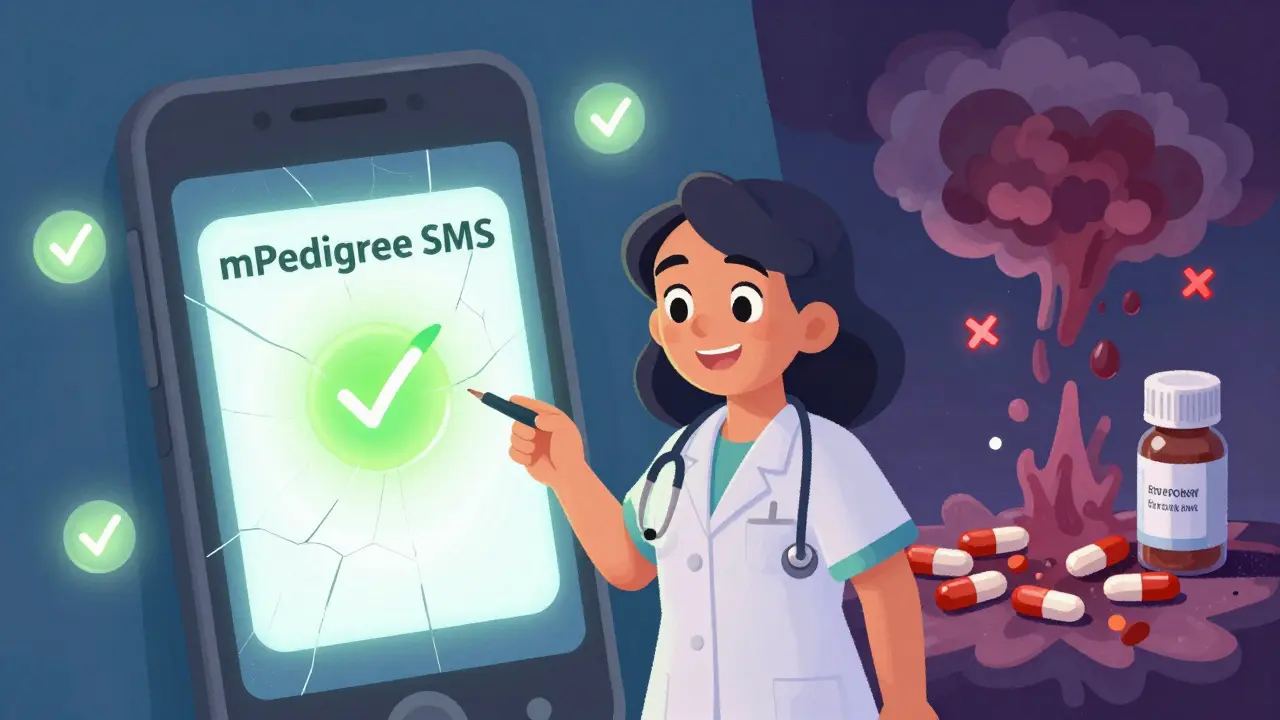
mPedigree, a Ghana-based system, lets people text a code from the medicine pack to a free number. Within seconds, they get a reply: “Real” or “Fake.” It’s saved lives. One user in Ghana said it saved her child’s life when she discovered her antimalarial was counterfeit.
Blockchain verification is now being used by WHO’s new Global Digital Health Verification Platform, active in 27 countries. It tracks every pill from factory to pharmacy. It’s accurate to 99.9%. But it needs internet, electricity, and trained staff-things many rural clinics don’t have.
Solar-powered testing kits that cost under $10 are being rolled out in sub-Saharan Africa. They use simple chemical reactions to detect if a drug has the right ingredients. They’re not perfect-70% accurate-but they’re better than nothing.
Community health workers are being trained to spot red flags: mismatched batch numbers, blurry print, pills that dissolve too fast, or no expiration date. In pilot areas, this training reduced fake drug use by 37%.
But here’s the catch: only 22% of pharmacies in low-income countries use any kind of verification system. In high-income countries, it’s 98%.
What Can You Do?
If you live in a developing country:
- Check for official seals, holograms, or scratch-off codes on packaging
- Ask the pharmacist where the medicine came from
- Use verification apps like mPedigree if available
- Report suspicious drugs to local health authorities
If you’re outside these countries:
- Don’t buy medicine online from unknown websites
- Support NGOs working on drug safety in developing nations
- Pressure governments and pharmaceutical companies to fund verification systems
There’s a myth that fake drugs only affect poor people. They don’t. They affect everyone. A fake antibiotic bought in Nigeria can lead to a superbug that spreads globally. A fake cancer drug in India can delay research because clinical trials are contaminated with ineffective products.
The Future Is at a Crossroads
Without action, the counterfeit drug market could hit $120 billion by 2027. The WHO warns that if trends continue, 5.7 million people could die from fake medicines in developing nations by 2030.
But there’s hope. The EU just pledged €250 million to help 30 developing countries strengthen their drug safety systems by 2026. The WHO’s goal is to reduce counterfeit drug prevalence to below 5% by 2027. AI-powered detection tools are being tested to scan for fake packaging in seconds.
Real change will only happen when governments, companies, and citizens treat this like the emergency it is. Not as a trade issue. Not as a crime problem. But as a public health crisis killing children, parents, and entire communities.
Every pill matters. Every check matters. Every voice matters.