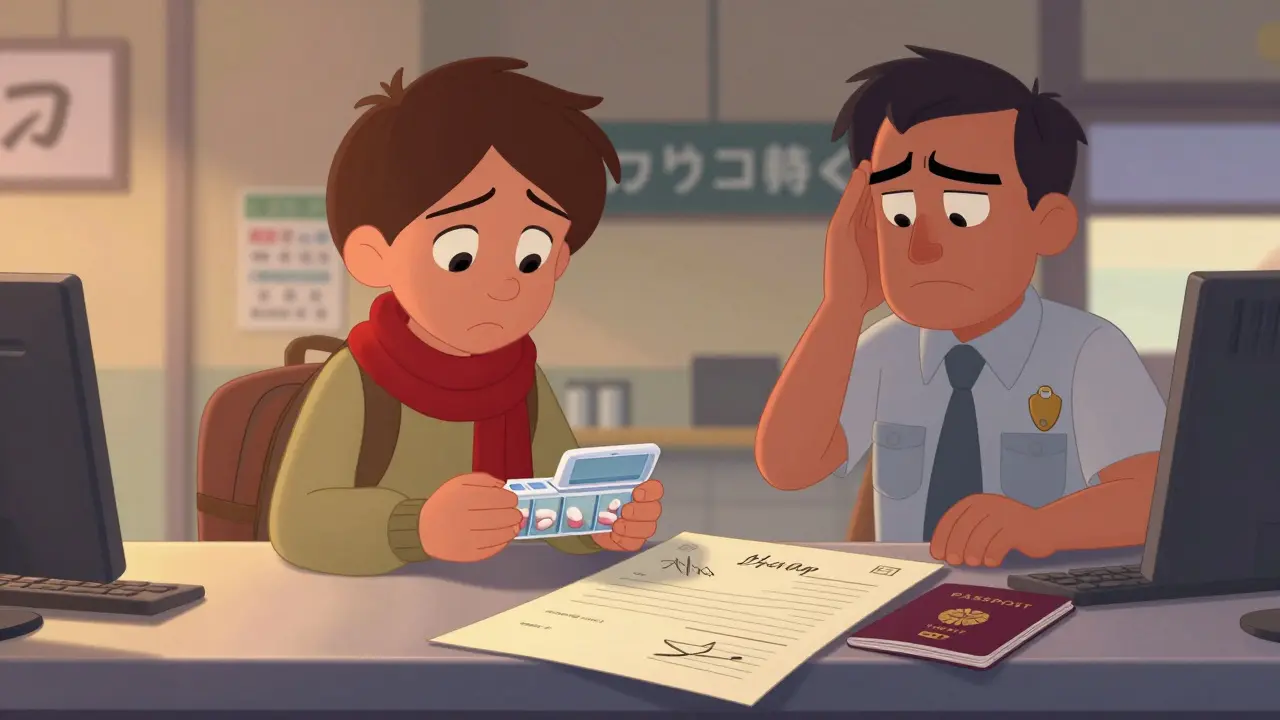
Imagine this: you’re at customs in Tokyo, holding your ADHD pills in a pill organizer. The officer asks for your prescription. You hand over a printout from your pharmacy. They shake their head. Your meds are confiscated. You’re detained for 12 days while they verify your story. This isn’t a horror movie. It happened to 127 travelers in 2022, according to the International Narcotics Control Board. And it’s not rare. Most of them had the right meds - just not the right doctor’s letter.
Why a doctor’s letter isn’t optional - it’s your passport
If you take opioids, stimulants, benzodiazepines, or any other drug listed under international drug treaties, you’re not just carrying medicine. You’re carrying a controlled substance. And every country has its own rules about who can bring them in - and how.The 1961 Single Convention on Narcotic Drugs, the 1971 Psychotropic Substances Convention, and the 1988 Anti-Trafficking Convention form the backbone of global drug control. These treaties allow countries to ban or restrict certain drugs - but they also require them to make exceptions for travelers with legitimate medical needs. That’s where your doctor’s letter comes in. It’s not a suggestion. It’s your legal shield.
Without it, even a 30-day supply of Adderall, oxycodone, or Xanax can look like drug smuggling. In Singapore, Malaysia, and the UAE, you could face jail time. In Japan, Adderall is banned outright - no letter changes that. The CDC says 68% of medication-related travel incidents happen because travelers didn’t bring the right paperwork. Not the wrong brand. Not too much. Just no letter at all.
What your doctor’s letter must include
A generic note from your doctor won’t cut it. Customs officers aren’t doctors. They need hard facts, in clear language. Here’s what a valid letter must have, based on CDC, FDA, and DEA guidelines updated in 2023:- Your full name and date of birth (exactly as it appears on your passport)
- The prescribing doctor’s full name, license number, title, clinic address, and direct phone number
- The generic name of each medication (not the brand - brand names vary by country)
- The exact dosage, how often you take it, and the route (oral, patch, injection)
- The medical condition being treated (e.g., “Attention Deficit Hyperactivity Disorder,” “Chronic Neuropathic Pain”)
- A clear statement: “This patient requires this medication for legitimate medical treatment while traveling internationally”
- The total quantity being carried (must match what’s in your luggage)
- The date the letter was written
- The doctor’s handwritten signature and official letterhead
Many doctors skip the generic name. Big mistake. Adderall is amphetamine. Xanax is alprazolam. In Germany, you can buy alprazolam over the counter - but only if you can prove you’re not smuggling it. Your letter must say “alprazolam,” not “Xanax.”
Quantity limits: How much is too much?
There’s no universal rule. But most countries follow the 90-day personal use guideline from the FDA and U.S. Customs and Border Protection. That’s your safe zone.But here’s where it gets messy:
- In the EU, 90 days is generally accepted with proper documentation
- In Singapore and Malaysia, anything over 30 days can trigger criminal charges - even with a letter
- In Japan, stimulants like methylphenidate (Ritalin) and amphetamine (Adderall) are banned, period
- In the UAE, you need pre-approval from the Ministry of Health - even with a letter
- In Canada, you can carry up to 100 dosage units without a prescription, if you have a doctor’s letter
- In the U.S., you need both the letter and the original prescription bottle
Don’t assume your home country’s rules apply abroad. A 120-day supply that’s fine in the UK could get you arrested in Bangkok. Always check the destination country’s official health or customs website. The U.S. State Department reports that 58% of travelers rely on outdated or wrong info from blogs or forums. Don’t be one of them.
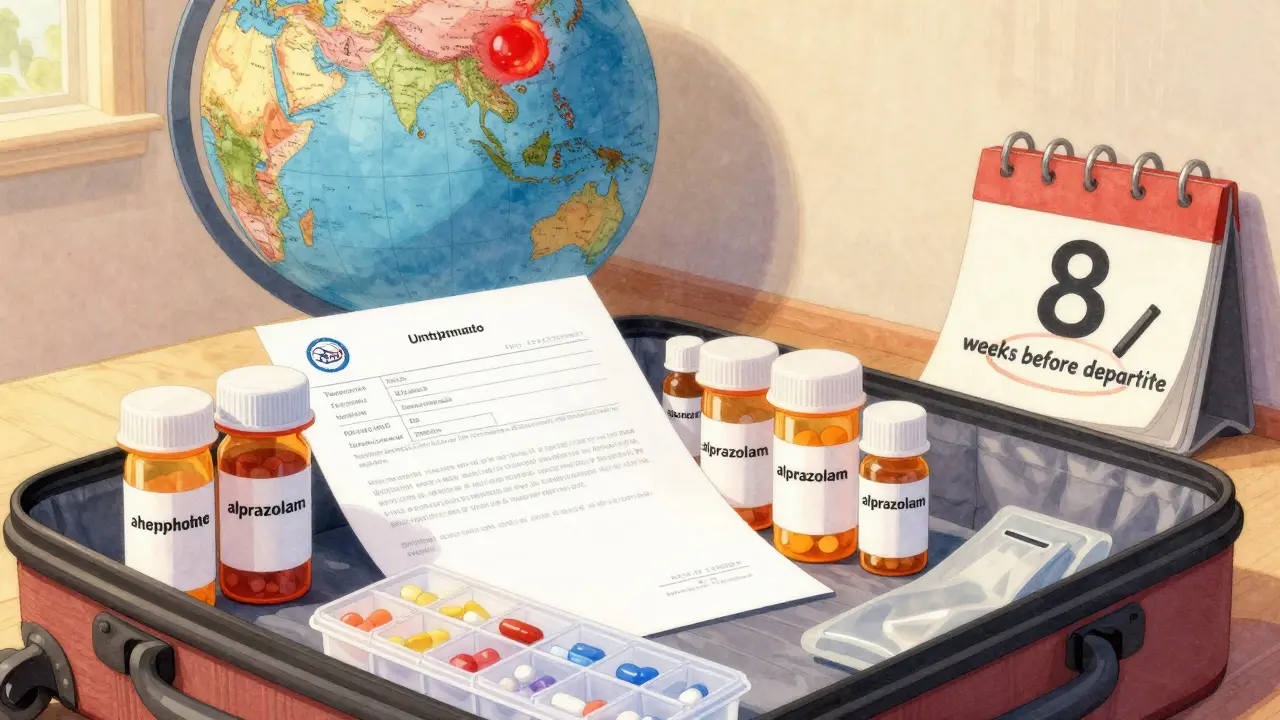
How to carry your meds: Containers, labels, and copies
Your meds must be in their original, labeled containers. That means the bottle from the pharmacy with your name, the drug name, the prescriber’s name, and the pharmacy’s stamp.You can transfer pills to a pill organizer - but only if you carry the original bottles AND the doctor’s letter. If you’re carrying multiple controlled substances, each needs its own letter. One letter for Adderall. Another for oxycodone. No shortcuts.
Keep the letter and prescriptions in your carry-on. Never pack them in checked luggage. If your bag gets lost, you’re stuck. Also, carry a printed copy of the letter in English. If your destination language isn’t English, get a certified translation. The FDA requires it. Border agents won’t guess what “hydrocodone” means in Arabic or Japanese.
Country-specific traps you can’t afford to miss
Some countries are easy. Others are landmines.Japan: Adderall, Ritalin, Concerta - all banned. No exceptions. Even with a letter. If you take ADHD meds, you’ll need to switch to a non-controlled alternative before you fly. Talk to your doctor at least 3 months ahead.
United Arab Emirates: You need advance approval from the Ministry of Health. Apply at least 4 weeks before travel. The process takes 7-10 days. No approval? No meds. Period.
Singapore & Malaysia: 30-day limit. Any more, and you risk jail. Even if you have a letter. They don’t care if you’re diabetic or in pain. Quantity is the law.
Thailand: Benzodiazepines like diazepam are controlled. You need a letter and the original bottle. No pill organizers. No copies.
European Union: Most countries accept letters from other EU nations. But if you’re flying from the UK to France with a UK prescription, bring the original bottle and the letter. Don’t assume automatic recognition.
What to do before you book your flight
This isn’t something you do the night before you leave. It’s a process.- Make a list of every medication you take - generic names, dosages, frequency.
- Call your doctor at least 8 weeks before departure. Ask them to write the letter using the CDC template. Don’t assume they know the rules - most don’t. A 2022 survey found 72% of physicians don’t provide full chemical names.
- Check the official government website of every country you’ll visit - not just your destination. Include layovers. A stop in Dubai counts.
- Contact the embassy or consulate of each country. Email them your medication list and ask: “Is this allowed? Do I need pre-approval?” Get their reply in writing.
- Print two copies of the letter. Keep one in your carry-on. Leave one with a trusted person at home.
- Carry the original prescription bottles. No exceptions.
Pro tip: If you take ADHD medication, you’re in the hardest group. 89% of countries require special documentation for stimulants. Start early. Talk to a travel medicine specialist. Many universities and clinics offer pre-travel consultations.

What happens if you get caught without a letter?
The consequences aren’t just “your meds are taken.” They’re life-altering.You could be detained for days - or weeks. The INCB reports average detention times of 14.3 days for travelers without proper documentation. You’ll be questioned. Your phone may be searched. You might miss your flight. Your job might fire you for being gone too long. Insurance won’t cover legal fees.
Dr. Ghada Wible of UNODC says: “The absence of appropriate medical documentation remains the single largest cause of traveler detention related to medication possession.”
You didn’t mean to break the law. But in the eyes of customs, you’re a suspect. A doctor’s letter turns you from a suspect into a patient.
What’s changing in 2026?
The system is slowly getting better. The INCB is piloting a digital medical certificate in 12 European countries. It’s meant to replace paper letters with a secure, verifiable online record linked to your passport. The EU is funding a €2.4 million project to make this system standard by late 2024.But don’t wait for it. It’s not available everywhere yet. And even when it is, you’ll still need a doctor’s letter to get it. The paper version is still the universal fallback.
Also, telemedicine prescriptions are now accepted by the FDA and CBP - as long as they’re printed and signed. So if you got your prescription from a virtual visit, bring the PDF with the doctor’s digital signature and your appointment confirmation.
Final checklist before you fly
- [ ] Doctor’s letter printed on official letterhead, signed and dated- [ ] Letter includes generic names, dosages, and medical condition
- [ ] Medications in original bottles with pharmacy labels
- [ ] No more than 90-day supply (30 days for Singapore/Malaysia)
- [ ] Certified translation if destination language isn’t English
- [ ] Copies of letter and prescriptions in carry-on and with someone at home
- [ ] Confirmed with destination country embassy or official website
- [ ] ADHD meds? Double-checked if banned in destination (Japan, UAE, etc.)
- [ ] Contacted doctor at least 8 weeks ahead
Traveling with controlled substances isn’t about breaking rules. It’s about following them - precisely. One missing detail can turn your vacation into a nightmare. Your doctor’s letter isn’t paperwork. It’s your freedom to move.