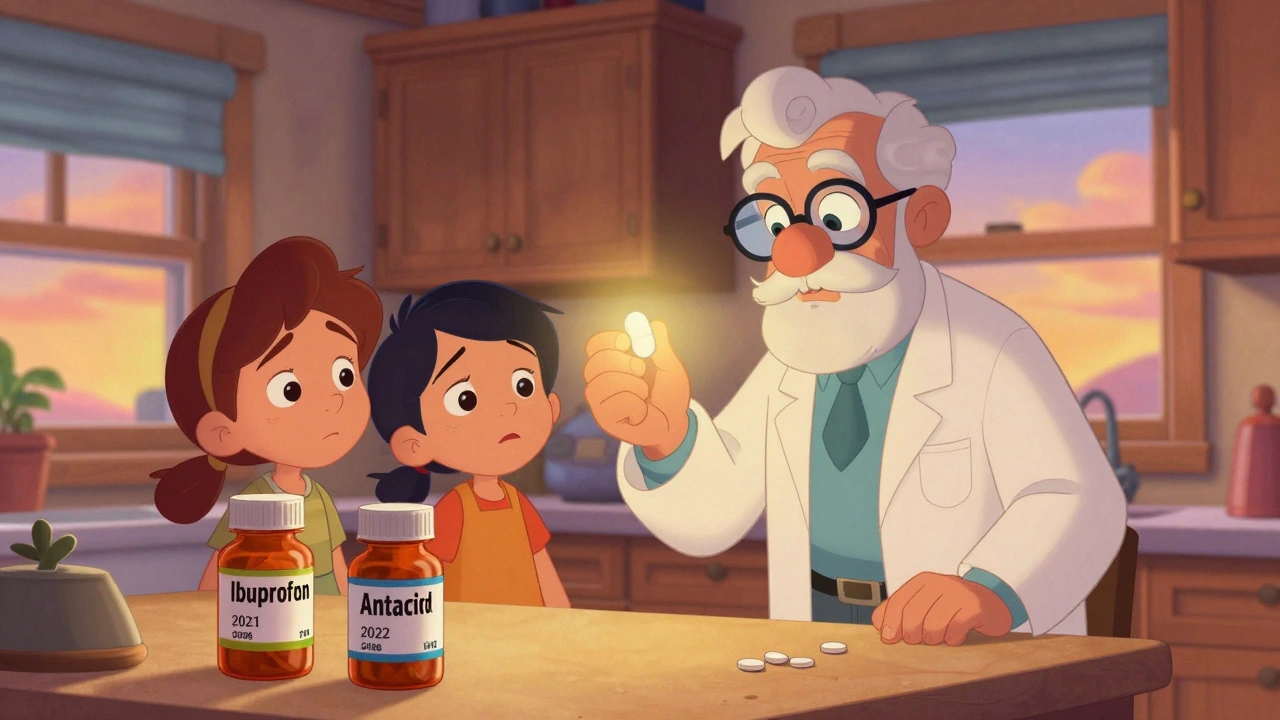
Most people throw away pills after the expiration date. But what if that’s the only medicine you have when your life depends on it?
Expiration dates don’t mean a drug turns poisonous on that day. They’re a manufacturer’s guarantee-under perfect storage-that the medicine will still work at full strength. The truth? Most medications stay safe and usable for years after that date. The U.S. Food and Drug Administration’s Shelf Life Extension Program, started in 1985, tested over 100 drugs from military stockpiles. Nearly 90% still had at least 90% of their original potency-sometimes 15 years later.
So why do we treat expired pills like time bombs? Because companies set conservative dates to avoid lawsuits. If a drug fails and someone gets hurt, the manufacturer doesn’t want to be blamed for selling something past its labeled date-even if the real cause was poor storage or a rare reaction. That’s why you see expiration dates that feel arbitrary. A bottle of ibuprofen might say "expires 2024," but if it’s been kept in a cool, dry drawer, it’s probably still working fine in 2027.
Not All Expired Medications Are the Same
Some drugs lose power slowly. Others become dangerous. The difference isn’t just about time-it’s about chemistry and storage.
Tablets and capsules? They’re the most stable. A 2021 study from the University of Southern California found that when kept at room temperature (25°C, 60% humidity), most solid drugs retain 95% of their potency five to ten years past expiration. That includes common painkillers like acetaminophen and ibuprofen. You can safely use them in an emergency-even if they’re a few years old.
Liquids? Not so much. Eye drops, antibiotics in syrup form, or insulin? These degrade faster. Insulin loses about 20% of its strength every month at room temperature. If you’re diabetic and your insulin expired six months ago, you’re not just getting weaker treatment-you’re risking diabetic ketoacidosis. The FDA warned in late 2023 that expired insulin glargine can drop 35% in potency after just six months.
Then there are the dangerous ones. Tetracycline antibiotics can break down into toxic compounds after expiration. Epinephrine auto-injectors (like EpiPens) lose about 25% of their potency each year. That means a 2-year-old EpiPen might only have half the dose needed to stop anaphylaxis. Nitroglycerin tablets, used for heart attacks, are light-sensitive. If they’ve been in a sunny bathroom, they can lose effectiveness in weeks.
When Is It Okay to Use an Expired Drug?
There’s no universal rule. But emergency medical teams have developed clear guidelines.
The Denver Metro EMS Medical Directors, who lead one of the most advanced protocols in the U.S., say expired drugs should only be used when:
- You’ve exhausted all non-expired options,
- The condition is life-threatening,
- There’s no reasonable substitute,
- And the drug has been stored properly.
They also require visual inspection: no discoloration, no cloudiness, no particles. If a liquid looks off, don’t use it. If a tablet is cracked or crumbly, toss it.
Here’s how experts rank risk:
- Never use expired: Insulin, epinephrine, nitroglycerin, liquid antibiotics.
- Use only in dire emergencies: Seizure meds (like phenytoin), blood thinners (like warfarin), thyroid meds (like levothyroxine). Even a 10-20% drop in potency can cause serious harm.
- Generally safe: Acetaminophen, ibuprofen, diphenhydramine (Benadryl), antacids, allergy pills. These are low-risk if you’re out of fresh ones.
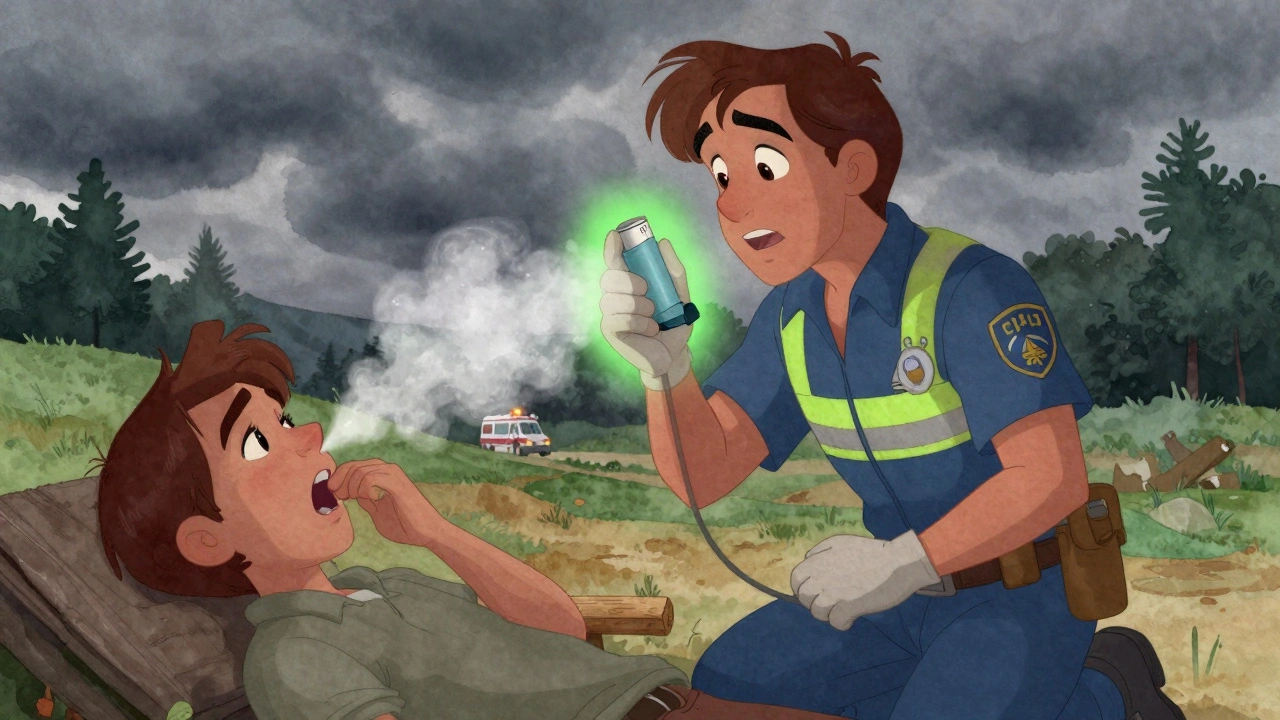
One real-world example: During the 2022 albuterol shortage, Denver Health extended expiration dates by 90 days for over 1,200 inhalers. Zero adverse events were reported. But that was under strict protocols-trained staff, temperature logs, and documentation.
What Happens When You Use a Weak Drug?
Most of the time, nothing dramatic happens. You just don’t get better.
Take antibiotics. If a 6-month-old amoxicillin only has 70% potency, it might not kill all the bacteria. The survivors? They adapt. That’s how antibiotic resistance starts. A 2023 case report in Prehospital Emergency Care described a child with severe asthma who didn’t respond to expired albuterol. The patient needed intubation. The drug didn’t kill them-it failed to help.
Or consider warfarin. A 10% drop in potency can mean the difference between a blood clot and a stroke. People on these drugs need precise dosing. Expired warfarin isn’t risky because it’s toxic-it’s risky because it’s unpredictable.
On the flip side, a paramedic in Ohio used a 3-month-old EpiPen to treat anaphylaxis in 2023. The patient improved in two minutes. They still went to the ER, as recommended. But the expired drug bought them time.
According to a 2022 survey by the American Ambulance Association, 43% of EMS providers have used expired meds during shortages. Of those, 89% said outcomes were positive-when used for immediate life threats.
Why Are We Even Talking About This?
Because drug shortages aren’t rare anymore. In 2022, the FDA tracked 312 drug shortages-a 27% jump from the year before. Nearly 70% of those were injectables: things hospitals rely on for emergencies. Insulin. Epinephrine. Sedatives. Antibiotics.
Costs are huge. The International Society for Pharmacoeconomics and Outcomes Research estimated drug shortages cost the U.S. $234 million in 2022 alone. And it’s getting worse. Since 2019, emergency medication shortages have increased 45%.
Hospitals and EMS agencies are adapting. In 2019, only 8% had formal protocols for using expired meds. By 2023, that number jumped to 43%. The FDA even released draft guidance in April 2023 proposing standardized extension rules for 12 critical drugs.
But here’s the catch: most of these protocols are for systems-not individuals. If you’re a regular person with a 2-year-old EpiPen and no replacement, you’re on your own.
What Should You Do at Home?
Don’t stockpile expired drugs. But don’t panic if you find one.
For OTC painkillers, antihistamines, or antacids? If they’re a year or two past expiration and stored in a cool, dry place, they’re likely fine. You might feel less relief, but you won’t get hurt.
For anything prescription or life-saving? Don’t gamble. If you rely on insulin, epinephrine, seizure meds, or blood thinners, replace them before they expire. Talk to your pharmacist. Ask if you can get a small extra supply. Many pharmacies will give you a few extra pills if you explain you’re preparing for emergencies.
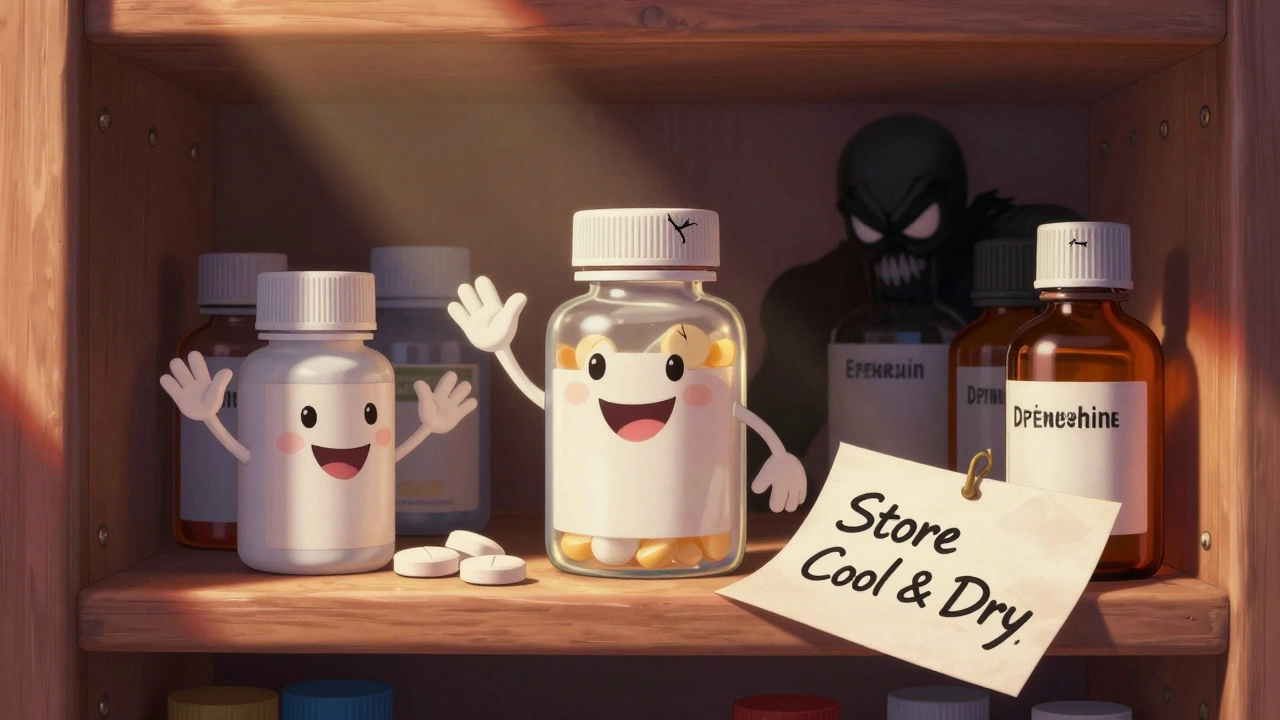
Store meds properly. Keep them away from heat, moisture, and sunlight. A bedroom drawer is better than a bathroom cabinet. Use a small thermometer to check storage temps if you’re unsure.
And if you ever have to use an expired drug in an emergency? Document it. Write down the drug name, expiration date, storage conditions, and what happened. That info could save someone else’s life later.
The Bottom Line
Expired medications aren’t magic. They’re not always safe. But they’re not always useless.
In a true emergency-when no other option exists-some expired drugs can keep you alive long enough to get help. That’s not reckless. It’s practical.
The real danger isn’t using a slightly weak ibuprofen. It’s assuming every expired drug is dangerous, and then not having anything at all when you need it.
Knowledge beats fear. Know which drugs are risky. Know how to check them. Know when to use them-and when to never risk it.
And if you’re worried about running out? Talk to your doctor. Ask about backup plans. Stockpile wisely. Because in emergencies, the best medicine isn’t always the newest one-it’s the one you have.
Comments
Ibrahim Yakubu
I’ve seen this in Lagos-people using expired antibiotics because pharmacies charge triple for new ones. My cousin took a 3-year-old amoxicillin for pneumonia. She didn’t die. She got better. The doctor didn’t even ask about expiration. Just wrote a new script. Real talk: if you’re poor, you don’t get to follow FDA brochures.
Expiration dates are corporate smoke screens. They don’t care if you live or die-they care if you sue them for giving you a $2 pill instead of a $20 one.
And don’t get me started on insulin. In Nigeria, people reuse syringes because they can’t afford new ones. Expired insulin? That’s the *luxury* option.
On December 5, 2025 AT 21:04
Brooke Evers
This post made me cry a little. I’ve been a nurse for 18 years, and I’ve seen so many people choose between food and meds. I once had a diabetic grandmother in rural Ohio who was using insulin that expired in 2019. She said, ‘I’m not gonna die before my grandkids graduate.’
She was right to use it. She didn’t get ketoacidosis. She lived another five years. The science here is solid-solid drugs stay stable. It’s the liquids and injectables that are the real danger.
But here’s the thing: we don’t talk about this enough because it makes people uncomfortable. We’d rather blame the patient than fix the system that makes them choose between rent and their life.
Thank you for saying this out loud. It’s not reckless. It’s survival. And we need more of these conversations, not fewer.
On December 5, 2025 AT 23:21
Chris Park
Let me guess-the FDA is in cahoots with Big Pharma. Of course they say drugs last 15 years. Why? So they can keep you buying new bottles every 12 months. The real reason expiration dates exist? Profit. Not safety.
And let’s not forget: the Shelf Life Extension Program was funded by the *military*. Not the public. They’re not testing your ibuprofen-they’re testing rocket fuel-grade pharmaceuticals stored in climate-controlled bunkers.
Meanwhile, your bathroom cabinet is a sauna. Humidity. Heat. Light. All of which destroy drugs. So no, your 2022 Advil in the medicine cabinet isn’t ‘probably fine.’ It’s a placebo with a side of delusion.
Also, ‘expired insulin loses 20% per month’? That’s not a study. That’s a manufacturer’s worst-case scenario. They’re not giving you data-they’re giving you fear. And fear sells.
On December 7, 2025 AT 05:53
Saketh Sai Rachapudi
USA think they know everything. In India we use expired medicine since 1990s. No one die. Only USA people get scared of paper date. My uncle take 8 year old paracetamol for headache. He still alive. You people need to stop listen to FDA. FDA is for rich people. Poor people use what they have. Simple.
On December 8, 2025 AT 15:38
joanne humphreys
I appreciate how balanced this is. It’s easy to panic about expired meds, but the reality is way more nuanced. I’ve kept my ibuprofen in a drawer since 2020. It still works. I’ve also had insulin expire on me during a supply chain issue-and I replaced it immediately because I knew the risk.
What’s missing from this conversation is the emotional toll. People aren’t just making cold calculations-they’re scared, exhausted, and often alone. The fact that we even have to debate whether someone should use a 3-year-old painkiller says something deeply broken about our healthcare system.
Let’s not villainize people who use expired meds. Let’s fix the system that forces them to.
On December 9, 2025 AT 19:30
Nigel ntini
Brilliant breakdown. I’m a paramedic in Glasgow, and we’ve had to use expired epinephrine twice this year due to NHS stockouts. We documented everything. Both patients survived. One was a 7-year-old with a bee sting.
The key is context. A 12-month-old EpiPen with 75% potency is better than nothing. A 5-year-old one? Not even close.
But here’s what nobody says: if your country doesn’t guarantee access to life-saving meds, then the burden falls on the individual. And that’s not fair. We need policy change, not just personal risk assessments.
Still-this post is a godsend. People need to know the difference between ‘risky’ and ‘deadly.’
On December 9, 2025 AT 21:06
Priya Ranjan
How can anyone be so irresponsible? You’re encouraging people to gamble with their lives. Expired drugs are not ‘sometimes safe.’ They are *unregulated*, *untested*, and *unpredictable*. What if your child takes expired seizure medication and has a status epilepticus? Who do you blame then? The FDA? The manufacturer? Or yourself?
And don’t pretend this is about ‘poverty.’ If you can’t afford medicine, go to a clinic. Ask for samples. Call patient assistance programs. There are options. Using expired drugs is not ‘practical.’ It’s negligent.
Also, the ‘Denver Health’ example? They’re a *hospital system* with protocols, staff training, and liability insurance. You’re not them. Stop pretending you are.
On December 11, 2025 AT 04:36
Gwyneth Agnes
Expired meds aren't dangerous. But they're not reliable either. Use them if you have to. But don't pretend it's safe.
On December 11, 2025 AT 14:23
Ashish Vazirani
Let me tell you about my cousin in Mumbai-he used expired warfarin because his pharmacy ran out. He had a stroke. His wife divorced him. He lost his job. Now he’s on disability. All because he thought ‘it’s probably fine.’
And now you want to normalize this? No. No. NO.
What about the people who *do* die? What about the families who bury their loved ones because someone thought a 3-year-old pill would ‘do the trick’?
This isn’t survival. This is a tragedy waiting to be viral on TikTok. ‘Look at me, I used expired insulin and lived!’ No. You got lucky. That’s not a strategy. It’s a lottery ticket you shouldn’t buy.
On December 12, 2025 AT 17:11
Mansi Bansal
One must approach this matter with the utmost gravity, as the pharmacological integrity of pharmaceutical agents is not a matter of casual discretion but a solemn covenant between science, ethics, and human life.
The assertion that solid dosage forms retain 95% potency beyond expiration is statistically misleading, as it derives from controlled, laboratory-grade storage environments-conditions utterly unrepresentative of the average domestic domicile, wherein ambient humidity, thermal fluctuations, and photodegradation conspire to catalyze molecular decomposition.
Furthermore, to suggest that laypersons may engage in self-diagnosis and self-administration of life-sustaining pharmaceuticals based on anecdotal experience is not merely irresponsible-it is an affront to the very foundations of evidence-based medicine.
One does not pilot a jetliner using a 15-year-old flight manual. One does not perform neurosurgery with a rusted scalpel. And one does not administer insulin with a vial that has languished in a sunlit bathroom for three years.
Prudence, not pragmatism, must govern our actions in matters of life and death.
On December 13, 2025 AT 15:37
Kay Jolie
Okay but let’s be real-this is peak biohacking meets capitalism collapse. We’re living in a world where your EpiPen costs $700 and your rent is $3K. Of course you’re gonna use the one that expired 18 months ago.
It’s not ‘dangerous’-it’s a symptom. The real drug shortage isn’t the pills-it’s the trust in institutions that were supposed to protect you.
And let’s not forget: the FDA’s ‘Shelf Life Extension Program’? That’s the same agency that approved OxyContin. So yeah, I’ll take my science from a guy who lived through the opioid crisis, not a corporate compliance officer.
Knowledge beats fear? Hell yes. But systemic change beats individual bravery every time.
On December 14, 2025 AT 17:00
pallavi khushwani
I’ve been thinking about this a lot. We treat expiration dates like they’re divine law, but they’re just… a suggestion. Like a ‘best by’ on yogurt. Except with medicine, the stakes are higher.
But here’s what I wonder: why do we have so little trust in our own bodies? Why do we assume a pill that’s 2 years old must be useless? Maybe we’re just afraid of uncertainty.
I keep my ibuprofen in a cool drawer. I check for cracks. I smell it. If it looks and smells normal, I use it. I don’t feel guilty. I feel… thoughtful.
Maybe the real question isn’t ‘is it safe?’ but ‘how much do I trust myself to make this call?’
On December 14, 2025 AT 20:57
Dan Cole
There’s a profound philosophical irony here: we live in an age of hyper-optimization-quantified self, biohacking, nootropics, cryotherapy-yet we are terrified of using a pill that’s six months past its printed date.
Why? Because we’ve outsourced our agency to corporations and regulators. We don’t trust our senses. We don’t trust our intuition. We don’t trust our own judgment.
Expiry dates are a form of social control. They make you dependent. They make you compliant. They make you buy again.
And yet, the science says: most pills don’t rot. They just… fade. Like memories. Like hope.
So when you use an expired drug, you’re not breaking a rule. You’re reclaiming autonomy. And that’s the most dangerous thing of all.
On December 15, 2025 AT 09:09
Billy Schimmel
So let me get this straight: you’re saying it’s okay to use a 5-year-old EpiPen if you’re out of options?
…Cool. I’ll just keep mine in my glovebox next to the expired fries.
Yeah, I’m being sarcastic. But only because this is the kind of logic that gets people killed. You don’t ‘gamble’ with your epinephrine. You don’t ‘hope’ your insulin still works.
And if you’re that desperate? Call your doctor. Call a pharmacy. Call 211. There are resources. You’re not alone.
But no, let’s just take our chances with a dusty bottle. That’s the American way.
On December 15, 2025 AT 18:55
Shayne Smith
I had a friend who used expired Benadryl during an allergic reaction and it worked fine. She still went to the ER, just to be safe. But she didn’t die. And she didn’t feel bad about it.
Meanwhile, my mom threw out her 2-year-old asthma inhaler because the label said ‘expired’-even though it was stored perfectly. She bought a new one for $150.
So… we’re punishing people for being careful? Or rewarding them for being wasteful?
On December 17, 2025 AT 04:23
Max Manoles
One thing this post doesn’t mention: storage matters more than time. I keep all my meds in a sealed container with silica gel packs in my bedroom closet. My 2021 ibuprofen? Still solid. My 2022 antihistamine? Fine.
But if you leave your insulin in a hot car? Yeah, it’s garbage. That’s not the expiration date’s fault-that’s your storage.
And here’s the kicker: most people don’t even know how to store meds properly. We treat them like snacks. We leave them in bathrooms. We throw them in purses.
The problem isn’t the date. It’s the culture of neglect.
On December 17, 2025 AT 17:25
Katie O'Connell
While the empirical data presented in the referenced FDA study is indeed compelling, one must remain cognizant of the epistemological limitations inherent in extrapolating controlled, institutional storage conditions to the heterogeneous domestic environments of the general populace.
Furthermore, the ethical calculus of utilitarian risk minimization must be weighed against the deontological imperative to uphold regulatory standards designed to protect public health.
One cannot, in good conscience, endorse the nonstandard administration of pharmaceuticals absent standardized protocols, quality assurance, or pharmacovigilance infrastructure.
Thus, while the sentiment is understandable, the recommendation remains, in principle, untenable.
On December 17, 2025 AT 21:30
Clare Fox
i think the real issue is we’re taught to fear expiration dates like they’re magic death clocks. but if you’ve ever had a bottle of aspirin from 2018 that still looks and smells normal? it’s probably fine.
but i get why people panic. we’ve been sold this idea that medicine is this perfect, fragile thing that just… stops working. like a phone battery.
but it’s not. it’s chemistry. and chemistry doesn’t care about dates.
just… don’t use cloudy insulin. that’s not hard.
On December 18, 2025 AT 12:40
Akash Takyar
As a pharmacist in Delhi, I can confirm: over 60% of our patients use expired medications due to financial constraints. We do not judge. We advise. We provide alternatives. We help them apply for aid.
But I also tell them: if it’s a solid tablet-clear, intact, no odor-it’s likely still potent. If it’s a liquid, or if it smells odd, or if it’s changed color-do not use.
Knowledge is power. Fear is a luxury. We must educate, not shame.
And yes, I have personally witnessed patients survive anaphylaxis using expired EpiPens. They went to the hospital afterward. They lived. That’s not recklessness. That’s wisdom.
On December 18, 2025 AT 13:44
Arjun Deva
Of course the FDA says it’s safe. They’re paid by Big Pharma. The real reason drugs expire? So you buy new ones every year. The military study? They had perfect storage. You don’t. You live in a humid apartment with a window AC that runs 24/7.
And why do you think insulin prices keep rising? Because they know you’ll pay $300 for a new vial instead of using the one that’s 2 years old.
Don’t be fooled. This isn’t science. It’s a scam. And you’re the mark.
Also-did you know the FDA banned 14,000 drugs last year for being ‘unsafe’? But expired ones are fine? Yeah. Right.
On December 18, 2025 AT 18:40
Brooke Evers
I read your comment, and I just want to say: you’re not wrong. But I also think you’re missing the point. This isn’t about whether the FDA is lying. It’s about whether people should be forced to choose between their health and their rent.
When a single mom has to decide between her son’s EpiPen and her own insulin, that’s not a medical question. That’s a moral crisis.
And if using an expired drug is the only way she keeps both of them alive for one more day? Then we need to fix the system-not shame her for surviving.
On December 19, 2025 AT 12:52
Max Manoles
Exactly. The real villain isn’t the person using the expired pill. It’s the system that makes them feel like they have no choice.
I work in a free clinic. We had a woman come in last month with a 3-year-old albuterol inhaler. She said, ‘I used it last week. It worked.’ We gave her a new one. But we also gave her a list of programs that help with medication costs.
She cried. Not because she was scared of the pill. Because no one had ever asked her if she needed help before.
On December 20, 2025 AT 09:40