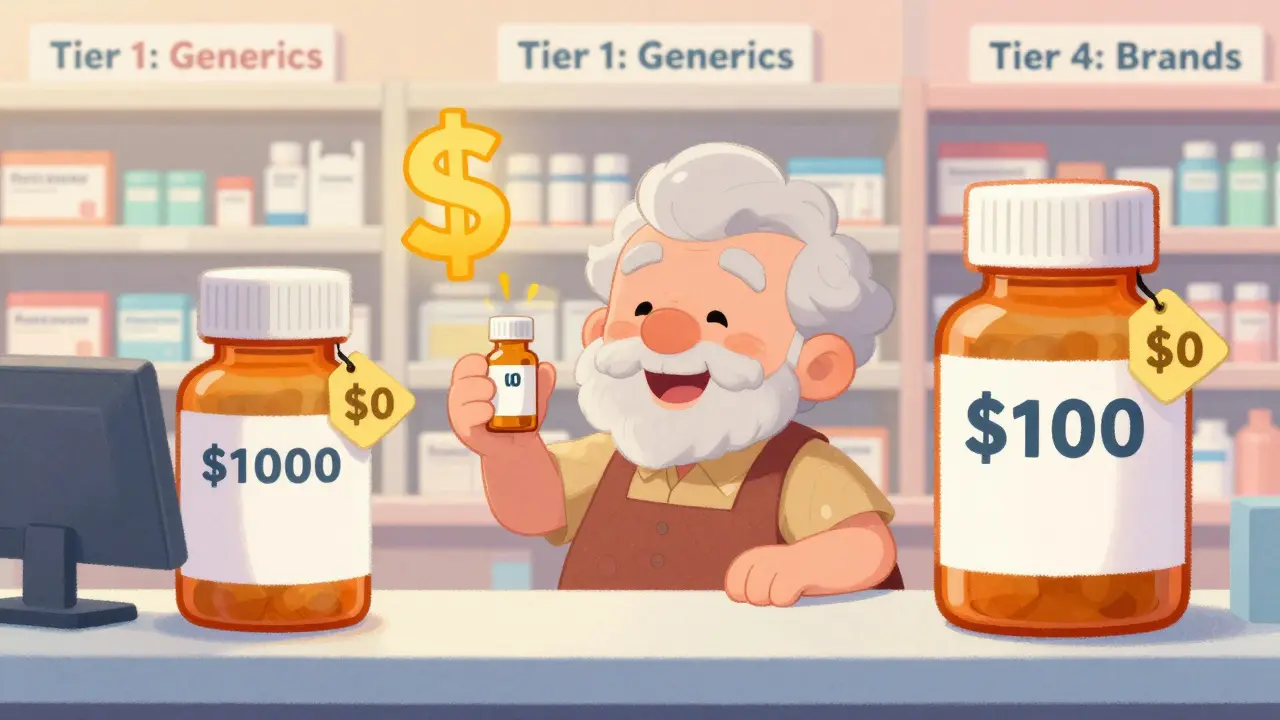
When you pick up a prescription, the price you pay at the pharmacy isn’t the full cost of the drug. It’s just your share - the copay. And whether you’re paying for a generic or a brand-name drug, that number can be wildly different. In 2024, the gap between generic and brand copays isn’t just noticeable - it’s a major factor in whether people can afford their meds.
What’s the real cost difference?
For most people on Medicare Part D or commercial insurance, generic drugs cost far less than brand-name versions. In 2024, the average copay for a preferred generic was $4.50. Some plans even had $0 copays. That’s it. For a 30-day supply of something like lisinopril or metformin, you might walk out paying nothing or just a few dollars. Now compare that to brand-name drugs. The median copay for a preferred brand was $47. For non-preferred brands - the ones your plan doesn’t strongly recommend - it jumped to $100. That’s more than 20 times the cost of a generic. And if you’re on a high-deductible plan, you might not even be paying a fixed copay. Instead, you’re paying 30% to 50% of the drug’s total price. That can mean hundreds of dollars per prescription.Why does this gap exist?
It’s not random. The system was built this way. Back in 2006, when Medicare Part D launched, insurers and the government wanted to encourage people to choose cheaper, equally effective generic drugs. So they created a tiered formulary: Tier 1 for generics, Tier 2 for non-preferred generics, Tier 3 for preferred brands, Tier 4 for non-preferred brands. Some plans even added Tier 5 for specialty drugs that cost over $1,000 a month. The goal was simple: lower out-of-pocket costs for generics to push people toward them. And it worked. In 2023, 92.7% of all prescriptions filled were generics. But those generics only made up 17% of total drug spending. Meanwhile, brand-name drugs - just 7.3% of prescriptions - accounted for 83% of the money spent.Medicare Advantage vs. Standalone Drug Plans
Not all plans work the same. If you’re on a Medicare Advantage Prescription Drug (MA-PD) plan, you’re more likely to have fixed copays. That means you know exactly what you’ll pay each time. For preferred brands, 97% of MA-PD plans use copays, with a median of $47. For non-preferred brands, it’s $100. But if you’re on a standalone Prescription Drug Plan (PDP), you’re more likely to pay coinsurance - a percentage of the drug’s price. For preferred brands, the median is 22%. For non-preferred, it’s 47%. That might sound okay until you realize that if your brand-name drug costs $500, 47% of that is $235. Suddenly, your “median” cost isn’t so median anymore.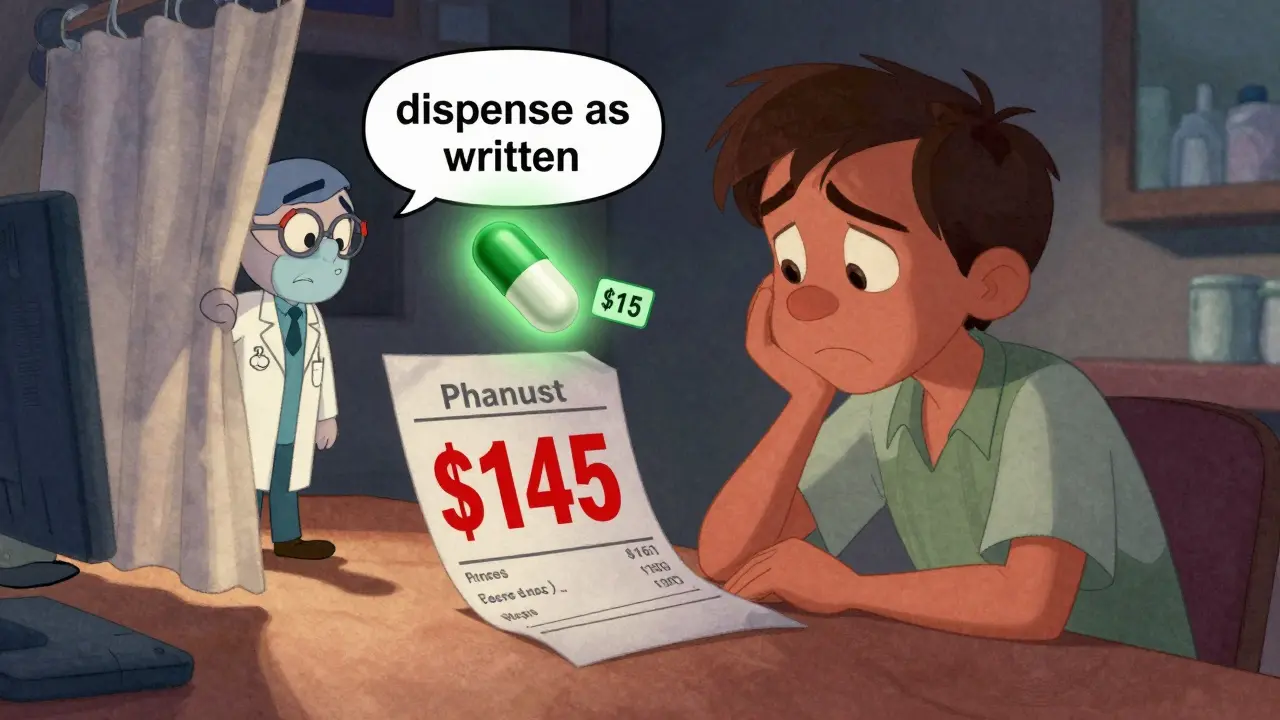
The “Member Pay the Difference” trap
Some commercial plans - especially bronze-level plans - have a sneaky rule called “Member Pay the Difference.” Here’s how it works: if your doctor prescribes a brand-name drug but a generic is available and approved by your plan, you don’t just pay your normal copay. You pay your copay plus the full price difference between the brand and the generic. Say your brand-name Lipitor costs $120, and the generic atorvastatin costs $15. Your plan’s copay for the brand is $40. But under “Member Pay the Difference,” you pay $40 + ($120 - $15) = $145. That’s not a typo. That’s $145 for a drug that has a $15 generic version. People often don’t realize this rule exists until they get their bill. Reddit users and Medicare forums are full of complaints like: “My doctor wrote ‘dispense as written,’ but my plan still charged me $42 extra because I didn’t pick the generic.”What about the Inflation Reduction Act?
The Inflation Reduction Act of 2022 changed the game. In 2023, insulin became capped at $35 a month - no matter if it’s generic or brand. That rule stuck in 2024. In 2025, the annual out-of-pocket cap for Medicare Part D drops to $2,000. That’s huge. Before, some people were paying $5,000 or more a year just for drugs. But here’s the catch: that $2,000 cap applies to your total spending, not per drug. So if you’re taking a $1,000-a-month brand-name drug, you’ll hit that cap fast. After that, you pay only 5% coinsurance or a small copay. For people on expensive meds, this is life-changing. For those on generics, it’s less dramatic - because they were already paying $5 or less per prescription.Who’s affected the most?
The Medicare Rights Center surveyed 1,200 beneficiaries in 2024. They found that 63% of people taking brand-name drugs struggled to afford them. Only 28% of people on generics said the same. That’s more than double the hardship. One user on MedicareInteractive.org wrote: “I pay $95 for my non-preferred brand med. The generic would be $15. But my doctor won’t switch me because of side effects.” That’s the nightmare scenario: you’re stuck with a costly drug, no alternatives, and no way out. Meanwhile, plans with $0 generic copays got 4.7 out of 5 stars in user reviews. Plans with high generic copays? Around 3.2 stars. People notice. And they vote with their feet - or their pharmacy receipts.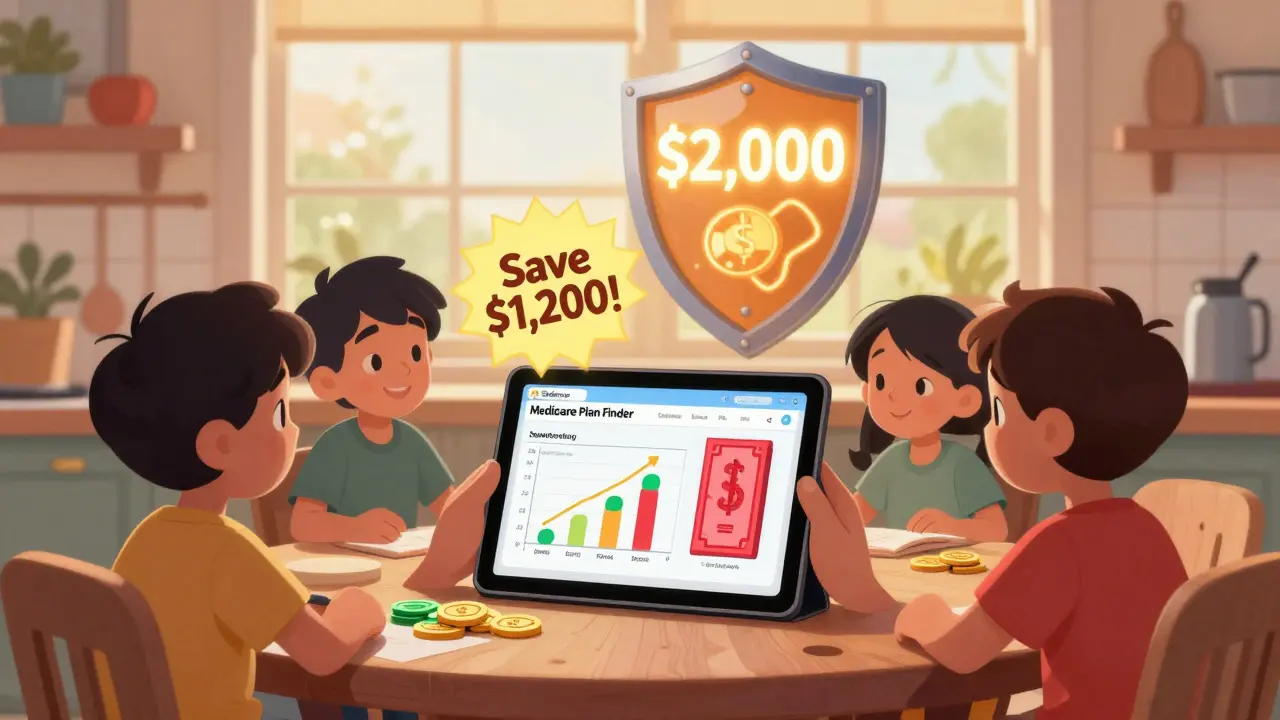
How to save money in 2024
You can’t change your plan mid-year unless you qualify for a special enrollment period. But you can still cut costs:- Check your formulary. Every plan must publish its drug list by October 15 each year. Look up your exact meds. Don’t assume your brand is covered.
- Ask about therapeutic alternatives. 72% of Medicare Part D plans have a generic or lower-tier brand that works just as well. Your doctor might not know - but your pharmacist does.
- Use the Medicare Plan Finder. It’s updated daily. Enter your drugs, zip code, and pharmacy. It shows you the real cost across all plans in your area.
- Consider cash prices. Sometimes, paying cash at Walmart or Costco is cheaper than your copay. Use GoodRx or SingleCare to compare.
- Ask for a tier exception. If your drug is on a high tier and you can’t switch, your doctor can file an appeal. Many get approved.
What’s coming in 2025?
The changes are accelerating. By 2025, 98% of Medicare Part D plans will offer $0 preferred generic copays. That’s up from 87% in 2024. Non-preferred brand copays are expected to rise to a median of $105. The $2,000 out-of-pocket cap will hit hard. For people on expensive brand drugs, it could mean a 28% drop in annual spending. For those on generics? Only about 12% savings - because they were already paying so little. But here’s the dark side: industry practices are still distorting prices. Independent pharmacists report that wholesalers tie generic drug prices to brand drug deals. So even when generics should be cheap, they’re artificially inflated to protect brand profits. That’s why sometimes, the cash price for a generic is lower than your copay.Bottom line
Generic copays are low. Brand copays are high. That’s not an accident. It’s designed that way. But the system is changing. The $2,000 cap in 2025 will help people on expensive drugs. But for most, the best move is still simple: ask if there’s a generic. Ask if there’s a cheaper alternative. And always check your plan’s formulary before you fill a prescription.If you’re paying more than $50 a month for a drug that has a generic version, you’re probably overpaying. And in 2024, you don’t have to.
What’s the average generic copay in 2024?
The average generic copay in 2024 was $4.50 for preferred generics and $7 for non-preferred generics under Medicare Part D. Many plans offered $0 copays. Commercial plans often charged 10-20% coinsurance, but the out-of-pocket cost was still far lower than brand drugs.
Why are brand name drug copays so much higher?
Brand name drugs cost more because they’re still under patent protection, and manufacturers charge premium prices. Insurance plans use higher copays to discourage use unless necessary. The goal is to steer patients toward cheaper generics that work the same way. In 2024, the median copay for non-preferred brand drugs was $100 - over 20 times the cost of a typical generic.
Does Medicare cover generics and brand drugs differently?
Yes. Medicare Part D plans use tiered formularies. Generics are usually on Tier 1 or 2 with low copays. Brand drugs are on Tier 3 or 4 with much higher copays or coinsurance. Medicare Advantage plans tend to use fixed copays, while standalone Part D plans often use coinsurance, which can lead to unpredictable costs for expensive brand drugs.
Can I save money by switching from a brand to a generic?
Absolutely. For many drugs, switching to a generic can cut your monthly cost by 80-95%. For example, if you’re paying $95 for a brand-name drug, the generic might cost $15. Even if your doctor says the brand is better, ask if there’s a therapeutic alternative on a lower tier. Most conditions have multiple generic options that work just as well.
What is the “Member Pay the Difference” rule?
It’s a policy used by some commercial insurance plans. If a generic is available and approved, but you choose the brand name, you pay your normal copay plus the full price difference between the brand and the generic. For example, if the brand costs $120 and the generic is $15, you pay your copay (say $40) plus $105 - totaling $145. This rule is rarely explained clearly to patients until they get the bill.
Will the $2,000 out-of-pocket cap in 2025 help people on generics?
Not as much. People on generics were already paying very little - often $0 to $10 per prescription. The $2,000 cap helps most those on expensive brand-name drugs, who might have been paying $5,000 or more a year. For them, the cap could reduce costs by 28%. For generic users, savings will be closer to 12% because their costs were already low.
How do I find the best drug plan for my medications?
Use the official Medicare Plan Finder tool. Enter your exact medications, dosage, pharmacy, and zip code. It shows real out-of-pocket costs across all plans in your area. Don’t rely on monthly premiums - focus on what you’ll pay for your specific drugs. You can also ask a free Medicare counselor or use a plan review service - many save people $400+ a year.