
A goiter isn't just a lump in the neck. It's a sign that something's off with your thyroid - a small, butterfly-shaped gland at the base of your throat that controls your metabolism, energy, and even your mood. When this gland swells, it can become visible or feel like a tightness when you swallow. For many, it starts as a subtle fullness. For others, it grows large enough to make breathing or swallowing hard. The good news? Most goiters are treatable. The better news? The cause often comes down to one simple thing: iodine.
What Causes a Goiter?
The thyroid needs iodine to make hormones. Without enough, it works harder - growing bigger to try to catch more iodine from the blood. This is why, in places without iodized salt, iodine deficiency causes about 90% of goiters. The World Health Organization estimates that 1.9 billion people still live in areas where this is a real risk.
In the U.S., things are different. Since the 1920s, salt has been iodized. So now, the most common causes aren’t about diet - they’re about your immune system. Hashimoto’s thyroiditis, an autoimmune condition where your body attacks your thyroid, is the #1 reason for goiter here. It slowly destroys thyroid tissue, causing it to swell. Graves’ disease, another autoimmune disorder, does the opposite - it overstimulates the gland, making it grow and produce too much hormone. Both lead to enlargement.
Age and gender matter too. Women are three times more likely to develop a goiter than men. After age 40, the risk climbs. That’s partly because hormone shifts during menopause can trigger autoimmune reactions. It’s also because thyroid function naturally slows over time.
How Big Is Too Big?
A healthy thyroid weighs about 15-20 grams - roughly the size of a walnut. When it hits 25 mL in volume (about the size of a golf ball), doctors consider it enlarged. In severe cases, goiters can swell to 50-100 grams. At that point, you might feel pressure, hear a raspy voice, or have trouble lying flat. Some people only notice it when someone else points out the bulge.
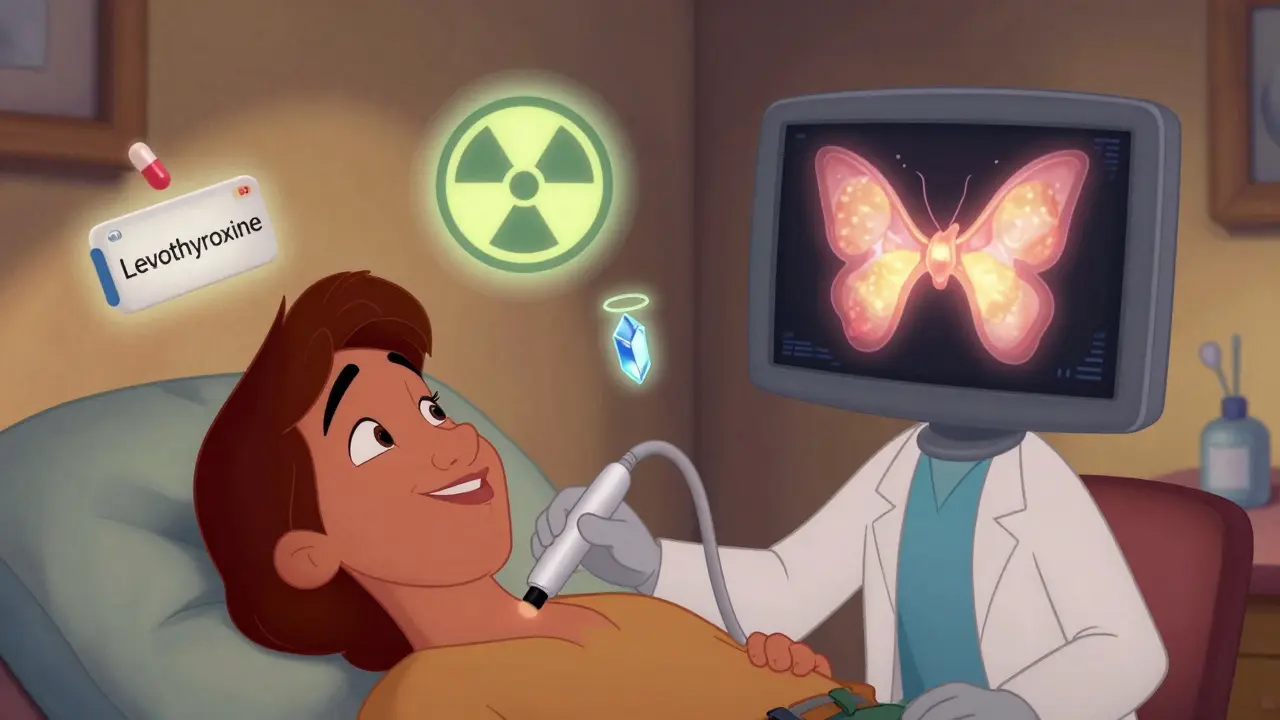
Ultrasound is the standard tool for measuring size. A goiter over 80-100 mL usually means surgery is needed - especially if it’s pressing on your windpipe or esophagus. That’s not common, but when it happens, it’s urgent.
Iodine Supplementation: The Simple Fix - When It Works
If your goiter is from iodine deficiency, the fix is straightforward: take iodine. The American Thyroid Association recommends 150 mcg daily for adults. Pregnant women need 220 mcg. Lactating women? 290 mcg. That’s about one teaspoon of iodized salt per week. Most iodized table salt has 45 mcg per gram - so a quarter teaspoon gives you nearly half your daily need.
Studies show that with consistent supplementation, iodine-deficient goiters shrink by 30-40% within 6-12 months. In 70-85% of cases, the gland returns to normal size within a year or two. That’s why global salt iodization programs cut goiter rates by half since the 1990s.
But here’s the catch: if you’re in the U.S. and you’re eating processed food, you might not get enough. Salt in bread, canned soup, or chips often isn’t iodized. So even if you use iodized salt at home, you could still be falling short. A blood test for urinary iodine is the best way to know for sure.

What If It’s Not Iodine?
If you’re in the U.S. and you’re not iodine-deficient, then supplementation won’t help. In fact, taking extra iodine when you have Hashimoto’s or Graves’ disease can make things worse. Too much iodine can trigger more inflammation in an already overactive immune system.
For Hashimoto’s, the treatment is levothyroxine - a synthetic thyroid hormone. It replaces what your gland can’t make. It doesn’t shrink the goiter much - usually only 10-20% - because the gland becomes scarred and stiff over time. But it fixes the symptoms: fatigue, weight gain, cold intolerance.
For Graves’ disease, doctors use antithyroid drugs like methimazole. These calm the overproduction. Over 12-18 months, the goiter shrinks by 40-60%. But if the gland stays too big or keeps overproducing, radioactive iodine or surgery may be next.
When Surgery or Radioactive Iodine Is Needed
Surgery isn’t the first choice - but it’s the only one when the goiter is huge or causing real problems. A total thyroidectomy removes 30-40 grams of tissue. That’s a lot. But if your windpipe is squished or you can’t swallow without pain, it’s worth it.
Radioactive iodine (RAI) is another option, especially for toxic goiters. A single dose of 5-15 mCi can shrink the gland by 50-60% in six months. But here’s the trade-off: 75-80% of people end up with permanent hypothyroidism. That means lifelong pills. Some people prefer that to daily medication. Others hate the idea of destroying their thyroid.
Post-op complications happen. About 15% of patients have voice changes. 8% develop low calcium from damaged parathyroid glands. Patient reviews show only 42% satisfaction with surgical outcomes - mostly because of these side effects. That’s why doctors try everything else first.
What About Selenium or Other Supplements?
You might see ads for selenium, zinc, or ashwagandha for thyroid health. But the science doesn’t back most of them.
A 2021 Cochrane Review looked at 12 studies on selenium for goiter. The result? No significant benefit. Odds ratio was 0.92 - basically zero effect. Some European guidelines suggest it might help in early Hashimoto’s, but it won’t shrink a big goiter.
The only supplement with clear, proven value is iodine - and only if you’re deficient. Taking more than you need won’t help. It might hurt.
What’s New in Goiter Research?
The NIH is running a big study called TRIPOD - tracking 5,000 people across 10 countries to find genetic links to thyroid size. Early results show 37 genes tied to how big the gland gets. That could one day lead to personalized risk scores.
Meanwhile, the FDA now requires iodine content to be labeled on all salt products. That’s huge. It means you can actually check if your sea salt or Himalayan salt has iodine - most don’t. And the European Medicines Agency just standardized radioactive iodine dosing to reduce side effects.
What Should You Do?
If you notice swelling in your neck:
- See a doctor. Get a thyroid ultrasound and blood test for TSH, T3, T4, and thyroid antibodies.
- If you’re in the U.S. and eat mostly processed food, ask about your iodine levels - even if you use salt.
- Don’t self-supplement with iodine. It can worsen autoimmune conditions.
- If you’re pregnant or planning to be, make sure your prenatal vitamin has iodine. Many don’t.
- Choose iodized salt over sea salt or pink salt. It’s cheap, safe, and effective.
Goiter isn’t rare. It affects 5% of Americans. But most cases are quiet, slow-growing, and fixable. The key isn’t panic. It’s knowing the cause - and acting on it with the right info.
Can iodine supplements shrink a goiter if I’m not deficient?
No. If your goiter is caused by Hashimoto’s thyroiditis, Graves’ disease, or another autoimmune condition, extra iodine won’t help - and it might make inflammation worse. Iodine supplementation only works if your goiter is due to true iodine deficiency, which is rare in the U.S. unless you avoid iodized salt, dairy, and seafood.
Is all salt iodized?
No. Only table salt labeled as "iodized" contains added iodine. Sea salt, Himalayan salt, kosher salt, and most gourmet salts have little to no iodine. If you use these instead of iodized salt and don’t eat dairy, eggs, or seafood regularly, you may be at risk for deficiency.
How much iodine do I need daily?
Adults need 150 mcg per day. Pregnant women need 220 mcg, and breastfeeding women need 290 mcg. One teaspoon of iodized salt provides about 400 mcg - more than enough. Most people get enough through diet, but those avoiding dairy, eggs, or iodized salt may fall short.
Can a goiter go away on its own?
Sometimes, yes - but only if it’s small and caused by mild iodine deficiency. Most goiters, especially those linked to autoimmune disease, won’t shrink without treatment. Left untreated, they can grow larger or lead to hypothyroidism or hyperthyroidism. It’s not something to wait out.
Are goiters cancerous?
Most goiters are not cancerous. In fact, over 90% are benign. But any new or growing lump in the neck should be checked. Doctors use ultrasound and fine-needle biopsy to rule out thyroid cancer, which is rare but treatable if caught early.