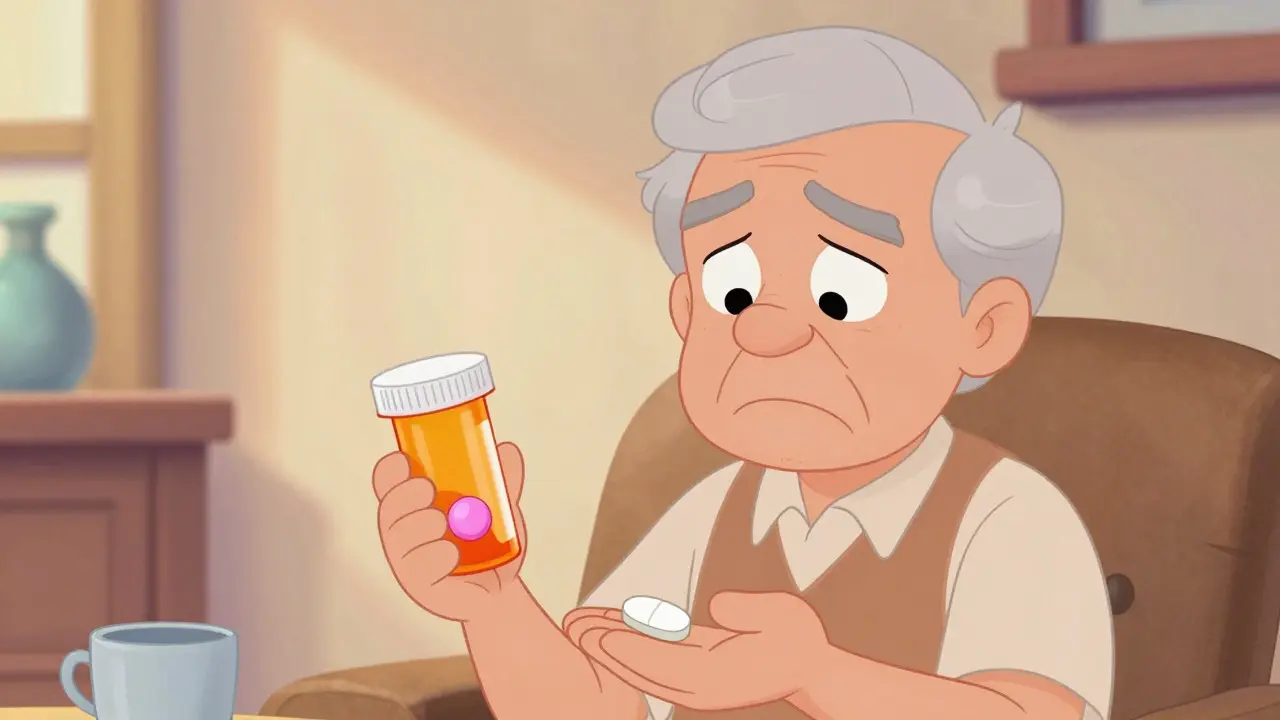
Imagine picking up your prescription. The bottle looks different. The pill is a different color, maybe even a different shape. You take it home, stare at it, and wonder: "Is this the right medicine?" If you’ve ever felt that hesitation, you aren’t alone. This confusion sits at the heart of a major public health challenge known as health literacy, specifically how we understand and use generic medications.
We often assume that if a doctor prescribes a drug, the patient will know exactly what to do with it. But for millions of people, the gap between medical jargon and daily life is wide. When that gap meets the world of generic drugs-which look different from brand names but work the same way-mistakes happen. These aren't just minor mix-ups; they can lead to missed doses, dangerous overdoses, or people stopping life-saving treatment entirely.
What Is Health Literacy Anyway?
Let’s clear up the definition first. It’s not about how many years of school you finished. The World Health Organization defines health literacy as the ability to access, understand, appraise, and use information to make good health decisions. In simpler terms, it’s about whether you can read a prescription label, understand what a nurse tells you, and actually follow through.
The U.S. Department of Health and Human Services updated this idea in 2020. They split it into two parts:
- Personal health literacy: Your own skill set to find and use health info.
- Organizational health literacy: The duty of hospitals, clinics, and pharmacies to make sure their systems are easy for everyone to navigate.
Why does this distinction matter? Because even if you’re smart and capable, a confusing system can trip you up. And nowhere is the system more confusing than when switching from a brand-name drug to a generic one.
The Generic Drug Confusion
Generic medications are the backbone of modern healthcare. In the U.S., they make up about 90% of all prescriptions by volume. They save billions of dollars. But they come with a catch: visual inconsistency.
A brand-name drug like Lipitor always looks the same. A generic version, however, might be made by Company A today and Company B next month. Company A’s pill might be white and oval. Company B’s might be pink and round. To a pharmacist, these are identical in active ingredients. To a patient with low health literacy, they look like two completely different medicines.
Research backs this up. A study published in the *Journal of General Internal Medicine* found that community pharmacists see patients struggle specifically when brands change. Another study showed that 42% of patients couldn’t correctly identify that generic drugs are therapeutically equivalent to brand-name versions. That means nearly half of people don’t trust the generic because they don’t understand the science behind it.
| Feature | Brand-Name Drugs | Generic Drugs |
|---|---|---|
| Active Ingredient | Standardized | Identical to brand |
| Appearance (Color/Shape) | Consistent | Varies by manufacturer |
| Patient Trust Level | High (due to marketing/recognition) | Lower (especially among low-literacy groups) |
| Error Rate Source | Rarely appearance-based | High risk of visual misidentification |
This "generic distrust" is real. Medicare beneficiaries with below-basic literacy skills are 3.1 times more likely to refuse a generic substitution. Why? Because fear fills the void where understanding should be.
Who Is Most at Risk?
Not everyone struggles equally. The data points clearly to specific groups who face higher risks:
- Elderly patients: Vision issues combined with multiple medications make visual changes terrifying. A JAMA study showed a 23% increase in non-adherence when seniors received a visually different generic.
- People with chronic conditions: If you have diabetes or heart disease, missing a dose can be catastrophic. Yet, 41% of Medicare beneficiaries with multiple chronic conditions report confusion about generic changes.
- Low-income populations: Often relying on generics due to cost, yet having less access to consistent pharmacy care or digital tools to verify meds.
Consider the story shared on PatientsLikeMe: a diabetic patient whose metformin changed from white ovals to pink rounds. Thinking it was a wrong prescription, they stopped taking it for three days. The result? A trip to the ER for high blood sugar. This isn’t an isolated incident. It’s a systemic failure.
Why Do Errors Happen?
It’s not just about looking at a pill. It’s about the entire communication chain breaking down.
- Complex Labeling: Only 37% of generic manufacturers use plain language in their leaflets. The rest rely on dense, legalistic text that most adults can’t parse quickly.
- Lack of Visual Cues: Unlike cars, which have standardized brake lights, pills have no universal color code for their function. A red pill doesn’t mean "heart," and a blue one doesn’t mean "blood pressure." It’s random.
- Pharmacy Rush: Pharmacists are overwhelmed. They may hand over a bag without explaining why the new box looks different from the old one.
The Institute for Safe Medication Practices documented over 1,200 medication errors related to generic confusion between 2015 and 2020. That’s 17% of all reported generic errors. These aren’t typos; they are preventable harms caused by poor design and poor communication.
Practical Solutions That Work
So, what can we do? We can’t force every manufacturer to use the same pink paint. But we can improve how we talk about these drugs. Here are strategies that have proven effective:
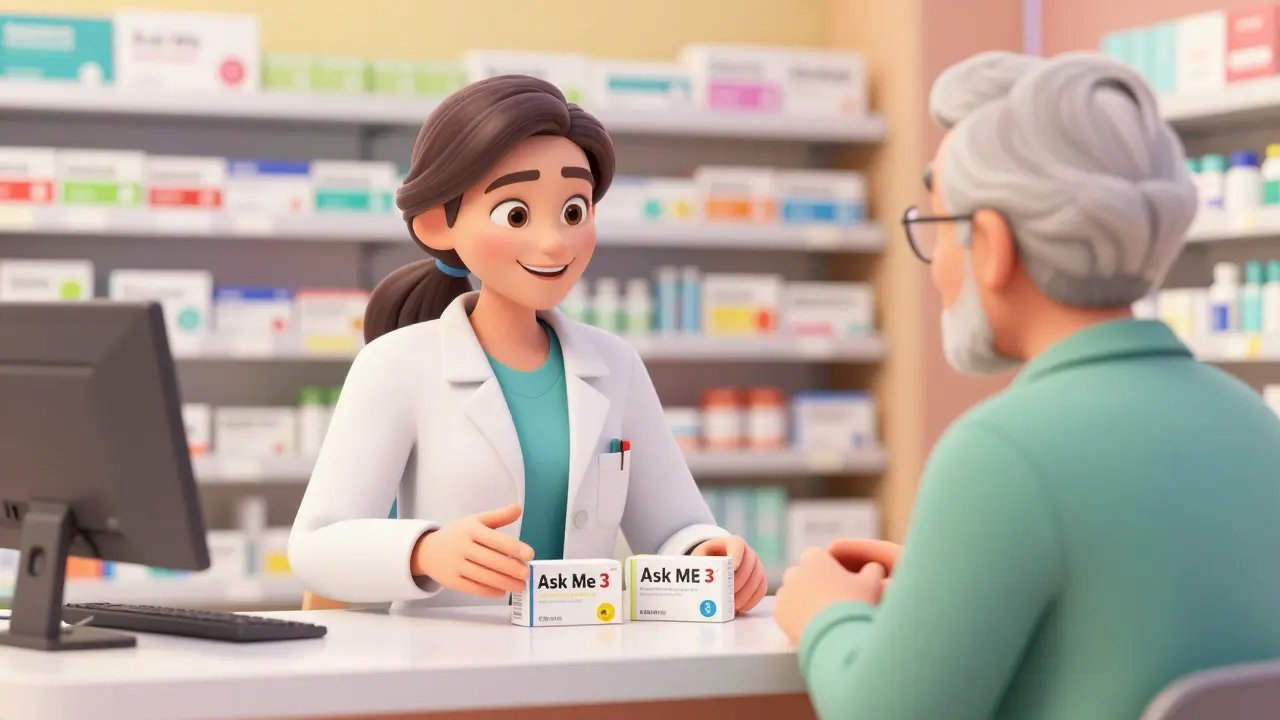
1. The "Ask Me 3" Approach
Developed by the Partnership for Clear Health Communication, this simple framework trains providers to ensure patients leave with answers to three questions:
- What is my main problem?
- What do I need to do?
- Why is it important for me to do this?
2. Brown Bag Reviews
Bring every single medication bottle to your appointment. Not just the new ones-the old ones too. Let the doctor or pharmacist compare them side-by-side. This technique reduced medication discrepancies by 44% in a Johns Hopkins study. It turns abstract worry into concrete verification.
3. Digital Verification Tools
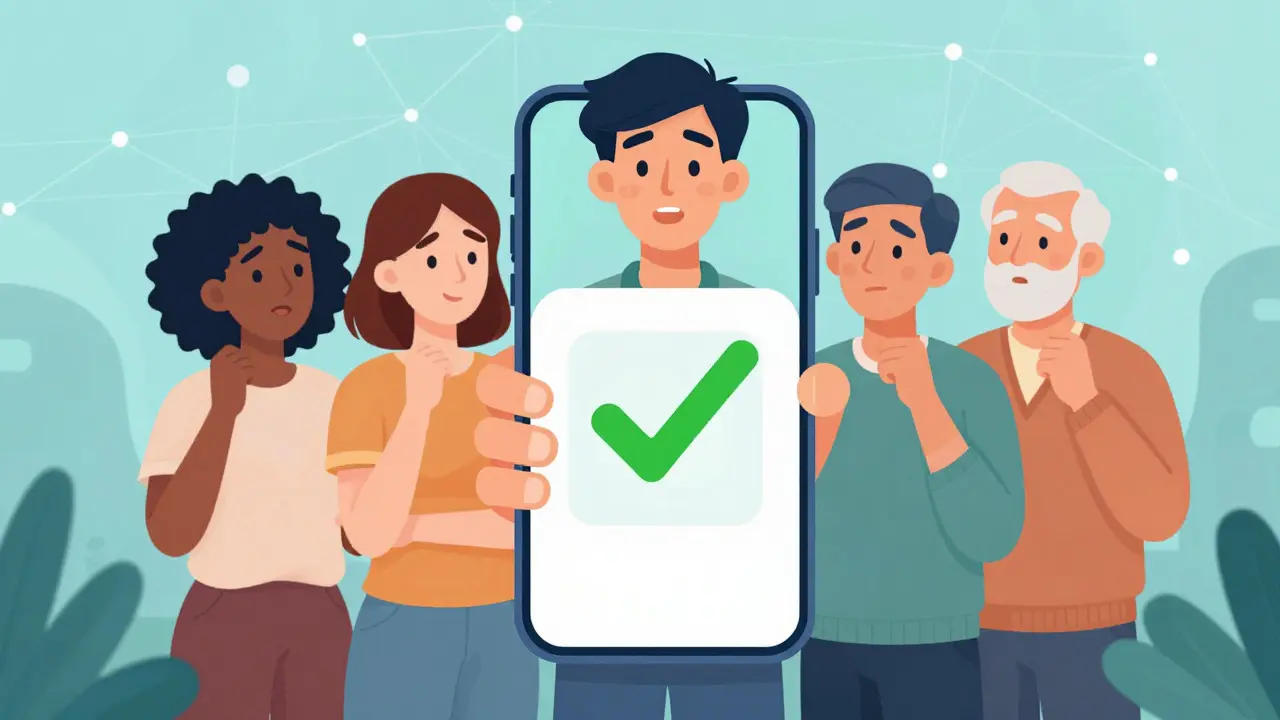
Apps like Medisafe allow you to scan a pill or search by description. For patients with low literacy, seeing a picture match helps build trust. AI-powered recognition tools improved generic understanding by 63% in recent trials. If you’re unsure, snap a photo before you swallow.
4. Universal Precautions
Treat every interaction as if the patient has low health literacy. Use plain language. Avoid acronyms. Say "blood pressure medicine" instead of "antihypertensive." The CDC’s approach, now used in 92% of Federally Qualified Health Centers, cuts confusion by half simply by changing how staff speak.
What’s Changing in Policy?
Good news is coming from regulators. The FDA released draft guidance in 2023 proposing standardized color-coding for therapeutic classes. Imagine if all heart meds were blue and all diabetes meds were green. Australia already tested this and saw a 33% reduction in errors.
The European Union’s Falsified Medicines Directive also pushed for standardized packaging, reducing errors by 19% in pilot programs. Meanwhile, the Biden administration’s National Action Plan targets a 25% reduction in confusion-related errors by 2027. These aren’t just goals; they are roadmaps for safer care.
How You Can Take Control Today
You don’t have to wait for policy changes. Here is your checklist for navigating generics safely:
- Ask for Consistency: Tell your pharmacist, "I prefer the same manufacturer if possible." While not always guaranteed, many pharmacies will try to keep you on the same generic supplier to avoid visual shocks.
- Verify Before You Switch: If your new pill looks different, call the pharmacy immediately. Don’t guess. Ask, "Is this the same medication as before?"
- Use Pill Organizers Carefully: If you switch generics, re-sort your weekly organizer. Old habits die hard, and muscle memory can lead to skipping a dose if the pill doesn’t fit the slot mentally.
- Educate Your Family: If you care for an aging parent, learn their meds. Know what the "old" pill looked like so you can spot the "new" one early.
Health literacy isn’t a test you pass or fail. It’s a skill you practice. By acknowledging that generic drugs can be confusing, you take the first step toward better health outcomes. The goal isn’t perfection; it’s awareness. And awareness saves lives.
Are generic medications as effective as brand-name drugs?
Yes. Generic medications must contain the same active ingredients, strength, dosage form, and route of administration as the brand-name drug. The FDA requires them to be bioequivalent, meaning they work in the body the same way. The only differences are usually in inactive ingredients, which affect appearance but not efficacy.
Why do my generic pills look different every time I refill?
Pharmacies source generics from various manufacturers based on availability and cost. Since patent laws allow multiple companies to produce the same generic drug, each company designs its own pill shape, color, and imprint. This lack of standardization is the primary cause of visual confusion for patients.
What should I do if I think my generic medication is causing side effects?
First, contact your pharmacist or doctor. Sometimes, side effects are due to inactive ingredients (like dyes or fillers) that differ between manufacturers. Your provider may switch you to a different generic brand or back to the brand-name drug if medically necessary and affordable.
Can I ask my pharmacist to keep me on the same generic manufacturer?
You can request it, but it is not always guaranteed. Pharmacies often buy in bulk from whichever supplier offers the best price. However, stating a preference for consistency can help. Some insurance plans also allow "dispense as written" requests if there is a documented medical reason for sticking to one manufacturer.
How can I improve my health literacy regarding medications?
Start by asking questions during every appointment. Use the "Ask Me 3" method. Bring all your medications to appointments for a "brown bag review." Utilize apps to identify pills visually. Finally, never hesitate to ask your pharmacist to explain the purpose, usage, and potential side effects of any new medication in plain language.