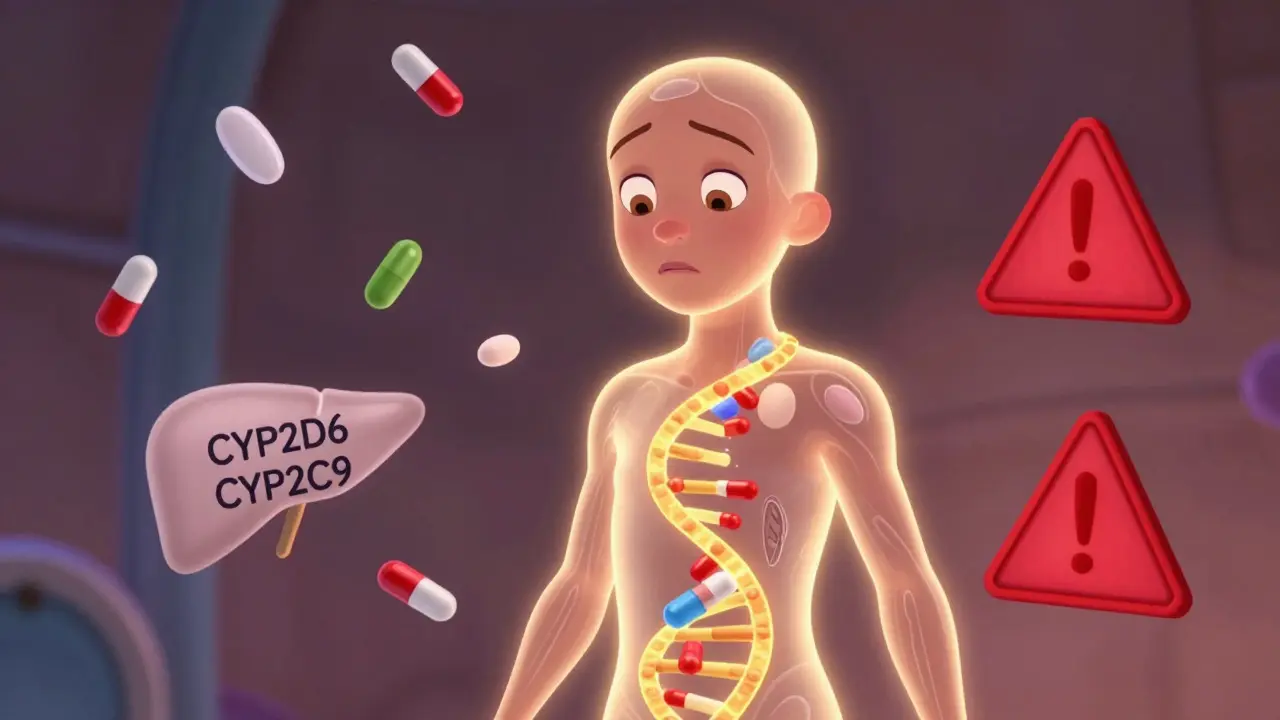
When you take multiple medications, the risk of dangerous drug interactions goes up. But what if the real problem isn’t just the drugs you’re taking - it’s your genes?
Every year, over 1.3 million people in the U.S. end up in the emergency room because of adverse drug reactions. Many of these aren’t caused by mistakes or overdoses. They’re caused by how your body processes drugs based on your DNA. This is where pharmacogenomics comes in - the study of how your genes affect your response to medicine. And it’s changing how we predict and prevent dangerous drug interactions.
Why Traditional Drug Interaction Checkers Miss the Mark
Most electronic prescribing systems and pharmacy databases check for drug-drug interactions. They’ll warn you if mixing warfarin and ibuprofen could cause bleeding. But they don’t know if you’re a slow metabolizer of warfarin because of a CYP2C9 gene variant. That’s the missing piece.
Traditional tools list around 50,000 possible interactions. But when you factor in genetics, that number jumps. A 2022 study in the American Journal of Managed Care found that adding genetic data increased the estimated risk of major drug interactions by 30.4%. For antidepressants, painkillers, and antipsychotics - drugs commonly prescribed in combination - the risk was even higher.
Why? Because two people can take the same two drugs, and one might have a bad reaction while the other doesn’t. The difference? Their genes.
How Your Genes Control Drug Metabolism
Your liver uses enzymes to break down drugs. The most important ones for drug interactions are CYP2D6, CYP2C19, CYP2C9, and TPMT. These enzymes are coded by genes that vary widely between people.
Take CYP2D6. About 7% of people of European descent are “poor metabolizers” - their bodies can’t break down certain drugs at all. If they take codeine, which needs CYP2D6 to turn into morphine, they get no pain relief. But if they’re “ultra-rapid metabolizers” (1-10% of some populations), codeine turns into morphine too fast. That can lead to deadly breathing problems, especially in children.
Same drug. Same dose. Completely different outcomes - all because of a single gene variation.
Another example: clopidogrel. It’s a blood thinner used after heart attacks. But 30% of people have a CYP2C19 variant that makes the drug useless. They’re still at risk of another heart attack, but their doctor doesn’t know why - because the interaction isn’t between two drugs, it’s between the drug and their DNA.
Phenoconversion: When Drugs Trick Your Genes
It’s not just your genes that matter. Sometimes, other drugs you’re taking can temporarily change how your genes behave. This is called phenoconversion.
Imagine someone with a CYP2D6 ultra-rapid metabolism. Normally, they process drugs quickly. But if they start taking fluoxetine (an antidepressant), that drug blocks CYP2D6. Suddenly, their body acts like a poor metabolizer - even though their genes haven’t changed. This mismatch can cause dangerous drug buildup.
Phenoconversion is invisible to standard drug interaction checkers. They see two drugs - fluoxetine and a beta-blocker - and don’t realize the genetic layer has flipped. Pharmacogenomics is the only way to catch this.
Real-World Impact: When PGx Saves Lives
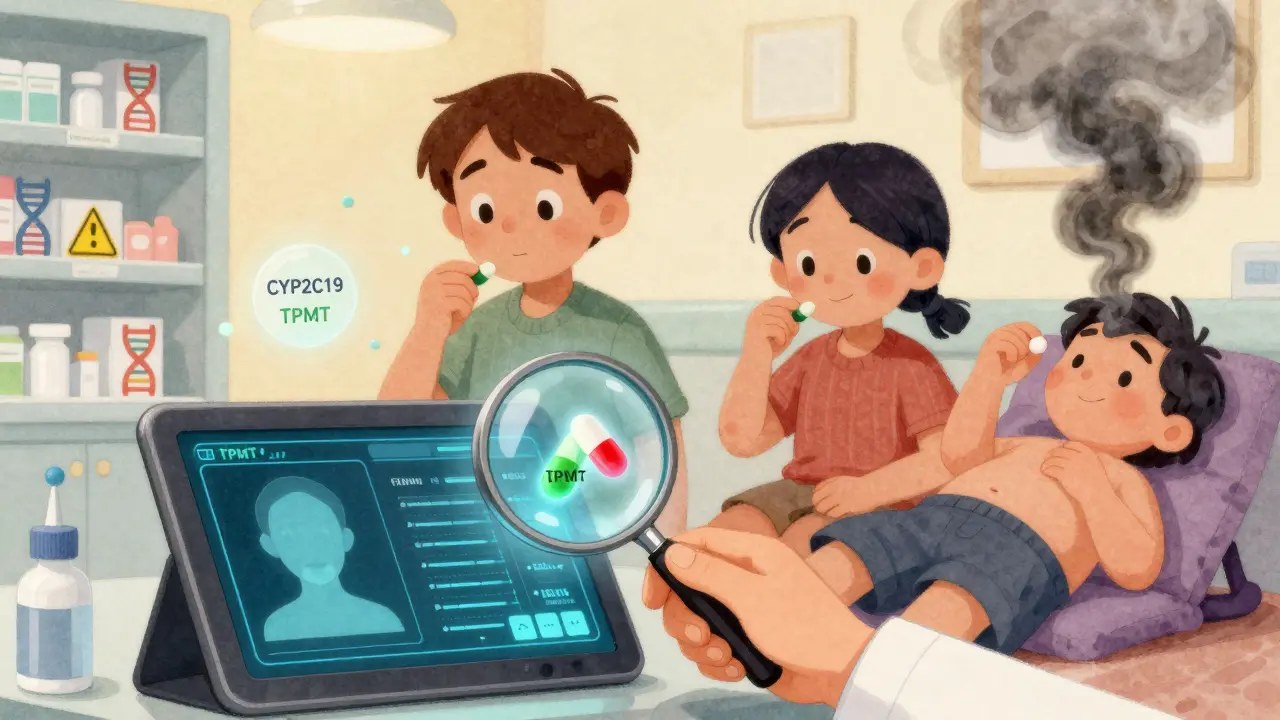
At Mayo Clinic, they’ve been testing patients for pharmacogenomic variants since 2011. Over 89% of those tested had at least one genetic variant that affected how they responded to common medications. With alerts built into their electronic records, doctors avoided dangerous prescriptions 45% more often.
One patient, a 68-year-old woman on warfarin, had a history of unexplained bleeding. Her genetic test showed she had two variants: CYP2C9*3 and VKORC1 -1639G>A. These meant she needed only 1.5 mg of warfarin per day - less than half the average dose. Without the test, she might have been given 5 mg, leading to a stroke or internal bleeding.
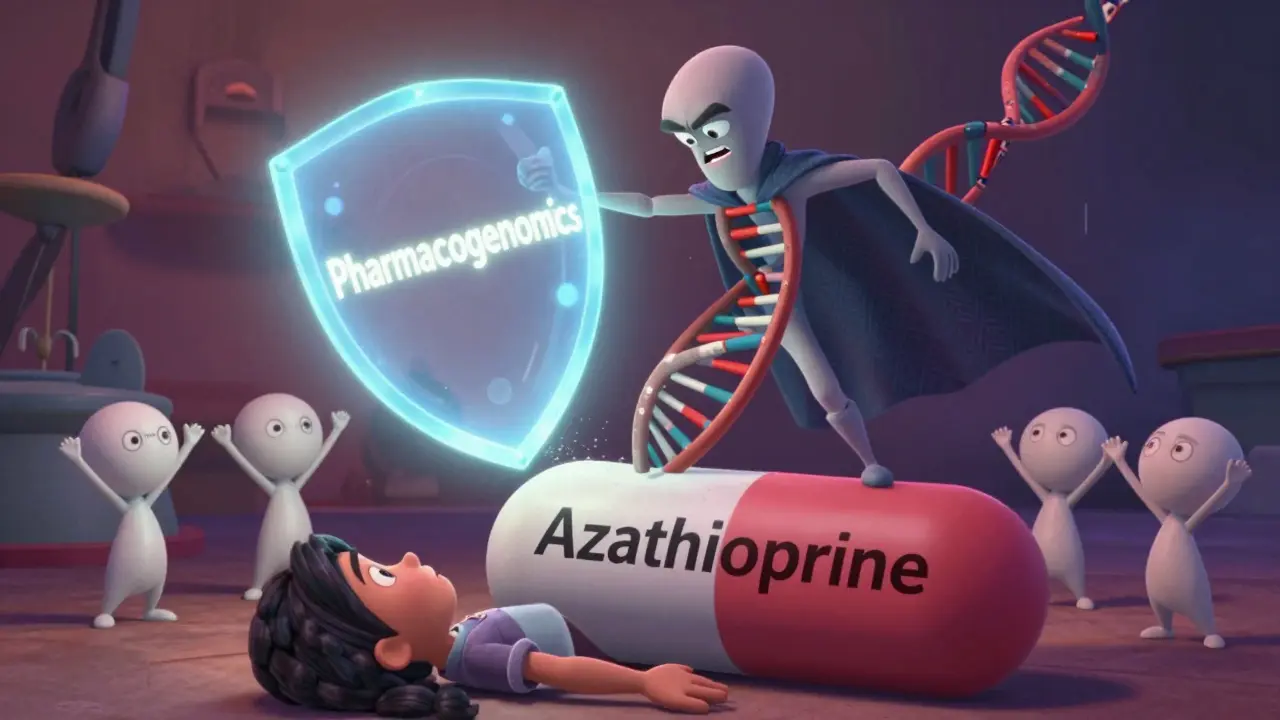
Another case: a man prescribed azathioprine for an autoimmune disease. His TPMT gene test came back as a poor metabolizer. Standard doses would have destroyed his bone marrow. With the result, his doctor cut the dose to 10% of normal. He stayed healthy. Without the test? He could have died.
The Gap Between Science and Practice
Despite the evidence, most doctors still don’t use pharmacogenomics. Why?
First, only 22% of the FDA-recognized gene-drug pairs have official clinical guidelines from the Clinical Pharmacogenetics Implementation Consortium (CPIC). That means for many variants, we know they matter - but we don’t have clear rules on what to do.
Second, most hospitals don’t have the systems in place. A 2022 study found only 15% of U.S. healthcare systems have PGx results integrated into their electronic health records. Pharmacists? Only 28% feel trained to interpret the results.
Third, insurance rarely pays for it. There are only 19 CPT codes for PGx testing, and reimbursement averages $250-$400 per test. Many clinics can’t justify the cost without guaranteed payment.
And there’s a bigger problem: the data isn’t diverse. Over 98% of pharmacogenomic studies are based on people of European or Asian ancestry. African, Indigenous, and Hispanic populations are severely underrepresented. That means the guidelines we have might not work for everyone.
What’s Changing - And What’s Next
The NIH’s All of Us program has returned PGx results to over 250,000 people. The FDA plans to add 24 new gene-drug pairs to its list in 2024. Companies like 23andMe now offer limited pharmacogenomic reports to 12 million customers.
AI is stepping in, too. A 2023 study in Nature Medicine showed an algorithm using genetic data predicted the right warfarin dose 37% more accurately than traditional methods. That’s not just a tweak - it’s a leap.
And the cost is falling. Whole-genome sequencing, once $10,000, now costs under $200. Soon, your genetic profile might be part of your medical record from birth - not just when you’re sick.
What You Can Do Today
You don’t need to wait for your doctor to order a test. If you’re on three or more medications, ask:
- “Could any of my drugs interact with my genes?”
- “Has my pharmacist checked for pharmacogenomic risks?”
- “Is there a genetic test that could help me avoid side effects?”
Some direct-to-consumer tests (like 23andMe) include basic PGx results. You can download your raw data and upload it to free tools like PharmGKB to see if you carry high-risk variants.
And if you’re a patient with a chronic condition - depression, heart disease, chronic pain - ask your doctor about PGx testing. The evidence is strong enough that the Journal of the American Medical Association found PGx-guided therapy reduced adverse reactions by over 30% across multiple drug classes.
Pharmacogenomics isn’t science fiction. It’s here. And it’s the most powerful tool we have to stop drug interactions before they start - not by avoiding combinations, but by understanding the person behind the prescription.
What is pharmacogenomics and how does it relate to drug interactions?
Pharmacogenomics studies how your genes affect how your body processes drugs. It helps explain why two people taking the same medication can have completely different outcomes - one might get relief, the other a dangerous reaction. Many drug interactions aren’t just between two drugs; they’re between a drug and your genetic makeup. For example, if you’re a poor metabolizer of CYP2D6, even a standard dose of codeine can become toxic. Pharmacogenomics identifies these hidden risks before they cause harm.
Which genes are most important for drug interaction risk?
The top genes linked to drug interaction risk are CYP2D6, CYP2C19, CYP2C9, and TPMT. CYP2D6 affects over 25% of commonly prescribed drugs, including antidepressants, painkillers, and beta-blockers. CYP2C19 impacts clopidogrel (a blood thinner) and proton pump inhibitors. CYP2C9 is critical for warfarin dosing. TPMT determines how your body handles azathioprine and mercaptopurine - if you’re a poor metabolizer, standard doses can cause life-threatening bone marrow suppression.
Can other drugs change how my genes work?
Yes - this is called phenoconversion. A drug you’re taking can temporarily block or boost the enzyme your genes code for. For example, fluoxetine (an antidepressant) blocks CYP2D6. If you’re genetically an ultra-rapid metabolizer, that drug can make your body act like a poor metabolizer. This creates a mismatch between your DNA and your actual drug response. Standard drug interaction checkers don’t detect this - only pharmacogenomics does.
Is pharmacogenomic testing covered by insurance?
Coverage is limited. There are only 19 CPT codes for PGx tests, and reimbursement averages $250-$400 per test. Medicare and some private insurers cover testing for specific drugs like warfarin, clopidogrel, or certain antidepressants - but only if it’s ordered by a specialist and tied to a clear clinical need. Most routine testing isn’t covered yet. Some direct-to-consumer services like 23andMe offer basic PGx reports for under $100, but these aren’t always accepted by doctors.
Are pharmacogenomic guidelines the same for everyone?
No - and that’s a major concern. Over 98% of genetic data used to create these guidelines comes from people of European or Asian ancestry. Variants common in African, Indigenous, or Hispanic populations are poorly studied. This means the risk predictions and dosing recommendations may not apply to everyone. For example, a variant that’s rare in Europeans might be common in Africans, but we don’t yet know how it affects drug response. This gap risks worsening health disparities if testing is rolled out without diverse data.
Should I get tested if I’m on multiple medications?
If you’re taking five or more medications, the chance of a hidden genetic interaction rises sharply. Studies show polypharmacy patients have up to 90% higher risk of clinically significant drug-gene interactions. Getting tested can prevent serious side effects - like bleeding from warfarin, bone marrow failure from azathioprine, or respiratory depression from codeine. Talk to your doctor or pharmacist about whether PGx testing is right for you. Even one test can guide your treatment for years.