Electronic prescribing was supposed to fix medication errors. Instead, it created new ones. You’d think sending a prescription straight from a doctor’s computer to a pharmacy would cut out mistakes. But in reality, e-prescribing systems are still handing pharmacists prescriptions that don’t make sense - not because of bad handwriting, but because of bad system design.
Back in 2006, the Institute of Medicine found that handwritten prescriptions caused about 25% of all medication errors. That’s why e-prescribing took off. By 2013, 74% of U.S. doctors were using it. And yes, it cut overall prescribing errors by up to 99% in some cases. But here’s the catch: transcription errors didn’t disappear. They just changed shape. Now, 37% to 41.5% of all prescribing errors come from electronic systems - not because the doctor typed wrong, but because the system miscommunicated.
Why E-Prescribing Still Gets It Wrong
Imagine this: A doctor writes a prescription for methotrexate. Instead of typing "take 1 tablet once a week," the system auto-fills "1 tablet daily." Why? Because the system doesn’t know the difference between weekly and daily dosing unless the indication is clearly entered. That’s not a human mistake. That’s a system flaw.
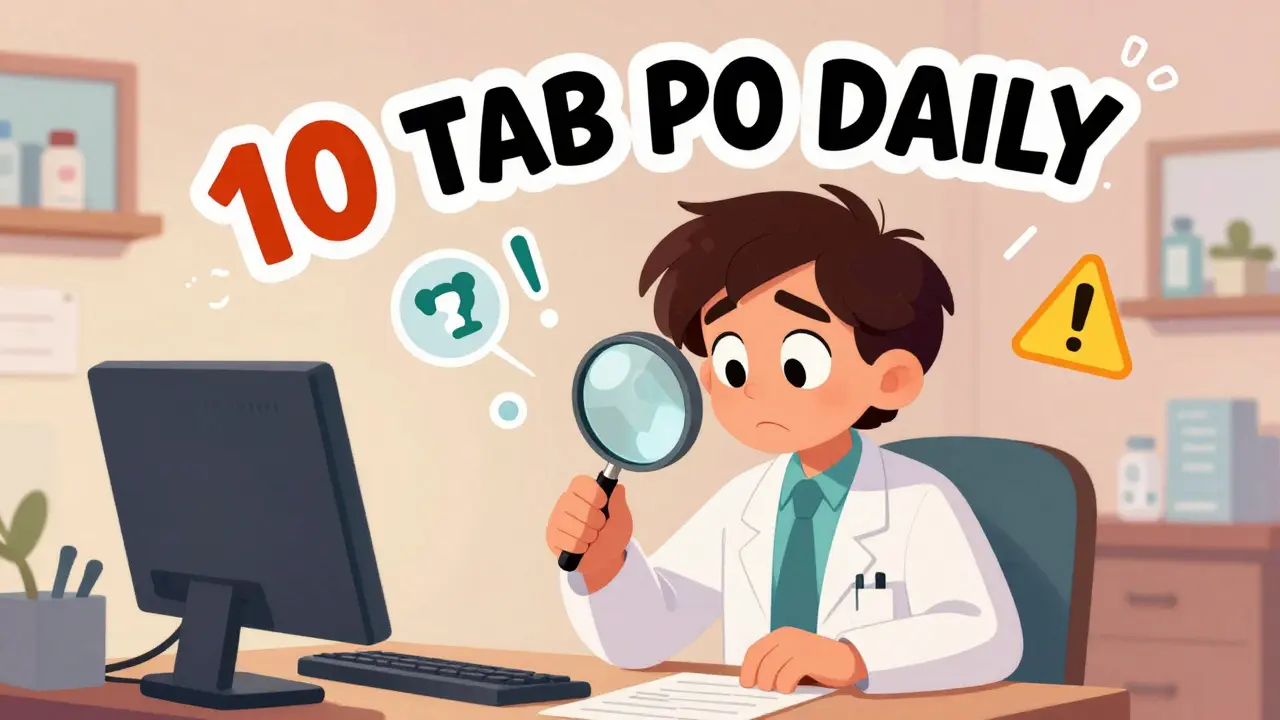
Even worse, when a prescription gets sent from an Epic EHR to a QS/1 pharmacy system, the sig (instructions) often get scrambled. A simple instruction like "take 1 tablet by mouth daily" turns into "1 TAB PO DAILY." Some pharmacy systems read that as "10 TAB PO DAILY" - ten times the dose. That’s not a typo. That’s a coding mismatch. And according to a top-rated post on r/PharmacyTech in May 2023, this happens in 27% of prescriptions sent between these systems.
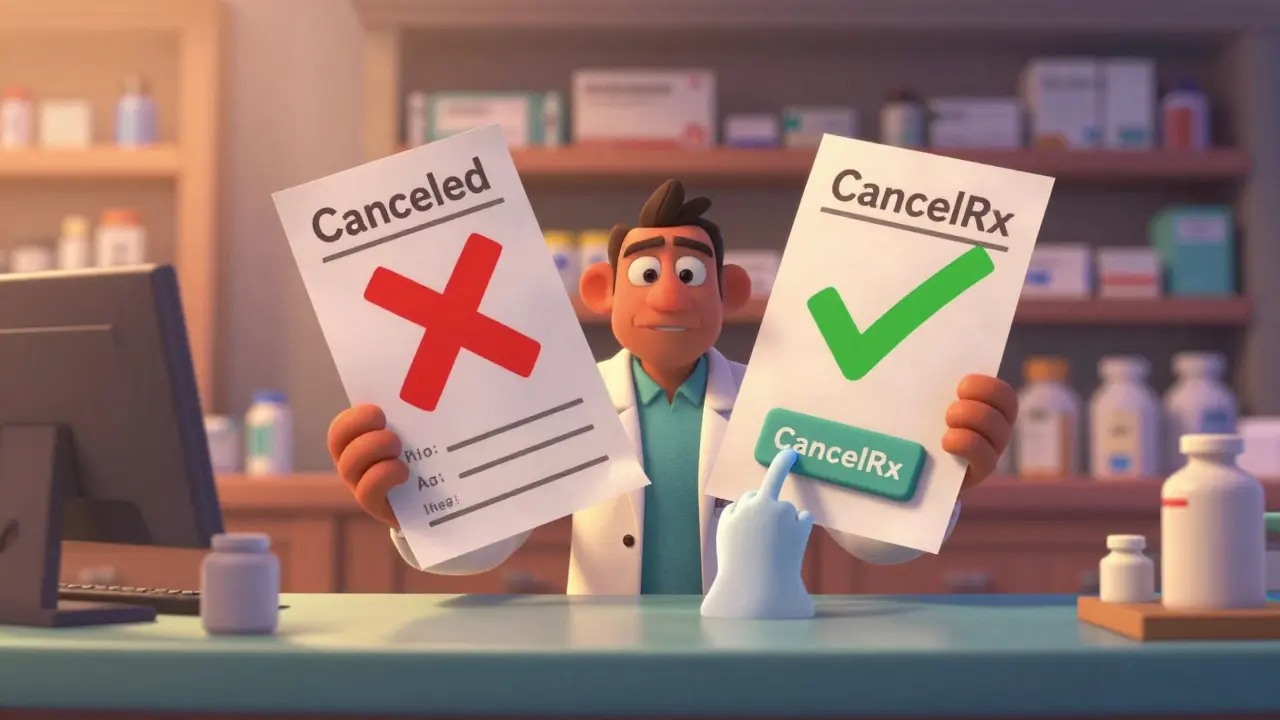
Another big issue? Multiple prescriptions for the same drug. If a doctor cancels a prescription but doesn’t use the CancelRx protocol, the pharmacy gets two e-prescriptions: the old one and the new one. The pharmacist has to guess which one to fill. That’s not safe. That’s a waiting accident.
The Real Culprit: Fragmented Systems
The biggest problem isn’t the doctors or the pharmacists. It’s the fact that e-prescribing systems don’t talk to each other. Epic, Cerner, DrFirst, QS/1, Pioneer - they all speak different languages. Even though they’re all supposed to follow the NCPDP SCRIPT Standard Version 201900, many don’t implement it fully. And when they don’t, manual re-entry becomes the norm.
That’s why 41% of pharmacists spend 15 to 30 minutes every day just fixing e-prescription errors. That’s not efficiency. That’s wasted time that puts patients at risk. A 2022 Surescripts report found that 68% of those errors come from incompatible formatting. One system uses abbreviations. Another doesn’t recognize them. One sends structured data. Another expects free text. The result? Confusion.
And here’s the irony: integrated systems like Epic’s Hyperspace reduce overall prescribing errors by 84%. But standalone systems like DrFirst Rcopia have 42% fewer transcription errors than integrated ones - because they’re simpler and don’t rely on messy EHR-to-pharmacy connections. The trade-off? Integrated systems offer better clinical decision support. Standalone ones avoid system clashes. Neither is perfect.
What Actually Works: Six Evidence-Based Fixes
The Agency for Healthcare Research and Quality (AHRQ) studied this for years. They found six proven ways to slash transcription errors. Not guesses. Not opinions. Real, tested solutions.
- Standardized sig formatting - No more "1 TAB PO DAILY." Use plain language: "Take one tablet by mouth every day." This alone cuts errors by 41%.
- CancelRx protocol - If you cancel a prescription, send a cancel signal. Not a new one. Not a note. A real electronic cancellation. This reduces discontinued med errors by 63%.
- Single shared medication list - If the doctor and pharmacist see the same list of meds, no more "Did you refill this?" Guesswork. This cuts reconciliation errors by 52%.
- Structured indication entry - Don’t just write "pain." Write "osteoarthritis knee pain." That tells the system what drug to suggest and what dose to recommend. This reduces wrong-drug-for-indication errors by 79%.
- Pharmacy-prescriber connectivity - Use HL7 FHIR Release 4.0.1. It’s the latest standard for systems to talk. A 2017 ISMP Canada study showed it eliminates 92% of manual re-entry errors.
- Redesigned workflow for modifications - If a prescription needs changing, the system should allow edits before it’s sent - not after. That cuts confusion errors by 67%.
These aren’t optional. They’re the difference between a patient getting the right dose and a patient ending up in the ER.
What You Can Do Right Now
You don’t need to wait for a system upgrade. There are immediate steps you can take to protect patients.
- Always type out instructions in plain language. Avoid abbreviations. Even if your system auto-fills them, override it. "Take one tablet every morning" beats "1 TAB QD."
- Use the CancelRx function every time. Don’t just write a new prescription. Cancel the old one electronically. It’s one click. It saves lives.
- Enter the indication every time. It’s not extra work - it’s safety. If you’re prescribing gabapentin for nerve pain, type it. Don’t assume the system knows.
- Double-check the sig before sending. Read it like a pharmacist would. Would you know what to give? If not, rewrite it.
- Ask your pharmacy if they use FHIR. If they don’t, push for it. Your patients deserve systems that talk to each other.
The Bigger Picture: Regulation, Tech, and the Future
The 21st Century Cures Act made it illegal for systems to block data exchange. That’s called "information blocking." If your EHR won’t send prescriptions to a pharmacy because it’s not on their "preferred list," that’s a violation. And the DEA now requires all controlled substances to be e-prescribed - no paper allowed. That alone cut transcription errors for Schedule II drugs by 57%.
But the real game-changer is coming. HL7’s Da Vinci Project showed a 98% error reduction in 2023 pilot studies using FHIR-based e-prescribing. And AI tools like Epic’s DoseMeRx, currently in pilot, can flag wrong doses before they’re sent. Early results show a 65% drop in errors.
By 2025, the ONC mandates that all e-prescribing systems use API-based connectivity. By 2028, FHIR will be universal. But until then, the burden is on you. The systems aren’t perfect. The standards aren’t fully adopted. The gaps are real.
Don’t wait for someone else to fix it. Use the tools you have. Type clearly. Cancel properly. Enter indications. Check the sig. Push for FHIR. These aren’t just best practices. They’re your last line of defense against a preventable error.

What’s Holding Practices Back?
It’s not lack of will. It’s lack of support. Sixty-three percent of practices say their legacy systems won’t integrate. Seventy-two percent say providers resist typing structured data. It’s easier to click through menus than to type out full sentences.
But training helps. AHRQ’s guide says providers need 4.7 hours to learn proper e-prescribing. Pharmacists need 3.2 hours to adapt to new workflows. That’s less than a full workday. The return? Fewer phone calls. Fewer mistakes. Fewer lawsuits.
And if your practice is small? The ONC is offering $15 million in funding to help small clinics upgrade to FHIR-compliant systems. You don’t have to do it alone.
Final Thought: Safety Is a Habit, Not a Feature
E-prescribing didn’t eliminate transcription errors. But it gave us the tools to beat them. The problem isn’t technology. It’s how we use it.
Every time you skip entering an indication, every time you accept a default sig, every time you don’t cancel an old prescription - you’re betting on luck. And in healthcare, luck isn’t a strategy.
Be the doctor who types it right. Be the pharmacist who asks the question. Be the team that demands better systems. That’s how you stop errors before they reach the patient.
What are the most common transcription errors in e-prescribing?
The most common errors include incorrect sig formatting (like "1 TAB PO DAILY" being misread as "10 TAB PO DAILY"), missing medication indications, failure to cancel old prescriptions, and incompatible abbreviations between systems. These errors often arise from poor system integration, lack of standardized data entry, and reliance on legacy formats.
How does CancelRx reduce transcription errors?
CancelRx is an electronic protocol that lets prescribers send a formal cancellation notice to the pharmacy when a prescription is no longer needed. Without it, pharmacists receive both the old and new prescriptions, creating confusion about which one to fill. CancelRx reduces discontinued medication errors by 63% by eliminating this ambiguity.
Why do some e-prescribing systems cause more errors than others?
Standalone systems like DrFirst Rcopia often cause fewer transcription errors because they’re designed solely for prescribing and avoid complex EHR integrations. Integrated systems like Epic reduce overall prescribing errors by 84% but can introduce formatting mismatches when connecting to pharmacy systems that don’t use the same standards. The key difference is interoperability - systems that speak the same language (like FHIR) cause far fewer errors.
Can AI help reduce transcription errors in e-prescribing?
Yes. AI-powered tools like Epic’s DoseMeRx, currently in pilot, analyze prescriptions in real time to flag incorrect doses, drug interactions, and indication mismatches. Early results show these tools can reduce transcription errors by an additional 65% by 2026. However, they work best when paired with structured data entry and FHIR-based systems.
What is HL7 FHIR and why does it matter for e-prescribing?
HL7 FHIR (Fast Healthcare Interoperability Resources) is a modern standard for exchanging health data electronically. It allows different systems - like EHRs and pharmacy software - to communicate using a common language. A 2017 ISMP Canada study showed FHIR eliminates 92% of manual re-entry errors by ensuring prescriptions are sent and received in a consistent, machine-readable format.
Are there regulations that require better e-prescribing practices?
Yes. The 21st Century Cures Act bans "information blocking" - meaning systems can’t prevent data from being shared. The DEA requires all controlled substances to be e-prescribed. Medicare Part D mandates e-prescribing for compliance. And by 2025, the ONC requires all systems to use API-based connectivity. Non-compliance can lead to penalties.