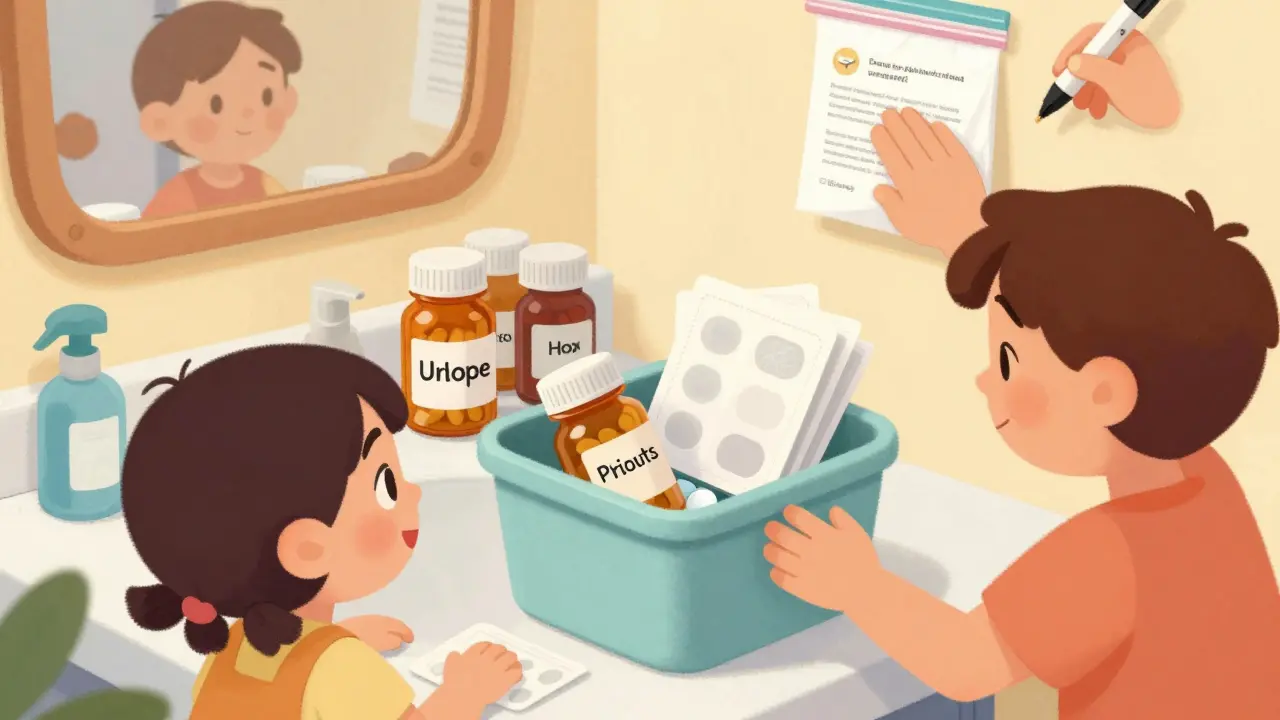
Every year, millions of unused pills, patches, and liquids sit in medicine cabinets across the U.S.-not because they’re still needed, but because people don’t know how to get rid of them safely. Flushing them down the toilet or tossing them in the trash might seem easy, but it’s dangerous. These drugs can end up in water supplies, be found by kids or pets, or fall into the hands of someone who shouldn’t have them. That’s why take-back events exist. And with over 16,500 permanent collection sites across the country, you don’t need to wait for a special day to dispose of your unused meds. The key? Preparing them right.
What Can You Bring to a Take-Back Event?
Most authorized collection sites accept a wide range of medications. Prescription drugs-even controlled substances like OxyContin, Adderall, or Xanax-are welcome. Over-the-counter pills, cough syrups, vitamins, and even pet medications are all accepted. Transdermal patches, like fentanyl or nicotine patches, are also taken. The only rule? They must be unused or expired. No one wants to collect drugs that are still being used.
But not everything goes in. You can’t bring hydrogen peroxide, aerosol inhalers (like asthma pumps), iodine-based products, thermometers, or illegal drugs. These items require special handling and aren’t safe to mix with regular pharmaceutical waste. If you’re unsure, check the DEA’s Drug Take Back website or call your local pharmacy. Most sites have clear lists posted online.
Step-by-Step: How to Prepare Your Medications
Preparing your meds for drop-off is simple, but it matters. Do it wrong, and you might be turned away. Here’s how to do it right:
- Keep them in the original container. This is the gold standard. The label has the drug name, dosage, and your name-so staff can verify it’s legal to collect. Over 90% of collection sites require this. If you lost the bottle, don’t panic. A sealed plastic bag or small container works too.
- Remove or cover your personal info. Use a black permanent marker to scribble over your name, address, and prescription number. Or peel off the label if it’s easy to remove. This isn’t optional-it’s required by HIPAA. Leaving your info visible risks identity theft or drug diversion. A 2023 study found that 41% of rejected submissions were due to incomplete redaction.
- Don’t mix different medications. Keep each drug separate. Don’t dump all your pills into one bag. This helps staff identify what’s being collected and prevents accidental contamination. The Military Health System strictly forbids mixing, and even civilian sites prefer it.
- Handle liquids and patches carefully. Liquid meds should stay in their original bottle with the cap tightly sealed. If the bottle is cracked or leaking, put it in a second sealed plastic bag. Patches? Fold them in half, adhesive side in, so they stick to themselves. This prevents accidental skin contact and is required at every collection site.
That’s it. No need to rinse pills, crush tablets, or remove foil backing. Just secure, label-free, and organized.
Why Original Containers Matter (and When They Don’t)
You’ve probably heard: "Always use the original bottle." And for good reason. The pharmacy label proves the medication is legally prescribed. It protects you and the collection site from liability. In California, 98% of sites enforce this rule. But not everywhere is that strict.
Some places, like Walgreens kiosks, just want your meds-no bottle needed-as long as your name is gone. Washington State allows sealed bags for most meds, as long as liquids are in secure containers. A 2023 Johns Hopkins study found that 43% of people avoided take-back events because they didn’t know the rules. If you don’t have the original bottle, use a small plastic container, zip-top bag, or even an empty vitamin jar. Just make sure it’s sealed and your info is gone.
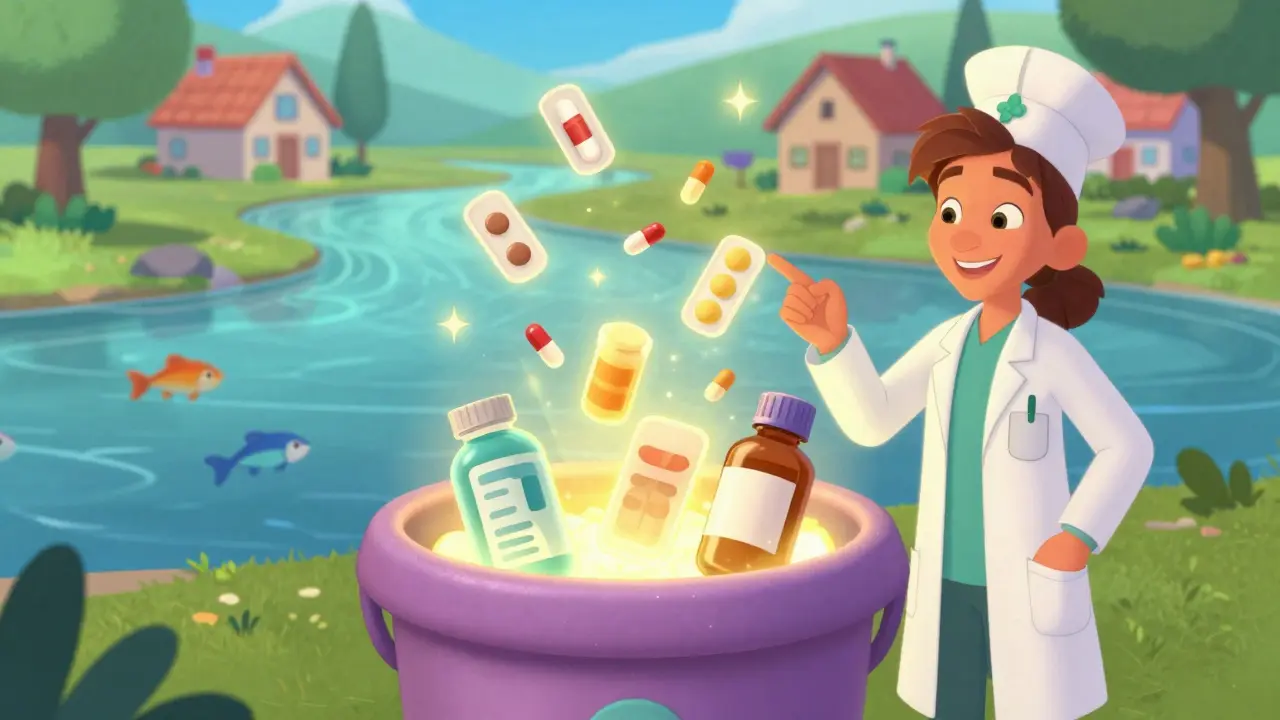
What You Can’t Bring-and Why
Some items are common in medicine cabinets but banned at take-back sites. Here’s why:
- Asthma inhalers - They’re pressurized. If crushed or heated during transport or incineration, they can explode.
- Hydrogen peroxide - It’s a chemical oxidizer. Mixing it with other drugs creates dangerous reactions.
- Iodine-based meds - These can contaminate water treatment systems. They need specialized disposal.
- Thermometers - Especially mercury ones. They’re hazardous waste, not pharmaceuticals.
- Illicit drugs - Even if you’re turning them in, they require law enforcement handling. Call your local police station instead.
If you’re unsure, ask. Most pharmacies have a disposal guide posted near their take-back bin. You can also check the DEA’s Drug Take Back locator for site-specific rules.
Special Cases: Insulin Pens, EpiPens, and More
Some medications need extra care:
- Insulin pens - These are sharps. Remove the needle (if detachable) and dispose of it separately in a sharps container. The pen body can go in the take-back bin. Only 32% of retail pharmacies accept them, but 89% of hospital sites do.
- EpiPens - These are also sharps. Remove the needle and place the pen in the bin. The needle goes in a sharps container.
- Transdermal patches - Always fold them adhesive-side in. This prevents accidental exposure. It’s not optional.
If you’re unsure about a specific item, call ahead. Many pharmacies will tell you exactly what to do. Don’t guess.
Why This Matters: Safety, Privacy, and the Environment
Why go through all this trouble? Three big reasons:
- Prevents misuse - In 2022, 18.4 million Americans misused prescription drugs. Most got them from family medicine cabinets. Proper disposal cuts off that source.
- Protects your privacy - Your name, prescription number, and dosage are personal. Leaving them visible could lead to identity theft or fraud.
- Keeps water clean - The U.S. Geological Survey found pharmaceuticals in 80% of U.S. streams. Flushing meds is a major contributor. Proper take-back means these drugs are incinerated, not washed into rivers.
In 2024, Stericycle alone incinerated 29,800 tons of pharmaceutical waste. That’s the equivalent of 11 million pounds of dangerous substances removed from homes and waterways.
What If You’re Turned Away?
It happens. A 2023 Consumer Reports survey found 37% of people were rejected even when they followed the rules. Why? Inconsistent training. Rural sites, with fewer staff, had 22% higher rejection rates than urban ones.
If you’re turned away:
- Ask why. Was it the container? The label? The liquid?
- Take notes. You might need to go elsewhere.
- Try a different location. Hospitals, VA centers, and police stations are often more flexible than retail pharmacies.
- Use the DEA’s online tool to find sites with clear guidelines. Some even list what they accept.
Don’t give up. One Reddit user, u/EcoPharm, said their VA hospital accepted mixed pills in a ziplock after they scratched off their name. Staff even gave them disposal pouches for next time.
What’s Changing in 2025?
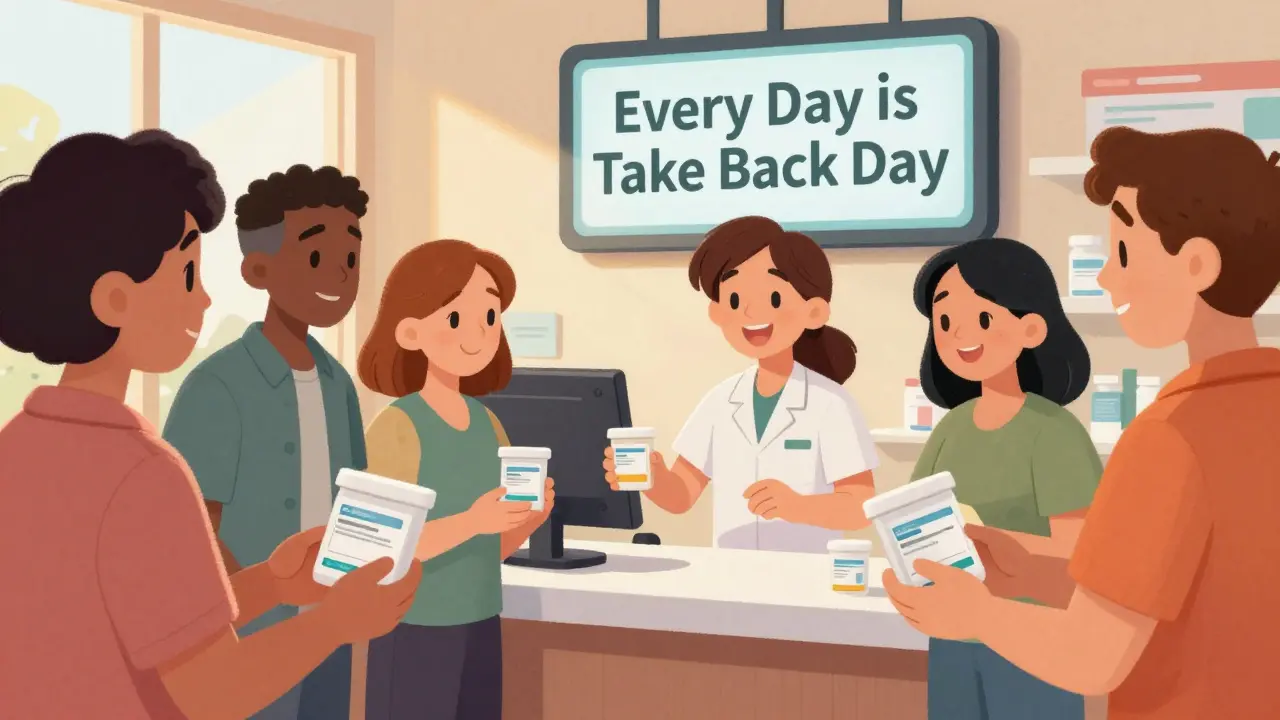
The DEA launched "Every Day is Take Back Day" in January 2024 to simplify everything. Their goal? Standardize rules across all 16,500+ sites. Right now, rules vary wildly. California demands original bottles. Washington allows sealed bags. Walgreens asks for nothing but privacy protection.
Thirty-eight states are now testing "universal preparation standards"-a move that could eliminate container requirements entirely. Early results show participation could jump 22% if people don’t have to hunt for bottles.
The FDA has allocated $8.7 million to educate the public on proper disposal. That means clearer signs, better online guides, and more staff training. The message is simple: if you remove your name and keep it sealed, you’re doing it right.
Final Tip: Make It a Habit
Don’t wait until you have a full cabinet. Every time you refill a prescription, check what’s left. Take out expired pills. Discard ones you won’t use. Keep a small ziplock bag in your medicine cabinet. Add to it as you go. When it’s full, drop it off. No stress. No mess. Just safe, simple disposal.
Take-back events aren’t just about cleaning up old meds. They’re about stopping addiction before it starts, protecting your family, and keeping your community safe. You don’t need to be an expert. Just follow these three steps: remove your name, keep it sealed, and bring it in. That’s all it takes.