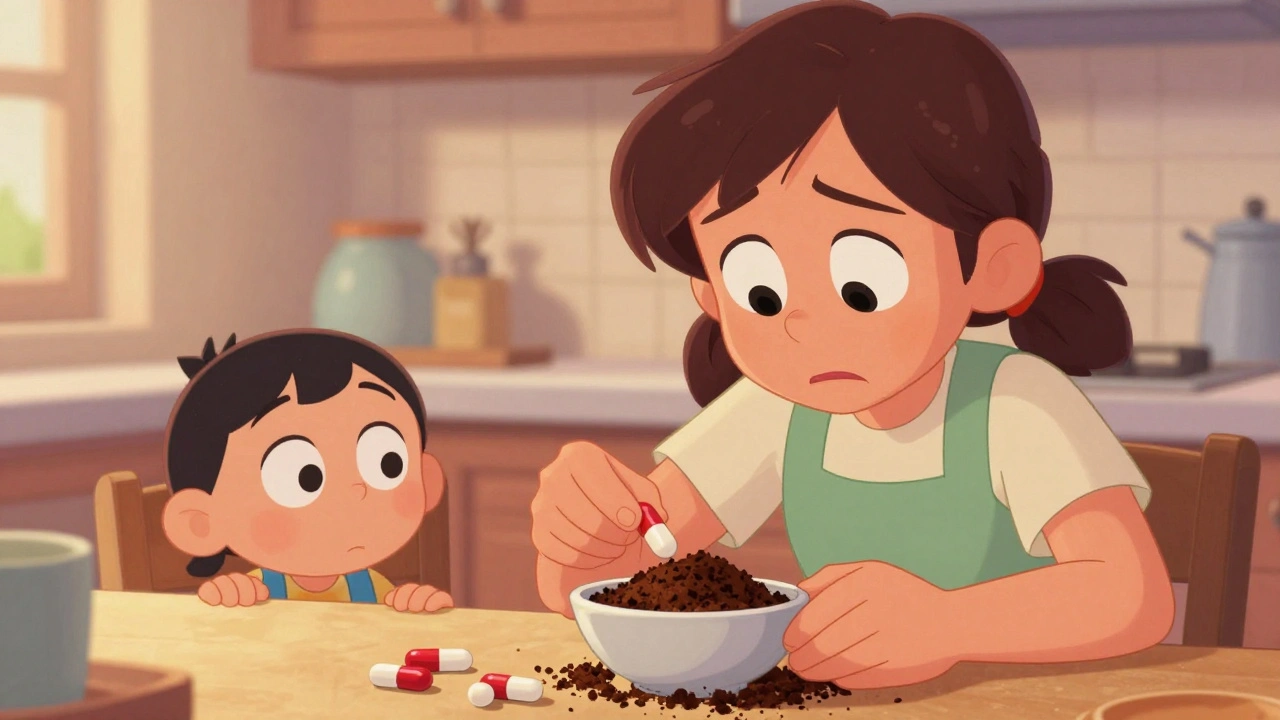
Keeping unused or expired medications in your medicine cabinet isn’t just messy-it’s dangerous. Every year, thousands of children accidentally swallow pills they find at home. Adults misuse them. Waterways get contaminated. And most people have no idea how to get rid of them the right way. If you don’t have access to a drug take-back program, disposing of medications in household trash is your safest option-if you do it correctly.
Why You Can’t Just Toss Pills in the Trash
Throwing pills straight into the trash might seem harmless, but it’s not. Prescription bottles with your name and dosage still visible can be dug out by curious kids, pets, or people looking to misuse drugs. Even if the bottle is empty, leftover powder or liquid can leak and contaminate soil or groundwater over time. The FDA estimates that 15% to 30% of prescribed medications go unused. That’s a lot of potential harm sitting in homes across the country.When Household Trash Is the Only Option
Drug take-back programs are the gold standard. Pharmacies, police stations, and community centers often host collection bins. But not everyone lives near one. In rural areas, access is limited. Some people can’t drive or don’t have transportation. If you’ve checked local options and none are available, then household trash disposal is your next best step. The FDA and EPA both agree: when done right, it’s safe and effective.Step-by-Step: How to Dispose of Medications in Household Trash
Follow these five steps exactly. Skipping any one increases risk.- Check if your medication is on the FDA’s Flush List. A small number of drugs-mostly powerful opioids and sedatives-are so dangerous if misused that flushing is recommended. As of November 2023, there are 15 medications on this list, including fentanyl patches, oxycodone, and buprenorphine. If yours is on it, flush it down the toilet immediately. If not, move to step two.
- Remove pills from their original bottles. Don’t leave them in the prescription container. Those bottles have your name, address, and prescription number. Even if you think no one will look, someone might. Take the pills out and leave the empty bottle for the next step.
- Mix them with something unappealing. Use coffee grounds, cat litter, dirt, or even used paper towels. The goal is to make the mixture look and smell disgusting. Use at least a 1:1 ratio-equal parts medicine and bad stuff. For liquid medications, pour them into absorbent material like kitty litter or flour. Do NOT crush tablets or capsules. That can release dangerous dust into the air.
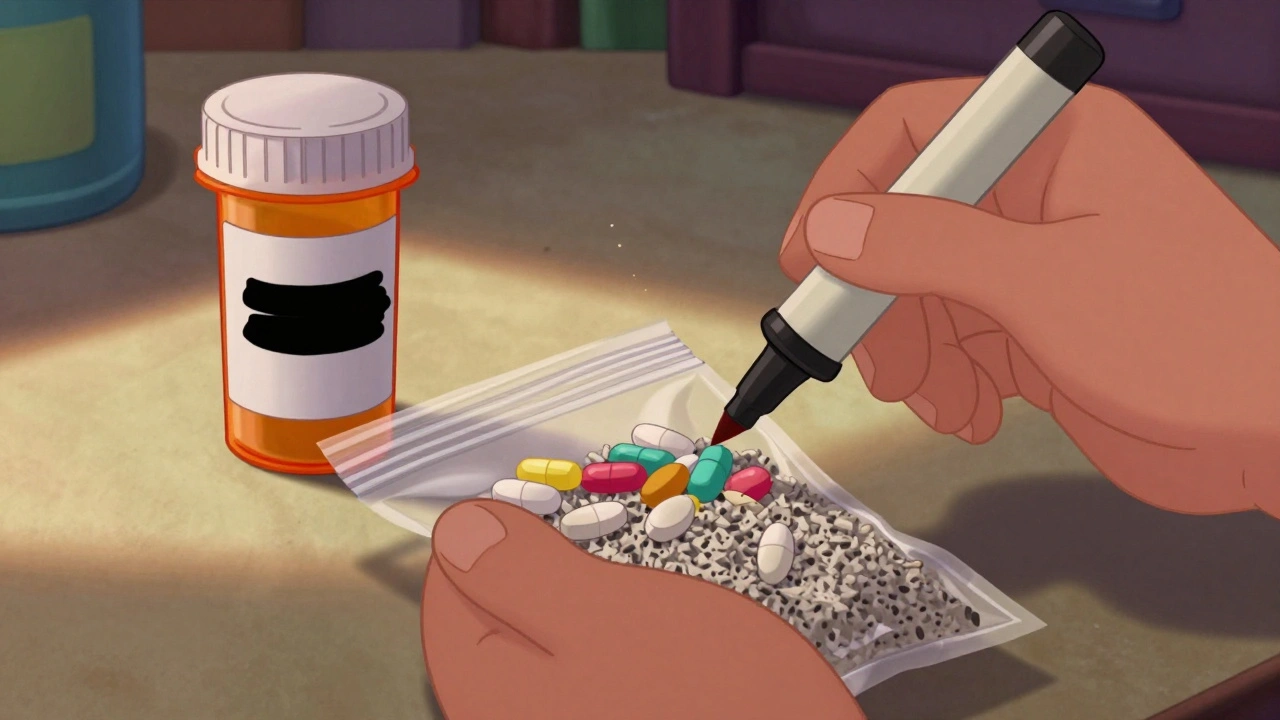
- Seal it in a container. Put the mixture into a resealable plastic bag, an empty yogurt tub, or a jar with a tight lid. This prevents leaks and keeps curious hands (or noses) away. Make sure it’s closed tightly.
- Hide your personal info on the bottle. Take the empty prescription bottle and cover your name, address, and prescription number with a permanent marker. Or wrap it in duct tape. Scratch it out with a key. Don’t just peel off the label-that’s not enough. HIPAA requires you to protect your health information, even after disposal.
Then, put the sealed container in your regular household trash. Don’t put it in recycling. Most amber prescription bottles aren’t recyclable anyway-87% of U.S. municipalities reject them.
What Not to Do
There are common mistakes that make disposal unsafe:- Don’t flush unless your drug is on the FDA’s Flush List. Flushing other meds pollutes waterways. The USGS found pharmaceuticals in 80% of U.S. rivers and streams.
- Don’t pour pills down the sink or toilet. Even if you think it’s harmless, trace amounts can linger for years.
- Don’t leave pills in open containers. A child or pet could find them.
- Don’t ignore the label. Some medications have special disposal instructions. Always read the package insert.
- Don’t wait too long. The longer you keep unused meds at home, the higher the chance of misuse or accident.
Why This Matters Beyond Safety
Improper disposal isn’t just a personal risk-it’s a public health issue. The FDA reports 45,000 emergency room visits each year from kids swallowing pills. Over 70,000 people die annually from prescription drug misuse. And while landfills aren’t perfect, proper trash disposal cuts environmental contamination by about 75% compared to flushing or dumping. Even though some compounds still seep into leachate (a 2023 study found 12-18% of certain drugs can leak), it’s far better than letting them enter water supplies.What About Those Empty Bottles?
After you’ve scrubbed off or covered your personal info, you can throw the empty prescription bottle in the trash. Most are made of #5 plastic (polypropylene), which most curbside recycling programs don’t accept. Some pharmacies, like Walgreens, take back empty bottles for proper recycling-but only if you drop them off in person. Don’t assume your local recycling center will take them.What If You Live in California?
California has stricter rules. Under SB 212, which took effect January 1, 2024, pharmacies with four or more locations must offer free medication disposal kiosks. That means 98% of Californians now have access to a drop-off point. But here’s the catch: California law bans flushing and trash disposal of any medication. So if you live there, use a kiosk-even if it’s a drive. Don’t rely on federal guidelines. State law overrides them.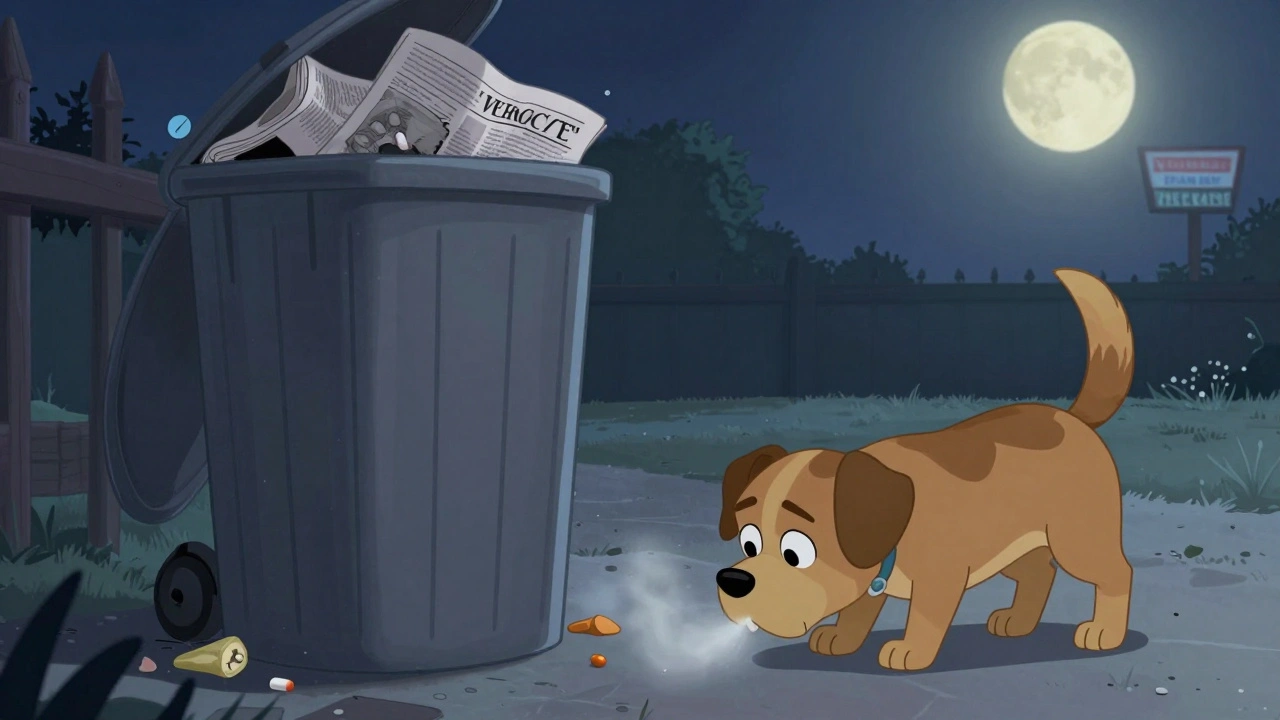
Comments
Keasha Trawick
Okay but let’s be real-mixing pills with cat litter is basically a horror movie set design. I did this last month after my grandma passed and I found three bottles of OxyContin tucked behind the Lysol. Coffee grounds? Nah. I used old french fries and a half-eaten burrito. Smelled like a dumpster behind a Taco Bell at 3 a.m. But hey, the kids won’t touch it. Also, did you know that fentanyl patches can kill a dog if they lick the residue? Yeah. I’m not sleeping tonight.
Also-why does the FDA have a FLUSH LIST but not a ‘DON’T BE AN IDIOT’ LIST? Just saying.
On December 12, 2025 AT 06:06
Webster Bull
five min. mix. seal. toss. done.
no fancy kits. no guilt. no drama.
you save a kid. you protect the earth. you win.
just do it.
On December 12, 2025 AT 16:45
Bruno Janssen
I just leave mine in the cabinet. What’s the worst that could happen? Someone finds them and gets high? Maybe they’ll feel something for once. I don’t care. I’m tired. I don’t have the energy to mix pills with dirt. I just… don’t think about it. I’m sorry. I know it’s wrong. But I’m tired.
On December 13, 2025 AT 09:20
Scott Butler
So now we’re giving out government-approved trash disposal guides because people can’t be bothered to drive 15 minutes to a drop-off? This is why America’s falling apart. We don’t need more ‘easy out’ instructions-we need more accountability. If you can’t make the trip, maybe you shouldn’t have been prescribed the damn pills in the first place. And California? You’re just another socialist state pretending to care while raising taxes on everything.
Also, why are we letting Big Pharma off the hook? They’re the ones flooding the market with opioids. Fix the source, not the trash can.
On December 14, 2025 AT 16:53
Emma Sbarge
Step 3 says don’t crush tablets. That’s critical. I saw a video once where someone crushed Adderall and inhaled it-ended up in the ER with lung damage. Don’t do it. Even if you think it’s harmless, you’re not just disposing-you’re preventing a whole cascade of harm. Also, the empty bottle thing? That’s HIPAA 101. Your medical info isn’t public property. Cover it. Scrub it. Burn it if you have to. Protect yourself. Protect others.
This guide is actually really well done. Clear. Practical. No fluff. Thank you.
On December 15, 2025 AT 22:53
Deborah Andrich
you don’t need to be perfect you just need to care
even if you mix it with old cereal
even if you use a yogurt cup instead of a ziplock
even if you forget to mark the bottle just a little
you’re still doing better than 90% of people
that’s enough
you’re enough
keep going
On December 16, 2025 AT 04:33
Tommy Watson
lol why do we even have to do this? Why can’t the pharmacy just take back ALL the bottles? Why is this on us? I’m not a janitor. I didn’t even ask for 12 bottles of painkillers. My doctor just handed them to me like candy. Now I gotta mix ‘em with coffee grounds? Bro. I’m tired. Just give me a mailer. Or better yet-make the pills dissolve after 30 days. Like a time bomb for dumb people. That’d be smart.
Also I think the FDA is just trying to sell more containers. I’m not buying it.
On December 18, 2025 AT 02:49