
Imagine your heart pounding so hard you can feel it in your ears, your hands shaking uncontrollably, and a sense of anxiety that just won’t go away. For someone with hyperthyroidism, also known as overactive thyroid, this isn't just stress-it's their daily reality. This condition occurs when the thyroid gland produces too much of the hormones T3 and T4, pushing the body into a hypermetabolic state. While definitive treatments like medication or surgery take weeks to work, patients need relief now. That is where beta-blockers come in.
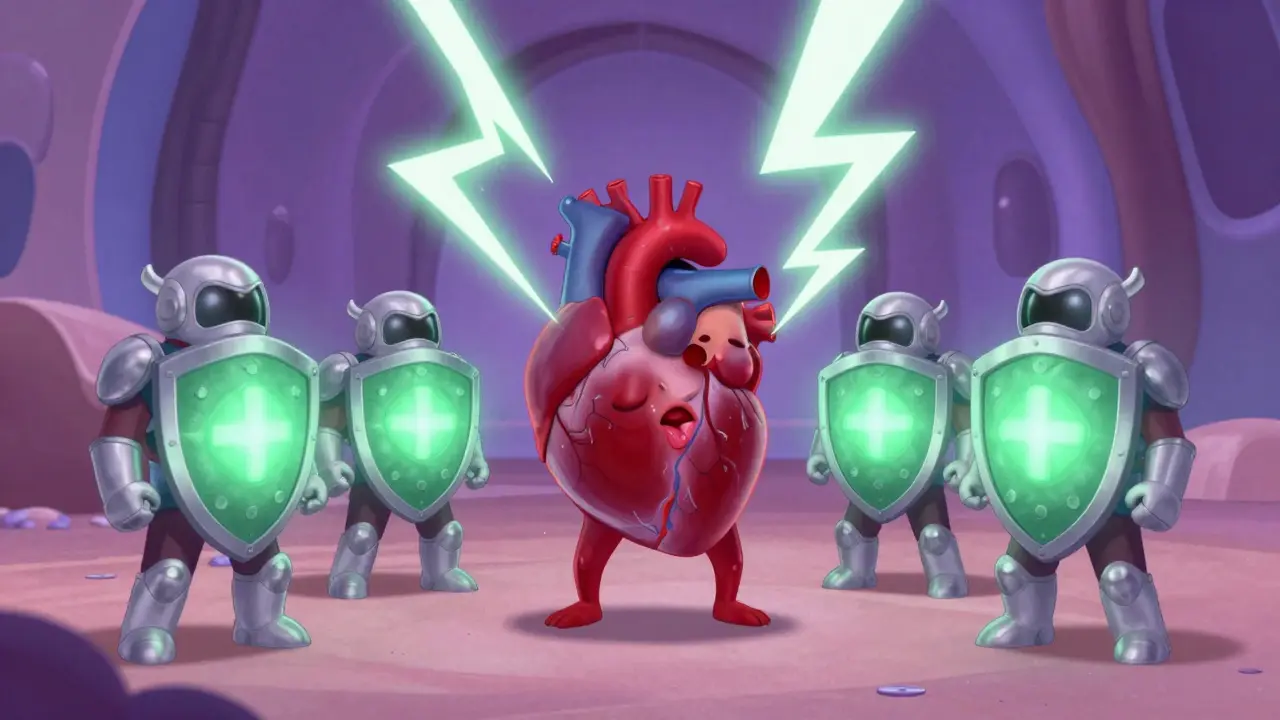
Beta-blockers are not a cure for an overactive thyroid. They don't stop hormone production. Instead, they act as a shield, blocking the effects of those excess hormones on the body’s adrenergic system. Think of them as the brakes on a car that has its accelerator stuck down. Without them, the risk of complications like rapid heart rate (tachycardia) or even thyroid storm-a life-threatening emergency-increases significantly. Understanding how these drugs fit into the broader treatment plan is essential for anyone navigating this diagnosis.
Why Beta-Blockers Are the First Line of Defense
When a doctor diagnoses hyperthyroidism, the immediate goal is symptom control. The American Thyroid Association (ATA) guidelines from 2016, which remain the standard reference alongside 2018 European recommendations, explicitly recommend beta-blockers for nearly all patients. Why? Because they work fast. While antithyroid drugs like methimazole take three to six weeks to normalize blood levels, beta-blockers can reduce heart rate and tremors within hours.
The primary mechanism involves blocking beta-adrenergic receptors. In a hyperthyroid state, the body is hypersensitive to adrenaline. Beta-blockers prevent adrenaline from binding to these receptors, effectively calming the nervous system’s overreaction. This results in reduced palpitations, less anxiety, and improved heat tolerance. It’s crucial to understand that while these drugs manage symptoms, they do not lower thyroid-stimulating antibodies or shrink the thyroid gland. They buy time for definitive therapies to kick in.
- Tachycardia: Slows down a racing heart, reducing strain on cardiac muscle.
- Tremors: Stabilizes hand movements that interfere with daily tasks.
- Anxiety: Dampens the physical sensation of panic often mistaken for psychological distress.
- Heat Intolerance: Helps regulate body temperature perception.
Choosing the Right Beta-Blocker: Propranolol vs. Others
Not all beta-blockers are created equal when treating an overactive thyroid. The choice often comes down to selectivity. Non-selective beta-blockers block both beta-1 (heart) and beta-2 (lungs/peripheral tissues) receptors. Selective ones target mainly the heart. For hyperthyroidism, non-selective options are generally preferred because they offer broader symptom relief.
Propranolol is the gold standard here. According to clinical data, at higher doses, propranolol does something unique: it partially inhibits the peripheral conversion of T4 (thyroxine) to T3 (triiodothyronine). Since T3 is the more active hormone, stopping some of this conversion provides an extra layer of benefit beyond just blocking adrenaline. Typical dosing starts at 10-40 mg taken three to four times daily. In severe cases, doses may climb to 240-480 mg per day, though this requires close medical supervision.
Other options exist for specific situations. Nadolol is another non-selective option but is taken once daily (40-160 mg), which can improve compliance for patients who struggle with frequent dosing. Esmolol is used intravenously in intensive care units for thyroid storm, a critical condition requiring immediate intervention. Its short half-life allows doctors to titrate the dose precisely in unstable patients.
| Drug Name | Type | Typical Dosing | Key Advantage |
|---|---|---|---|
| Propranolol | Non-selective | 10-40 mg, 3-4x daily | Inhibits T4 to T3 conversion; fastest onset |
| Nadolol | Non-selective | 40-160 mg, once daily | Once-daily convenience |
| Atenolol | Selective (Beta-1) | 25-50 mg, once daily | Safer for mild asthma/COPD patients |
| Esmolol | Selective (Beta-1) | IV infusion only | Rapid titration for thyroid storm |
Who Should Avoid Beta-Blockers?
While effective, beta-blockers aren't safe for everyone. The most significant contraindication is severe asthma or chronic obstructive pulmonary disease (COPD). Because non-selective beta-blockers like propranolol block beta-2 receptors in the lungs, they can cause bronchospasm-a tightening of the airways that makes breathing difficult. For these patients, the ATA guidelines suggest using calcium channel blockers instead.
Verapamil (120-360 mg/day) and Diltiazem (120-360 mg/day) are the go-to alternatives. They control heart rate without affecting lung function. Another group to watch closely is elderly patients with existing heart conditions. While beta-blockers protect the heart from tachycardia, they can sometimes cause excessive bradycardia (slow heart rate) or worsen heart failure if not titrated carefully. Doctors must balance the benefits of symptom relief against the risks of cardiac depression.
Beta-Blockers vs. Antithyroid Drugs: A Team Effort
A common misconception is that beta-blockers replace antithyroid medications. They do not. Methimazole (MMI) and Propylthiouracil (PTU) are the drugs that actually stop the thyroid from making hormones. MMI is typically the first-line therapy for Graves' disease, prescribed at 10-20 mg daily for 12-18 months. PTU is reserved for specific cases, such as the first trimester of pregnancy or thyroid storm, due to higher risks of liver toxicity.
The relationship between these two drug classes is complementary. You start beta-blockers immediately for symptom control. You start antithyroid drugs concurrently to treat the root cause. As the antithyroid drugs begin to work after several weeks, the patient becomes "euthyroid" (normal thyroid levels). At this point, the beta-blocker is gradually tapered off. If you rely on beta-blockers alone, you’re masking the problem without fixing it, which can lead to long-term bone loss and heart damage.

Navigating Radioactive Iodine Therapy
For many patients, Radioactive Iodine (RAI) therapy is the definitive treatment. It destroys overactive thyroid tissue, usually resulting in permanent hypothyroidism, which is easier to manage with synthetic hormone replacement. Timing matters here. Patients must stop taking antithyroid drugs 2-3 days before RAI administration to ensure the thyroid absorbs enough radiation. However, beta-blockers tell a different story.
Doctors often continue beta-blockers during the peri-radioiodine period, especially for high-risk patients. These include individuals with very high T4 levels, the elderly, or those with pre-existing heart disease. After RAI, it can take 3-6 months for the thyroid to fully shut down. During this window, symptoms may flare up again. Keeping the beta-blocker on board prevents this rebound effect. Once thyroid function tests confirm the patient is stable or hypothyroid, the beta-blocker is discontinued.
Monitoring and Long-Term Outlook
Managing hyperthyroidism requires patience and regular check-ins. Clinical protocols typically involve monitoring thyroid function tests at 6 weeks, 3 months, 6 months, and 1 year after starting treatment. This schedule helps doctors adjust antithyroid drug doses and determine when to taper off beta-blockers. A study published in the *Journal of Thyroid Research* in 2021 found that initiating beta-blockers within 24 hours of diagnosis reduced emergency department visits by 37%, highlighting the importance of early intervention.
Long-term viability of this approach is strong. There is no evidence that beta-blockers lose effectiveness over time. However, they should never be used as monotherapy for extended periods without addressing the underlying hyperthyroidism. Doing so delays proper management and exposes the patient to unnecessary cardiovascular stress. With proper coordination between symptomatic relief (beta-blockers) and definitive treatment (medication, RAI, or surgery), most patients return to normal health within months.
How long do I need to take beta-blockers for hyperthyroidism?
The duration depends on your definitive treatment. If you are on antithyroid drugs, you typically take beta-blockers for 4-8 weeks until your thyroid levels normalize. If you undergo radioactive iodine therapy, you may need them for 3-6 months until the thyroid activity subsides. Your doctor will taper the dose gradually rather than stopping abruptly.
Can beta-blockers cure hyperthyroidism?
No, beta-blockers do not cure hyperthyroidism. They only manage symptoms like rapid heart rate and tremors. They do not reduce thyroid hormone production or address the underlying cause, such as Graves' disease or toxic nodules. Definitive treatment requires antithyroid medications, radioactive iodine, or surgery.
What if I have asthma and am diagnosed with an overactive thyroid?
If you have severe asthma, non-selective beta-blockers like propranolol can trigger dangerous breathing issues. In these cases, doctors often prescribe calcium channel blockers like verapamil or diltiazem to control heart rate. Alternatively, selective beta-1 blockers like atenolol may be used cautiously under strict supervision.
Why is propranolol preferred over other beta-blockers?
Propranolol is preferred because it is non-selective and, at higher doses, it inhibits the conversion of T4 to the more active T3 hormone. This dual action provides faster and more comprehensive symptom relief compared to selective beta-blockers, which only affect heart rate and blood pressure.
What are the side effects of beta-blockers for thyroid patients?
Common side effects include fatigue, cold hands and feet, and potentially slowed heart rate (bradycardia). In rare cases, they can cause sexual dysfunction or mask signs of low blood sugar in diabetics. Serious risks include bronchospasm in asthmatics and worsening heart failure in susceptible individuals.