By 2025, Medicare Part D covers over 51 million Americans, and nearly 92% of all prescriptions filled under the program are for generic drugs. That’s not an accident-it’s by design. The system was built to push people toward cheaper, equally effective medications. But understanding how that actually works in practice? That’s where most beneficiaries get lost.
What Exactly Is a Medicare Part D Formulary?
A formulary is just a list of drugs your plan will pay for. It’s not random. Every Part D plan must follow strict federal rules set by the Centers for Medicare & Medicaid Services (CMS). They have to cover at least two different generic drugs in every major category-like blood pressure, diabetes, or cholesterol meds. And for six critical drug classes (like antidepressants and cancer drugs), they must cover every available generic. But here’s the catch: not all generics are treated the same. Your plan puts them into tiers. Think of it like a pricing ladder. The lower the tier, the less you pay.Tier 1: The $0 to $15 Generics
Tier 1 is where the magic happens. This is for preferred generics-drugs your plan has negotiated the best price on. For a 30-day supply, you might pay $0, $5, or $15. That’s it. No percentage. No surprise bills. These are the drugs your pharmacist automatically gives you unless you ask for something else. Most common medications fall here: lisinopril for blood pressure, metformin for diabetes, atorvastatin for cholesterol. If you’re taking one or two of these, your monthly drug cost could be under $20-even $0-if your plan has a $0 deductible.Tier 2: The Non-Preferred Generics
Tier 2 is for generics that work the same but cost a bit more for the plan to buy. You’ll still save money compared to brand names, but you’ll pay more out of pocket. Copays here can range from $20 to $40, or sometimes you pay 25-35% of the drug’s price (coinsurance). That’s where things get tricky. Say your plan covers generic amlodipine in Tier 1 but only covers generic diltiazem in Tier 2-even though both treat high blood pressure. If your doctor prescribes diltiazem, you’re stuck with higher costs. That’s why checking your plan’s formulary before you enroll matters.How the New $2,000 Cap Changes Everything
Before 2025, there was a gap in coverage called the “donut hole.” Once you spent a certain amount, you paid 100% of your drug costs until you hit a high threshold. That was brutal for people on multiple generics. The Inflation Reduction Act changed that. Starting January 1, 2025, your out-of-pocket costs for all drugs-brand or generic-are capped at $2,000 per year. After that, you pay nothing for the rest of the year. This is huge. For someone taking three generics costing $100 each month, they’d hit the cap by July. After that, their meds are free. That’s not a discount. That’s a lifeline.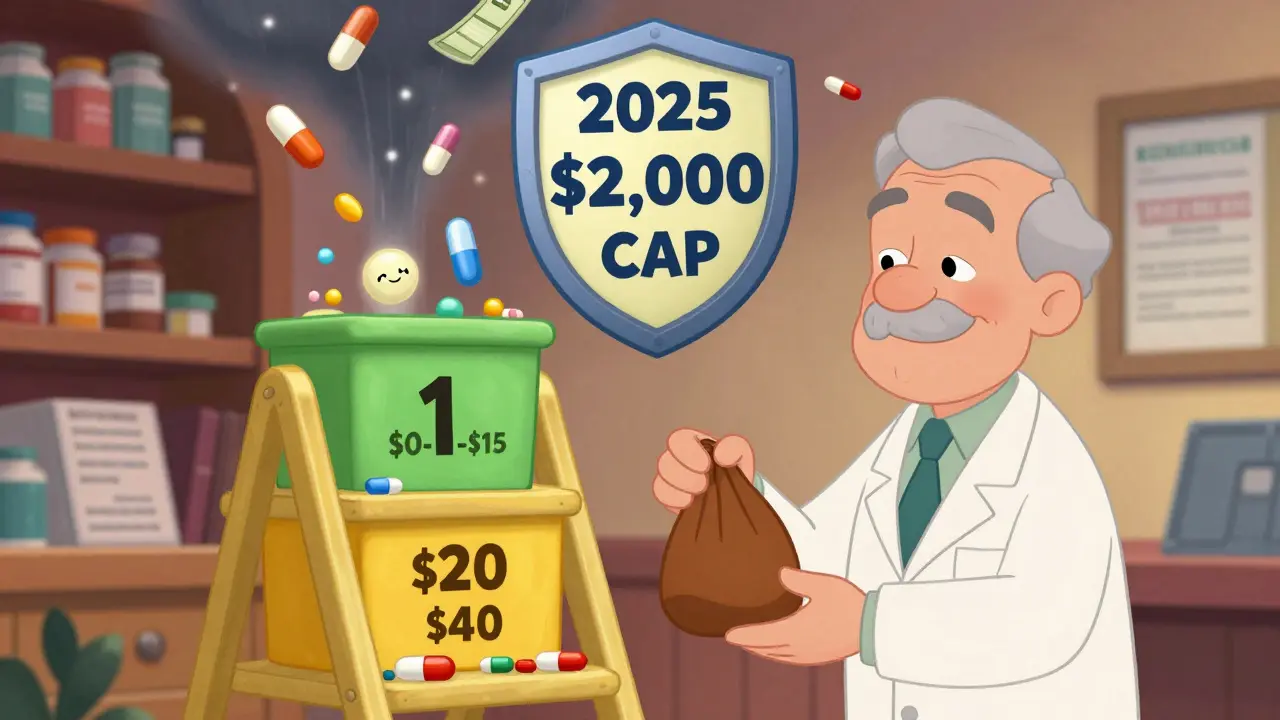
Why Generics Cost Less (And Why That Matters)
Generics cost less because they don’t need expensive clinical trials. The FDA says they’re identical in active ingredient, strength, and effect to the brand. The only differences? Color, shape, or inactive fillers-none of which affect how the drug works. In 2023, generics made up 92% of Part D prescriptions but only 18% of total spending. That’s the power of this system. Your plan pays 75% of the cost for a generic, while for a brand name, it’s only 72.5%. The difference seems small, but multiply that by millions of prescriptions, and you’re talking billions saved.What You Pay When You’re in the Coverage Gap
You pay 25% coinsurance on generics during the initial coverage phase-after you meet your deductible ($615 in 2025). But here’s the twist: only what you pay counts toward your $2,000 cap. For brand names, the manufacturer discount (up to 70%) also counts. So if you’re on a brand-name drug, you hit the cap faster. For generics? You’re paying the full 25%. But since the drug itself is cheaper, you’re still spending less overall. A $15 generic at 25% is $3.75. A $100 brand at 25% is $25. The math is simple: generics keep your out-of-pocket costs low.How to Find the Best Plan for Your Generics
You can’t pick a plan based on price alone. You need to pick one that covers your drugs. Use the Medicare Plan Finder tool. Type in every generic you take. Look at the tier, the copay, and the deductible. Don’t just look at the monthly premium. A $10/month plan with a $615 deductible and $40 copays on your meds could cost you more than a $30/month plan with a $0 deductible and $0 copays. Check your Annual Notice of Change (ANOC) every fall. Plans change their formularies. A drug you paid $5 for last year might jump to Tier 2 this year. That’s why 37% of plans tweak their generic tiers annually.What If Your Generic Isn’t Covered?
If your doctor prescribes a generic your plan doesn’t cover, you can ask for a coverage determination. You submit a request, and your plan has to respond in 72 hours. In 2023, 83% of these requests were approved. Sometimes, your pharmacist can switch you to another generic in the same class. But if your plan only covers one version of a drug, and you get a different one, you might pay full price. That’s a common complaint on Reddit and in Medicare forums.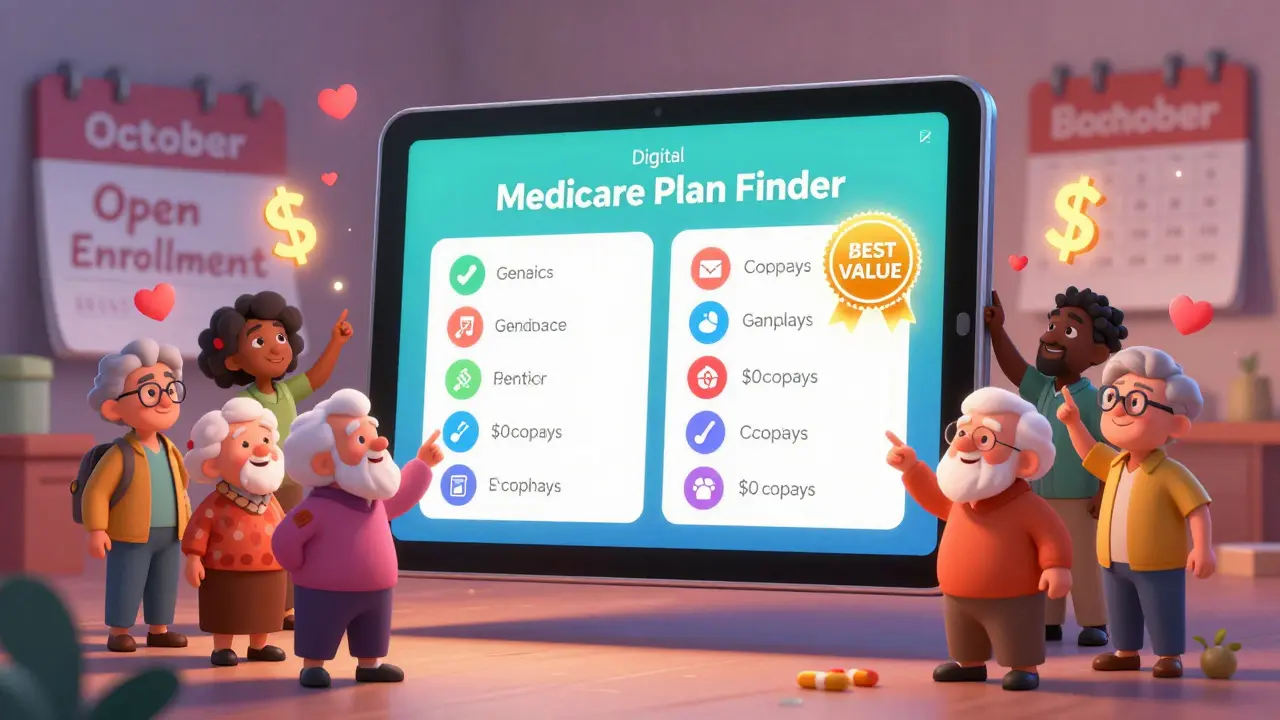
What’s Changing in 2026 and Beyond
Starting in 2026, all Part D plans must include a tool in their member portals that shows you the lowest-cost generic alternative for any drug you’re taking. That’s a big step toward transparency. By 2029, the government will start negotiating prices for certain generics-starting with insulin glargine. That means even more savings on some of the most common drugs. The goal? By 2027, 95% of Medicare beneficiaries will have access to $0 copays on at least half of their commonly used generics. That’s not a dream-it’s the projected outcome of current policy.Real Stories, Real Savings
One beneficiary in Ohio takes three generics: metformin, lisinopril, and atorvastatin. In 2024, she paid $120 a month. In 2025, with her plan’s $0 deductible and Tier 1 copays, she pays $0. Her out-of-pocket savings: $1,440 a year. Another man in Florida was paying $80 a month for a brand-name heart med. His doctor switched him to a generic. His monthly cost dropped to $15. He didn’t even have to call his doctor-he just asked his pharmacist. These aren’t rare cases. They’re the norm for people who know how to use the system.Don’t Guess. Check.
Medicare Part D isn’t complicated. But it’s easy to assume your plan covers what you need. It doesn’t always. A generic version of your drug might be on Tier 2. Or your plan might not cover it at all. Your best move? Before you enroll-or every fall during Open Enrollment-go to Medicare.gov, enter your exact medications, and compare plans side by side. Look for the one with the lowest total cost for your specific drugs. Don’t trust the premium. Don’t trust the marketing. Trust the numbers. Because when it comes to your health, the cheapest plan isn’t always the best. The right plan-the one that covers your generics at the lowest cost-is the one that actually saves you money and stress.What to Do Next
1. Make a list of every medication you take, including the generic name. 2. Go to Medicare.gov/plan-compare and enter your drugs. 3. Compare plans by total annual cost-not just monthly premium. 4. Check your plan’s formulary annually in the fall. 5. If a drug you need isn’t covered, request a coverage determination. 6. Talk to your pharmacist. They know what’s covered and what’s not. You’re not alone. Millions of people use this system every day. You just need to know how to use it.Are all generic drugs covered by Medicare Part D?
Not every generic is covered, but all FDA-approved generics must be covered unless they’re for weight loss, fertility, or cosmetic use. Plans can choose which specific generics to include in each class, but they must cover at least two per category and all generics in six protected drug classes like antidepressants and cancer drugs.
Why does my plan cover one generic but not another for the same condition?
Plans pick specific generics based on negotiated prices and formulary rules. Even if two generics are chemically identical, one might be cheaper for the plan to buy. So they cover the cheaper one and may require you to try it first. If it doesn’t work, you can request a coverage exception.
Does the $2,000 out-of-pocket cap apply to generic drugs only?
No. The $2,000 cap applies to all drugs you pay for-including brand names and specialty meds. But because generics are cheaper, most people reach the cap faster when taking mostly generics. Once you hit the cap, you pay $0 for everything else for the rest of the year.
Can I switch plans if my generic gets moved to a higher tier?
Yes. You can switch plans during the Annual Enrollment Period (October 15 to December 7). If your plan changes your drug’s tier in the fall, you’ll get an Annual Notice of Change. Use that to compare other plans and switch if needed. You can also request a special enrollment if your drug is removed entirely.
How do I know if a drug is a generic or brand name?
The generic name is usually the first part of the drug’s label-for example, “metformin” instead of “Glucophage.” Your pharmacist can confirm. You can also check the FDA’s online database or use the Medicare Plan Finder, which lists drugs by generic name.
What if I can’t afford my generic even with Medicare?
You may qualify for Extra Help-a federal program that lowers Part D costs. People with limited income and resources can get help paying premiums, deductibles, and copays. Apply at SSA.gov or call 1-800-MEDICARE. Many people don’t know they qualify.