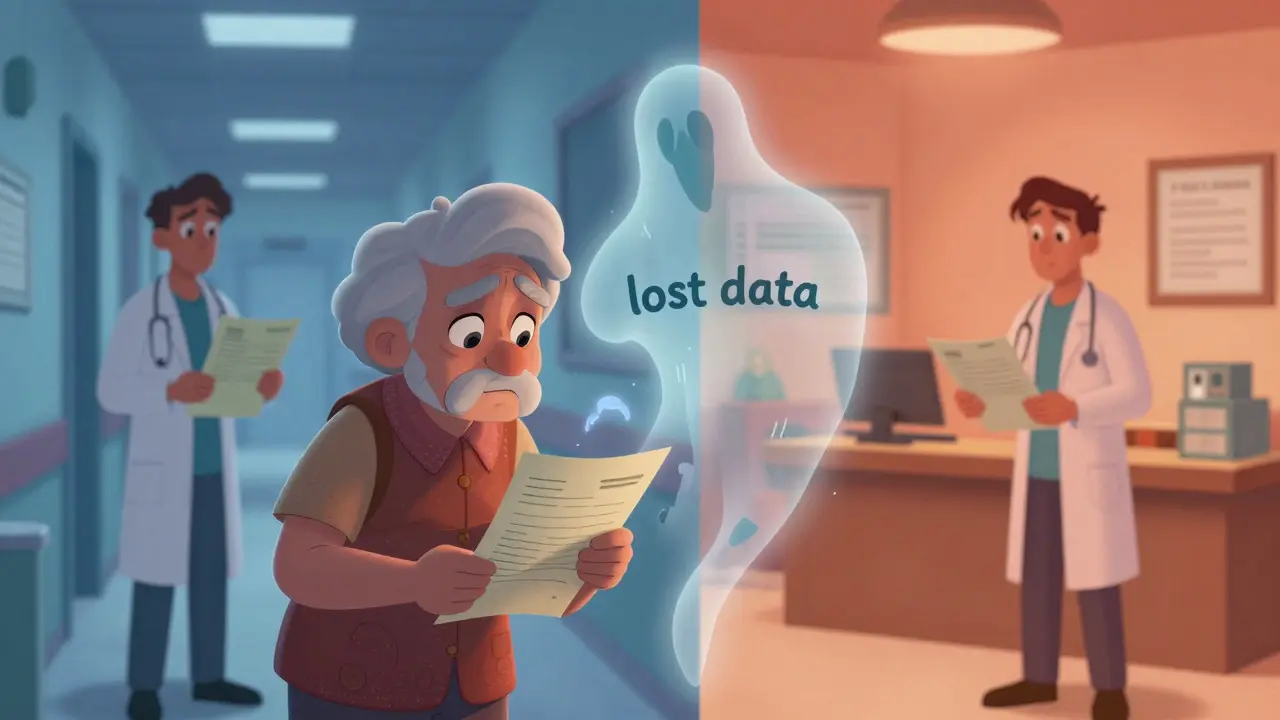
Imagine a patient leaves the hospital with a new list of drugs. Two days later, they visit their GP who sees an old record. The GP prescribes a third drug that interacts badly with the first one. This isn't a rare glitch; it is a common failure point in modern healthcare. Medication reconciliation is the process of creating and verifying the most accurate list of all medications a patient is taking to ensure safe transitions between care settings. It is the critical safety net that catches omissions, duplications, and dangerous interactions before they reach the patient. You might wonder why this simple act of checking a list is so difficult. The answer lies in the fragmentation of health data. When a patient moves from an emergency room to an inpatient ward, or from a specialist clinic back to primary care, information often gets lost in translation. Without a rigorous process to update these lists, the risk of adverse drug events skyrockets. For anyone involved in patient care-whether you are a pharmacist, nurse, or physician-understanding how to execute this process effectively is not just a best practice; it is a necessity for patient survival. ### Why Medication Errors Happen at Transitions Most people assume that if a doctor writes a prescription, it is correct. But the danger usually isn't in the writing; it is in the handoff. Research indicates that medication errors occur in 50-70% of patient transitions. Of those errors, about 20-30% cause potential harm. This happens because different care settings use different systems, speak different 'languages,' and have different priorities. A community pharmacy might see a patient's over-the-counter purchases, but the hospital electronic health record (EHR) might only show prescriptions filled by that specific hospital system. The gap between what the patient is actually taking and what the next provider thinks they are taking is where disasters brew. Adverse drug events account for roughly 6.5% of all hospital admissions. That means nearly one in fifteen patients ends up in the hospital not because of a new disease, but because a medication went wrong. By focusing on the transition points-admission, transfer, discharge, and follow-up visits-we can close these gaps. The goal is simple: ensure that every provider has the same, most current picture of the patient's pharmacological status. ### The Five Steps of Effective Reconciliation Effective medication reconciliation follows a standardized five-step framework. Skipping even one step can compromise the entire process. Here is how it works in practice:
- Develop a complete current list: This is known as the Best Possible Medication History (BPMH). You need to gather names, dosages, frequencies, routes, and indications for every substance. This includes prescriptions, over-the-counter drugs, herbal remedies, and supplements. Do not rely solely on the patient's memory. Cross-reference with community pharmacy records, previous EHR entries, and family input if available. Studies show that relying only on patient self-report leads to errors in 42% of cases.
- Create the new care setting list: Determine which medications should continue, which should be stopped, and which new ones are needed for the current condition. This requires clinical judgment based on the patient's acute needs.
- Compare the two lists: Look for discrepancies. Are there duplicates? Is a dose too high? Is a critical chronic medication missing? Clinical decision support tools can flag potential drug-drug interactions, which appear in 15-25% of complex medication lists.
- Make clinical decisions: Resolve the discrepancies. If a drug is stopped, document why. If a dose is changed, note the rationale. This step prevents 'silent' changes that confuse future providers.
- Communicate the final list: Send the updated list to the next provider, the pharmacy, and the patient. Ensure the patient understands any changes. Poor communication here is a leading cause of post-discharge confusion.
| Method | Average Time Per Patient | Error Reduction Rate | Key Challenge |
|---|---|---|---|
| Patient Self-Report Only | 5-10 mins | Low (42% error rate) | Incomplete history, memory gaps |
| Nurse-Led Manual Process | 20-30 mins | Moderate | Lack of pharmacology depth |
| Pharmacist-Led with Tech Support | 12-15 mins | High (47-67% reduction) | Staffing costs, training requirements |
| AI-Assisted EHR Integration | 5-8 mins | Very High (89% accuracy in pilots) | Initial setup cost, need for human verification |
What is the difference between medication reconciliation and a medication review?
Medication reconciliation is a specific, structured process performed during transitions of care (like admission or discharge) to create an accurate list of current medications. A medication review is a broader assessment, often done during routine checkups, to evaluate the effectiveness and appropriateness of long-term therapy. Reconciliation focuses on accuracy and continuity; review focuses on optimization and efficacy.
How much time does medication reconciliation take?
It varies by complexity and method. A basic check might take 5-10 minutes, but a comprehensive pharmacist-led reconciliation typically takes 12-20 minutes per admission and 10-15 minutes per discharge. Complex cases with many comorbidities can take up to 60 minutes if done manually without technology support.
Who is responsible for performing medication reconciliation?
Ideally, it is a team effort. Pharmacists lead the clinical decision-making, while nurses and technicians gather the initial data. Physicians approve the final orders. However, accountability rests with the entire care team to ensure the process is completed before the patient moves to the next stage of care.
Does medication reconciliation apply to over-the-counter drugs?
Yes. The Best Possible Medication History (BPMH) must include all substances, including over-the-counter medications, herbal remedies, vitamins, and traditional medicines. These can interact with prescription drugs and are often omitted if not specifically asked about.
What are the consequences of poor medication reconciliation?
Poor reconciliation leads to medication errors such as omissions, duplications, and dosing mistakes. This increases the risk of adverse drug events, which can cause hospital readmissions, prolonged stays, and in severe cases, death. It also erodes patient trust and confidence in the healthcare system.