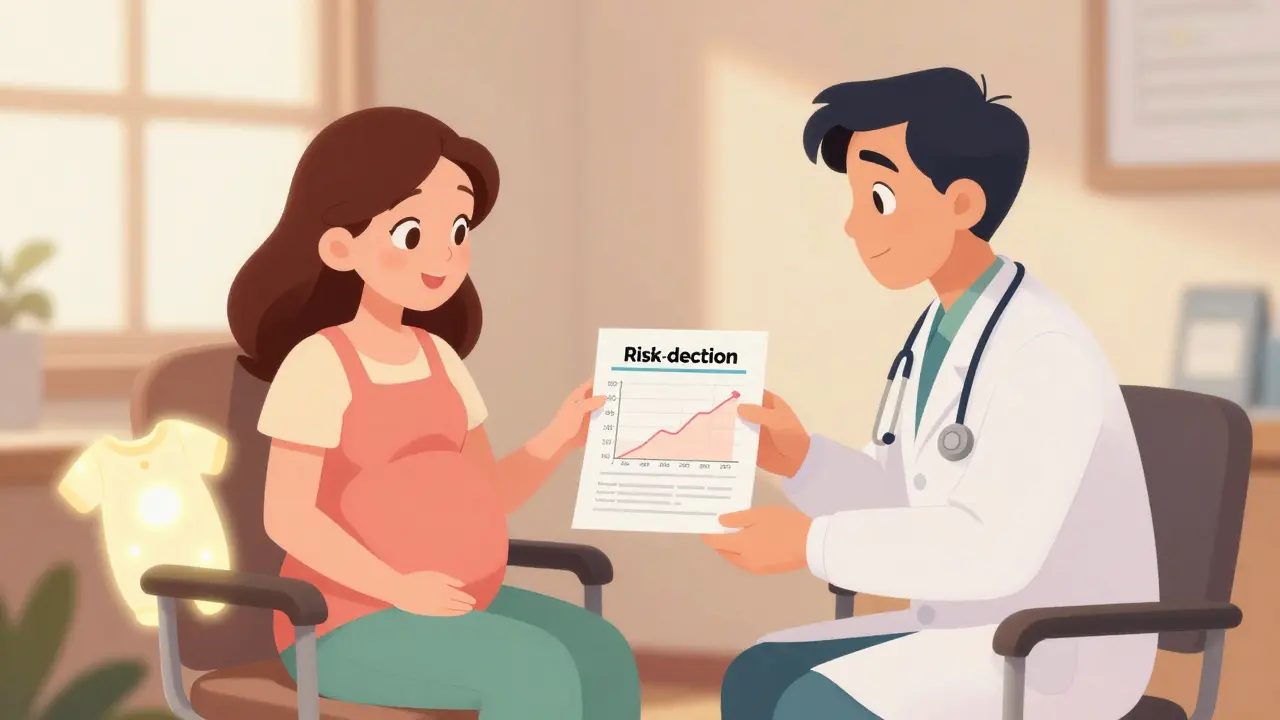
When you’re pregnant and managing a mental health condition, the question isn’t just whether to take medication-it’s how to decide, with all the fear, hope, and uncertainty that comes with it. You’re not just thinking about yourself anymore. You’re thinking about your baby. But you’re also thinking about your survival, your ability to hold your child, to sleep, to breathe. And that’s not something you should have to choose between.
There’s no safe option-and no unsafe one either
The truth is messy. No psychiatric medication is completely risk-free during pregnancy. But neither is leaving depression, anxiety, or bipolar disorder untreated. The risk of stopping your meds? Up to 80% chance of relapse if you have a history of severe depression. The risk of staying on them? A small, measurable increase in certain birth outcomes-like a slight rise in heart defects with paroxetine, or a higher chance of being born small for gestational age with SSRIs. But here’s what most people don’t tell you: those numbers are often misleading. Studies that say SSRIs increase birth defect risk? Many don’t account for the fact that the mothers taking them already have severe mental illness-and that illness itself raises the risk of preterm birth, low birth weight, and even stillbirth. When researchers control for that, the medication’s role shrinks. The real danger isn’t always the pill. It’s the silence, the isolation, the inability to get out of bed to feed yourself, let alone your baby.What medications are actually used-and why
Not all antidepressants are the same. For depression and anxiety, SSRIs are the first choice for a reason. Sertraline, citalopram, escitalopram-these are the ones most studied, most trusted. They cross the placenta, yes, but decades of data show they don’t cause major birth defects in most cases. The one exception? Paroxetine. It’s linked to a small but real increase in heart defects-about 10 out of every 1,000 births, compared to 8 out of 1,000 in the general population. That’s why most doctors avoid it unless there’s no other option. For bipolar disorder, lamotrigine is the go-to. It’s been tracked across thousands of pregnancies. No major malformations. No spike in autism risk. Lithium? It works-but your body changes during pregnancy. Your kidneys process it differently. Your blood volume increases. That means your dose might need adjusting every few weeks. If you’re on lithium, you’ll need frequent blood tests. It’s not ideal, but it’s manageable. And it’s safer than valproic acid-something you should never take if you’re planning to get pregnant. It raises the risk of neural tube defects from 1 in 1,000 to 1 in 50. That’s a 20-fold increase. Bupropion? It’s sometimes used, but it carries a slightly higher risk of miscarriage. Tricyclics like nortriptyline? They’re older, less studied, but still an option if SSRIs don’t work. Antipsychotics? Typical ones like haloperidol have decades of safety data. Atypicals? Less so. If you need one, your doctor will weigh the risks carefully-especially if you’re dealing with psychosis, where the consequences of stopping meds can be life-threatening.Shared decision-making isn’t a buzzword-it’s a process
This isn’t about your doctor telling you what to do. It’s not even about you deciding alone. Shared decision-making means you and your provider sit down with real numbers, real fears, and real options. Here’s how it works in practice:- You start with your history. How many episodes have you had? How severe? Have you been hospitalized? If you’ve had three major depressive episodes in the past five years, your chance of relapse without medication is over 70%.
- You look at the meds. Not just “is it safe?” but “how safe, exactly?” For example: “Taking sertraline increases your baby’s chance of being small for gestational age from 8% to 12%. But if you stop it, your chance of severe postpartum depression jumps to 60%.”
- You talk about alternatives. Therapy? Light therapy? Support groups? Can you combine them with lower doses? Is there a way to taper slowly after delivery instead of stopping cold?
- You make a plan for what happens if things get worse. What if you start crying nonstop at 28 weeks? Who do you call? What’s the backup plan if the med stops working?

What happens when you don’t talk about it
A 2022 survey found that 68% of pregnant women felt completely unprepared when it came to medication risks. Nearly half stopped their meds on their own-because they were scared, because no one explained it, because they were told “just go off everything.” The results? Hospitalizations. Suicidal thoughts. Babies born too early. Mothers who couldn’t bond. One Reddit user wrote: “I went off my antidepressants because my OB said it was ‘better for the baby.’ I had a panic attack so bad I thought I was having a heart attack. I ended up in the ER at 24 weeks. My baby was fine. But I wasn’t.” That’s the cost of silence.What’s changing-and what’s coming
The field is moving fast. The FDA ditched those outdated A, B, C, D, X labels years ago. Now, drug labels give real data: “In 1,200 pregnancies exposed to sertraline, 3% had major malformations-similar to the general population.” The National Pregnancy Registry has tracked over 15,000 women since 2010. That’s not just data-it’s stories. And now, they’re using it to build tools that give you personalized risk estimates. Not “most women.” Not “on average.” But “for a 32-year-old with two prior depressive episodes, taking sertraline, your risk of preterm birth is X, your risk of relapse without it is Y.” By 2026, these tools will be standard. You’ll walk into your appointment and see a chart that shows your personal risk profile-based on your age, your history, your medication, your support system. It won’t tell you what to do. But it will make the choice clearer.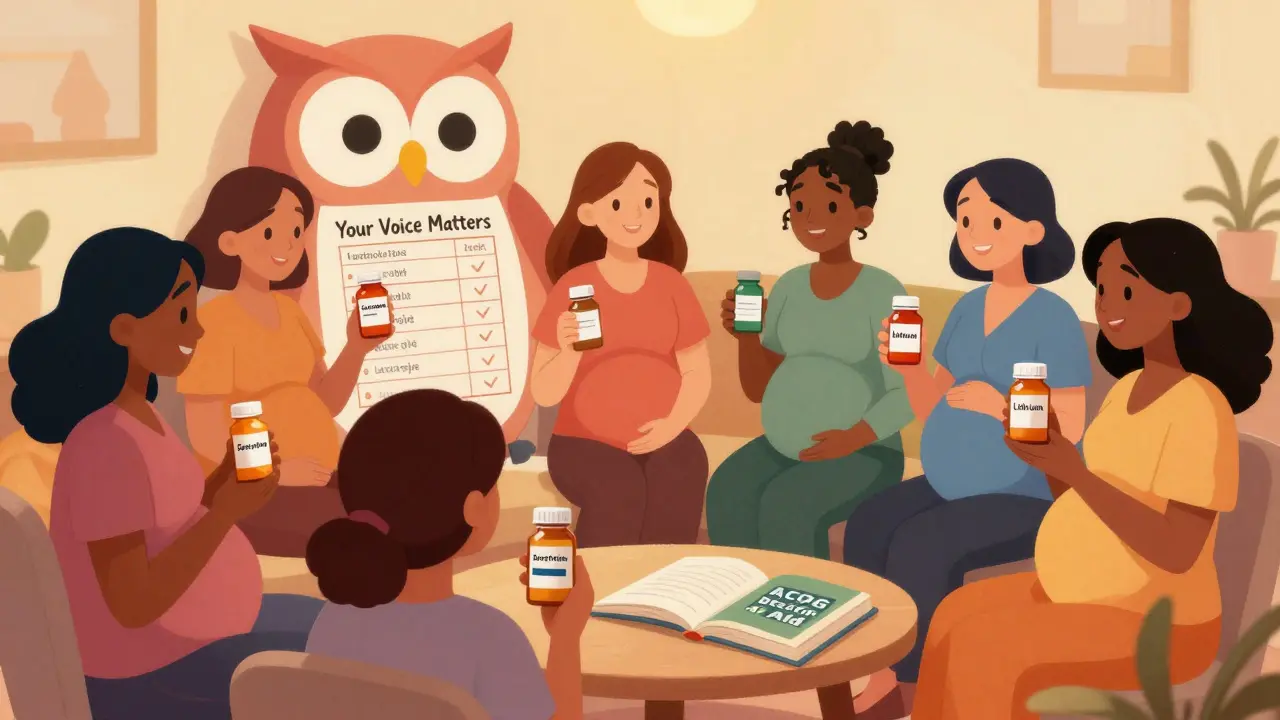
Your rights, your voice
You don’t have to accept pressure to go off your meds. You don’t have to feel guilty for needing them. And you don’t have to make this decision alone. If your provider doesn’t bring up shared decision-making, ask for it. Say: “I want to understand the real risks of continuing vs. stopping my medication. Can we go over the numbers together?” If they brush you off, ask for a referral to a perinatal psychiatrist. Eighty-seven percent of obstetricians now consult them regularly. That’s not a niche service-it’s standard care. And if you’re reading this because you’re scared, or alone, or unsure-you’re not broken. You’re human. And you deserve care that sees the whole picture: your mind, your body, your baby, your future.What to do next
If you’re pregnant or planning to be:- Don’t stop your meds without talking to your provider.
- Ask for the Mental Health Medication Decision Aid from ACOG-it’s free and updated quarterly.
- Track your mood. Use the Edinburgh Postnatal Depression Scale before and during pregnancy. It’s simple, quick, and tells you if things are slipping.
- Find a provider who’s trained in perinatal mental health. If your OB doesn’t know the difference between lamotrigine and valproic acid, find someone who does.
- Document your decisions. Write down what you discussed, what you chose, and why. It protects you-and your baby.
Are SSRIs safe to take during pregnancy?
Yes, most SSRIs like sertraline, citalopram, and escitalopram are considered safe and are the first-line treatment for depression during pregnancy. Studies show no significant increase in major birth defects with these medications, except for paroxetine, which carries a small increased risk of heart defects. The benefits of treating depression often outweigh this small risk, especially when untreated illness can lead to preterm birth, low birth weight, or maternal suicide.
Is it safer to stop my medication during pregnancy?
Not necessarily. For women with moderate to severe depression or bipolar disorder, stopping medication can lead to relapse rates of up to 80% during pregnancy. Untreated mental illness carries higher risks than most medications-including preterm birth, poor fetal growth, and increased maternal suicide risk. The decision should be based on your personal history, not fear. Stopping without a plan is riskier than continuing with proper monitoring.
What about lithium and bipolar disorder?
Lithium is effective for bipolar disorder but requires close monitoring during pregnancy. Your body’s ability to process lithium changes as your blood volume increases, so your dose may need frequent adjustments. Regular blood tests are essential. While lithium carries a small risk of heart defects (about 1 in 1,000), it’s far safer than valproic acid, which can cause serious neural tube defects. Many women successfully manage bipolar disorder with lithium throughout pregnancy with proper care.
Why is valproic acid dangerous in pregnancy?
Valproic acid increases the risk of neural tube defects from the baseline 0.1% to 1-2%-a 10 to 20 times higher risk. It’s also linked to lower IQ scores and higher autism risk in children exposed during pregnancy. Because of this, it’s strongly discouraged for women of childbearing age unless no other options exist. If you’re on valproic acid and planning pregnancy, talk to your doctor about switching to a safer alternative like lamotrigine.
Can I breastfeed while taking mental health medication?
Yes, most antidepressants and mood stabilizers are compatible with breastfeeding. Sertraline and paroxetine are among the safest, as they pass into breast milk in very low amounts. Lithium requires monitoring of the baby’s levels, but many mothers breastfeed successfully with careful management. The benefits of breastfeeding usually outweigh the minimal medication exposure. Always check with your provider before making changes.
What if my doctor pushes me to stop my meds?
You have the right to refuse any treatment-or discontinuation-of medication. If your doctor pressures you to stop without discussing risks of relapse or offering alternatives, ask for a referral to a perinatal psychiatrist. Many OBs now consult these specialists regularly. A 2021 study showed that shared decision-making reduces malpractice claims by 65%. Your mental health matters just as much as your physical health.
How can I find a provider who understands this?
Look for providers who mention perinatal psychiatry, maternal mental health, or reproductive psychiatry. Ask if they use the ACOG Mental Health Medication Decision Aid. Check with Postpartum Support International-they have directories of specialists. If your current OB doesn’t know the difference between lamotrigine and valproic acid, it’s time to find someone who does. You deserve care that respects the complexity of your situation.