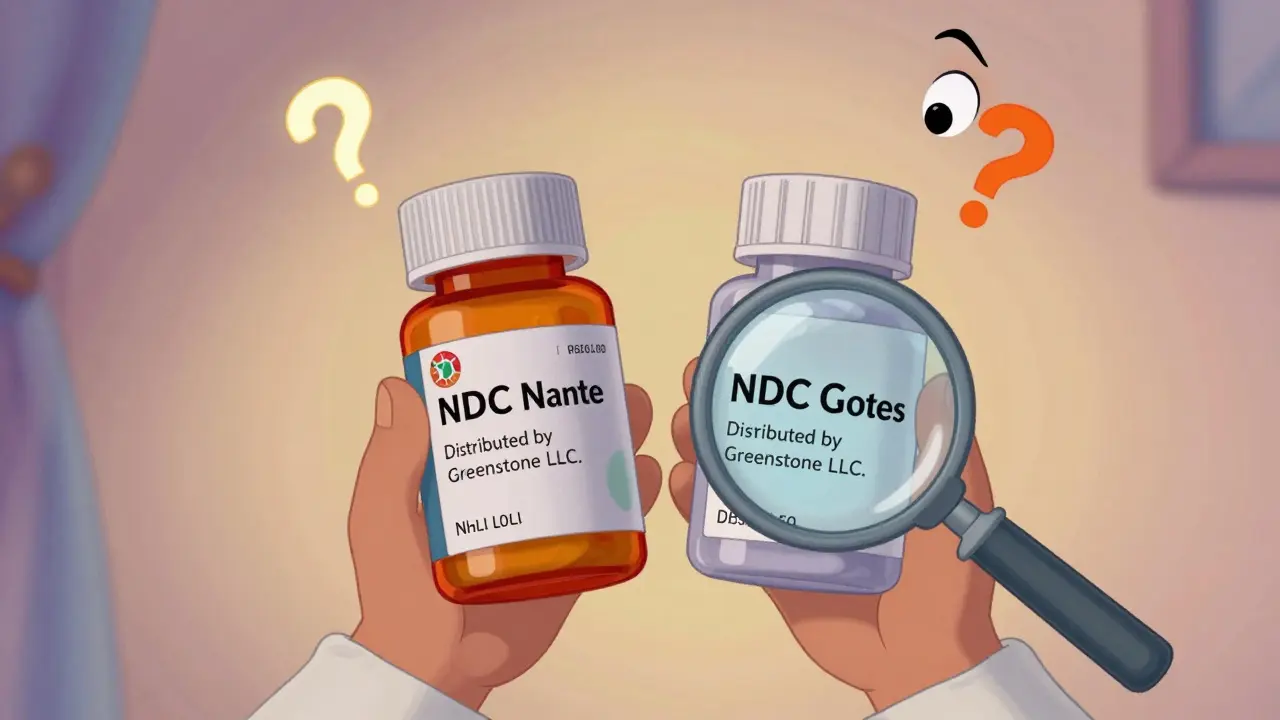
Ever picked up a prescription and noticed the pill looks exactly like your brand-name drug, but the box says a completely different company made it? That’s not a mistake. It’s likely an authorized generic-a real, FDA-approved version of your brand drug, sold under a different label. And if you don’t know how to spot one, you might miss out on savings or even worry you got the wrong medicine.
What Exactly Is an Authorized Generic?
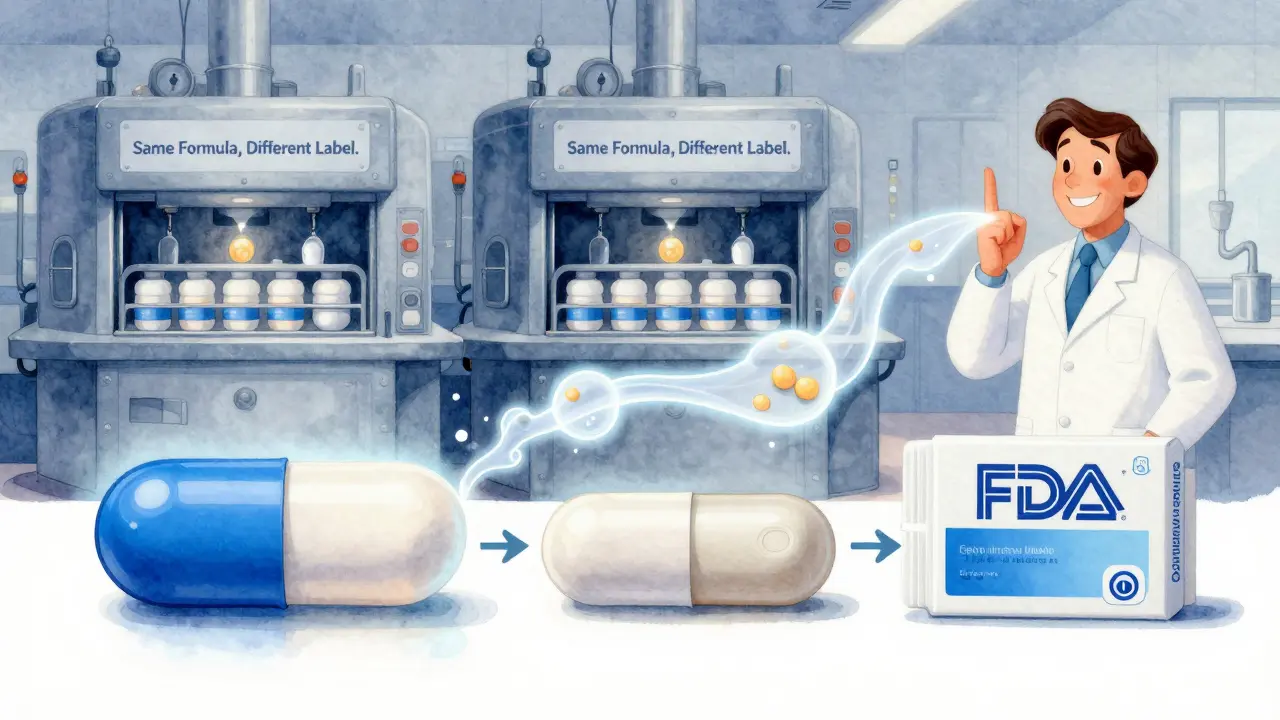
An authorized generic isn’t just another generic. It’s the exact same drug made by the original brand company, but sold without the brand name. Think of it like a car manufacturer making the same model but putting a different badge on it and selling it through a different dealer. The engine, parts, and performance? Identical. The logo? Gone. These drugs are approved under the original New Drug Application (NDA), not the Abbreviated New Drug Application (ANDA) used by most generics. That means they’re made in the same factory, with the same ingredients, same equipment, and same quality controls as the brand version. The only differences? The label, the packaging, and the price. They started showing up after 2003, when Congress passed a law to let brand companies sell their own drugs as generics during the first 180 days of generic competition. Why? To keep prices down without letting one company monopolize the generic market. Today, there are 147 authorized generics on the FDA’s official list as of October 2023.How to Spot an Authorized Generic by Its Packaging
The biggest clue is in the label. Look for these three things:- No brand name-If you see "Pfizer" on the box but the drug inside is Lyrica, that’s the brand. If it says "Greenstone LLC" instead, that’s the authorized generic. Greenstone is Pfizer’s own generic subsidiary.
- Distributed by-Authorized generics almost always say "Distributed by [Company Name]" rather than "Manufactured by." That’s because the brand company still makes it, but another company (often their own) handles distribution.
- No trademark symbols-You won’t see ® or ™ next to the drug name. The brand’s marketing language is stripped away. The label is clinical, bare-bones, and focused only on safety and dosage.
The NDC Code: Your Most Reliable Tool
The National Drug Code (NDC) is the key to 100% certainty. Every drug package has a unique 10- or 11-digit NDC number. It’s broken into three parts:- Labeler code-First segment. Identifies the company that markets the drug.
- Product code-Second segment. Identifies the drug’s strength, form, and formulation.
- Package code-Third segment. Identifies the package size.
- Brand Protonix (pantoprazole): NDC 00071-0040-10
- Authorized generic Protonix: NDC 55111-0040-10
How Authorized Generics Differ From Regular Generics
Regular generics go through the ANDA process. They must prove they’re bioequivalent to the brand drug. But they can-and often do-use different inactive ingredients. Colors, fillers, coatings? They might vary. Authorized generics? No bioequivalence testing needed. They’re the same drug from the same factory. That means:- Same active ingredients
- Same inactive ingredients
- Same manufacturing process
- Same FDA inspection records
What to Do When You’re Not Sure
If you’re confused by the packaging, don’t guess. Use these steps:- Check the NDC-Look at the box or bottle. Write down the full NDC number.
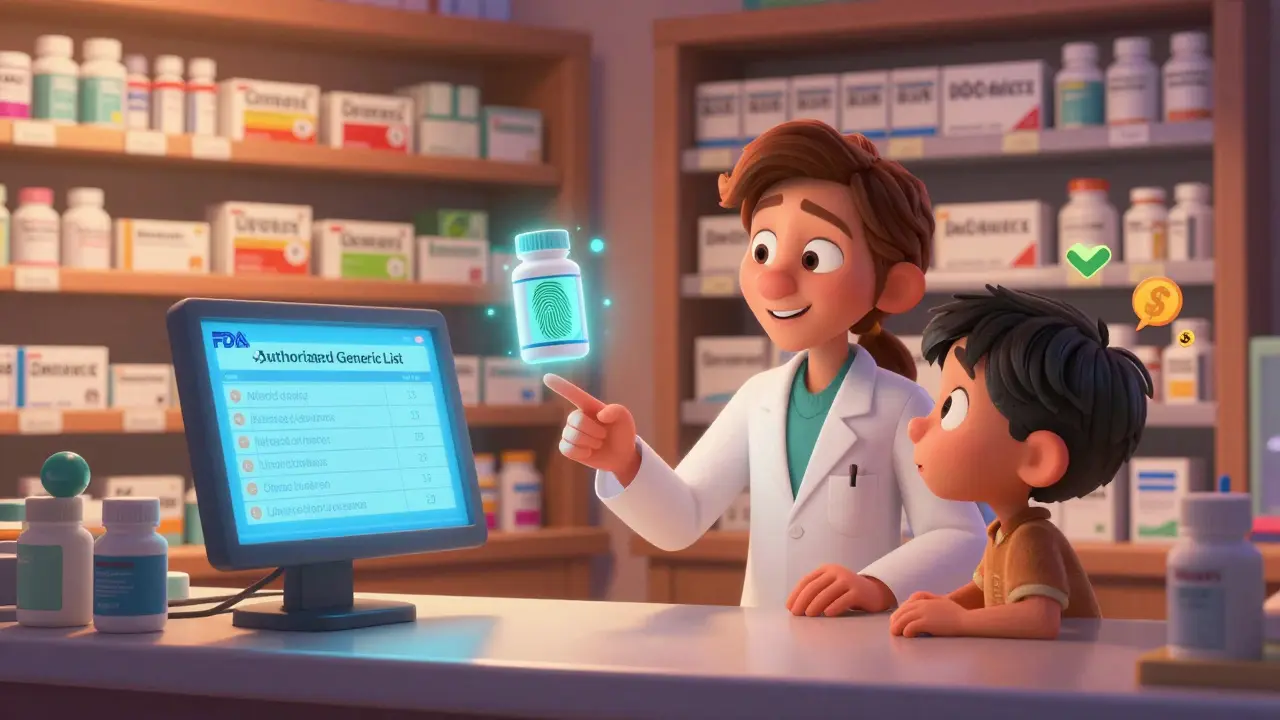
- Go to the FDA’s Authorized Generic List-Updated quarterly on January 1, April 1, July 1, and October 1. The latest update was October 2, 2023. Search by drug name or NDC.
- Compare the labeler code-If it matches a company listed as a distributor on the FDA list, you’ve got an authorized generic.
- Ask your pharmacist-Most pharmacy systems (like First Databank or Medi-Span) flag authorized generics automatically. But not all do. If you’re unsure, ask: "Is this an authorized generic?"
Why This Matters for You
Authorized generics aren’t just cheaper-they’re often the most consistent option. Patients in a 2022 Medscape survey reported 92.6% satisfaction with therapeutic outcomes compared to the brand. No unexpected side effects. No drop in effectiveness. Price-wise, they’re usually 15-25% cheaper than the brand, but 5-15% more expensive than regular generics. That’s because they’re not competing on the lowest possible price-they’re competing on trust. You get the brand’s quality without the brand’s markup. And if you’ve ever been freaked out by a pill that looks different? An authorized generic explains why. It’s not a counterfeit. It’s not a mistake. It’s the same drug, just packaged differently.Common Mistakes and How to Avoid Them
Here are the top errors people make:- Thinking "different label = different drug"-Wrong. The label is the only thing that changed.
- Confusing authorized generics with "authorized brand" products-Some companies sell traditional generics in brand-like packaging. These are NOT authorized generics. They’re just clever marketing.
- Assuming all generics are the same-Regular generics can have different fillers. Authorized generics? Same exact formula.
- Not checking the NDC-Visuals lie. The NDC doesn’t.
What’s Changing in 2024?
The FDA plans to integrate authorized generic identifiers directly into the National Drug Code Directory by Q2 2024. That means pharmacy systems will automatically flag them-no manual lookup needed. This should cut down on dispensing errors, which currently account for 8.3% of generic drug mistakes, according to the ISMP National Medication Errors Reporting Program. For now, though, the responsibility is still on you and your pharmacist. Don’t assume. Don’t guess. Check the NDC. Use the FDA list. Ask questions.Are authorized generics safe?
Yes. Authorized generics are made in the same facility as the brand-name drug, using the same ingredients and processes. The FDA inspects these facilities the same way it inspects brand manufacturers. There’s no difference in safety, quality, or effectiveness.
Why does the manufacturer name on my pill bottle look different?
That’s normal. The brand company often uses a subsidiary (like Greenstone, Actavis, or Dr. Reddy’s) to distribute the authorized generic. The actual drug is still made by the original manufacturer. The change in name is for legal and market reasons-not because the drug changed.
Can I trust an authorized generic if it looks different from my brand pill?
Absolutely. U.S. trademark laws prevent generics from looking exactly like brand drugs, even if they’re identical inside. So a blue capsule might be white, or a tablet might have a different imprint. The active ingredient, dosage, and effect remain unchanged. Always check the NDC to confirm.
How do I find the FDA’s list of authorized generics?
Go to the FDA’s website and search for "List of Authorized Generic Drugs." The list is updated quarterly on January 1, April 1, July 1, and October 1. You can search by drug name or NDC number. The most recent update was October 2, 2023.
Do authorized generics cost less than regular generics?
Usually not. Authorized generics typically cost 5-15% more than regular generics because they’re made by the brand company and carry less competition. But they’re still 15-25% cheaper than the brand-name version. They offer a middle ground: brand-quality at a lower price.
Can I ask my pharmacy to switch me to an authorized generic?
Yes. If your prescription is for a brand-name drug, ask if there’s an authorized generic available. Many pharmacies stock them because they’re often cheaper than the brand and more reliable than some regular generics. Just ask: "Is there an authorized generic for this?"