Why Early Detection Changes Everything
You might not think about your child’s hearing until they start talking. But the clock starts ticking the moment they are born. Pediatric hearing loss is any degree of auditory impairment in children from birth through age 21 that can significantly impact speech, language development, cognitive function, and social-emotional growth. It is not just about missing a whisper; it is about missing the building blocks of human connection.
The stakes are incredibly high. Research spanning four decades shows that children identified with hearing loss before six months of age achieve normal language outcomes 60-70% of the time. Compare that to children identified after twelve months, where only 20-30% reach those same milestones (Yoshinaga-Itano et al., 1998). This isn't just statistics; it is the difference between a child thriving in school and one struggling to keep up for years.
The medical community has built a robust framework around this critical window. The Early Hearing Detection and Intervention (EHDI) program is a public health initiative established following recommendations from the Joint Committee on Infant Hearing (JCIH) to ensure all infants are screened, diagnosed, and enrolled in intervention services as early as possible. Since the JCIH issued its first position statement in 1969, we have moved from reactive care to proactive prevention. Today, universal newborn hearing screening is standard practice across the United States, with 94% of U.S. newborns receiving this test before leaving the hospital (CDC, 2023).
How Screening Works at Every Age
Screening isn't a one-time event. It is a continuous process tailored to your child's developmental stage. If you are wondering what happens during these checks, here is the breakdown based on clinical pathways like those from the Children's Hospital of Philadelphia (CHOP).
| Age Group | Screening Method | Frequency/Timing | Key Metrics |
|---|---|---|---|
| Newborns (0-6 months) | Otoacoustic Emissions (OAE) or Automated Auditory Brainstem Response (AABR) | Before hospital discharge | Pass/Fail result; review risk indicators at first well-child visit |
| Infants/Toddlers (6 months - 3 years) | Pure-tone screening + Developmental surveillance | At each well-child visit | 20 dB HL threshold; evaluation of risk factors |
| Preschool/School Age (3-10 years) | Pure-tone audiometry | Ages 4, 5, 6, 8, and 10 | 500 Hz at 25 dB; 1000, 2000, 4000 Hz at 20 dB |
| Adolescents (11-21 years) | Pure-tone audiometry + Tympanometry | Once between 11-14, 15-17, and 18-21 | Add 6000 Hz at 20 dB; Tympanometric width >250 daPa referral |
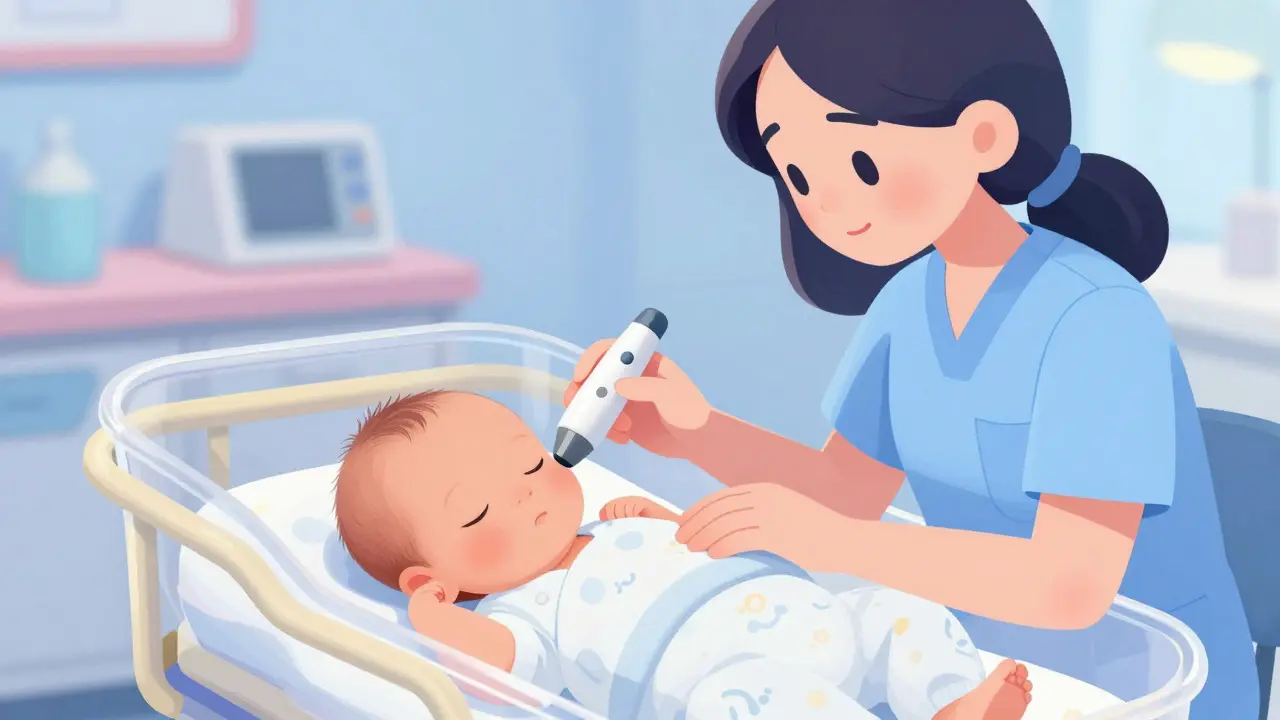
For newborns, the tests are quick and non-invasive. OAE screening requires a quiet environment and disposable probe tips to check if the inner ear is responding to sound. If a baby fails this initial screen, it does not automatically mean they are deaf. Fluid in the ear canal or middle ear can cause a false positive. However, the protocol is strict: diagnostic audiologic evaluation must be completed by three months of age for those who do not pass. Currently, 72.3% of U.S. infants meet this milestone (CDC, 2022).
As children grow, the methods change. For kids over three, pure-tone audiometry becomes the standard. They wear headphones and raise their hand when they hear a beep. The frequencies tested increase with age, adding higher pitches like 6000 Hz for older children to detect noise-induced damage early. Tympanometry is also used to check middle ear function, looking for specific pressure readings that indicate fluid buildup or eardrum issues.
What Causes Hearing Loss in Children?
Understanding the root cause is essential for treatment. Pediatric hearing loss generally falls into two buckets: congenital (present at birth) and acquired (developing later). Congenital causes account for 50-60% of cases.
- Genetic Factors: About 25% of congenital cases are genetic. The GJB2 gene mutation is responsible for 50% of these genetic cases. Family history is a major risk indicator, present in 20-30% of hearing loss cases.
- Prenatal Infections: Another 25% stem from infections passed from mother to child. Cytomegalovirus (CMV) is the leading non-genetic cause, accounting for 15-20% of congenital hearing loss. This is why prenatal screening is so vital.
- Prematurity Complications: Roughly 5% of cases are linked to complications arising from being born prematurely.
Acquired hearing loss is often temporary but can become permanent if ignored. Otitis media (middle ear infection) is the most common culprit, causing temporary hearing loss in 80% of children by age three. While usually fleeting, chronic fluid buildup can scar the eardrum or affect bone structure.
More serious acquired causes include bacterial meningitis, which leads to sensorineural hearing loss in 30% of pediatric cases, and noise-induced hearing loss. With kids spending more time with headphones and attending loud concerts, 12.5% of children aged 6-19 already show signs of noise-related damage (NHANES data, Shargorodsky et al., 2010).
The Critical Path: Diagnosis to Intervention
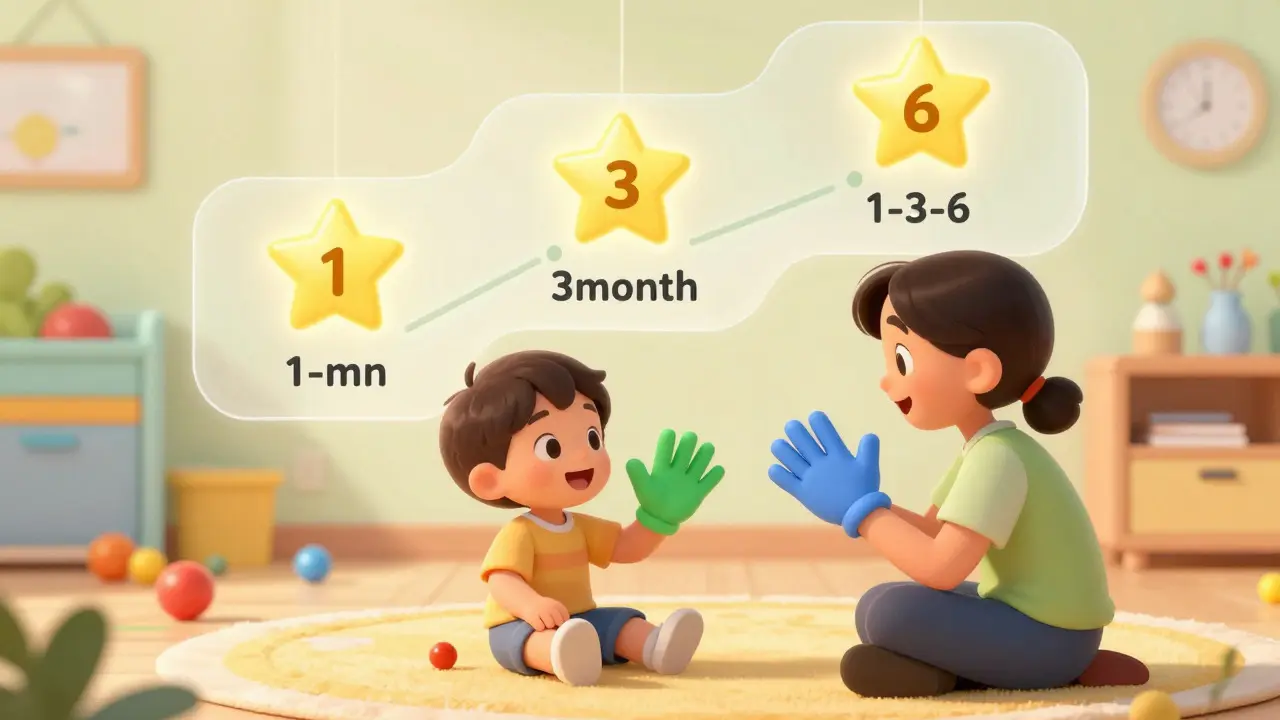
If your child fails a screening, the timeline tightens dramatically. The "1-3-6" rule is the gold standard in audiology:
- 1 Month: Complete newborn hearing screening.
- 3 Months: Complete comprehensive diagnostic evaluation if the screen was failed.
- 6 Months: Begin appropriate intervention services for confirmed permanent hearing loss.
Currently, only 64.5% of U.S. infants meet this six-month benchmark (CDC, 2022). Why does this delay happen? Often, it is due to loss to follow-up. Families may get a "refer" result and panic, then lose track of the next steps, especially in rural areas where specialists are scarce. Nationally, 37.5% of infants who fail screening do not receive a diagnosis by three months.
Intervention is not one-size-fits-all. It depends on the severity and type of loss. For mild-to-moderate loss, hearing aids are the first line of defense. Studies show they improve speech perception by 85% in quiet environments for children with mild-moderate loss (Ching et al., 2018). For profound loss, cochlear implants are life-changing, providing open-set speech recognition in 60-70% of children (Geers et al., 2017).
Therapy plays a huge role too. Auditory-Verbal Therapy (AVT) focuses on developing listening and spoken language skills. When started before 12 months, it produces age-appropriate language skills in 65-75% of children (Dettman et al., 2016). Alternatively, some families choose Bilingual-Bicultural (Bi-Bi) education, incorporating American Sign Language (ASL). This approach shows an 80% high school graduation rate for deaf students when taught by native ASL-signing teachers (Gallaudet Research Institute, 2019).
Barriers and Innovations in Care
Despite clear guidelines, gaps remain. Equity is a major issue. Black and Hispanic infants are 23% less likely to meet the six-month intervention benchmark compared to White infants (White et al., 2020). This disparity stems from access to care, insurance coverage, and cultural differences in seeking medical help.
Technology is helping bridge these gaps. Telehealth diagnostics now offer 92% accuracy for remote audiologic evaluations, allowing specialists in cities to help children in rural towns (Albergotti et al., 2022). Mobile screening units reached 15,000 previously unscreened children in 2022 alone (CDC, 2022). New innovations include smartphone-based OAE screening with 95% sensitivity and AI-powered tools that interpret audiograms with 98.7% accuracy (Mukari et al., 2023; Wu et al., 2023).
Looking ahead, universal genetic screening at birth is on the horizon. Targeted panels can already detect 80% of genetic causes of hearing loss. Combined with expanded newborn CMV testing, we are moving toward a future where almost every case of pediatric hearing loss is caught before it impacts a child's development.
What Parents Should Do Now
If you suspect your child has hearing issues, trust your gut. Look for red flags like delayed speech, lack of response to name, or frequent ear infections. Keep up with well-child visits and ensure screenings happen at ages 4, 5, 6, 8, and 10, as recommended by the AAP. Don't wait for school problems to arise. Early action gives your child the best chance to speak, learn, and connect with the world around them.
What should I do if my newborn fails the hearing screening?
Don't panic. A "refer" result doesn't mean your child is deaf. It means they need a follow-up diagnostic test. Schedule a comprehensive audiologic evaluation by three months of age. Common reasons for failure include fluid in the ear or movement during the test. Follow up promptly to rule out permanent loss.
Can hearing loss be cured in children?
It depends on the cause. Conductive hearing loss from ear infections or fluid is often temporary and treatable with medication or tubes. Sensorineural hearing loss (nerve damage) is usually permanent but manageable with hearing aids, cochlear implants, and therapy. Early intervention helps children develop normal language skills regardless of the cure status.
How often should my child's hearing be checked?
After the newborn screen, routine checks occur at well-child visits. Formal pure-tone screenings are recommended at ages 4, 5, 6, 8, and 10, plus once in each adolescent period (11-14, 15-17, 18-21). If your child has risk factors like family history or recurrent ear infections, more frequent monitoring is necessary.
What are the signs of hearing loss in toddlers?
Signs include delayed speech milestones, not responding to their name, turning up the TV volume excessively, or difficulty understanding simple commands. If you notice your toddler repeating words incorrectly or seeming distracted, request a hearing evaluation immediately.
Does insurance cover pediatric hearing aids and implants?
Coverage varies by state and plan. Many states mandate coverage for hearing aids for children under Medicaid or private insurance. Cochlear implants are often covered but may require prior authorization. Check with your provider and local EHDI program for financial assistance options.