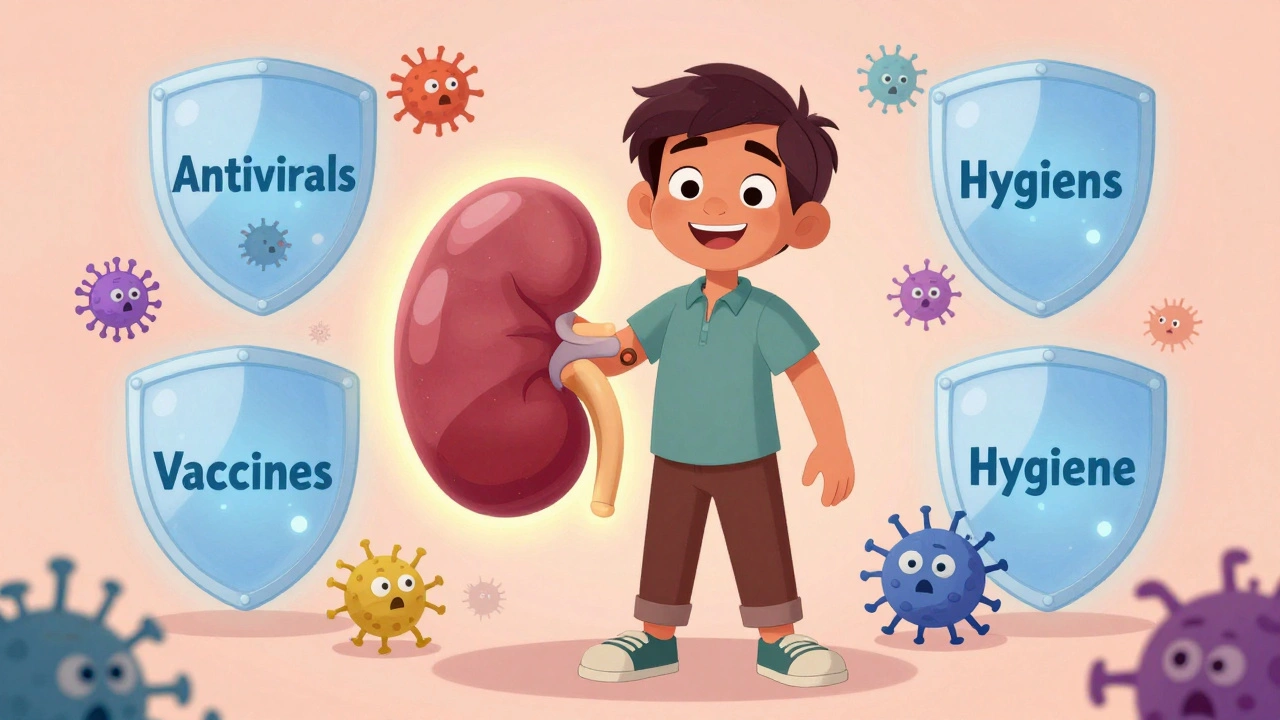
After a kidney transplant, the biggest threat isn't rejection-it's infection. You take powerful drugs to stop your body from attacking the new organ, but those same drugs leave you wide open to bacteria, viruses, and fungi that a healthy immune system would crush. In fact, post-transplant infections are the leading cause of death in the first year after surgery. The good news? Most of these infections are preventable-if you know what to do, when to do it, and how to spot the warning signs early.
Why Your Body Is More Vulnerable After Transplant
Your immune system is designed to fight off invaders. But after a kidney transplant, doctors intentionally weaken it. Too strong, and it rejects the new kidney. Too weak, and you get sick from things most people never notice-like a cold, a bite from a pet, or even a slice of deli meat. The risk isn't the same for everyone. It depends on your age, previous infections, the type of transplant, and how much immunosuppression you need. But here’s the reality: for the first 6 months, you're at highest risk. After that, the danger shifts. Early infections come from hospital germs or your own body’s hidden bacteria. Later, you’re more likely to catch something from the outside world-flu season, crowded places, or undercooked food.Three Pillars of Infection Prevention
There are only three real ways to protect yourself after a transplant: medicines, vaccines, and everyday choices. Skip any one, and your risk goes up.1. Preventive Medicines (Prophylaxis)
You won’t just get one pill. You’ll get a schedule. It’s not random-it’s timed to match when each type of infection is most likely to strike.- Herpes viruses (HSV and VZV): Acyclovir or valacyclovir for 1 to 3 months after transplant. These stop cold sores and shingles from flaring up.
- Cytomegalovirus (CMV): This is the big one. If you’re a recipient with no prior exposure (R-) and your donor had CMV (D+), you’re at high risk. You’ll get valganciclovir daily for 3 to 6 months. Studies show this cuts CMV infection rates by over 70%. Without it, CMV can trigger rejection and even kill the new kidney.
- Pneumocystis jirovecii: A fungus that causes pneumonia in immunocompromised people. Trimethoprim-sulfamethoxazole (Bactrim) is used for at least 6 months, sometimes longer.
- Bacterial infections: If you have a central line (a tube in your chest for meds), you’ll get daily chlorhexidine baths and special dressings that reduce bloodstream infections by up to 22%.
2. Vaccines: Timing Is Everything
Vaccines are your best defense, but you can’t get them anytime. Live vaccines (like MMR, chickenpox, or nasal flu) are dangerous after transplant because they contain weakened viruses your body can’t control. So they’re only given before the transplant, if possible. After transplant, you wait. Most inactivated vaccines (shots that don’t contain live viruses) are safe starting 6 months after surgery. These include:- Influenza (flu shot-never the nasal spray)
- Pneumococcal (Prevnar 13 and Pneumovax 23)
- Hepatitis B
- Tdap (tetanus, diphtheria, pertussis)
- COVID-19 boosters (recommended every 6-12 months)
3. Lifestyle Changes: What You Eat, Where You Go, and Who You Touch
Medicines and shots help. But your daily habits matter just as much.- Food safety: No raw seafood, undercooked eggs, unpasteurized cheese, or deli meats unless reheated until steaming. Listeria from these foods can cause sepsis in transplant patients.
- Water: Avoid hot tubs, lakes, and swimming pools for the first year. Tap water is fine, but don’t drink from garden hoses or unfiltered sources.
- Pets: You can keep your dog or cat-but no new pets for the first 6 months. Don’t clean litter boxes or bird cages. Wash your hands after petting. Reptiles? Avoid them. They carry salmonella.
- Hand hygiene: Wash hands with soap and water for 20 seconds. Use hand sanitizer when soap isn’t available. Do it before eating, after using the bathroom, and after touching public surfaces.
- Masks and crowds: During flu season or outbreaks, wear a mask in hospitals, airports, or busy stores. Avoid large gatherings, especially in winter.
- Travel: Check for region-specific risks. In Ohio or the Midwest, avoid digging in soil-it can carry histoplasmosis. In the Southwest, avoid dusty areas where coccidioidomycosis (valley fever) lives.
Monitoring: Catching Infections Before They Spiral
You can’t wait until you feel awful. By then, it might be too late. Regular blood tests are your early warning system. For CMV, doctors check your blood for viral DNA every 1-2 weeks for the first 3 months, then monthly. If they see rising levels-even if you feel fine-they start antivirals immediately. This is called preemptive therapy. For fungal infections, blood tests for galactomannan and beta-D-glucan help catch aspergillosis early. For bacterial infections, especially if you’ve had prior antibiotic use, weekly stool or nasal swabs may be done to screen for drug-resistant bacteria like MRSA or ESBL-producing E. coli. If you have a central line, nurses check the site daily. Redness, swelling, or pus? That’s a red flag. Fever without a clear cause? Call your transplant team immediately.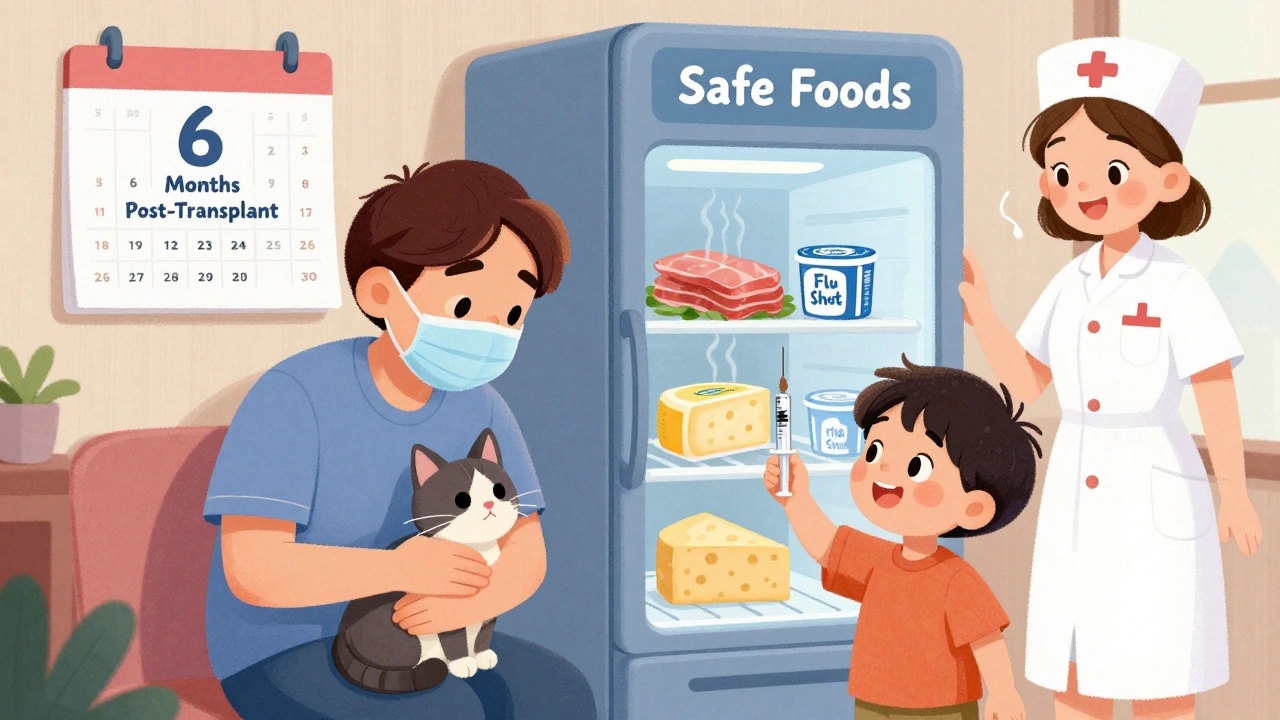
The New Frontiers: Fighting Superbugs and Resetting Your Gut
A growing problem is multidrug-resistant organisms (MDROs). One in three bacterial infections in transplant patients now comes from bacteria that won’t respond to standard antibiotics. These often live quietly in your gut before exploding into infection. New strategies are emerging:- Fecal microbiota transplantation (FMT): Done in select cases, FMT replaces unhealthy gut bacteria with healthy ones from a donor. It’s already helping prevent recurrent C. diff infections and may soon be used to reduce colonization by dangerous superbugs.
- Anti-adhesion therapies: Experimental drugs that stop bacteria from sticking to your bladder or gut lining-preventing infection before it starts.
- Letermovir: A newer drug being tested to extend CMV protection beyond 100 days in high-risk patients. Current drugs stop working after 6 months. This could fill that gap.
What Happens After 6 Months?
Many patients think they’re “safe” after six months. They’re wrong. Yes, your immunosuppression lowers. Yes, you stop most prophylactic meds. But your risk doesn’t disappear. You’re now vulnerable to community-acquired infections: flu, RSV, pneumonia, even tuberculosis. Your vaccines may wear off. Your gut flora may still be fragile. And if you’ve been on long-term antibiotics, resistant bugs may be waiting in your system. Stay vigilant. Keep your flu shot. Wash your hands. Avoid sick people. Talk to your doctor about booster shots. Don’t assume you’re out of the woods.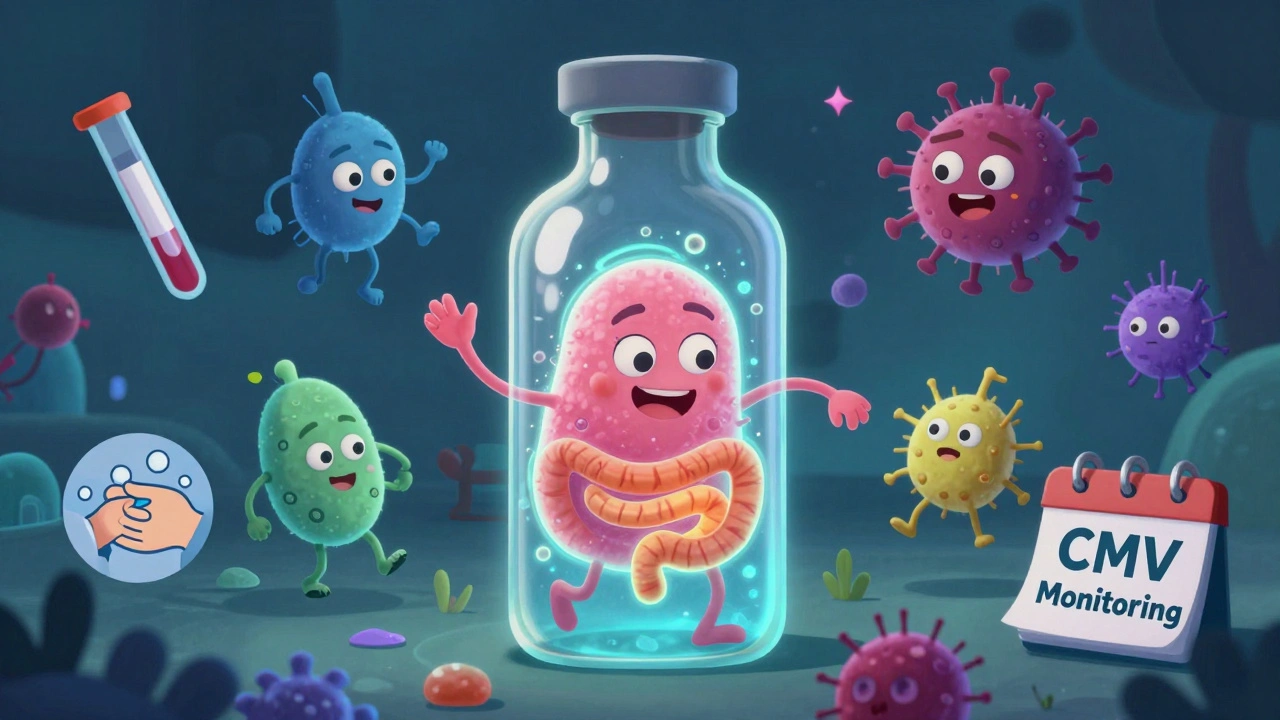
What If You Get Sick?
Don’t wait. Don’t try to tough it out. Don’t take OTC cold meds without checking with your transplant team-some can harm your kidney. Call your clinic immediately if you have:- Fever above 100.4°F (38°C)
- Chills, night sweats, or unexplained fatigue
- Shortness of breath or cough
- Diarrhea lasting more than 24 hours
- Redness, swelling, or drainage at your surgical site
- Any new rash or skin sore
Can I get the flu shot after a kidney transplant?
Yes, but only the inactivated flu shot-not the nasal spray. Wait at least 6 months after transplant before getting it. Make sure everyone in your household is also vaccinated to reduce your exposure risk.
Is it safe to have pets after a kidney transplant?
Yes, but with precautions. Avoid new pets for the first 6 months. Don’t clean litter boxes, bird cages, or reptile tanks. Wash your hands after petting. Cats and dogs are generally safe if they’re healthy and up to date on their own vaccines.
Why is CMV such a big deal after transplant?
CMV doesn’t just cause fever and fatigue-it increases your risk of organ rejection by 23-34% and raises the chance of long-term kidney failure. It can also lead to other infections and even death. That’s why doctors use antivirals like valganciclovir for 3-6 months if you’re high-risk.
Can I travel after a kidney transplant?
Yes, but plan carefully. Avoid areas with poor sanitation or known outbreaks. Check for region-specific risks-like histoplasmosis in the Midwest or dengue in tropical zones. Always carry your transplant team’s contact info and enough medication for your trip.
What foods should I avoid after a kidney transplant?
Avoid raw or undercooked meat, fish, and eggs. Skip unpasteurized cheeses, deli meats unless reheated, and raw sprouts. Don’t drink untreated water. Listeria and E. coli can be deadly for transplant patients-even if they don’t affect healthy people.
Do I need to keep taking antibiotics forever?
No. Most prophylactic antibiotics stop after 3-6 months. But some patients with higher risks-like those with prior infections or colonized with drug-resistant bacteria-may need longer courses. Always follow your transplant team’s advice, not general guidelines.
Next Steps: What to Do Right Now
If you’ve had a transplant or are preparing for one:- Review your vaccination history with your transplant team. Get missing shots before surgery if possible.
- Ask about your CMV serostatus (donor and recipient). This determines your prophylaxis plan.
- Set up a daily handwashing and hygiene routine. Make it a habit.
- Keep a list of foods to avoid and share it with your family.
- Know your transplant center’s emergency number. Keep it on your phone and in your wallet.
- Don’t ignore fevers or fatigue. Call them before you wait for symptoms to worsen.
Comments
Inna Borovik
Let’s be real - most transplant centers don’t even track CMV viral loads consistently after month 6. The guidelines say monthly, but in practice? If you’re not screaming, they ignore it. And don’t get me started on how they push Bactrim until you’re breaking out in hives, then blame you for being ‘non-compliant’ when you stop. Prophylaxis isn’t prevention - it’s damage control with a side of bureaucratic checkboxing.
On December 3, 2025 AT 18:51
Jackie Petersen
They say ‘avoid deli meat’ like we’re all toddlers. Meanwhile, the CDC says processed meats are fine if reheated - but somehow, transplant docs act like lunch meat is bioweapon-grade. I’ve eaten cold roast beef for 4 years post-transplant. Still alive. Still kicking. Maybe the real threat is fear-mongering disguised as medicine.
On December 3, 2025 AT 21:13
Annie Gardiner
Isn’t it funny how we’re told to ‘protect’ our new kidney like it’s a sacred relic, but nobody talks about how the whole system is built on suppressing the very thing that makes us human - our immune response? We’re not patients. We’re lab rats in a pharmaceutical experiment dressed up as ‘care.’ And the vaccines? Just corporate loyalty programs with needles.
On December 5, 2025 AT 11:34
Rashmi Gupta
CMV prophylaxis is overrated. In India, we don’t even test for it routinely. If you survive the first 3 months, you’re fine. Too much medicine = too much stress on kidneys. Less is more. Trust the body.
On December 5, 2025 AT 20:02
Andrew Frazier
Y’all are overcomplicating this. Just take your pills. Wash your hands. Don’t touch dirt. Don’t kiss your grandkids if they got a sniffle. America’s got the best med system in the world - stop whining. If you can’t follow 3 simple rules, maybe you shouldn’t have gotten the transplant in the first place. #AmericaFirst #TransplantResponsibility
On December 7, 2025 AT 10:29
Kumar Shubhranshu
FMT works. I did it. After 3 rounds of C. diff, my gut came back. No antibiotics. No fear. Just donor poop. Doctors hate it because they can’t charge for it. But it’s real. Ask any Indian GI doc. We’ve been doing it for centuries in Ayurveda. Modern medicine just calls it ‘experimental’ because it’s cheap.
On December 7, 2025 AT 10:31
Mayur Panchamia
Let me be blunt - this entire post is a corporate brochure written by a pharma rep with a thesaurus! ‘Preemptive therapy’? That’s just code for ‘we’re going to poison you before you get sick.’ And FMT? It’s not ‘new frontier’ - it’s ancient wisdom that Big Pharma refuses to patent because they can’t sell it for $12,000 a dose! Wake up, sheeple!
On December 7, 2025 AT 11:03
Karen Mitchell
It is deeply concerning that the article casually endorses the use of valganciclovir for six months without acknowledging the profound nephrotoxic potential of this agent, particularly in the context of renal allograft recipients. Furthermore, the recommendation to administer pneumococcal vaccines at six months post-transplant contravenes the 2021 KDIGO guidelines, which advocate for earlier immunization in stable recipients. This document, while well-intentioned, exhibits a troubling disregard for evidence-based nuance.
On December 9, 2025 AT 04:38
Geraldine Trainer-Cooper
After my transplant I stopped caring about all the rules. I ate raw sushi, hugged my grandkids, skipped the flu shot. I didn’t die. I lived. Maybe the body knows more than the doctors think. Maybe control is an illusion. I’m not scared anymore. I’m just here.
On December 9, 2025 AT 16:55
Nava Jothy
OMG I cried reading this 😭 I’m 3 months post-transplant and I’ve been so scared to touch my cat… but now I’m like… maybe I just need to hug her? 🐱💕 I mean, I know the risks but… life isn’t a spreadsheet. My transplant nurse said ‘moderation not paranoia’ and I’m finally believing it 💖 #TransplantLife #GutFeelingWins
On December 11, 2025 AT 14:41
Kenny Pakade
They want you to avoid travel? That’s just another way to keep the poor and middle class trapped in their houses while the rich jet off to Bali with their ‘transplant-friendly’ insurance. Wake up. This isn’t medicine - it’s class control dressed up as safety. I flew to Mexico 8 months post-op. No problems. They just want you afraid so you keep taking their pills.
On December 12, 2025 AT 01:35
brenda olvera
I’m from Mexico and we don’t have all these fancy meds but we have family. My abuela made me chicken soup every day. She held my hand when I had chills. We didn’t test for CMV. We just prayed. And I’m still here. Maybe the real medicine isn’t in the pill bottle - it’s in the love that holds you when you’re weak.
On December 12, 2025 AT 15:48