
Have you ever squinted to read a sign across the street, or felt headaches after reading for too long? You’re not alone. About 54% of adults between 40 and 69 have some kind of refractive error - a simple optical flaw in the eye that blurs vision. These aren’t diseases. They’re just mismatches between the shape of your eye and how light focuses on the retina. The three most common types are myopia (nearsightedness), hyperopia (farsightedness), and astigmatism. And each one has its own clear, proven way to be fixed.
What Causes Myopia, Hyperopia, and Astigmatism?
It all starts with light. When you look at something, light enters your eye and should focus perfectly on the retina - the light-sensitive layer at the back. If it lands in front of or behind the retina, your vision gets blurry. That’s a refractive error.
Myopia happens when your eyeball is too long - usually over 24 millimeters - or your cornea curves too sharply (more than 43 diopters). Light focuses in front of the retina. That’s why distant objects like road signs or whiteboards look fuzzy, but close-up things like books or phones stay clear. It often starts around age 10 and worsens until your early 20s. In parts of East Asia, up to 90% of young adults are myopic. In the U.S., about 30% of adults have it.
Hyperopia is the opposite. Your eyeball is too short (under 22 millimeters) or your cornea is too flat (less than 40 diopters). Light focuses behind the retina. Near vision suffers first - reading a phone, threading a needle - but severe cases blur distance too. Many kids are born slightly farsighted, but their eyes grow out of it. Adults over 40 often notice it more as the lens stiffens with age.
Astigmatism is different. It’s not about length or curvature alone. It’s about shape. Instead of being round like a basketball, the cornea or lens is more football-shaped. That means light doesn’t focus on one point - it smears into multiple spots. You might see double images, glare around lights, or distorted lines. About 30% to 60% of people have some level of astigmatism, often mixed with myopia or hyperopia.
How Glasses Fix These Problems
Glasses are still the most common fix. They work by bending light just enough to make it land on the retina - not before, not after.
For myopia, you need minus (-) lenses. These are concave. They spread light out slightly before it enters your eye, so it focuses farther back - right on the retina.
For hyperopia, you need plus (+) lenses. These are convex. They squeeze light together to focus it farther forward - onto the retina instead of behind it.
For astigmatism, it gets more precise. You need a cylinder-shaped lens with a specific axis (like 175 degrees). This lens corrects the uneven curve by adding extra power in one direction. A lot of people say their first pair of astigmatism glasses feels “off.” That’s normal. It can take up to three weeks to adjust. One user on Reddit wrote, “It felt like looking through water until my optometrist tweaked the axis.”
Most people adapt to glasses in just a few days. But if your prescription is complex - say, high astigmatism or a big difference between eyes - it might take longer. The key? Wear them consistently. Kids often resist, but studies show they’re more likely to keep wearing them if they helped pick the frames.
Contact Lenses: Convenience With Risks
Contact lenses offer a wider field of view than glasses. No frames. No fogging. No slipping. But they come with trade-offs.
Soft lenses are easy to use. Toric lenses handle astigmatism. Daily disposables reduce infection risk. But here’s the catch: the CDC says 3% to 4% of contact lens wearers develop microbial keratitis - a serious eye infection - each year. Most cases come from poor hygiene: sleeping in lenses, rinsing them with tap water, or not replacing them on time.
People who wear contacts daily often report discomfort after 8 hours. One Reddit user said, “My eyes burn by 6 p.m. No matter how much I hydrate.”
Gas-permeable lenses are stiffer but let more oxygen through. They’re great for high astigmatism or irregular corneas. But they take longer to get used to - sometimes weeks. And they’re easy to lose.
Hygiene matters more than brand. Wash hands before handling. Never use water. Replace the case every 3 months. Skip overnight wear unless your doctor says it’s safe.
Surgery: Permanent Correction?
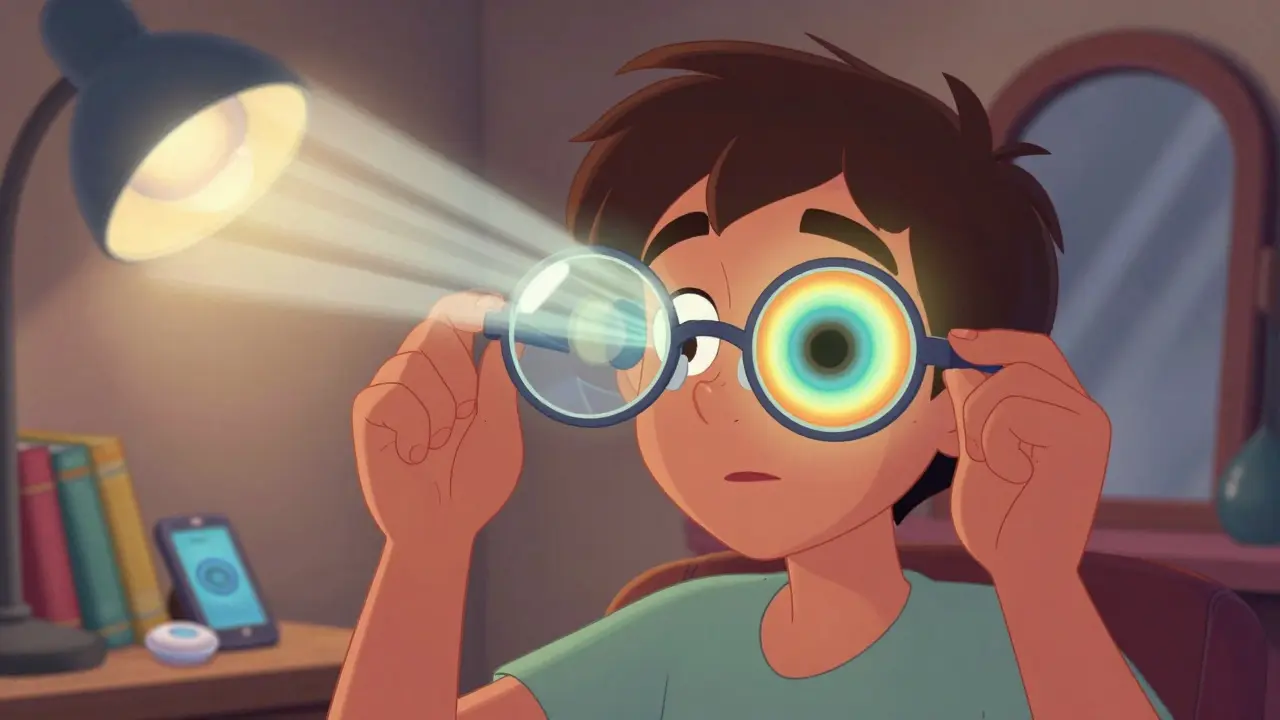
If you’re tired of glasses or contacts, surgery might be an option. The three main procedures are LASIK, PRK, and SMILE.
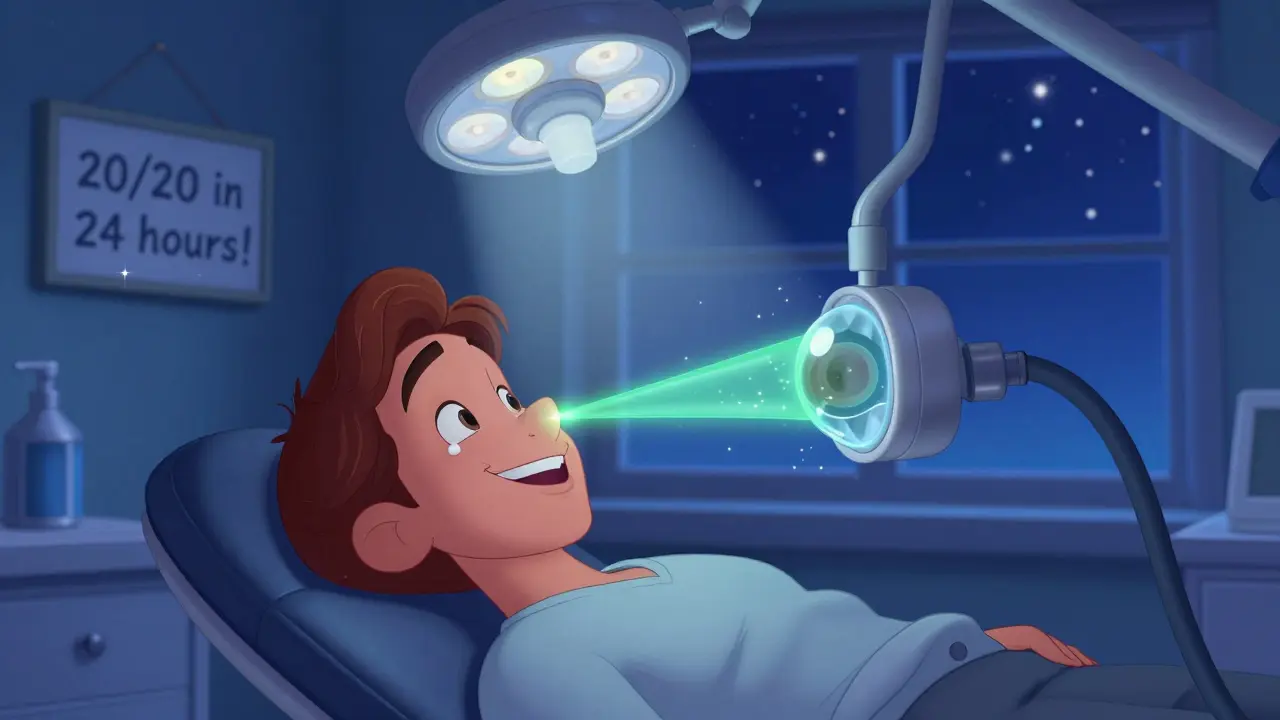
LASIK (Laser-Assisted In Situ Keratomileusis) is the most popular. A laser creates a thin flap on the cornea, lifts it, reshapes the tissue underneath, then replaces the flap. It’s fast - under 15 minutes per eye. Most people see clearly within 24 hours. The FDA approved it in 1995. Today, over 10 million procedures are done yearly worldwide.
PRK is similar but doesn’t create a flap. Instead, the outer layer of the cornea is removed. Healing takes longer - days to weeks - but it’s better for people with thin corneas or active lifestyles (like soldiers or athletes).
SMILE (Small Incision Lenticule Extraction) is newer. A femtosecond laser cuts a tiny lens-shaped piece inside the cornea and removes it through a 2-4 mm incision. No flap. Less disruption. Studies show fewer dry eye issues than LASIK. The precision? Within 0.25 diopters. That’s sharper than most glasses prescriptions.
But surgery isn’t for everyone. You need:
- A stable prescription for at least 12 months
- Corneal thickness over 500 microns
- Age 18 or older
- No active eye disease or autoimmune conditions
Side effects? About 20% to 40% of LASIK patients get dry eyes for a few months. Night glare or halos around lights happen in 5% to 10%. Most fade. A small number need enhancements.
Patients report high satisfaction. On review sites like Trustpilot and AllAboutVision, LASIK scores 4.5 out of 5. One user wrote: “I didn’t realize how blurry my world was until I saw trees clearly for the first time in 15 years.”
Why Myopia Is Getting Worse - And What’s Being Done
Myopia isn’t just common - it’s exploding. The World Health Organization says 2.2 billion people worldwide have uncorrected vision problems, mostly from refractive errors. By 2050, half of the global population could be myopic, according to the Brien Holden Vision Institute.
Why? Genetics play a role, but environment matters more. Kids who spend too much time indoors - glued to screens - and too little time outside are far more likely to develop myopia. The National Eye Institute says sunlight helps regulate eye growth. Just two hours a day outdoors can cut risk.
There’s new hope in prevention. Ortho-K lenses (orthokeratology) are worn overnight. They gently reshape the cornea while you sleep. Studies show they slow myopia progression by 36% to 56% in kids. Low-dose atropine drops (0.01% to 0.05%) are also proving effective, cutting progression by up to 80% over two years. Both are FDA-approved for children.
These aren’t cures. They’re brakes. But for a child with rapidly worsening vision, they’re game-changers.
When to See a Doctor
You don’t need to wait for symptoms. Kids should have their first eye exam by age 3, again before starting school, and then every 1-2 years. Adults under 40 should get checked every 2 years. After 40, yearly exams are wise - especially if you’re diabetic or have family history of glaucoma.
Call your eye doctor if you notice:
- Sudden blurriness in one eye
- Flashing lights or floaters
- Double vision that doesn’t go away
- Headaches or eye strain after short reading sessions
- Difficulty driving at night
High myopia (worse than -6.00 diopters) increases risk of retinal detachment and degeneration by 5 to 10 times. Regular retinal scans are critical.
Choosing the Right Correction
There’s no one-size-fits-all. Here’s how to think about it:
- Try glasses first - especially for kids or if you’re unsure. They’re safe, reversible, and easy to adjust.
- Try contacts if you’re active, hate frames, or have a strong prescription. But commit to hygiene.
- Consider surgery if you’re tired of daily routines, your prescription is stable, and you’re healthy enough. Talk to a surgeon who uses wavefront-guided tech - it’s better for astigmatism.
- For kids with fast-progressing myopia - ask about Ortho-K or low-dose atropine. Early action matters.
Don’t ignore blurry vision. It’s not just annoying - it affects learning, safety, and quality of life. The right correction can change everything.
Can you outgrow myopia or hyperopia?
You can’t outgrow myopia - it usually stabilizes in your early 20s but doesn’t reverse. Some children with mild hyperopia outgrow it as their eyes grow longer. But adults with hyperopia often get worse with age due to presbyopia (lens stiffening), not because the eye got shorter.
Do astigmatism lenses look different?
To the naked eye, no. But the lens is shaped differently - thicker in one direction to counteract the uneven cornea. Your optometrist will mark the axis (like 175 degrees) so the lens aligns perfectly. If it’s off by even 5 degrees, you’ll still feel blurry or strained.
Is LASIK safe for people with astigmatism?
Yes - especially with wavefront-guided or topography-guided lasers. These map your eye’s unique shape and correct both the curvature and the irregularity. Studies show 95% of patients with moderate astigmatism achieve 20/20 vision or better after LASIK.
Why do my eyes feel dry after LASIK?
LASIK temporarily cuts some corneal nerves that signal tear production. Most people recover within 3 to 6 months. Using artificial tears, avoiding fans or AC, and staying hydrated helps. Newer techniques like SMILE cause less dryness because they preserve more nerves.
Can glasses or contacts stop myopia from getting worse?
Regular glasses and contacts correct your vision but don’t slow progression. Only specific treatments like Ortho-K lenses or low-dose atropine drops have been proven to reduce the rate of worsening in children.
Refractive errors are common, treatable, and rarely dangerous - if managed properly. The tools to fix them are better than ever. Whether it’s a pair of glasses, daily contacts, or a quick laser procedure, clear vision is within reach.