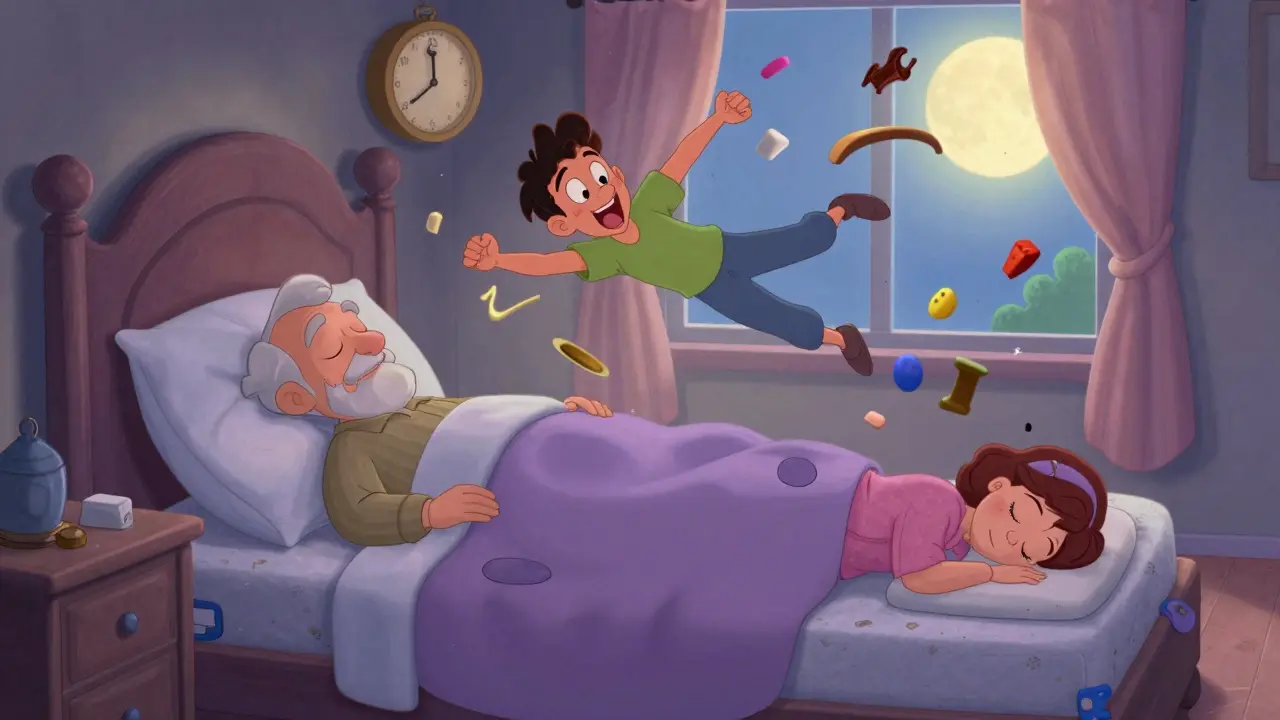
REM sleep behavior disorder isn’t just about acting out dreams. It’s a warning sign your brain is changing in ways that could lead to Parkinson’s disease, dementia with Lewy bodies, or multiple system atrophy. People with RBD kick, punch, yell, or even jump out of bed while asleep - not because they’re having a nightmare, but because the normal paralysis that keeps you still during REM sleep has broken down. This isn’t rare. About 90% of cases are linked to future neurodegenerative diseases. And if you’re diagnosed today, there’s a 73.5% chance you’ll develop one of these conditions within 12 years.
How RBD Shows Up - And Why It’s Dangerous
Imagine sleeping peacefully, then suddenly sitting up, shouting, swinging your arms, or falling out of bed. That’s what happens in RBD. The brain is still dreaming - often vividly, sometimes violently - but the body isn’t paralyzed like it should be. This isn’t sleepwalking. It’s dream enactment, and it’s not harmless. Studies show that 78% of people with RBD make changes to their bedroom to stay safe: removing sharp furniture, padding walls, taking away weapons, or sleeping on a mattress on the floor. One study found that 42% of patients eventually sleep separately from their partners just to avoid injury.
Bed partners report being punched, kicked, or bitten. One woman said, “After my husband started clonazepam, I could finally sleep in the same bed without fear.” But without treatment, these episodes happen an average of 4.2 times per hour. That’s not just disruptive - it’s life-threatening.
Diagnosis: It’s Not Just a Story - It’s Measured
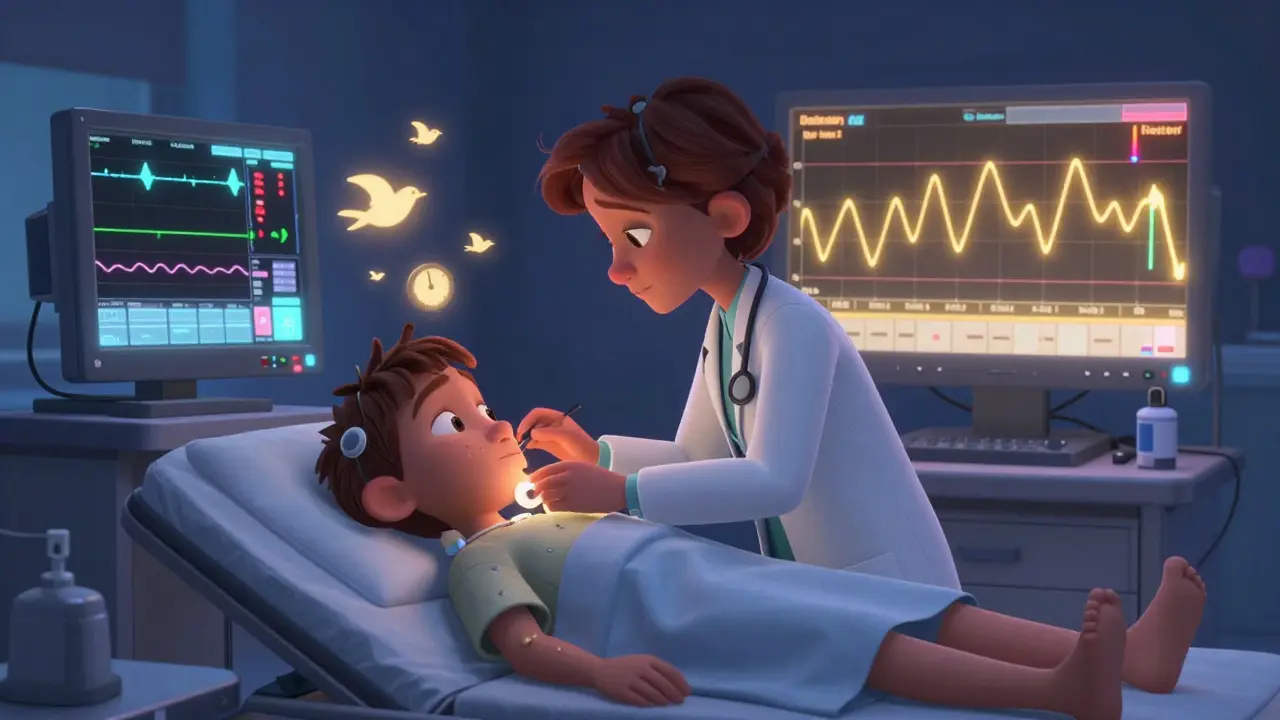
You can’t diagnose RBD by asking someone if they dream loudly. You need a sleep study. Polysomnography (PSG) is the gold standard. It records brain waves, eye movements, muscle activity, and heart rate while you sleep. The key finding? REM sleep without atonia - or RSWA. That means your muscles are active during REM sleep when they should be completely still.
The International Classification of Sleep Disorders says RSWA must be present in at least 15% of REM sleep epochs. That’s not a guess. It’s measured by electrodes on your chin and legs. Without this test, you’re just assuming. Many people are misdiagnosed with nightmares, PTSD, or epilepsy. But if you’re over 50, have no other explanation for violent sleep behaviors, and your PSG shows RSWA - you likely have RBD.
First-Line Treatments: Melatonin vs. Clonazepam
There are no FDA-approved drugs for RBD. That means everything used is off-label. But two medications have become standard: melatonin and clonazepam.
Melatonin is the safer first choice for most people. Start with 3 mg at bedtime. If there’s no improvement after 2-4 weeks, increase by 3 mg every few weeks - up to 12 mg. In clinical trials, about 65% of patients see a big drop in episodes. Side effects? Mild: maybe a headache or morning grogginess. One 68-year-old man cut his weekly episodes from 7 to 1 after starting 6 mg. He only felt slightly tired for two weeks - then it went away.
Clonazepam works faster and stronger. It’s a benzodiazepine that suppresses muscle activity. Start with 0.25-0.5 mg at night. Maximum dose is 2 mg. Studies show 80-90% of patients improve. But it comes with risks: dizziness (22%), unsteadiness (18%), daytime sleepiness (15%), and a 34% higher chance of falling if you’re over 65. It can also cause dependence. If you stop suddenly, 38% get terrible nightmares or agitation. That’s why doctors taper slowly - drop by 0.125 mg every 1-2 weeks.
One patient quit clonazepam after three months because his balance got worse. His falls went from zero to two per month. He switched to melatonin and stabilized.
Other Options - And Why They’re Not First Choice
Some doctors try pramipexole, a Parkinson’s drug. It helps about 60% of patients, especially those who also have restless legs syndrome. But it’s not reliable for everyone. Side effects include nausea, dizziness, and impulse control problems.
Rivastigmine, used for Alzheimer’s, showed promise in one small study for RBD patients with mild memory issues who didn’t respond to other treatments. But there’s not enough data to recommend it broadly.
New hope is coming from dual orexin receptor antagonists. These drugs, like suvorexant (Belsomra), block wakefulness signals. Mount Sinai research in October 2023 showed a 78% drop in dream enactment behaviors in animal models. Human trials are underway. Neurocrine Biosciences’ NBI-1117568 got Fast Track status from the FDA in January 2023 - meaning it could be approved faster if results hold up.
Neurological Monitoring: You’re Not Just Treating Sleep
RBD isn’t a sleep problem. It’s a brain problem. Every person diagnosed with idiopathic RBD (meaning no known cause) needs regular neurological checkups. The American Academy of Neurology recommends annual exams. Why? Because 6.3% of these patients develop Parkinson’s or another neurodegenerative disease each year. That’s more than 1 in 15 people annually.
Signs to watch for: subtle tremors, loss of smell, constipation, stiff movements, or trouble with balance. A neurologist might order an MIBG cardiac scan or a DaTscan to look for early dopamine loss - markers that predict future Parkinson’s. The goal isn’t just to stop the kicking. It’s to catch the disease early enough to join clinical trials for disease-modifying drugs.

What You Must Do at Home - Beyond Medication
Medication helps. But safety starts in the bedroom.
- Remove all weapons - guns, knives, swords.
- Pad sharp corners of furniture.
- Place thick rugs or foam mats beside the bed.
- Install bed rails if needed.
- Consider sleeping in a separate room if episodes are violent.
- Avoid alcohol completely. Even one or two drinks can trigger an episode in 65% of people with RBD.
- Don’t take sedatives or sleep aids unless approved by your doctor.
These steps aren’t optional. They’re lifesaving. One man broke his ribs after falling out of bed during an episode. Another cut his hand badly on a nightstand. These injuries are common - and preventable.
The Bigger Picture: RBD as a Window Into the Future
The global market for RBD treatments hit $1.2 billion in 2023. Why? Because doctors now see RBD as the earliest warning sign of Parkinson’s. In fact, RBD often appears 10-15 years before motor symptoms. That’s a huge window for intervention.
Right now, we treat the symptoms. But the real goal is to stop the disease before it starts. Researchers are testing drugs that target alpha-synuclein - the toxic protein that builds up in Parkinson’s and Lewy body dementia. If we can clear it early, maybe we can delay or prevent the whole cascade.
Dr. Ronald Postuma at McGill University says, “The next five years will likely see the first disease-modifying therapies for RBD.” That’s the future. But for now, we have what we have: melatonin, clonazepam, safety changes, and vigilant monitoring.
What to Do Next
If you or someone you know is acting out dreams at night:
- See a sleep specialist. Get a polysomnography test.
- If diagnosed, start melatonin at 3 mg. Wait 4 weeks. Adjust if needed.
- Make your bedroom safe - immediately.
- See a neurologist for annual checkups.
- Avoid alcohol and sedatives.
- Track episodes in a journal - frequency, intensity, triggers.
RBD is not a life sentence. It’s a signal. With the right care, you can sleep safely today - and maybe delay the next chapter tomorrow.
Can REM sleep behavior disorder be cured?
No, RBD cannot be cured - but it can be effectively managed. Medications like melatonin and clonazepam reduce or eliminate dream enactment in most patients. However, since RBD is usually a sign of an underlying neurodegenerative process, the root cause isn’t reversible. Treatment focuses on safety and symptom control, not cure.
Is melatonin or clonazepam better for RBD?
It depends on the patient. Melatonin is safer, especially for older adults, with fewer side effects and no risk of dependence. It works well for about 65% of people. Clonazepam is more effective - helping 80-90% - but carries risks like dizziness, falls, and addiction. For most people over 65 or with balance issues, melatonin is the better first choice. Clonazepam may be used if melatonin fails or symptoms are severe.
Does RBD always lead to Parkinson’s?
No, but the risk is very high. About 90% of RBD cases are linked to synucleinopathies like Parkinson’s, dementia with Lewy bodies, or multiple system atrophy. Studies show 73.5% of people with idiopathic RBD develop one of these conditions within 12 years. It’s not guaranteed, but it’s common enough that every RBD diagnosis should trigger neurological monitoring.
Can alcohol make RBD worse?
Yes. Even small amounts of alcohol - one or two drinks - can trigger or worsen RBD episodes in 65% of patients. Alcohol disrupts normal sleep architecture and reduces muscle atonia during REM sleep, making dream enactment more likely. People with RBD are strongly advised to avoid alcohol completely.
What’s the latest research on RBD treatments?
The most promising new approach is dual orexin receptor antagonists, like suvorexant and Neurocrine Biosciences’ NBI-1117568. Early studies show a 78% reduction in dream enactment behaviors in animal models. Human trials are underway, and NBI-1117568 received FDA Fast Track status in early 2023. These drugs target the brain’s wake-sleep switch and may offer better safety than current options. They’re not yet approved for RBD, but they represent the next generation of treatment.
How often should someone with RBD see a neurologist?
Annual neurological assessments are recommended for all patients with idiopathic RBD. This is because the risk of developing Parkinson’s or another neurodegenerative disease is 6.3% per year. Regular checkups help detect early motor symptoms, smell loss, or cognitive changes. Early detection opens doors to clinical trials and potential disease-modifying therapies in the future.