Antihistamine Comparison Tool
Second-Generation Antihistamine Comparison
Compare the most common second-generation antihistamines based on your specific needs. Filter by factors like sedation risk, effectiveness for congestion, liver safety, and more to find your ideal option.
Sedation risk: 6-14%
Effectiveness: Good for sneezing, itching, runny nose
Congestion: Weak
Liver interaction: Moderate (metabolized by liver)
Typical cost: $5-$15 (generic)
Sedation risk: 6-14% (but 23% real-world)
Effectiveness: Good for sneezing, itching, runny nose
Congestion: Weak
Liver interaction: Moderate (metabolized by liver)
Typical cost: $7-$20 (generic)
Sedation risk: 5%
Effectiveness: Good for sneezing, itching, runny nose
Congestion: Weak
Liver interaction: Low (only 5% metabolized by liver)
Typical cost: $8-$25 (generic)
Recommended Option:
Based on your filter selection, we recommend Fexofenadine (Allegra) as the best option for you.
Most people who take allergy meds know the drowsy, foggy feeling that comes with old-school antihistamines like diphenhydramine (Benadryl). You take it to stop the sneezing and itchy eyes, but then you can barely keep your eyes open at work or while driving. That’s why second-generation antihistamines became the go-to choice for millions - they work just as well without the sleepiness.
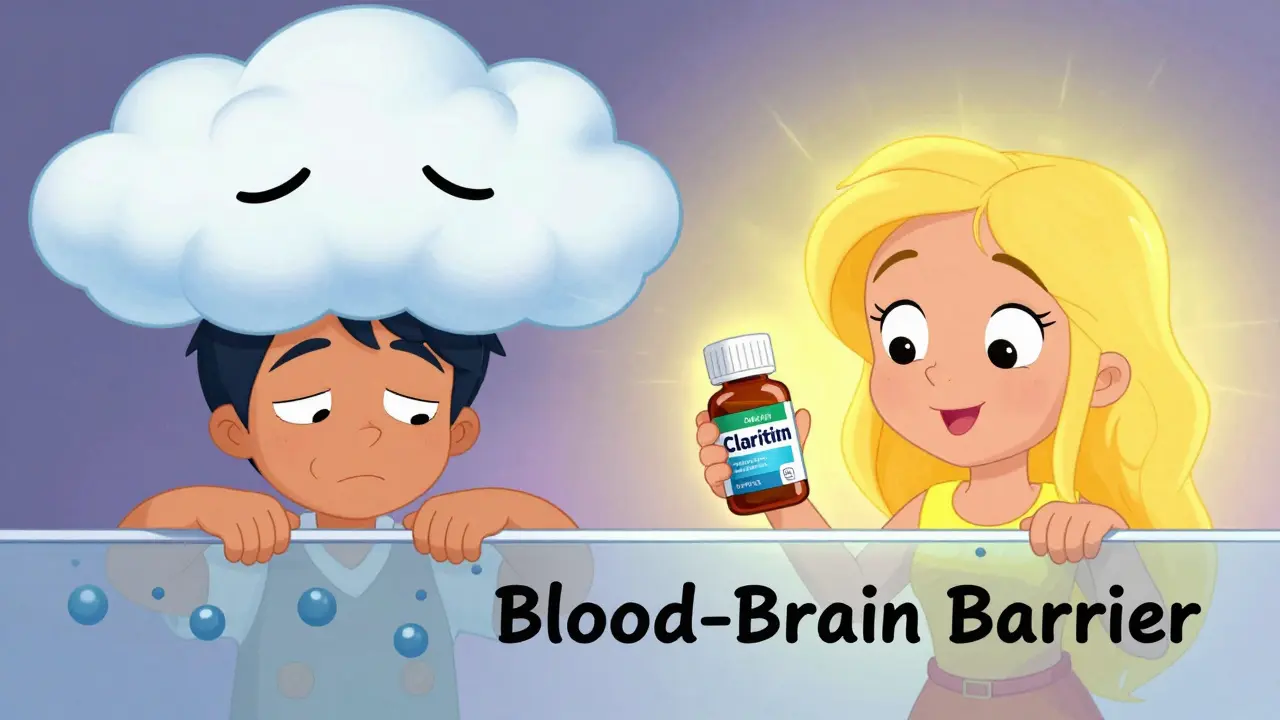
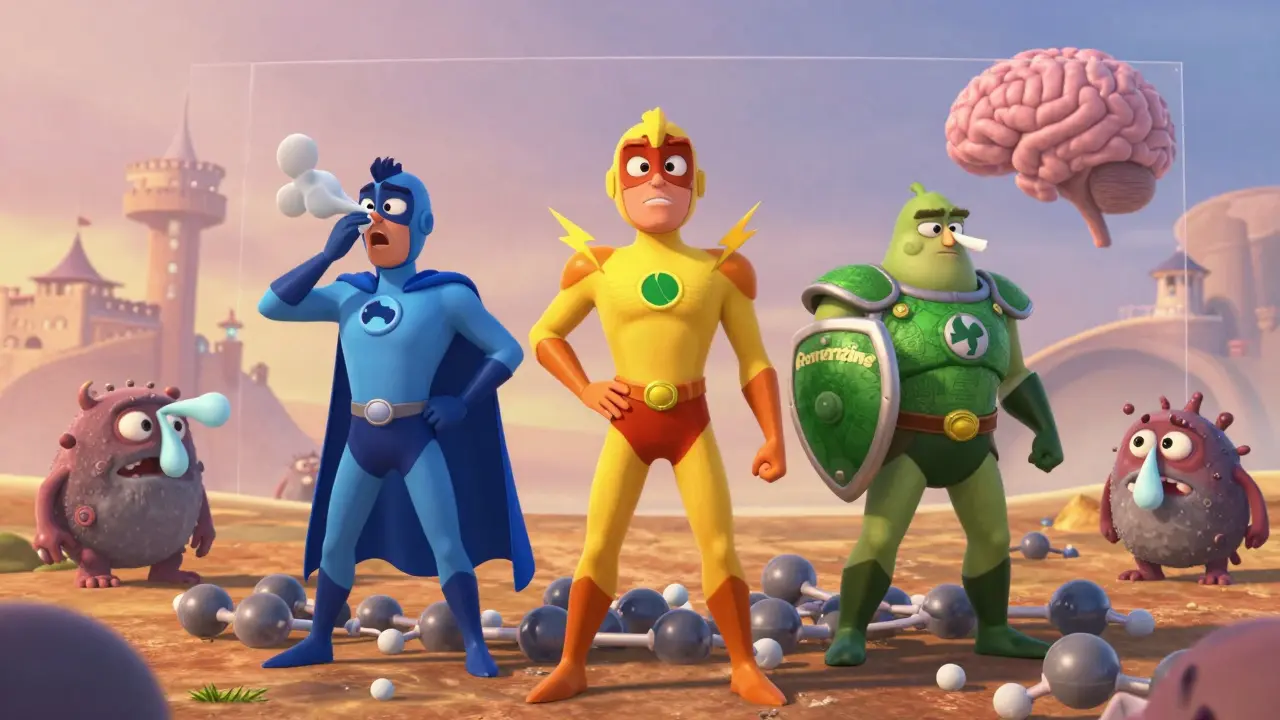
These newer meds - including loratadine (Claritin), cetirizine (Zyrtec), and fexofenadine (Allegra) - were designed to block histamine, the chemical that triggers allergic reactions, without crossing into your brain. That’s the key difference. First-gen drugs like Benadryl slip through the blood-brain barrier easily. Second-gen ones? They’re built to stay out. Their larger molecular size and polar structure make it harder for them to enter brain tissue. This simple change cut sedation rates from over 50% with older drugs down to just 6-14% with today’s options.
How They Work - And Why They Don’t Make You Sleepy
It all comes down to structure. Second-generation antihistamines have a chemical design that fits tightly into histamine H1 receptors in your nose, throat, and skin - the places where allergy symptoms show up. But they don’t fit well into receptors in your brain. Studies using cryo-electron microscopy (like the 2024 Nature Communications paper) show these drugs latch onto a specific pocket in the receptor, locking it shut so histamine can’t activate it. And because they’re more polar and heavier (over 400 daltons), they can’t easily pass through the tight junctions of the blood-brain barrier.
This means your body still gets relief from itching, runny nose, and watery eyes - but your mind stays clear. You can drive, work, or study without feeling like you’ve been hit with a pillow. For many, this was a game-changer. A 2023 Consumer Reports survey found 68% of allergy sufferers preferred second-gen meds over first-gen, mainly because they didn’t feel wiped out.
The Top Three: Loratadine, Cetirizine, and Fexofenadine
Not all second-gen antihistamines are the same. Each has its own quirks.
- Loratadine (Claritin): Available over the counter, it lasts about 24 hours. Most people tolerate it well, but some report headaches - one user on Drugs.com described three straight days of pounding headaches until they switched. It’s metabolized by the liver, so if you have liver issues, talk to your doctor.
- Cetirizine (Zyrtec): Works faster than loratadine and is slightly more potent. It’s the best-selling second-gen antihistamine globally, holding 35% of the market. But here’s the catch: even though only 6-14% of users get drowsy in clinical trials, real-world data from WebMD shows 23% of users still feel sleepy. Why? Individual metabolism varies. Some people process it slower, leading to higher blood levels. If you’re sensitive, try taking it at night.
- Fexofenadine (Allegra): This one’s the least likely to cause drowsiness. Only 5% of it is metabolized by the liver; most is excreted unchanged in stool and urine. That makes it safer if you’re on other meds. It’s also the only one that doesn’t interact much with grapefruit juice or common antibiotics. If you’ve had bad reactions to other antihistamines, fexofenadine is often the safest bet.
Market data from Grand View Research (2023) shows these three make up 85% of the $3.2 billion global antihistamine market. Cetirizine leads, followed by loratadine and then fexofenadine. But don’t assume one size fits all. About 35% of users try two or three different ones before finding the right fit.
What They Don’t Do - And Why You Might Still Need More
Here’s the tricky part: second-gen antihistamines are great for sneezing, itching, and runny nose - but they’re weak on nasal congestion. That’s because they don’t block acetylcholine like first-gen drugs do. First-gen antihistamines act like a double agent: they block histamine AND acetylcholine, which helps dry up mucus. Second-gen ones? They’re picky. They only block histamine.
So if you’re stuffed up, taking just Zyrtec or Claritin won’t cut it. You’ll need something extra - like a decongestant (pseudoephedrine) or a nasal spray (Flonase, Nasacort). A Reddit user summed it up perfectly: “Fexofenadine works great for my seasonal allergies without making me sleepy like Benadryl did, but I still need Flonase for congestion.” That’s not a flaw - it’s the design.
Dr. Paul S. Muether’s 2001 study at Johns Hopkins confirmed this: second-gen antihistamines didn’t reduce sneezing in people with common colds, while first-gen ones did. Why? Because colds aren’t just about histamine - they involve other inflammatory pathways. Second-gen drugs are optimized for allergic rhinitis, not viral infections.
Safety: What You Need to Know
Early second-gen antihistamines like terfenadine and astemizole were pulled from the market in the late 1990s because they caused dangerous heart rhythm problems when taken with certain antibiotics or grapefruit juice. That scared a lot of people. But today’s versions? They’re much safer.
Fexofenadine, for example, barely touches the liver’s CYP3A4 enzyme system - the same one that caused the old cardiac issues. Loratadine and cetirizine do use it, but at low levels. The FDA’s post-marketing surveillance through 2023 found no significant rise in heart problems with current second-gen antihistamines. Still, if you’re on medications like ketoconazole, erythromycin, or certain antifungals, check with your pharmacist. It’s rare, but interactions can happen.
Side effects? Most are mild: headache (reported by 38% of users), dry mouth, or occasional nausea. A small number (12%) on Reddit mention strange taste changes - metallic or bitter. That’s unusual but not dangerous. One user on Drugs.com said loratadine gave them “severe headaches for three days.” Switched to cetirizine? No more headaches. That’s why trial and error matters.

How to Use Them Right
Timing matters. Taking your antihistamine just before you’re exposed to pollen or pet dander can reduce symptoms by 40-50% compared to taking it after they start, according to a 2019 study in the Journal of Allergy and Clinical Immunology. If you know your triggers - like weekend yard work or springtime walks - take it 1-2 hours beforehand.
Don’t expect instant results. These meds build up in your system. For best results, take them daily during allergy season, not just when you feel awful. CDC data from 2023 shows only 32% of users take them consistently. The rest wait until they’re miserable - which means they’re not getting the full benefit.
And remember: OTC labels are often too vague. Package inserts score 8.2/10 for clarity, but store-bought labels? Only 6.4/10. If you’re unsure about dosing, talk to a pharmacist. The American College of Allergy, Asthma, and Immunology runs a helpline that fields over 12,000 questions a year - they can help you pick the right one.
What’s Next?
Research is moving fast. The 2024 Nature Communications study didn’t just explain how current antihistamines work - it found a second binding site on the H1 receptor. That opens the door for third-generation drugs that could be even more precise. One new drug, bilastine XR, is already in FDA breakthrough therapy review. It’s a once-a-week pill, designed for people who forget daily doses. About 37% of users struggle with adherence, so this could be huge.
Climate change is another factor. Pollen counts are rising. The National Institute of Environmental Health Sciences predicts 25-30% more pollen by 2050. That might mean higher doses or more frequent use for some people. For now, second-gen antihistamines remain the gold standard. As Dr. Robert Naclerio put it in February 2024: “They’re the cornerstone of allergic disease management.”
Are second-generation antihistamines safe for long-term use?
Yes. Studies tracking users for over a decade show no increased risk of liver damage, kidney issues, or other organ problems with loratadine, cetirizine, or fexofenadine when taken as directed. The FDA and European Medicines Agency both approve them for daily, long-term use. If you have severe liver disease, consult your doctor - but for most people, these are safe to take year-round.
Can I take second-generation antihistamines with other allergy meds?
Absolutely. Many people combine them with nasal corticosteroids (like Flonase), eye drops, or decongestants. In fact, combination products like Allegra-D (fexofenadine + pseudoephedrine) are popular because they tackle both histamine and congestion. Just avoid mixing with first-gen antihistamines - you don’t need the drowsiness. Always check with a pharmacist if you’re unsure about interactions.
Why does cetirizine make me sleepy if it’s supposed to be non-drowsy?
Cetirizine is metabolized differently in different people. Some individuals process it slowly, leading to higher blood levels. Genetics, liver function, and even age can affect this. About 23% of users report drowsiness in real-world settings - higher than the 6-14% seen in controlled trials. If you’re one of them, try taking it at night or switch to fexofenadine, which has the lowest sedation rate.
Do second-generation antihistamines help with cold symptoms?
Not really. They’re designed for allergic rhinitis - not viral infections. Studies show they don’t reduce sneezing or nasal stuffiness from colds. That’s because colds involve different chemicals in the body, not just histamine. First-gen antihistamines can help with cold symptoms because they also block acetylcholine. But they cause drowsiness. For colds, rest, hydration, and saline sprays work better than antihistamines.
Which one is best for someone with liver problems?
Fexofenadine (Allegra) is the safest choice. It’s mostly excreted unchanged in stool and urine - only 5% is processed by the liver. Loratadine and cetirizine rely more on liver enzymes (CYP3A4), so if you have liver disease, fexofenadine is less likely to build up in your system. Always talk to your doctor before starting any new medication if you have liver issues.
If you’ve been stuck with old-school antihistamines that leave you groggy, switching to a second-gen option might be the simple fix you’ve been looking for. Try one, give it a week, and see how you feel. If it doesn’t work, try another. You’re not alone - most people need to test a few before finding their perfect match.