Smoking Cessation & Medication Safety Timeline
Timeline of Enzyme Recovery
Click on a time point to see what's happening in your body.
Quit Day
72 Hours
1 Week
2 Weeks
4 Weeks
Enzyme Activity High
You have just stopped smoking. Your liver enzymes (CYP1A2) are still operating at an induced, high-speed rate due to previous exposure to PAHs.
Key Takeaway for Patients
The most critical period is Days 3-14. During this window, enzyme activity drops rapidly while your medication dose remains high, creating a significant risk of toxicity. Always consult your prescriber before quitting if you take CYP1A2-metabolized drugs like Clozapine, Theophylline, or Olanzapine.
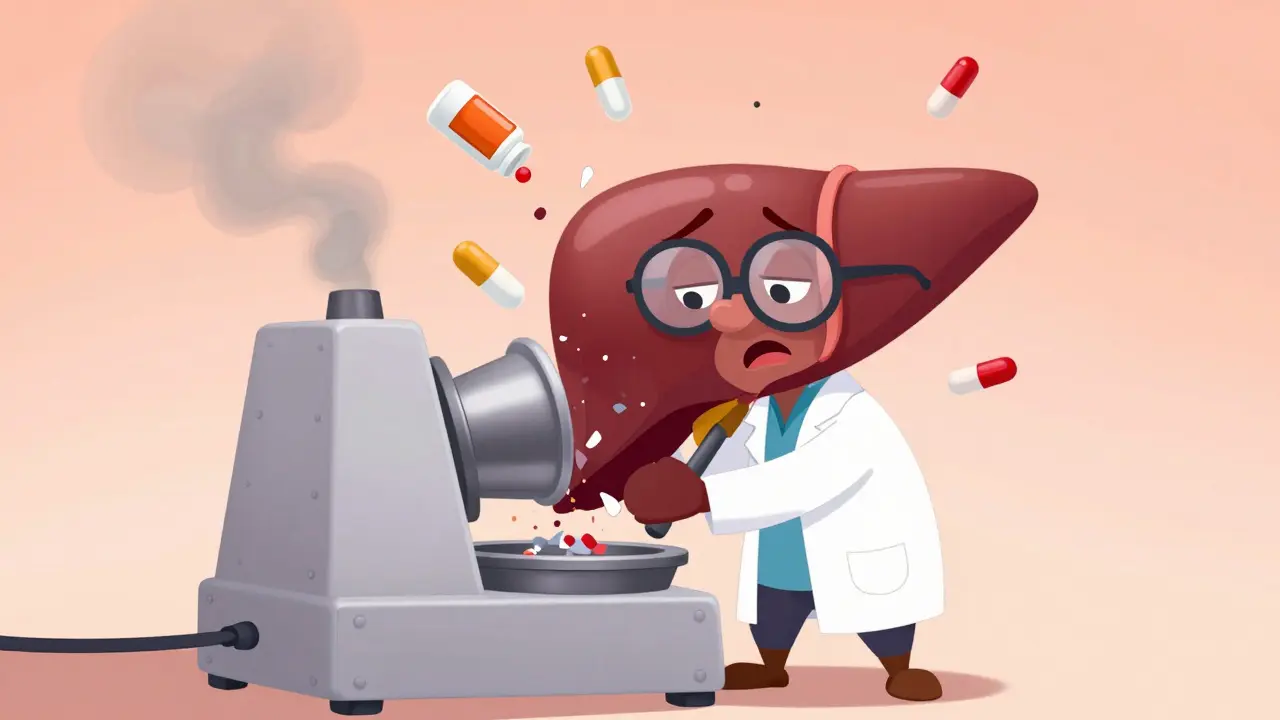
Did you know that lighting up a cigarette can quietly change how your body processes life-saving medications? For millions of people, smoking isn't just a bad habit-it's a biochemical event that alters drug levels in the blood. This happens through a process called enzyme induction, where chemicals in tobacco smoke force your liver to work overtime, breaking down drugs faster than intended.
If you are a smoker taking certain medications, you might need higher doses to feel any effect. But here is the tricky part: if you quit smoking, those same medications can suddenly become toxic because your liver stops speeding up its metabolism. Understanding this interaction is critical for avoiding treatment failure or dangerous side effects.
How Tobacco Smoke Changes Your Liver’s Chemistry
To understand why smoking affects drugs, we have to look at what’s inside the smoke. It contains polycyclic aromatic hydrocarbons (PAHs), which are sticky chemical compounds. When these PAHs enter your bloodstream, they bind to a specific receptor in your cells called the aryl hydrocarbon receptor (AhR). Think of AhR as a switch inside your cell nucleus. When PAHs flip this switch, it signals your DNA to produce more enzymes, specifically from the cytochrome P450 family.
The most affected enzymes are CYP1A2, CYP1A1, and CYP2E1. Research by Villard et al. (1998) showed that chronic smokers have 20-30% more CYP2E1 activity, while Seree et al. (1996) found up to 40% increased activity in CYP1A2. These enzymes act like shredders in your liver, breaking down foreign substances-including your prescription meds-much faster than usual.
This induction doesn’t happen overnight. It takes about 1 to 3 weeks of consistent smoking to reach maximum effect. However, once you stop smoking, the reverse happens quickly. Enzyme activity starts normalizing within 72 hours, and full reversal typically occurs within 2 to 4 weeks. This rapid shift is exactly why quitting smoking requires careful medical supervision for patients on sensitive medications.
Which Drugs Are Most Affected?
Not all medications are created equal when it comes to smoking interactions. Drugs that rely heavily on the CYP1A2 enzyme for breakdown are the most vulnerable. Here is a breakdown of the major offenders:
| Medication | Primary Use | Effect of Smoking | Clinical Consequence |
|---|---|---|---|
| Clozapine | Schizophrenia | Clearance increases significantly; levels drop by ~50% | Risk of psychotic relapse; requires dose increase |
| Theophylline | Asthma/COPD | Half-life reduced by 63%; clearance up 58-100% | Treatment failure unless dose is adjusted upward |
| Olanzapine | Bipolar/Schizophrenia | Clearance increases by 98%; serum levels drop 12% | Reduced efficacy; may need higher dosage |
| Pioglitazone | Type 2 Diabetes | Metabolism accelerated via minor pathways | Potential need for 20-30% higher dosing |
| Propranolol | Hypertension/Angina | Plasma concentrations reduced by 25% | Less effective blood pressure control |
Clozapine is perhaps the most dramatic example. A landmark study by Anand et al. (1994) found that smokers need 50% higher doses of clozapine to achieve the same therapeutic levels as non-smokers. If a patient quits smoking without telling their doctor, the drug levels can skyrocket, leading to severe toxicity. Conversely, antidepressants metabolized by multiple pathways, such as many SSRIs, show minimal interaction, with exposure changes rarely exceeding 15%.
The Danger Zone: Quitting Smoking
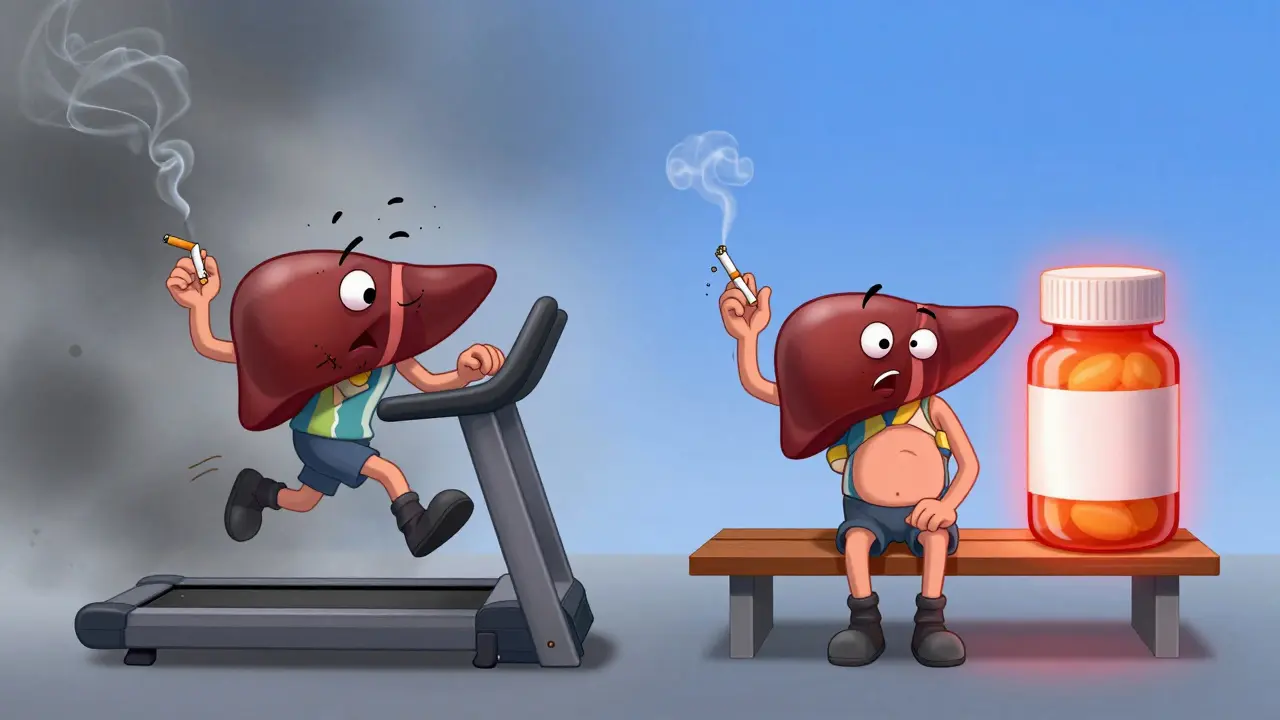
Most people think quitting smoking is purely beneficial-and it is. But for patients on CYP1A2-metabolized drugs, quitting creates a hidden risk window. Dr. Kroon warned in the British Journal of Clinical Pharmacology that "the period immediately following smoking cessation represents a critical window for adverse drug reactions."
Here is what happens: You quit smoking. Within 3 days, your liver enzymes start slowing down. Within 2 weeks, they return to normal speed. But your medication dose is still set for the "fast-shredder" mode. The result? Drug levels in your blood rise rapidly. Real-world data from the FDA Adverse Event Reporting System (2020-2022) identified 147 cases of clozapine toxicity linked to smoking cessation, with 89% occurring within the first 14 days after quitting.
I’ve seen this play out in clinical discussions. One pharmacist reported a patient hospitalized for theophylline toxicity just 10 days after quitting. The patient’s drug levels went from subtherapeutic to toxic simply because the dose wasn’t adjusted. Another patient on DiabetesDaily.com shared how their A1C dropped unexpectedly two weeks after quitting pioglitazone, not because they changed their diet, but because the drug became more potent in their system.

What Clinicians and Patients Should Do
Managing this interaction requires proactive steps. The NHS Specialist Pharmacy Service (2023) recommends a structured approach:
- Document Smoking Status: Don’t just ask "Do you smoke?" Ask "How many cigarettes per day?" Record this quantitatively at every visit.
- Monitor New Smokers: If a patient starts smoking, monitor therapeutic drug levels weekly for 2-3 weeks. Be prepared to titrate doses upward.
- Prepare for Cessation: If a patient plans to quit, reduce doses of CYP1A2 substrates by 25-50% within 3-7 days of cessation. The most critical period is days 3-14 post-cessation.
Institutions that implemented mandatory smoking status documentation in electronic health records saw a 42% reduction in adverse drug events related to smoking status changes, according to the American Society of Health-System Pharmacists (2022). This simple administrative step saves lives.
For patients, the message is clear: Never quit smoking without consulting your prescriber. If you are on clozapine, theophylline, olanzapine, or similar drugs, your doctor needs to adjust your dosage before or immediately after you quit. Ignoring this can turn a successful quit attempt into a medical emergency.
Future Directions in Personalized Medicine
Science is catching up to this complex issue. In 2023, the FDA approved a companion diagnostic test called SmokeMetrix® that quantifies CYP1A2 induction status by assessing caffeine metabolism. This test correlates 94% with gold-standard assays, allowing doctors to see exactly how much a patient’s smoking is affecting their drug processing.
The NIH is also funding a $12.7 million longitudinal study tracking 5,000 patients through smoking cessation to develop personalized dosing algorithms. Preliminary data suggests that combining CYP1A2 genotype with smoking history can predict 37% of necessary dose adjustments. Meanwhile, Dr. Benowitz’s team at UCSF is developing a smartphone app that uses carbon monoxide breath monitoring to provide real-time estimates of enzyme induction, aiming to make this invisible interaction visible to both doctors and patients.
Does vaping affect medication levels like smoking does?
Current research suggests that vaping has a lesser impact on CYP1A2 enzyme induction compared to combustible tobacco. Combustible smoke contains high levels of polycyclic aromatic hydrocarbons (PAHs), which are the primary drivers of enzyme induction. E-cigarettes generally lack these PAHs, though some studies indicate minor effects depending on the nicotine formulation and additives. However, long-term data is still limited, so caution is advised.
How long does it take for drug levels to normalize after quitting smoking?
Enzyme activity begins to decrease within 72 hours of stopping smoking. Full normalization of CYP1A2 and other induced enzymes typically takes 2 to 4 weeks. During this window, drug levels in the blood will rise, potentially reaching toxic ranges if doses are not adjusted downward.
Which medications are NOT affected by smoking?
Drugs metabolized primarily by CYP2D6, such as many SSRIs (e.g., fluoxetine, sertraline) and beta-blockers like metoprolol, show minimal interaction with smoking. Exposure changes for these drugs are usually less than 10%, rarely requiring dose adjustments. Always check the metabolic pathway of your specific medication.
Can I reverse the effects of smoking on my liver enzymes?
Yes, completely. The enzyme induction caused by smoking is reversible. Once you stop exposing your body to tobacco smoke, the aryl hydrocarbon receptors are no longer activated, and enzyme production returns to baseline levels within a few weeks. This is why dose adjustments are temporary if you maintain abstinence.
Why do I need a higher dose of antipsychotics if I smoke?
Smoking induces CYP1A2, an enzyme that breaks down antipsychotics like clozapine and olanzapine. With more enzyme activity, your liver clears the drug from your body faster, leaving lower concentrations in your blood. To maintain therapeutic effectiveness, a higher dose is required to compensate for this accelerated clearance.