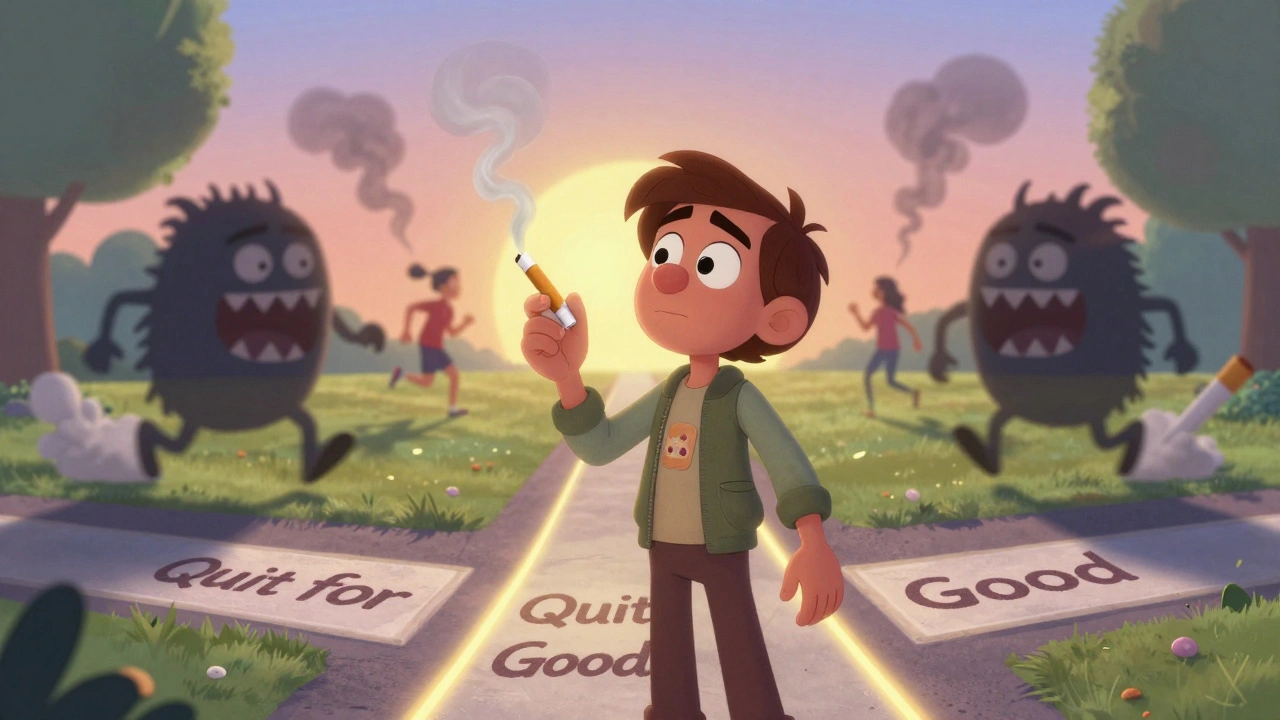
Quitting smoking isn’t just about willpower. If you’ve tried before and failed, it’s not because you’re weak-it’s because nicotine rewires your brain. The good news? Science has tools that work. You don’t have to suffer through cravings alone. There are medications and strategies backed by decades of research, real patient outcomes, and clinical guidelines that actually help people quit for good.
What Works Best? The Medications That Actually Deliver Results
Not all quit aids are created equal. The most effective options are FDA-approved and studied in large, real-world trials. Among them, varenicline (brand name Chantix) stands out. It’s not a nicotine patch or gum-it’s a targeted drug that works directly on the brain’s nicotine receptors. Developed by Pfizer and approved in 2006, varenicline reduces cravings and blocks nicotine from giving you a high if you slip up. In the landmark EAGLES study, 21.8% of people using varenicline were still smoke-free at six months, compared to just 9.4% on placebo.
How does it compare? Varenicline is about 32% more effective than nicotine patches and 46% more effective than bupropion. A 2022 meta-analysis of 363 trials confirmed this: varenicline gives you nearly three times better odds of quitting than nothing at all. Even better, it works well across different groups-including Black smokers, who often respond poorly to other treatments.
But it’s not perfect. About 30% of users report nausea, especially at first. Vivid dreams are common too-nearly half of users on Reddit’s r/stopsmoking community mentioned them. Some people quit because of side effects. Still, for those who stick with it, the payoff is real. One verified user wrote: “It doubled my chances compared to the patch alone.”
Bupropion (Zyban), originally an antidepressant, is another option. It doesn’t contain nicotine but helps reduce withdrawal symptoms and improves mood for some. In the EAGLES trial, 16.2% of users quit after six months. People with depression often report feeling better while using it, but insomnia is a common reason for stopping. It’s cheaper-around $15 for a 30-day supply at Walmart’s generic program-and available as a prescription.
Nicotine replacement therapy (NRT) is the most familiar. Patches, gum, lozenges, nasal spray, and inhalers all deliver small, steady doses of nicotine to ease withdrawal. The 21mg patch is recommended for people who smoke more than 10 cigarettes a day. Used alone, NRT gives you about a 15% chance of quitting at six months. But here’s the key: NRT works better when you combine it. Use the patch for steady relief and gum or lozenges for sudden cravings.
Combining Treatments: The Secret Weapon Most People Miss
One of the biggest mistakes people make is using just one method. The best results come from combining medications. A 2022 network meta-analysis found that using varenicline plus a nicotine patch increased quit rates dramatically-odds of success jumped to 5.75 times higher than placebo. That’s not a small bump. That’s life-changing.
The U.S. Public Health Service guideline recommends this exact combo: start varenicline one to two weeks before your quit date, then use a nicotine patch along with gum or lozenges for breakthrough cravings. You’re not doubling your risk-you’re doubling your chance of success.
Even if you don’t use varenicline, combining NRT products helps. Use the patch all day, then chew a 4mg gum when you feel the urge. Studies show people who combine methods are 25-40% more likely to quit than those using one alone.
There’s also cytisine, a plant-based alternative to varenicline used for decades in Eastern Europe. It’s cheaper-about $25 for a full course-and shows similar results in recent trials. It’s not yet approved in the U.S., but it’s gaining attention. If cost is a barrier, ask your doctor if it’s an option.
Behavioral Support: Why You Can’t Skip This
Medications help your body. But your mind needs help too. The CDC says even a three-minute chat with a doctor increases your chances of quitting by 30%. That’s not magic-it’s accountability, strategy, and emotional support.
Intensive counseling-four or more sessions-combined with medication gives you the highest success rate. You don’t need weekly therapy. Free resources like Smokefree.gov offer text-based coaching, apps that track cravings, and online communities. The NHS in the UK runs a free phone service with trained advisors. In Leeds, local NHS stop-smoking services offer face-to-face support at community centers, often with free NRT.
Behavioral strategies aren’t fluffy. They’re practical. Learn to recognize your triggers: coffee, stress, driving, socializing. Plan alternatives. Chew gum. Take a walk. Drink water. Delay the urge for five minutes-it often passes. Keep a journal. Note when you crave a cigarette and what you did instead.
One smoker I spoke with in Leeds quit after using varenicline and texting a quit coach every morning. “I didn’t think I needed the talking part,” he said. “But when I almost smoked after my dad’s funeral, the coach reminded me why I started. That stopped me.”

Cost, Access, and Insurance: What You Really Pay
Cost is a real barrier. Varenicline costs about $500 for a 12-week course without insurance. Bupropion is much cheaper-$15 for a month’s supply. NRT patches cost around $45 for a week’s supply at Walgreens. That adds up fast.
But here’s the thing: most insurance plans cover quit medications. In the U.S., 68% of commercially insured people have coverage. Medicaid coverage varies by state-only 29% of beneficiaries in non-expansion states get help. Ask your pharmacy or doctor. Many manufacturers offer coupons or patient assistance programs. Pfizer has a savings card for Chantix. Some states give free NRT through public health programs.
Don’t let price stop you. If you can’t afford varenicline, start with NRT and counseling. Use the $4 generic bupropion. Every dollar you save on cigarettes pays for your quit aids. Smoking a pack a day costs about $250 a month. That’s more than enough to cover a month’s supply of medication.
Side Effects and Safety: What You Need to Know
People worry about varenicline causing depression or suicidal thoughts. That fear comes from early reports. But the EAGLES study in 2016, which included over 8,000 people with psychiatric conditions, found no increased risk compared to placebo. The FDA removed its black box warning in 2016 based on this evidence.
Side effects are real, but manageable. Nausea from varenicline usually fades after a week. Take it with food and a full glass of water. If vivid dreams are too disturbing, talk to your doctor-dosing adjustments can help. Bupropion can cause insomnia; take it before 6 p.m. NRT can cause mouth irritation or hiccups, but that’s minor.
The biggest risk isn’t side effects-it’s quitting too soon. Only 44% of people complete the full 12-week course. That’s why having a plan matters. Set a quit date. Tell someone. Prepare for cravings. Don’t wait for “motivation.” Start the medication first, then quit.

Who Should Use What? A Simple Guide
- Best overall: Varenicline - Highest success rate, works for most people, including those with depression or anxiety.
- Best for budget: Bupropion - Cheap, effective, helps with mood.
- Best for mild cravings: NRT patch + gum - Safe, over-the-counter, good for people who want to wean off slowly.
- Best combo: Varenicline + NRT - Highest success rate of all. Worth the cost if you’ve tried before and failed.
- Don’t use alone: Willpower - Only 5-7% of people quit cold turkey and stay quit long-term.
There’s no one-size-fits-all. If you have heart disease, talk to your doctor before using NRT. If you’re pregnant, NRT is safer than smoking. If you’re under 18, bupropion isn’t approved-but NRT and counseling are safe options.
What Happens After You Quit?
Quitting isn’t the finish line-it’s the start. The first 30 days are the hardest. Cravings fade after a week, but triggers stick around. After three months, your lungs start to heal. After one year, your heart disease risk drops by half. After five years, your stroke risk equals a non-smoker’s.
Relapse is common, but not failure. Most people try three to five times before quitting for good. If you slip, don’t give up. Figure out what triggered it. Adjust your plan. Maybe you need more counseling. Maybe you need to switch from bupropion to varenicline. Maybe you need to extend your treatment beyond 12 weeks.
The World Health Organization says widespread use of proven cessation methods could prevent 200 million tobacco-related deaths by 2050. That’s not a distant dream. It’s possible if more people use what works.
You don’t have to be perfect. You just have to be persistent. One person in Leeds quit after five tries. Her sixth attempt? Varenicline, a quit coach, and a daily walk around Roundhay Park. She’s been smoke-free for 18 months. “I didn’t believe it would work,” she told me. “But I kept trying. And now I can breathe.”
What’s the most effective medication to quit smoking?
Varenicline (Chantix) is the most effective single medication, with clinical trials showing 21.8% of users remain smoke-free at six months-nearly double the rate of nicotine patches. It works by reducing cravings and blocking nicotine’s effects in the brain. The American Thoracic Society recommends it as the top choice for quitting.
Can I use nicotine patches and varenicline together?
Yes, combining varenicline with nicotine replacement therapy (like a patch or gum) significantly increases your chances of quitting. Studies show this combo can nearly triple your odds compared to using one method alone. The U.S. Public Health Service guideline specifically recommends this approach for people who need extra support.
How long should I take smoking cessation medication?
Most medications are prescribed for 12 weeks. But if you’re doing well after that, extending treatment for another 12 weeks can improve long-term success. The CDC and U.S. Public Health Service recommend continuing medication as long as it’s helping and side effects are manageable.
Is it safe to use smoking cessation drugs if I have depression?
Yes. Early concerns about varenicline and bupropion causing psychiatric side effects were based on limited data. The large EAGLES study in 2016 found no increased risk of depression, anxiety, or suicidal thoughts compared to placebo-even in people with existing mental health conditions. Varenicline is now recommended for smokers with depression by major health organizations.
What if I can’t afford these medications?
Many insurance plans cover quit medications. In the U.S., Medicaid coverage varies, but some states offer free NRT. Generic bupropion costs as little as $15 a month at Walmart. Pfizer offers savings cards for Chantix. Free resources like Smokefree.gov and NHS stop-smoking services provide counseling and sometimes free patches or gum. The money you save on cigarettes can pay for your quit aids.
Do e-cigarettes help people quit smoking?
E-cigarettes are not FDA-approved for smoking cessation. While some people use them to quit, evidence is mixed. They still deliver nicotine and may keep you dependent. The CDC and American Heart Association recommend using proven medications like varenicline, NRT, or bupropion instead. If you use e-cigarettes, aim to quit them too-don’t trade one addiction for another.
Comments
Courtney Black
People act like quitting smoking is a moral failure. Nah. It’s a neurological heist. Nicotine hijacks your reward system like a hacker stealing your crypto. You don’t need willpower-you need a better algorithm. Varenicline? That’s the firewall. Patch + gum? Backup keys. Stop blaming yourself. Start engineering your escape.
And yeah, the dreams? Wild. I saw my dog running on the moon smoking a cigar. I woke up laughing. Then I didn’t smoke that day. Weird? Maybe. Effective? Absolutely.
On December 7, 2025 AT 19:43
iswarya bala
omg i tried varenicline and it was a game changer!! i was smoking 15 a day now im 6 months clean!! the nausea sucked at first but i just ate banana and it helped!! and the dreams?? i was flying with dragons!! lol but i kept going!! u can do it too!!
just start slow and dont give up!! i cried on day 3 but now i can run without wheezing!! 💪❤️
On December 8, 2025 AT 12:36
Simran Chettiar
It is imperative to recognize that the pharmacological interventions detailed herein are not merely palliative measures, but rather, they constitute a neurochemical recalibration of the addiction circuitry. The efficacy of varenicline, as substantiated by the EAGLES trial, demonstrates a statistically significant modulation of the α4β2 nicotinic receptor, thereby attenuating both the craving response and the reinforcing properties of nicotine.
Concomitant utilization of nicotine replacement therapy serves not as an additive, but as a synergistic adjunct-providing a controlled, temporal release of nicotine to mitigate withdrawal-induced dysphoria, while varenicline occupies the receptor sites, rendering exogenous nicotine inert. This dual-pathway strategy is not anecdotal; it is evidence-based, peer-reviewed, and endorsed by the U.S. Public Health Service.
One must also not overlook the behavioral architecture. Without cognitive restructuring-without the deliberate identification of triggers and the substitution of rituals-the pharmacology alone is a ship without a rudder. The mind must be retrained, not merely sedated.
And yet, access remains inequitable. The cost disparity between varenicline and generic bupropion reflects not clinical superiority, but market dynamics. We must advocate for universal coverage. To deny medication based on income is to deny neurobiology.
Finally, let us dispense with the myth of ‘willpower.’ The brain does not obey moral exhortations. It obeys chemistry. And chemistry, when properly harnessed, can liberate.
On December 9, 2025 AT 01:18
Anna Roh
So… varenicline gives you weird dreams and nausea, and you’re telling me that’s better than just… not smoking? I mean, I get the stats, but honestly, I’d rather just suffer through cravings than feel like I’m tripping on a bad acid trip while my stomach rebels.
Also, why is everyone acting like this is new? I quit in 2008 with gum and sheer stubbornness. No meds. No coaches. Just me and my will.
On December 10, 2025 AT 14:55
om guru
Success requires discipline not desperation
Medications are tools not crutches
Behavioral change is the foundation
Support systems are non negotiable
Cost is never an excuse when health is at stake
Start today not tomorrow
One day at a time
Peace and strength to all who seek freedom
On December 11, 2025 AT 07:27
Richard Eite
Look I don’t care what your fancy studies say. America invented quitting smoking. We don’t need some foreign drug or British coaching to tell us how to live. I smoked for 20 years, quit cold turkey with a baseball bat and a Motörhead playlist. That’s American grit. Varenicline? That’s just Big Pharma selling pills to weak people. You want to quit? Stop being a baby. Get off the couch. Go for a run. Drink water. Breathe. That’s it. No prescriptions. No apps. No therapy. Just American resolve.
Also NHS? Who even are they? We don’t need their help. We got Walmart generics and free will. And if you can’t afford it? Then maybe you don’t deserve to quit. Just saying.
And no, e-cigs aren’t bad. They’re just the future. You’re just mad because you didn’t think of it first.
On December 13, 2025 AT 01:36