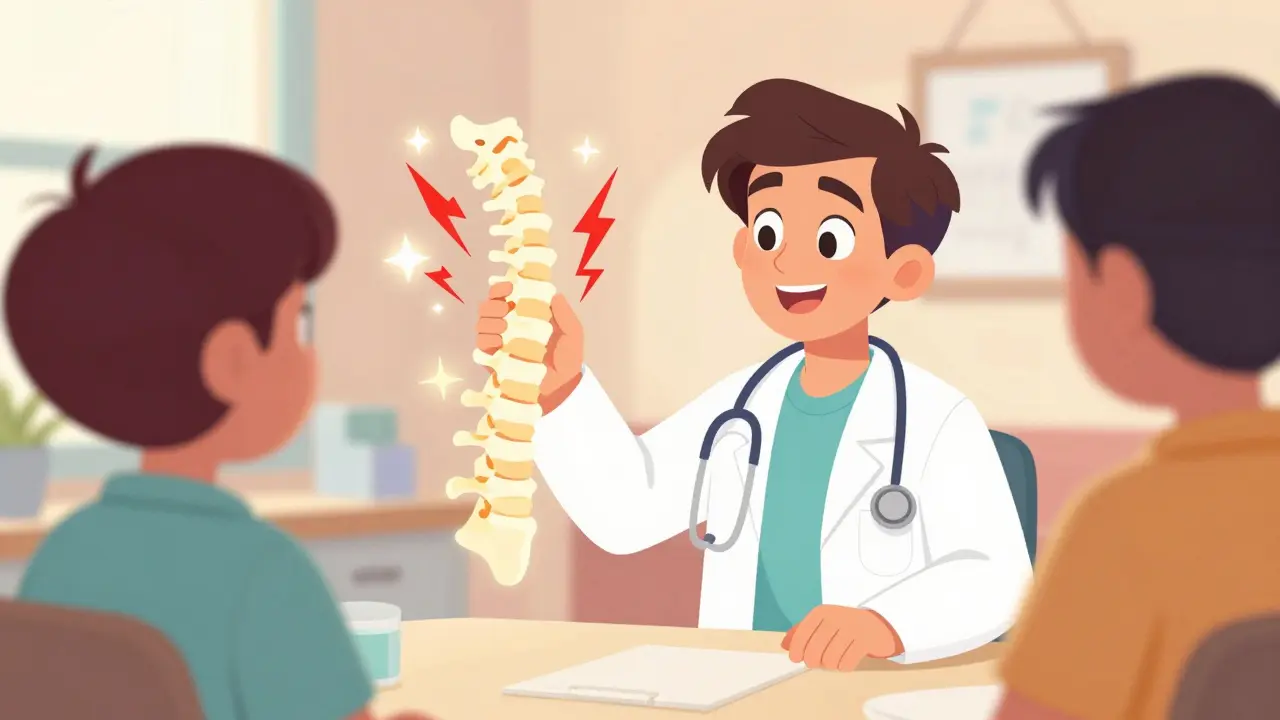
Living with chronic pain feels like carrying a weight that never gets lighter. You have tried medications, physical therapy, and perhaps even surgeries, but the relief was temporary or non-existent. If you are reading this, you might be hearing about Spinal Cord Stimulation, also known as SCS. It is a medical device treatment that sends electrical pulses to your spinal cord to block pain signals from reaching your brain. But here is the hard truth: it does not work for everyone. In fact, without proper screening, failure rates can exceed 40%. So, how do you know if you are a candidate? And what does the process actually look like in 2026?
What Exactly Is Spinal Cord Stimulation?
To understand if SCS is right for you, you first need to know what it does. Think of your nervous system as a telephone line. When you have an injury, that phone rings constantly with pain messages. Neuromodulation is the process of changing how those nerves behave. SCS acts like a static noise generator on that line. It doesn't stop the call, but it makes the voice unintelligible, so you no longer hear the pain clearly.
The system consists of three parts: leads (thin wires) placed near your spinal cord, a connecting wire, and a pulse generator (similar to a pacemaker) implanted under your skin, usually in your abdomen or buttock. The device sends mild electrical currents to the dorsal columns of the spinal cord. This technique was first developed in 1967 by Dr. C. Norman Shealy. Today, it is considered an intermediate option in pain management-more involved than injections but less invasive than major back surgery.
Who Is the Ideal Candidate for SCS?
This is the most critical question. Insurance companies and doctors use strict criteria because the device is expensive and requires surgery. You are likely a good candidate if you meet these specific conditions:
- Chronic Neuropathic Pain: Your pain must be nerve-related, such as burning, tingling, or shooting sensations. Common diagnoses include Failed Back Surgery Syndrome (FBSS), where pain persists after spinal operations, and Complex Regional Pain Syndrome (CRPS).
- Failed Conservative Care: You must have tried and failed other treatments for at least 12 to 24 months. This includes physical therapy, oral medications, and epidural steroid injections.
- No Structural Repair Needed: SCS manages symptoms; it does not fix broken bones or herniated discs. If there is a surgical problem that can be fixed, surgeons will want to fix that first.
- Positive Trial Response: You must achieve at least 50% pain relief during a temporary test period before getting the permanent implant.
Psychological health matters just as much as physical health. Studies show that patients with untreated major depression have a 35% lower success rate. Doctors often require a psychological evaluation to ensure you have realistic expectations and coping strategies.
Types of Stimulation: Tonic vs. Advanced Waveforms
Not all SCS devices feel the same. Ten years ago, almost everyone felt a tingling sensation called paresthesia. Today, technology has evolved significantly. Understanding these differences helps you choose the right system.
| Mode Type | Sensation | Frequency Range | Best For |
|---|---|---|---|
| Tonic (Traditional) | Mild tingling (paresthesia) covering the pain area | 30-120 Hz | Patients who prefer feeling the device working; lower cost |
| Burst | No tingling; subtle tapping sensation or none | 500 Hz bursts at 40 times/sec | Patients who dislike tingling; complex pain patterns |
| High-Frequency (HF10) | Completely pain-free; no sensation | 1,000-10,000 Hz | Patients wanting zero distraction from daily life |
Modern systems from manufacturers like Boston Scientific (Precision Spectra), Medtronic (Intellis), and Abbott (Proclaim) offer these advanced modes. High-frequency stimulation, for example, operates at 10 kHz and eliminates paresthesia entirely, which many patients find more comfortable for long-term use.
The Two-Phase Process: Trial and Implant
You do not wake up with a permanent device. The process is designed to prove efficacy first. It happens in two distinct phases.
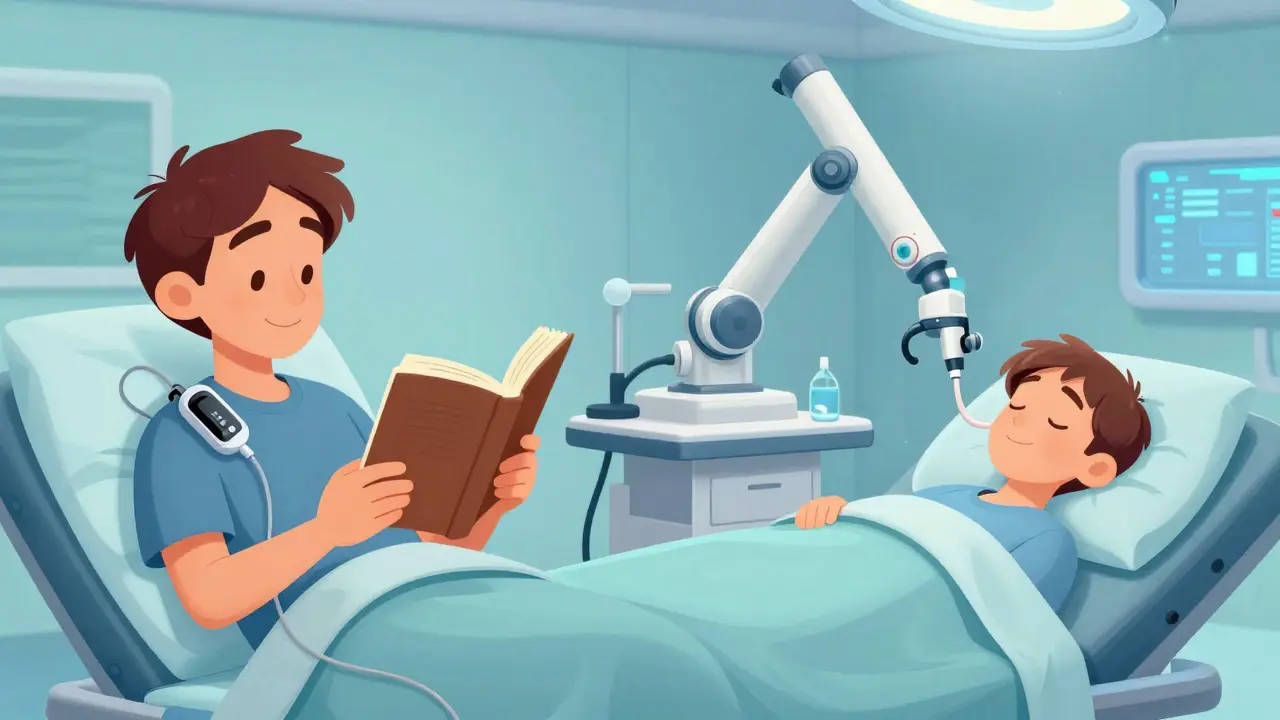
- The Trial Period (5-7 Days): A doctor places thin, temporary leads into your epidural space using fluoroscopic guidance (live X-ray). These leads connect to a small external battery pack you wear outside your body. You go home and live your normal life. If you get at least 50% pain relief and improved function, the trial is successful. If not, the leads are removed, and there is no commitment.
- Permanent Implantation (1 Day Surgery): If the trial succeeds, you schedule a short surgery (60-90 minutes). The doctor implants the permanent leads and connects them to an Implantable Pulse Generator (IPG) placed under the skin. You go home the same day.
After surgery, you will spend 2-4 weeks learning to program your device. Most patients need at least one follow-up visit with their physician to fine-tune the settings. About 89% of users require professional programming adjustments initially to find the "sweet spot" for their pain coverage.
Risks, Complications, and Realistic Expectations
It is important to be honest about the downsides. SCS is not a cure-all, and it carries risks. According to data from the Washington State Health Care Authority, the safety rating is "Medium" due to potential complications.
- Lead Migration: This is the most common issue, affecting about 15% of patients within six months. The wires can shift slightly, causing the stimulation to move away from your pain area. This often requires a minor revision surgery to reposition the leads.
- Infection: Occurs in 3.8% to 7.2% of cases. If an infection develops, the entire system usually needs to be removed until the infection clears.
- Battery Replacement: The IPG battery lasts between 2 to 10 years depending on usage and model. You will need additional surgeries to replace it. Newer models like the Boston Scientific WaveWriter Alpha Prime offer up to 24 months of life, while others last longer.
- MRI Limitations: Not all systems are MRI-compatible. If you choose a newer "MRI-conditional" system, you must follow strict protocols when undergoing scans. Older models may prevent you from having MRIs altogether.
Long-term efficacy also varies. While 76% of patients report significant relief at six months, that number drops to 58% at three years and 52% at five years. This decline suggests that patient selection and ongoing management are crucial for lasting results.
Cost and Insurance Coverage in 2026
Money is a major factor. The total cost of an SCS system, including surgery and hospital fees, ranges from $25,000 to $45,000 in the U.S. Medicare covers SCS for specific indications like FBSS and CRPS. However, private insurance policies vary widely.
Many patients face out-of-pocket costs between $5,000 and $10,000 for deductibles and co-pays. Before proceeding, verify your coverage. Ask your insurer specifically about:
- Coverage for the trial phase.
- Approved device models (some insurers only cover certain brands).
- Requirements for psychological clearance.
- Limits on revision surgeries.
Alternatives to Spinal Cord Stimulation
If SCS is not right for you, other options exist. Here is how they compare:
- Opioid Therapy: While effective for some, long-term opioid use carries high risks of addiction and tolerance. Studies show SCS patients reduce opioid use by 57% at one year compared to medication-only groups.
- TENS Units: Transcutaneous Electrical Nerve Stimulation units are cheap ($50-$200) and non-invasive, but they provide surface-level relief and are generally ineffective for severe chronic neuropathic pain.
- Peripheral Nerve Stimulation (PNS): Similar to SCS but targets specific nerves in the limbs rather than the spine. It works better for localized extremity pain but is less effective for axial low back pain.
Does spinal cord stimulation cure pain?
No, SCS does not cure the underlying cause of pain. It manages the symptoms by modulating the nerve signals. It is a tool to improve quality of life and reduce reliance on medications, but the pain condition itself remains.
How long does the trial period last?
The trial typically lasts 3 to 7 days. During this time, you wear an external battery pack connected to temporary leads. If you experience at least 50% pain relief, you are eligible for permanent implantation.
Can I drive with a spinal cord stimulator?
Yes, most patients can drive. However, you should check with your surgeon and local regulations. Some devices may interfere with car anti-theft systems, though modern cars are generally compatible. Avoid placing magnets near the device.
What is the success rate of SCS?
Success rates vary by study and patient population. Generally, 56% to 85% of properly selected patients achieve significant pain relief (defined as ≥50% reduction). Long-term maintenance of this relief drops to around 52% at five years.
Will my insurance cover the trial?
Most major insurance providers and Medicare cover the trial if you meet clinical criteria for chronic neuropathic pain. Always pre-authorize the trial with your insurance company before scheduling the procedure to avoid unexpected bills.