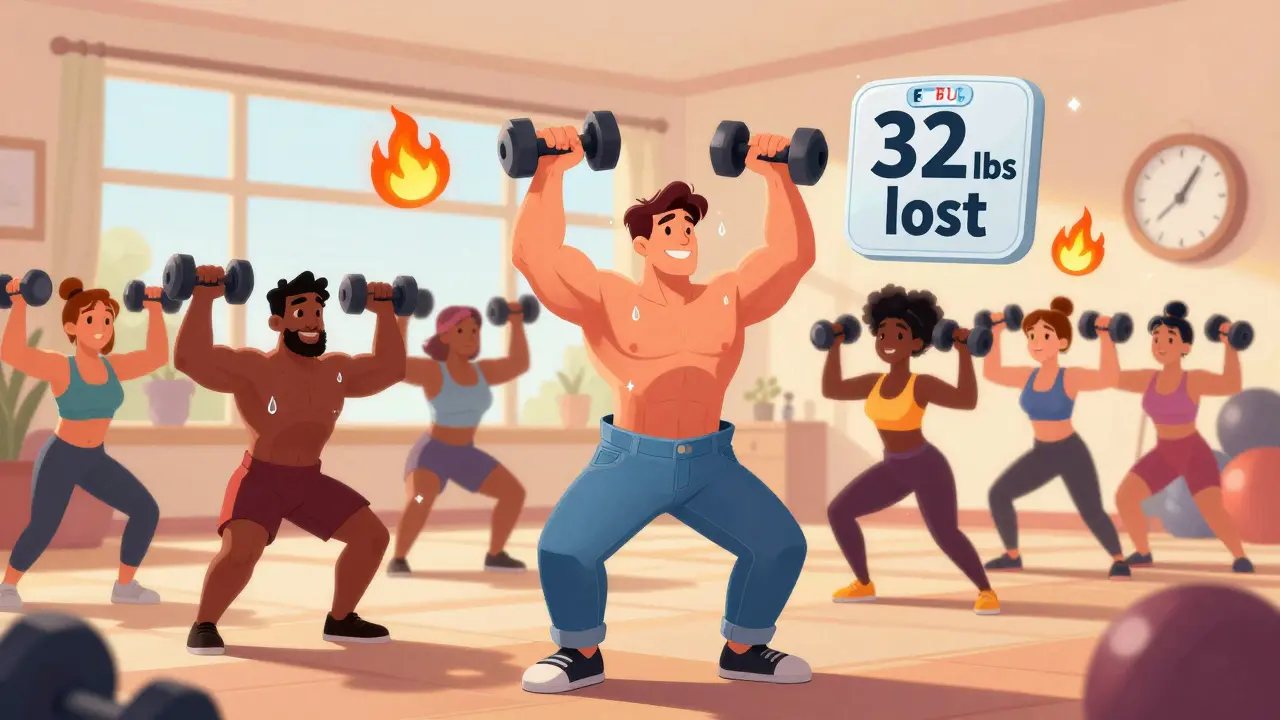
Most people think fat loss means endless cardio, early morning runs, or skipping meals. But if you’ve been doing that for months and still don’t see changes in the mirror, you’re not alone. The truth? Strength training is the most powerful tool you’re probably ignoring. It doesn’t just burn calories while you’re working out-it rewires your body to burn more fat even when you’re sitting still.
Why Strength Training Beats Cardio for Fat Loss
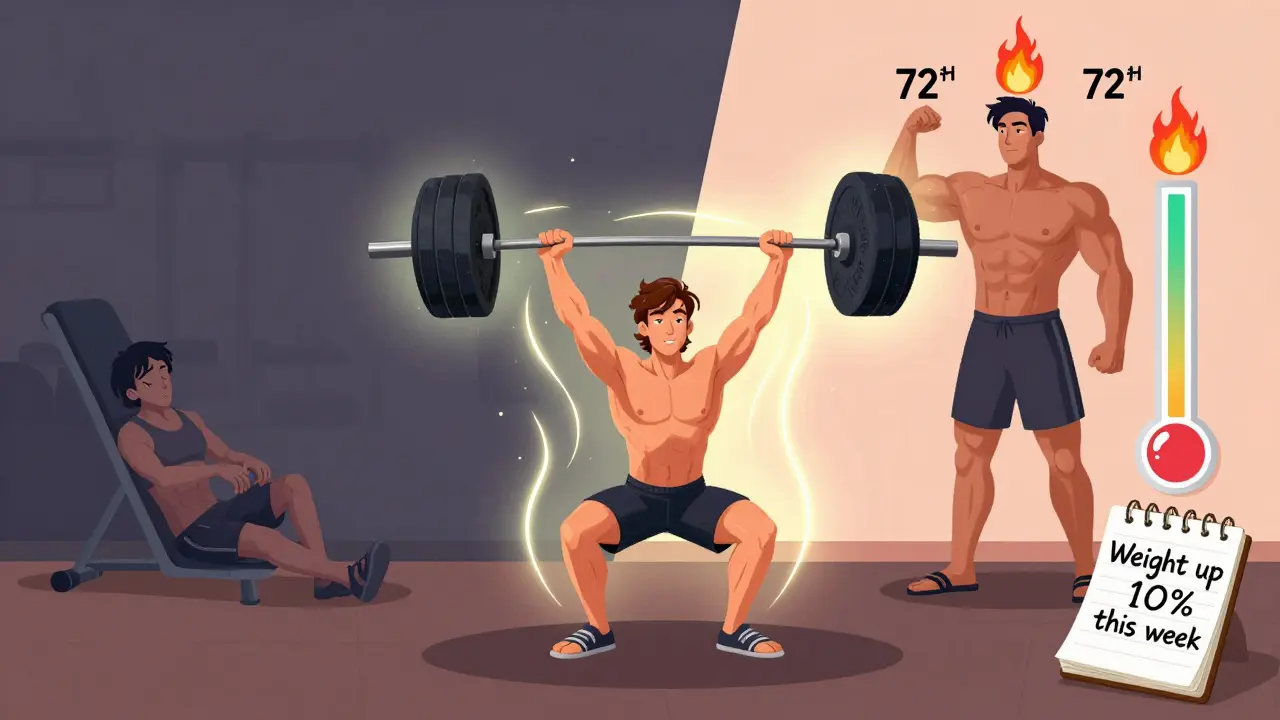
Cardio burns calories. That’s clear. But here’s the catch: it also burns muscle. When you do hours of running or cycling while eating less, your body doesn’t just tap into fat stores-it starts breaking down muscle for energy. That’s why so many people lose weight but end up looking thin and soft, not toned. Strength training flips that script. Studies show that during weight loss, people who lift weights keep 95% of their muscle mass. Those who only do cardio? They lose about 12%. That difference isn’t just about looks-it’s about metabolism. Every pound of muscle burns 6 to 10 calories a day at rest. Fat? Only 2 to 3. So if you gain 3 pounds of muscle while losing 8 pounds of fat, your body is now burning 15 to 21 extra calories every single day. That’s over 7,000 extra calories a year-without changing a single meal. And it gets better. After a hard strength session, your body keeps burning calories for up to 72 hours. This is called EPOC-excess post-exercise oxygen consumption. It’s your body’s way of repairing muscle, restoring energy, and cooling down. A 2018 study found this effect adds 6% to 15% more calories burned after the workout. Cardio? That effect usually fades within 24 hours.How to Structure Your Strength Program for Fat Loss
This isn’t about lifting heavy for big arms. It’s about smart, efficient training that triggers fat loss without turning you into a bodybuilder. Here’s what actually works:- Rep ranges: 8 to 15 reps per set. For big lifts like squats and deadlifts, aim for 8 to 12. For smaller moves like bicep curls or lateral raises, go for 12 to 15. This keeps your heart rate up while still building muscle.
- Sets: 3 to 5 per exercise. More than that risks burnout. Less than 3 won’t give you enough stimulus.
- Rest: 2 to 3 minutes between heavy sets. Shorter rests (30 to 60 seconds) work well for circuits, but don’t rush recovery on compound lifts.
- Tempo: Control the movement. Lower weights slowly (2 to 3 seconds), explode up, pause briefly. A 2/0/2 tempo (2 seconds down, 0 pause, 2 seconds up) increases time under tension and burns more calories.
Start with full-body workouts 3 times a week. Each session should include:
- One lower body compound lift (squats, lunges, or deadlifts)
- One upper body push (bench press, push-ups, or overhead press)
- One upper body pull (rows, pull-ups, or resistance band pulls)
- One core move (planks, dead bugs, or farmer’s carries)
Use dumbbells if you’re new. They’re easier to learn with than barbells. If you’ve been lifting for a while, add a barbell for heavier loads. Resistance bands are great for warm-ups or adding resistance to bodyweight moves.
Progression: The Secret Sauce
You won’t get results if you do the same weights every week. Progression is non-negotiable. Here’s how to do it:- When you hit the top of your rep range (e.g., 12 reps on all 3 sets of squats) with good form, increase the weight by 5% for women or 10% for men.
- Track every workout. Write down the weight, reps, and how it felt. If you’re not improving, you’re not progressing.
- Don’t chase the scale. Focus on strength gains. If you can lift more, you’re getting leaner-even if the number on the scale hasn’t changed.
One Reddit user lost 48 pounds over six months. The scale only dropped 32 pounds. The rest? Muscle. His body fat dropped from 32% to 19%. He didn’t change his diet much-he just started lifting heavier every week.
Cardio? Yes-but the Right Kind
You don’t need to run marathons. But adding cardio strategically boosts results:- Two days a week: one steady-state cardio session (30-45 minutes of brisk walking, cycling, or elliptical at 65-75% max heart rate)
- One day a week: HIIT (3-4 rounds of 30 seconds sprinting or jumping jacks, 90 seconds rest)
Don’t do cardio on your strength days. Space them out. If you lift Monday, Wednesday, Friday, do cardio on Tuesday and Saturday. This gives your muscles time to recover and grow.
A 2022 meta-analysis found that combining strength training with cardio led to 1.8 pounds of fat loss per week-better than either alone. The key is balance. Too much cardio kills muscle. Too little? You miss out on extra calorie burn.
Nutrition: You Can’t Out-Train a Bad Diet
Strength training won’t magically melt fat if you’re eating junk. But you also don’t need to starve yourself.- Protein: Aim for 1.6 to 2.2 grams per kilogram of body weight. That’s about 100-130g for a 70kg person. Eat it after workouts and spread it across meals.
- Carbs: 30% of your calories. Focus on whole grains, vegetables, and fruit. They fuel your lifts and recovery.
- Fats: 30%. Avocados, nuts, olive oil, eggs. They support hormones and keep you full.
Don’t count calories obsessively. Focus on food quality. A 2023 study found people who ate high-protein meals after workouts gained 22% more muscle than those who waited 3 hours.
What to Track (Besides the Scale)
The scale lies. It doesn’t know the difference between fat and muscle. Here’s what actually matters:- Waist measurement (do it weekly)
- Hip and chest measurements
- Progress photos (take them every 2 weeks in the same lighting)
- Strength gains (can you lift more? Do more reps?)
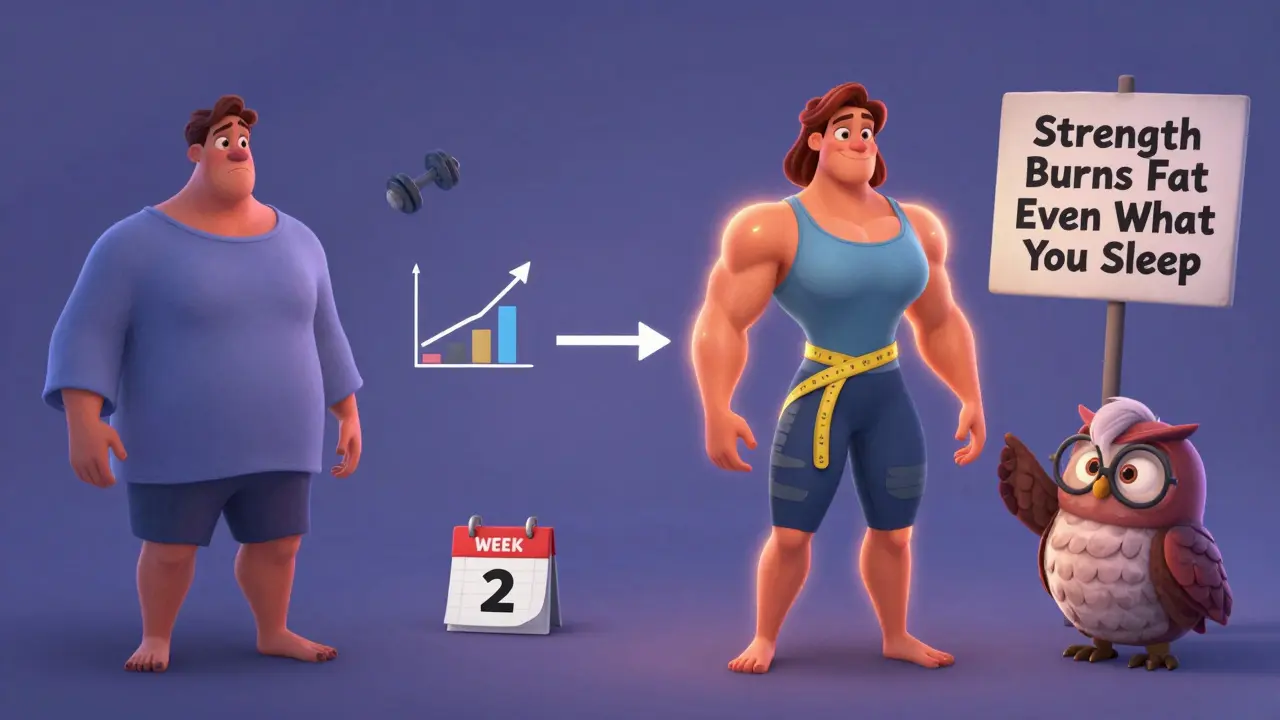
Most people who succeed say the same thing: they almost quit at week 2 because the scale didn’t move. Then, at week 4, their jeans started falling loose. Their arms looked tighter. Their shoulders popped. That’s when they realized: they weren’t losing weight-they were getting stronger.
Common Mistakes and How to Fix Them
- Skipping warm-ups: Always do 5 minutes of light cardio and dynamic stretches before lifting. It prevents injury and primes your muscles.
- Doing partial reps: Go full range of motion. Squat until your thighs are parallel. Lower the bar to your chest. This builds real strength.
- Ignoring form: Watch videos. Record yourself. Ask a trainer. Bad form wastes effort and risks injury. It takes 2 to 3 weeks to learn proper technique.
- Not resting enough: Muscles grow when you rest, not when you lift. Take at least one full rest day between strength sessions.
One common error? Doing too much too soon. People jump into 5-day splits and heavy weights. Then they’re sore for two weeks and quit. Start simple. Three full-body sessions a week. Focus on technique. Progress slowly. That’s how you stick with it.
Real People, Real Results
Amazon reviews for the Women’s Health 4-Week Strength Training Plan show a pattern. Out of 1,287 reviews, 87% of 5-star ratings mentioned one thing: “I increased the weight every week.” That’s it. No magic diet. No detoxes. Just consistent, progressive lifting. One user wrote: “Week 3’s rep drop from 12 to 8 with heavier weights made my arms look defined for the first time. I’d done cardio for years. This was different.” Another said: “I almost quit after two weeks. The scale didn’t move. But I kept going. By week 5, I lost 3 inches off my waist. I didn’t lose weight-I got leaner.” These aren’t outliers. They’re the rule.What the Experts Say
Dr. Brad Schoenfeld, a leading muscle researcher, says: “Preserving lean mass during fat loss is the key to long-term success. Resistance training is the most potent tool we have.” His studies show people who lift 3 times a week while in a calorie deficit keep 97% of their muscle. The American College of Sports Medicine now says strength training isn’t optional-it’s essential for sustainable fat loss. And they’re not alone. 83% of certified trainers now prioritize it over cardio for clients trying to lose fat.What’s Next? The Future of Strength Training
Tech is catching up. Wearables like WHOOP now track something called “muscle preservation score.” Apple Fitness+ has dedicated “Strength for Fat Loss” workouts. Tonal’s new AI feature adjusts weight in real time based on how tired you are. But the core hasn’t changed. You still need to lift. You still need to get stronger. You still need to eat enough protein. The tools are better. The science is clearer. But the work? It’s still yours.Can I lose fat just by lifting weights without changing my diet?
Lifting weights helps, but you can’t out-train a bad diet. Fat loss happens when you burn more calories than you take in. Strength training boosts your metabolism and preserves muscle, but if you’re eating excess sugar, processed foods, or oversized portions, you’ll still struggle to lose fat. Nutrition does the heavy lifting-literally. Aim for high protein, moderate carbs, healthy fats, and whole foods. You don’t need to count every calorie, but you do need to be honest about what you’re eating.
How long until I see results from strength training for fat loss?
Most people notice changes in 4 to 6 weeks. The scale might not move much at first-especially if you’re gaining muscle-but your clothes will fit looser. Your waist will shrink. Your arms and legs will look tighter. By week 8, you’ll likely see visible muscle definition if you’ve been consistent. The key is patience. The real payoff comes after 12 weeks, when your metabolism has fully adapted and you’re burning more calories at rest.
Do I need a gym to do strength training for fat loss?
No. You can build muscle and burn fat with just dumbbells, resistance bands, and your bodyweight. Push-ups, squats, lunges, rows with bands, and planks are all effective. Many people start at home and only join a gym later. What matters isn’t the equipment-it’s the progression. If you can increase the difficulty over time (more reps, heavier weight, harder variation), you’ll get results anywhere.
Should I do cardio on my rest days?
Light activity is fine-walking, stretching, yoga. But don’t do intense cardio on rest days. Your muscles need recovery time to grow. If you’re lifting hard three times a week, give them 48 hours before the next session. On off days, focus on moving gently. It helps with circulation, reduces soreness, and keeps you active without overtraining.
I’m a woman. Will lifting weights make me bulky?
No. Women don’t have enough testosterone to build bulky muscle naturally. Strength training will make you leaner, tighter, and stronger-not big. Most women who lift see improved posture, reduced body fat, and more energy. The “bulky” look you see in magazines? That’s years of extreme training, supplements, and sometimes steroids. You don’t need to fear weights. They’re your best tool for getting toned.
What if I get sore after lifting?
Delayed soreness (DOMS) is normal, especially in the first few weeks. It peaks at 48 hours and fades by day 3. Don’t skip workouts because you’re sore-just move gently. A 10-minute walk or foam rolling cuts soreness duration by 35%. Stay hydrated. Sleep well. Eat protein. These help your body recover faster. If pain lasts more than 5 days or feels sharp, stop and check your form.
Strength training for fat loss isn’t a trend. It’s science. It’s not about how fast you can run. It’s about how strong you can become. And the stronger you get, the more fat you burn-every single day.