
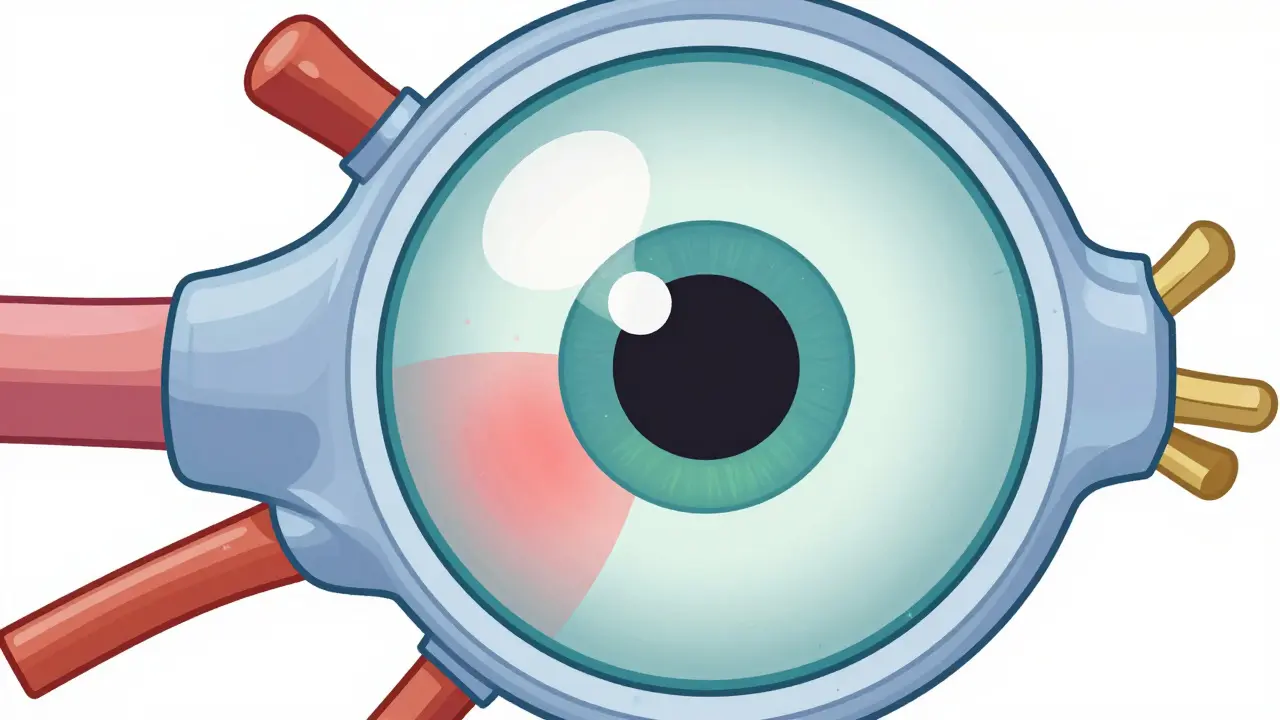
Your eye feels gritty, it’s unusually red, and bright lights hurt. You might assume it’s just a tired day or mild conjunctivitis. But if the pain is deep inside the eye and your vision is blurring, you could be dealing with uveitis, an inflammatory condition affecting the uvea, the middle layer of the eye comprising the iris, ciliary body, and choroid. This isn’t standard pink eye. It is a serious internal inflammation that can lead to permanent vision loss if ignored.
Uveitis is the third leading cause of blindness worldwide. That statistic alone should make you pause. The good news? When caught early, it is highly treatable. The cornerstone of treatment is usually corticosteroid therapy, anti-inflammatory medication used to reduce swelling and prevent tissue damage in the eye. Understanding what triggers this condition, how to spot the signs, and why steroids are necessary can save your sight.
What Is Uveitis and Where Does It Happen?
To understand uveitis, you need to know the anatomy of the eye. Think of the eye as having three main layers. The outer layer is the sclera (the white part) and cornea. The inner layer is the retina. Sandwiched between them is the uvea, the vascular middle layer of the eye responsible for nourishing other eye structures. The uvea consists of three parts:
- The Iris: The colored part of your eye.
- The Ciliary Body: Located behind the iris, it helps focus your lens.
- The Choroid: A network of blood vessels at the back of the eye that feeds oxygen to the retina.
When the immune system mistakenly attacks these tissues, or reacts to an infection, inflammation occurs. This swelling disrupts the delicate balance of fluids and nutrients in the eye, leading to pain, light sensitivity, and potential scarring.
The Four Types of Uveitis
Doctors classify uveitis based on where the inflammation is located. Knowing which type you have determines how aggressive the treatment needs to be. The Standardization of Uveitis Nomenclature (SUN) working group established these categories to help specialists communicate clearly.
| Type | Location Affected | Common Symptoms | Risk Level |
|---|---|---|---|
| Anterior Uveitis | Iris and Ciliary Body (Front) | Redness, sharp pain, light sensitivity, blurred vision | High if untreated; common form (75-90% of cases) |
| Intermediate Uveitis | Vitreous Cavity (Middle) | Floaters, blurred vision, less pain | Moderate; often chronic, risk of macular edema |
| Posterior Uveitis | Retina and Choroid (Back) | Blurred vision, floaters, gradual vision loss | Very High; direct threat to central vision |
| Panuveitis | All Layers of the Eye | Combination of all above symptoms | Highest; severe complications likely |
Anterior uveitis is the most common type. It hits hard and fast. You’ll notice redness and pain immediately. Intermediate uveitis is trickier because it often lacks pain. You might just see floaters-those annoying squiggly lines-and ignore them until your vision drops. Posterior uveitis is dangerous because it affects the retina. Since the retina processes images, damage here can lead to permanent blindness. Panuveitis is the most severe, involving every part of the uvea simultaneously.
Why Did This Happen? Identifying the Causes
If you’ve been diagnosed with uveitis, your first question is probably, “Why me?” Here is the frustrating truth: in about one-third of cases, there is no clear answer. Doctors call this idiopathic uveitis. However, when a cause is found, it usually falls into one of three buckets.
1. Autoimmune Disorders
Your immune system is supposed to fight off invaders. In autoimmune diseases, it gets confused and attacks your own body. Several conditions are strongly linked to uveitis:
- Ankylosing Spondylitis: An arthritis that affects the spine. It has a very strong link to anterior uveitis.
- Multiple Sclerosis (MS): Often associated with intermediate uveitis.
- Reactive Arthritis: Inflammation triggered by an infection elsewhere in the body.
- Sarcoidosis: A disease causing clumps of inflammatory cells that can affect the eyes.
2. Infections
Germs can travel to the eye through the bloodstream or directly via injury. Common infectious culprits include:
- Viruses: Herpes simplex, herpes zoster (shingles), and cytomegalovirus (CMV).
- Bacteria: Syphilis and tuberculosis.
- Parasites/Fungi: Toxoplasmosis (often from cat feces) and histoplasmosis (from soil/bird droppings).
3. Trauma or Surgery
A blow to the eye or recent eye surgery can trigger an inflammatory response. This is sometimes called traumatic uveitis. The eye reacts to the physical damage by swelling, even after the wound has healed.
Steroid Therapy: The First Line of Defense
You cannot wish uveitis away. Rest won’t fix it. The only way to stop the inflammation from destroying eye tissue is to suppress the immune response locally. This is where steroid therapy, medical treatment using corticosteroids to reduce inflammation in the eye comes in. Steroids are powerful anti-inflammatories. They don’t cure the underlying cause (like an autoimmune disease), but they stop the damage while doctors figure out the root issue.
How Steroids Are Delivered
The method of delivery depends entirely on where the inflammation is. Putting drops on the front of the eye won’t help if the problem is in the back.
- Topical Drops (For Anterior Uveitis): If the inflammation is in the front, doctors prescribe potent steroid drops like prednisolone acetate 1%. You might start by putting a drop in every hour. As the redness fades, the doctor will slowly taper the dose. Stopping too soon causes a rebound flare-up.
- Periocular Injections (For Intermediate Uveitis): For inflammation in the middle of the eye, drops don’t penetrate deep enough. Doctors inject steroids around the eye (behind the cheekbone or near the eyelid) to bathe the vitreous cavity in medication.
- Intravitreal Implants or Injections (For Posterior Uveitis): If the retina is involved, the drug must go inside the eye. Implants like Ozurdex release steroids slowly over months. This avoids the side effects of taking oral steroids daily.
- Oral Steroids (For Panuveitis or Severe Cases): In widespread inflammation, pills like prednisone may be necessary to calm the entire system.
The Risk of Steroids
Steroids are effective, but they come with a price. Long-term use can lead to two major complications:
- Cataracts: Clouding of the lens. This is very common in patients who use steroid drops for more than a few weeks.
- Steroid-Induced Glaucoma: Steroids can raise the pressure inside the eye (intraocular pressure). High pressure damages the optic nerve. This is why regular eye exams during treatment are non-negotiable.
Because of these risks, doctors aim for the lowest effective dose for the shortest time possible. If uveitis keeps coming back, they may add immunosuppressive agents (steroid-sparing drugs) to allow them to reduce the steroid dosage.

Spotting the Signs Early
Time is vision. The longer inflammation sits in your eye, the higher the chance of scarring. Watch for these specific symptoms:
- Eye Redness: Not just a little pinkness, but a deep, angry red, often around the pupil.
- Pain: A dull ache or sharp pain that worsens when you read or look at screens.
- Photophobia: Extreme sensitivity to light. You might find yourself squinting or hiding in dark rooms.
- Blurred Vision: Like looking through a foggy window.
- Floaters: New spots or cobwebs drifting across your vision.
If you experience sudden eye pain and redness, do not wait for a routine appointment. Call an ophthalmologist immediately. Tell them you suspect uveitis. This signals urgency.
Living With Uveitis: Management and Outlook
Uveitis is often a chronic condition. Even after the acute flare-up settles, you remain at risk for recurrence. About 50% of patients experience another episode within five years. Management involves:
- Regular Monitoring: Even when you feel fine, keep your check-ups. Silent inflammation can damage the retina without pain.
- Treating the Root Cause: If your uveitis is linked to ankylosing spondylitis or Lyme disease, treating that systemic condition helps protect your eyes.
- Patient Advocacy: Learn your medication names. Know the signs of high eye pressure. Ask your doctor about the long-term plan, not just the immediate fix.
With modern steroid therapies and immunomodulatory drugs, most people with uveitis maintain good vision. The key is partnership with your eye care specialist. Don’t skip doses. Don’t ignore new floaters. And never underestimate the power of early intervention.
Is uveitis contagious?
Generally, no. Uveitis itself is not contagious. However, if the uveitis is caused by an infectious agent like herpes simplex virus or toxoplasmosis, the underlying infection might be transmissible through close contact or bodily fluids, but the inflammation in the eye does not spread to others.
Can uveitis cause permanent blindness?
Yes, if left untreated or poorly managed. Uveitis is the third leading cause of preventable blindness worldwide. Complications like cataracts, glaucoma, macular edema, and retinal scarring can permanently impair vision. Early treatment with steroids significantly reduces this risk.
How long does steroid treatment last?
It varies by severity and type. Acute anterior uveitis might require drops for 2-4 weeks, tapered gradually. Chronic or posterior uveitis may require injections or implants lasting months, or oral medications for longer periods. Never stop steroids abruptly without medical guidance.
What is the difference between uveitis and pink eye?
Pink eye (conjunctivitis) affects the clear membrane covering the white of the eye. It causes itching, discharge, and surface redness. Uveitis affects the internal structures of the eye. It causes deep pain, light sensitivity, and blurred vision. Pink eye is usually minor; uveitis is a medical emergency.
Are there natural remedies for uveitis?
No. There are no proven natural remedies that can stop the internal inflammation of uveitis. Relying on home remedies instead of prescribed steroid therapy can lead to rapid and permanent vision loss. Medical intervention is required.