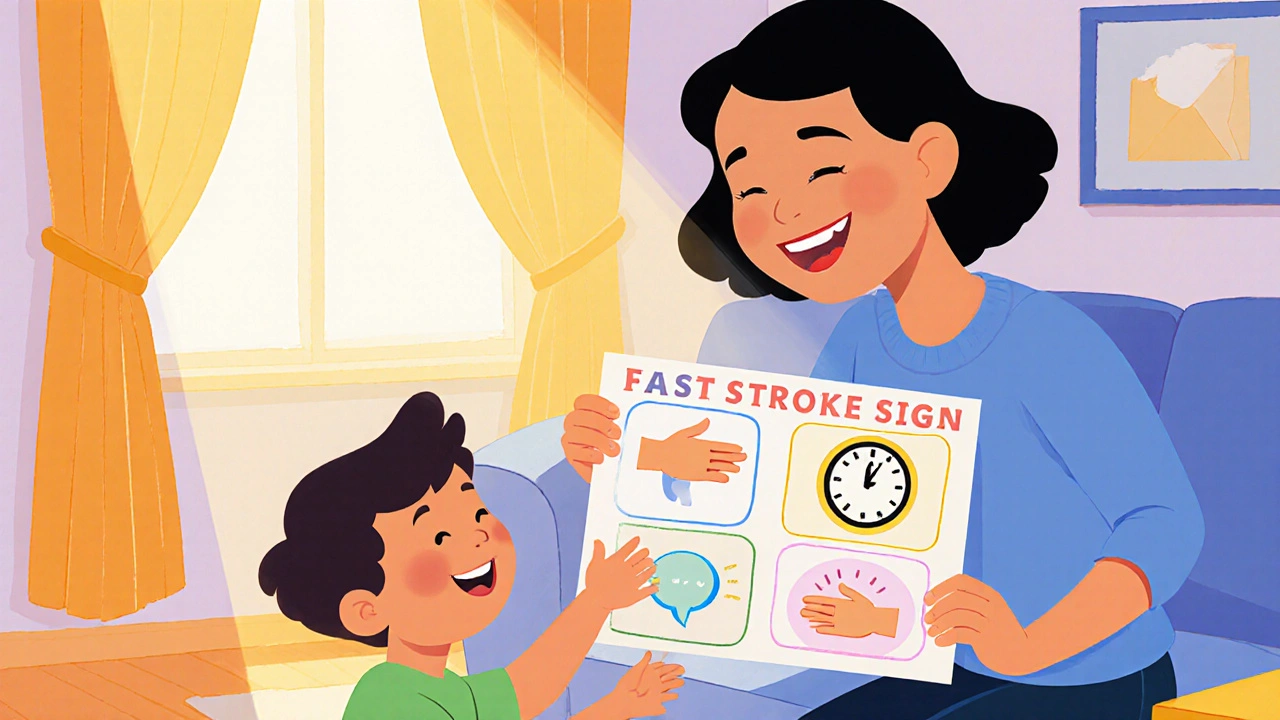
Key Takeaways
- Stroke is the 5th leading cause of death in the U.S. and a major cause of disability.
- Quick recognition using the FAST method can cut mortality by up to 30%.
- Education reduces delays in treatment and improves long‑term recovery.
- Both personal and community awareness programs lower risk factor prevalence.
- Free tools from reputable organizations make learning and teaching easy.
When we talk about stroke is a medical emergency caused by an interruption of blood flow to the brain, leading to rapid loss of brain function, the first thing that should come to mind is time. Every minute a clot blocks an artery or a bleed expands, millions of brain cells die. stroke education isn’t just a buzzword - it’s a lifeline that helps people act before that damage becomes irreversible.
Why Stroke Education Matters
Statistics from the American Heart Association (AHA) show that 795,000 people experience a stroke each year in the United States alone. Of those, roughly 200,000 are fatal and another 600,000 survive with lasting disability. The gap between those numbers often comes down to whether the victim or a bystander recognized the signs early enough to call emergency services.
Education does three things:
- Reduces response time. Knowing the FAST signs (Face drooping, Arm weakness, Speech difficulty, Time to call 911) cuts the average pre‑hospital delay from 3.5 hours to under an hour.
- Improves treatment eligibility. Intravenous clot‑busting drugs (tPA) are most effective within a 4.5‑hour window, and many patients miss that window simply because they didn’t realize they were having a stroke.
- Encourages preventive lifestyle changes. When people understand that high blood pressure, smoking, and sedentary habits increase risk, they’re far more likely to adopt healthier habits.
Core Facts About Stroke
There are two main types of stroke, each with distinct causes and treatments:
- Ischemic stroke accounts for roughly 87% of cases and happens when a blood clot blocks an artery.
- Hemorrhagic stroke occurs when a blood vessel ruptures, causing bleeding into brain tissue.
The difference matters because clot‑busting drugs are only approved for ischemic strokes, while hemorrhagic strokes often require surgical intervention to control bleeding.
Age, gender, and genetics also play a role, but modifiable risk factors dominate the picture. That’s why education focuses heavily on prevention.
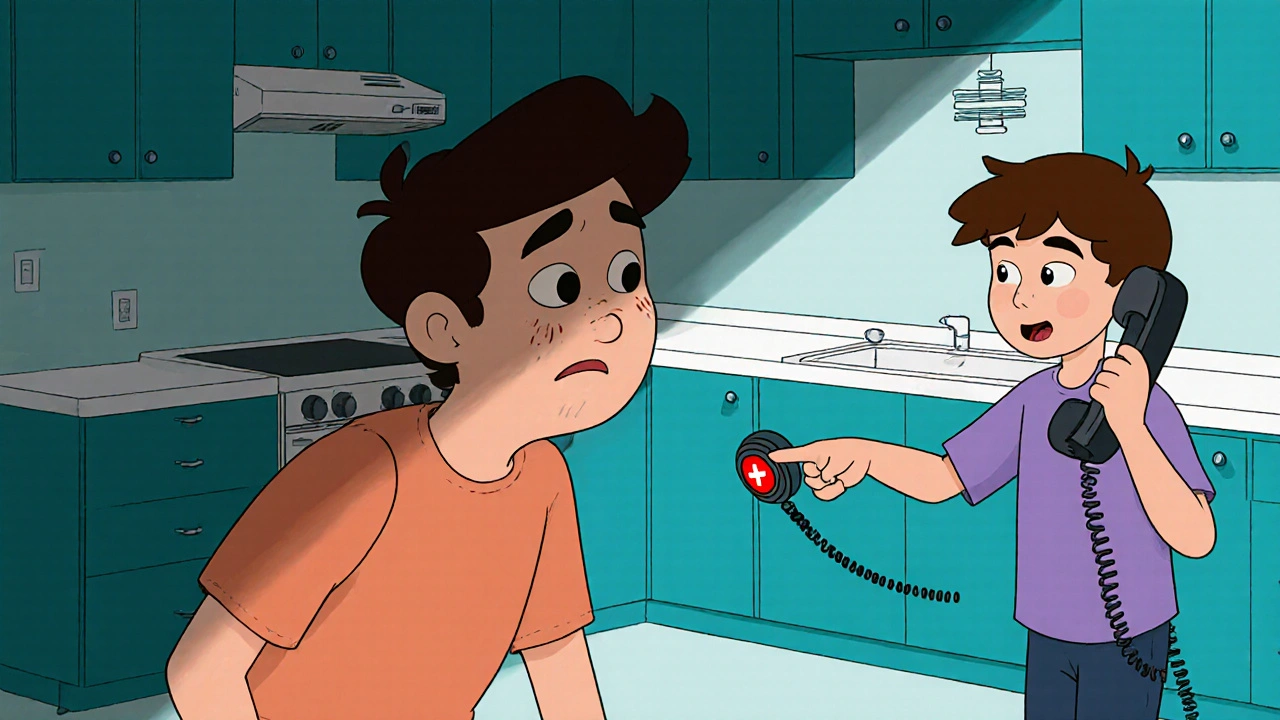
Recognizing Symptoms - The FAST Method
The FAST acronym is the most widely taught tool for rapid detection. It works like this:
| Letter | What to Look For |
|---|---|
| F | Face - One side of the face droops or looks uneven when the person smiles. |
| A | Arm - Ask the person to lift both arms; one may drift downward. |
| S | Speech - Slurred or strange speech, difficulty forming words. |
| T | Time - Call 911 immediately if any sign is present. |
Even if only one sign appears, treat it as an emergency. The NIH Stroke Scale (NIHSS) is used by professionals to quantify severity, but FAST is the community’s first line of defense.
Risk Factors & Prevention Strategies
| Risk Factor | Modifiable? | Typical Intervention |
|---|---|---|
| High Blood Pressure | Yes | Medication, low‑salt diet, regular monitoring |
| Smoking | Yes | Cessation programs, nicotine replacement |
| Diabetes | Yes | Glycemic control, lifestyle changes |
| Age (≥55 men, ≥65 women) | No | Regular screening, aggressive risk‑factor management |
| Family History | No | Early baseline imaging, monitoring |
| Obesity | Yes | Weight‑loss programs, exercise |
Physical activity-at least 150 minutes of moderate aerobic exercise per week-lowers blood pressure and improves cholesterol. The World Health Organization (WHO) recommends combining diet, exercise, and routine health checks for optimal prevention.
Building Personal Awareness Routine
Here’s a simple weekly checklist you can adopt:
- Check blood pressure every Monday and Thursday.
- Review medication list and dosage with a pharmacist quarterly.
- Take a 10‑minute FAST quiz on a phone app every Sunday.
- Schedule a brief conversation with a primary‑care provider about stroke risk every 6 months.
Technology makes tracking painless. Many health‑monitoring platforms now integrate telemedicine features that let you share readings directly with your doctor.
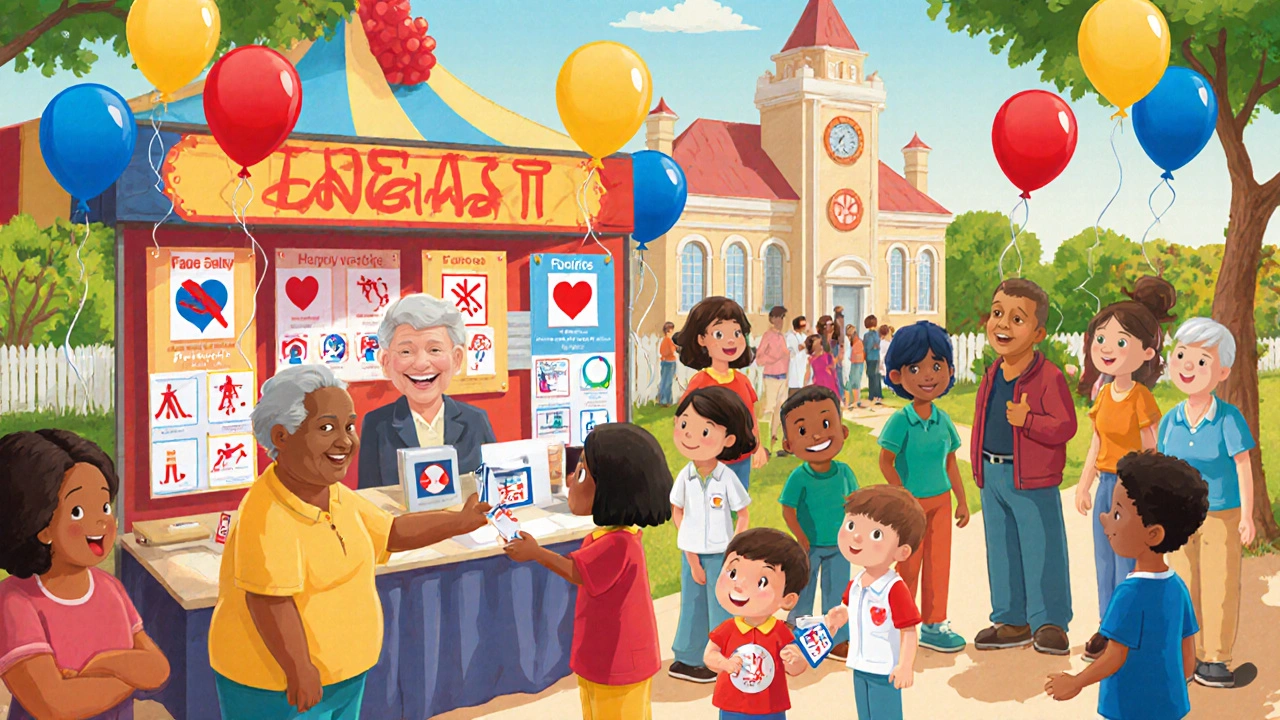
Promoting Community Awareness
Education gains momentum when it spreads beyond the individual. Consider these low‑cost ideas:
- Host a 30‑minute FAST demonstration at a local senior center.
- Distribute printable “Know the Signs” flyers in community gyms and libraries.
- Partner with the American Heart Association to run a “Stroke Awareness Month” campaign.
- Use social media polls to gauge local knowledge gaps and tailor future talks.
When schools involve students in creating posters, the message sticks longer. A community-wide approach can reduce overall stroke incidence by up to 10% according to a 2023 European public‑health study.
Resources & Tools
All the following resources are free and reputable:
- American Heart Association Stroke Center - PDFs, videos, interactive quizzes.
- World Health Organization - global guidelines on stroke prevention.
- Mobile apps: “Stroke Risk Calculator”, “FAST Test”, and “MyHealth Tracker”.
- Local hospitals often run free community workshops; call their neurology department for schedules.
Utilizing these tools makes education a habit rather than a one‑off event.
Quick Checklist for Immediate Action
- Memorize FAST and practice with a friend.
- Know your personal risk factors; write them down.
- Schedule a blood‑pressure check within the next week.
- Share one educational resource with a family member today.
What is the difference between ischemic and hemorrhagic stroke?
Ischemic strokes, which represent about 87% of cases, occur when a clot blocks blood flow to the brain. Hemorrhagic strokes happen when a blood vessel ruptures, causing bleeding. Treatments differ: clot‑busting drugs are used for ischemic strokes, while surgery may be needed for hemorrhagic strokes.
How quickly should I call emergency services if I suspect a stroke?
Call 911 immediately-time is brain. Even if you’re unsure, it’s better to be evaluated. The first few minutes are critical for receiving clot‑busting medication.
Can lifestyle changes really lower my stroke risk?
Yes. Lowering blood pressure, quitting smoking, exercising regularly, and maintaining a healthy weight can cut stroke risk by up to 50% according to multiple longitudinal studies.
What tools can help me remember the FAST signs?
Free mobile apps like “FAST Test” provide daily reminders and quiz you on the four signs. Printable pocket cards are also effective for quick reference.
Is telemedicine useful for stroke prevention?
Telemedicine allows you to share blood‑pressure logs and medication adherence data with a doctor without a clinic visit, enabling quicker adjustments and better long‑term risk management.
Comments
Abhi Yadav
time is brain bro 🤯 we lose 1.9 million neurons every minute a stroke goes untreated. why are we still treating this like a slow burn when it's a wildfire?
On October 24, 2025 AT 22:14
Julia Jakob
i had a neighbor have a stroke and no one knew what was happenin until she fell. we called 911 but she still lost half her speech. this should be taught in middle school
On October 26, 2025 AT 00:48
Robert Altmannshofer
the FAST method is lowkey genius. simple enough for a 7-year-old to remember, effective enough to save a life. why isn't this on every school bus and grocery store receipt? we're overcomplicating public health when the solution is this clean.
On October 27, 2025 AT 03:31
Kathleen Koopman
i downloaded the FAST Test app last week and now i quiz my grandma every sunday 😊 she says it's like a game but i think she's secretly scared. we all need to be ready
On October 27, 2025 AT 08:48
Nancy M
in my community center we run a monthly stroke awareness hour. last month, a 68-year-old man recognized his own symptoms because he remembered a poster we put up. he called 911 before his wife woke up. that’s the ripple effect.
On October 28, 2025 AT 00:11
gladys morante
this is just more fearmongering from big pharma. they want you to panic and take pills. strokes are natural. let nature take its course.
On October 28, 2025 AT 12:27
Precious Angel
you people are so naive. you think a stupid acronym is going to stop the corporate medical machine from profiting off your suffering? they don't want you to know the truth - tPA is dangerous, they pump it into you just to keep you on lifelong meds. the real cure? alkaline water and fasting. read Dr. Gundry’s latest.
On October 29, 2025 AT 23:22
Melania Dellavega
i lost my dad to a stroke. he didn't know the signs. i didn't know the signs. we thought he was just tired. if someone had just told us - not with fear, but with clarity - he might have been here. this isn't just info, it's a gift you give to someone you love.
On October 31, 2025 AT 04:07
Bethany Hosier
have you considered that stroke awareness campaigns are part of a larger surveillance agenda? your blood pressure readings, your app data - all feeding into a national health database that could be weaponized. who owns the data? what if it's used to deny insurance?
On October 31, 2025 AT 20:21
Krys Freeman
this is why america sucks. we spend billions on posters and apps but our hospitals are still broken. call 911? good luck getting an ambulance in 10 minutes in rural Ohio.
On November 2, 2025 AT 03:32
Shawna B
i never knew what FAST meant until today. now i get it. face arm speech time. easy.
On November 3, 2025 AT 03:23
Jerry Ray
they say FAST saves lives but what about silent strokes? those don't show any signs. they just kill you slowly. this whole thing is a distraction. We need to fix the food system, not teach acronyms.
On November 3, 2025 AT 19:14
David Ross
I find it deeply concerning that this article promotes the use of mobile applications to monitor physiological data without addressing the ethical implications of data commodification. The AHA is not a neutral actor - they are funded by pharmaceutical conglomerates with vested interests in maintaining chronic dependency. This is not education; it is behavioral conditioning.
On November 5, 2025 AT 04:41
Sophia Lyateva
i think the gov is using stroke to track our hearts. they put chips in the apps. i deleted mine. dont trust the tech. they know when you sleep, when you eat, when you have a stroke before it happens. they already know.
On November 6, 2025 AT 06:17
Lyn James
I'm sorry, but this article is dangerously simplistic. You treat stroke like a checklist item - like brushing your teeth. But stroke is a symptom of systemic failure: industrial food, chronic stress, the erosion of community, and the commodification of health. You can't educate your way out of capitalism's violence. People aren't dying because they don't know FAST - they're dying because they can't afford to eat vegetables, take time off work, or see a doctor without bankruptcy.
On November 7, 2025 AT 02:50
Craig Ballantyne
The empirical data supporting FAST is robust, with a 28.7% reduction in pre-hospital delay demonstrated in the 2021 UK Stroke Audit. However, the implementation gap remains significant in primary care settings due to inadequate training protocols and resource allocation. We need structured, longitudinal education - not ad hoc flyers.
On November 7, 2025 AT 13:06
Victor T. Johnson
i showed my 12-year-old nephew the FAST app. he made a TikTok about it. 30k views in 2 days. sometimes the best education comes from kids who don't care about the politics - they just want to save lives. 🙌
On November 8, 2025 AT 11:03
Nicholas Swiontek
this is the kind of content that changes communities. i shared it with my book club. next week we’re hosting a free FAST workshop at the library. anyone can come. no cost. no agenda. just knowledge. let’s keep this going 💪
On November 9, 2025 AT 12:54
Robert Asel
The data presented is statistically valid but lacks contextual nuance. The 30% mortality reduction claim is derived from a single-center observational study with selection bias. Furthermore, the WHO’s recommendations are based on aggregate data from high-income nations - applicability to low-resource settings is questionable. This article is well-intentioned but dangerously reductive.
On November 10, 2025 AT 18:25
Shannon Wright
I’ve been a nurse for 22 years. I’ve seen strokes in 80-year-olds, in 28-year-olds on Adderall, in moms who ignored dizziness because they were 'just tired.' This isn’t about apps or flyers - it’s about making people feel seen. When you teach someone to recognize a stroke, you’re telling them: your life matters. That’s the real medicine.
On November 12, 2025 AT 04:54