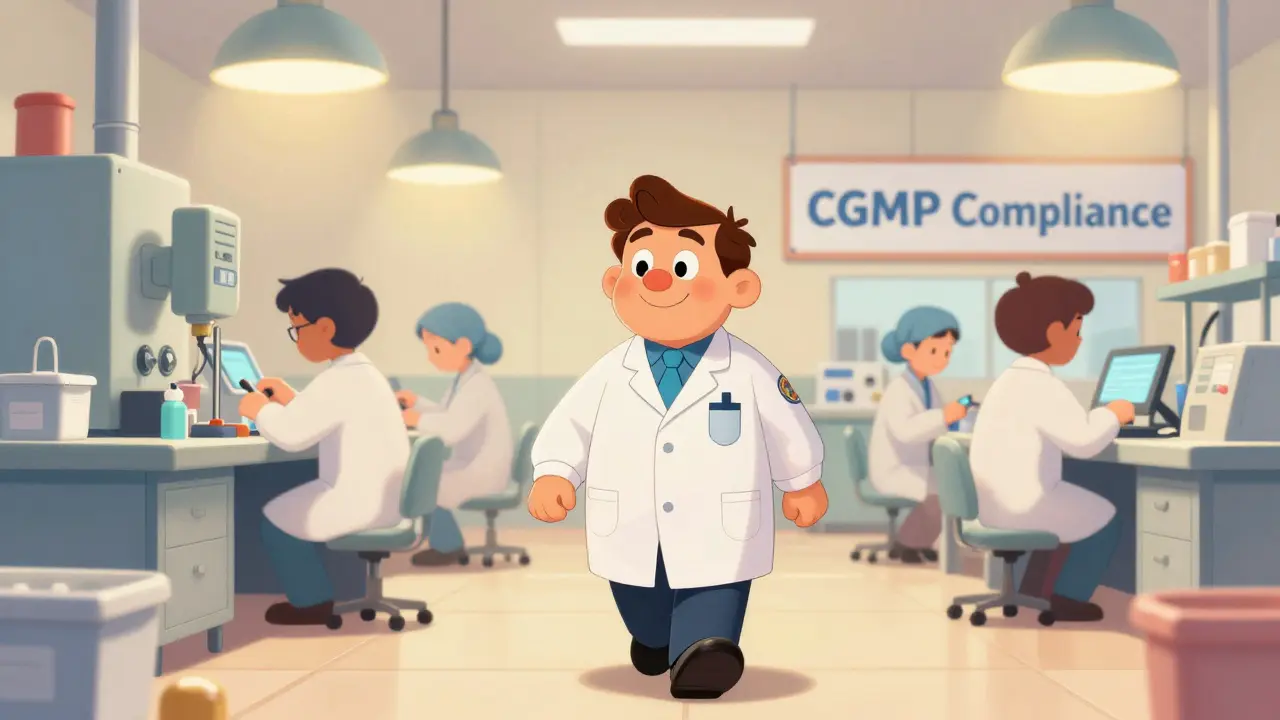
What Happens During an FDA Inspection of a Generic Drug Factory?
If you run a generic drug manufacturing facility and you’ve just gotten word that the FDA is coming, don’t panic. Most inspections go smoothly-but only if you’re truly ready. The FDA doesn’t show up to catch you off guard. They show up because they want to make sure the pills people take every day are safe, effective, and made the right way. And they’ve got a detailed plan to check it all.
The FDA’s inspection process for generic drug makers isn’t random. It’s built around Current Good Manufacturing Practices (CGMP), which are rules written into federal law under 21 CFR Part 211. These rules cover everything from how you clean your equipment to how you store your final product. The FDA doesn’t just look at paperwork-they walk through your facility, watch your staff work, check your records, and ask hard questions. Their goal? To confirm you’re not just meeting the rules, but you’re living by them.
The Four Types of FDA Inspections You Might Face
Not all inspections are the same. The FDA uses four main types, and which one hits your door depends on your situation.
- Pre-Approval Inspection (PAI): This happens before your generic drug gets FDA approval. The team checks if your facility can actually make the drug exactly as described in your application. They verify your equipment, your processes, your testing methods, and whether your stability samples are stored correctly. If your application says you use a specific machine to blend ingredients, they’ll find that machine-and watch it run.
- Routine Surveillance Inspection: These happen every 1-3 years for most facilities. The FDA uses a risk-based model to pick who gets visited. A facility with past issues, high-risk products, or complaints gets higher priority. Most inspections fall into this category.
- For-Cause Inspection: Triggered by a tip, a consumer complaint, or a spike in adverse events. The FDA zeroes in on the problem area but still checks the full quality system. Don’t assume it’s just a quick check-they’ll dig deep.
- Follow-Up Inspection: After you get a warning letter or an FDA 483, they come back to see if you fixed what was wrong. They’ll look at your corrective actions, your training records, and whether the same issue popped up again.
The Six-System Inspection Framework
Every FDA investigator uses the same checklist: the six-system approach. They don’t check all six every time, but they always check Quality-and at least two others. Here’s what they’re looking for in each:
- Quality System: Always inspected. This is the backbone. They want to see your quality unit is independent, empowered, and actively involved in every decision. Do you have a documented process for handling deviations? Are non-conformances tracked and analyzed? Are root causes found and fixed? If your quality team is just signing off on forms without real oversight, that’s a red flag.
- Facilities & Equipment: Are your rooms clean? Is your HVAC system validated? Are your equipment logs complete? They’ll check calibration records, cleaning procedures, and whether your equipment is suitable for the job. A dirty floor or an uncalibrated balance can trigger a 483 observation.
- Materials: Who supplies your raw ingredients? Are those suppliers qualified? Do you test incoming materials? Are your storage conditions documented? If your supplier’s certificate of analysis is outdated or your warehouse is humid, they’ll notice.
- Production: They’ll watch a batch being made. Does your process match your validation? Are your operators following SOPs? Are you controlling environmental conditions? If your blend time is 15 minutes in your protocol but your team does it in 8, that’s a deviation-and a problem.
- Packaging & Labeling: Labels must be exact. No typos. No wrong strength. No missing lot numbers. They’ll compare your label to the approved application. They’ll check your barcode scanning, your segregation of different products, and whether you have controls to prevent mix-ups.
- Laboratory Control: This is where many facilities stumble. They’ll review your testing methods, your validation data, your stability studies, and your data integrity. Are your chromatograms real? Are your results backed by raw data? Are your out-of-specification results investigated? If you’re deleting files or backdating records, you’re playing with fire.
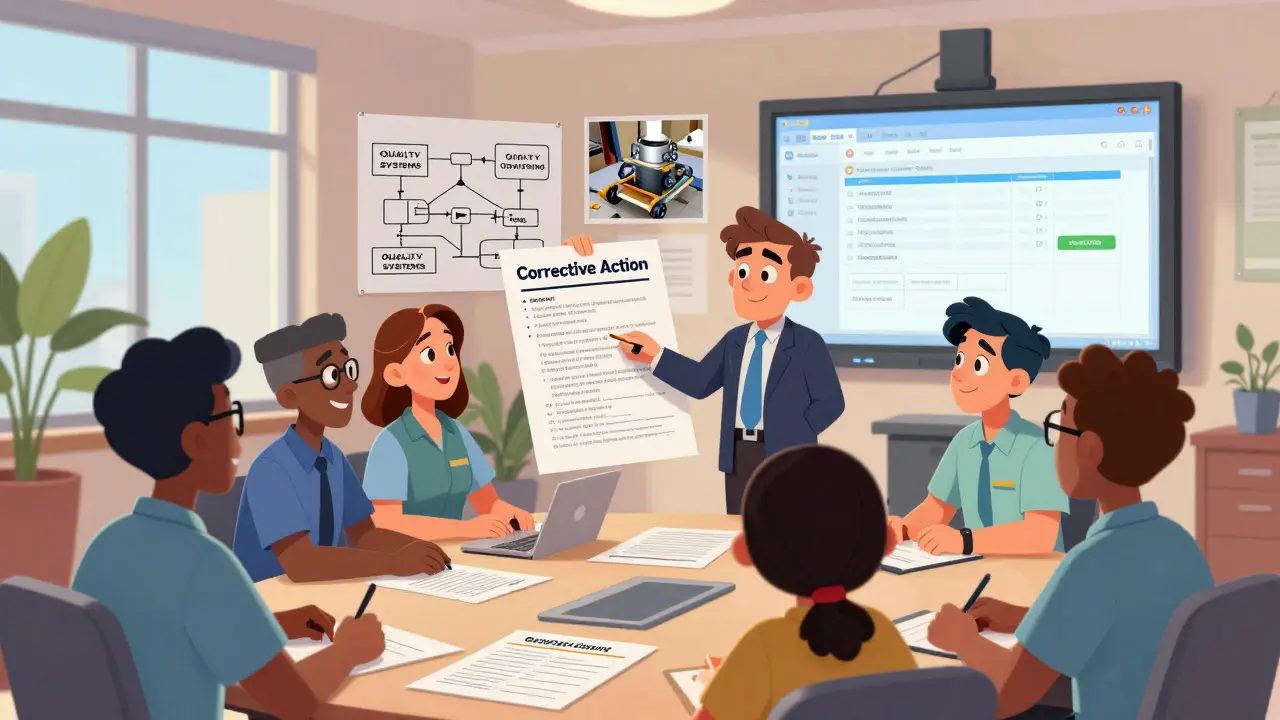
What Is an FDA 483-and Why Does It Matter?
If the inspector finds something wrong, they’ll hand you an FDA Form 483. It’s not a fine. It’s not a warning letter. It’s a list of observations. But don’t underestimate it.
Each item on the 483 references a specific regulation, like 21 CFR 211.22(a)-which says you must have a qualified quality unit. The observations are listed in order of seriousness. The first one is usually the biggest concern.
You have 15 business days to respond. Your response isn’t just an apology. It needs to be a plan. What did you do? Why did it happen? How will you stop it from happening again? Include evidence: training records, updated SOPs, validation reports, photos of corrected equipment.
If your response is weak, vague, or late, the FDA may issue a warning letter. That’s public. That’s serious. That can delay approvals, trigger import alerts, or even shut down your facility.
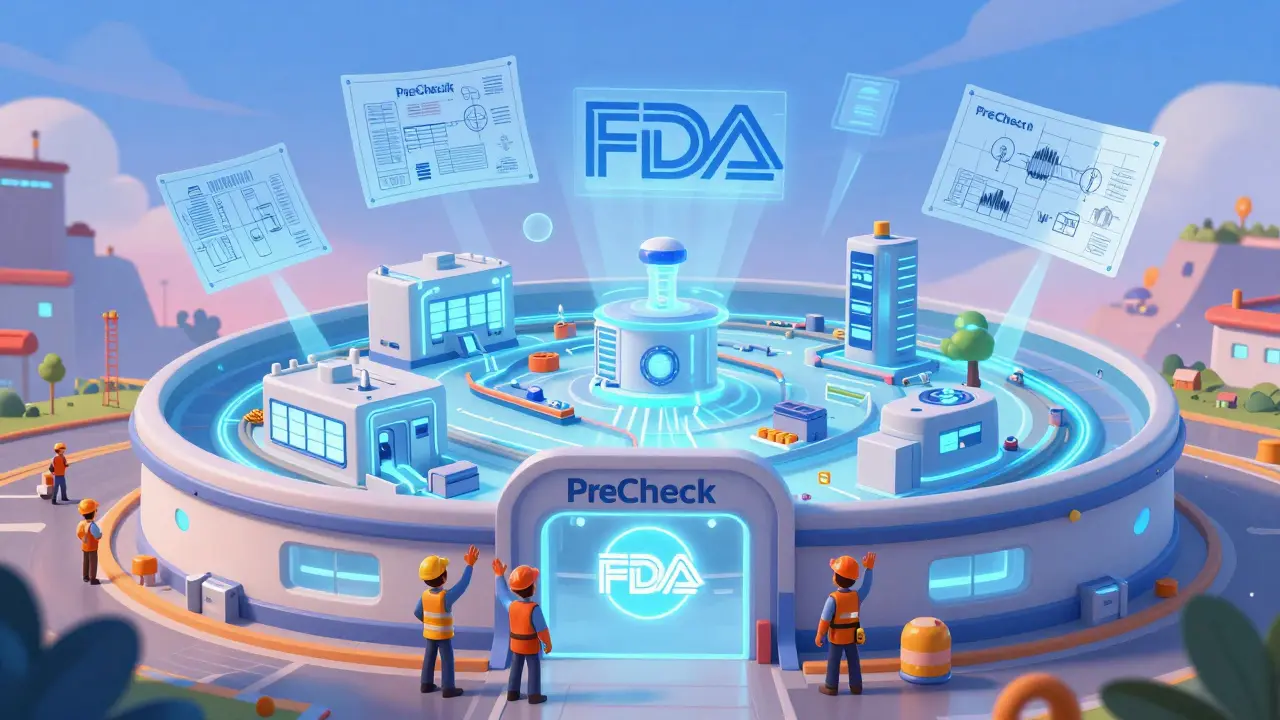
The PreCheck Program: A Game-Changer for Manufacturers
In 2024, the FDA launched the PreCheck program to help manufacturers avoid inspection surprises. It’s not a shortcut. It’s a heads-up.
Through PreCheck, you can submit a Type V Drug Master File (DMF) early-during facility design, construction, or pre-production. The FDA reviews it and gives you feedback before you spend millions on equipment that doesn’t meet standards.
Companies using PreCheck report fewer 483s and faster approvals. Why? Because they’re not guessing what the FDA wants. They’re building to the standard from day one. If you’re planning a new facility or major upgrade, PreCheck isn’t optional-it’s smart.
What You Need to Do Before They Arrive
Don’t wait for the inspection notice to start preparing. You should be ready every day.
- Keep everything documented. If it wasn’t written down, it didn’t happen. That includes training, maintenance, deviations, investigations, and change controls.
- Train your team like they’re being watched. Everyone-from the janitor to the plant manager-should know what to say if an inspector asks a question. Practice mock inspections. Role-play tough questions.
- Know your data. The FDA is now trained to spot manipulated data. Are your electronic records secure? Are your audit trails turned on? Are your LIMS systems validated? If you’re printing paper copies to hide missing data, they’ll find it.
- Design your facility for inspection. Clear paths. Clean floors. Organized records. No clutter. Make it easy for them to walk through without disrupting production. If they can’t get to your lab or your warehouse, they’ll assume you’re hiding something.
- Have a plan for the inspection team. Designate a lead contact. Prepare a meeting room. Have water, coffee, and a quiet space ready. Don’t let them sit in a break room with dirty dishes.
What Happens After the Inspection?
When the inspectors leave, they write the Establishment Inspection Report (EIR). This is their official summary. It says whether your facility was in a “state of control” or not.
If you got an FDA 483, your response becomes part of this report. The FDA will review your response along with your facility’s history, the type of drugs you make, and the potential risk to patients. They don’t just check boxes-they assess risk.
If your inspection outcome is “acceptable,” you’re good to go. If it’s “unacceptable,” you’ll likely get a warning letter. That’s when things get expensive. You’ll need to fix the problem, submit a detailed plan, and wait for FDA approval before you can ship product again.
Since June 2025, the FDA has offered Post-Warning Letter Meetings (PWLMs). This gives you a chance to sit down with FDA officials, explain your fix, and get direct feedback. It’s a lifeline-if you act fast and honestly.
Why Most Facilities Pass-and How to Be One of Them
More than 90% of FDA inspections result in acceptable outcomes. That’s not luck. It’s discipline.
Facilities that pass have a culture of quality, not just compliance. They don’t treat CGMP as a checklist. They treat it as a mindset. Their quality team isn’t just reviewing forms-they’re asking why things go wrong. Their engineers don’t just fix machines-they improve them. Their lab staff don’t just run tests-they validate methods and question outliers.
The FDA doesn’t want perfection. They want control. They want consistency. They want proof that you know what you’re doing-and that you care enough to do it right every time.
If you’re preparing for an inspection, stop thinking about tricks. Start thinking about systems. Because when the FDA walks in, they’re not just looking at your facility. They’re reading your story. Make sure it’s one that says: We take this seriously.
Are FDA inspections announced in advance?
Most routine inspections are unannounced. The FDA does not give advance notice to prevent facilities from cleaning up or staging conditions. However, Pre-Approval Inspections (PAIs) are scheduled in advance because they’re tied to a drug application submission. For-cause inspections are typically unannounced, while follow-up inspections may be scheduled after a warning letter.
What happens if I don’t respond to an FDA 483?
Failing to respond within 15 business days is seen as non-cooperation. The FDA may proceed to issue a warning letter without waiting for your reply. A warning letter is public, can block product approvals, and may trigger import alerts that stop your drugs from entering the U.S. market. Even if you disagree with the observations, you must respond with evidence and reasoning.
Can the FDA shut down my facility?
Yes, but only after a series of serious violations and failed follow-ups. The FDA can request a court order to halt production if there’s evidence that your drugs pose a significant health risk or if you repeatedly ignore compliance requirements. This is rare, but it has happened-especially when data integrity violations or contamination issues are found.
How long does an FDA inspection last?
Most routine inspections last 3 to 7 days. Pre-Approval Inspections can take longer-up to 10 days or more-because they involve deep review of application data and process validation. For-cause inspections may be shorter but more intense, focusing only on the area of concern. The length depends on the size of your facility, complexity of operations, and number of observations found.
What’s the difference between a 483 and a warning letter?
An FDA 483 is a list of observations made during an inspection. It’s not official enforcement-it’s a notice. A warning letter is a formal enforcement action issued after the FDA reviews your response (or lack thereof) to the 483. It’s a legal notice that you’re violating federal law. Warning letters are posted publicly on the FDA website and can trigger import bans, product recalls, or criminal investigation.
Is the FDA inspecting more generic drug facilities now?
Yes. Since 2020, the FDA has significantly increased inspections of generic drug facilities, especially those outside the U.S. In 2023, over 70% of inspections were conducted at foreign sites. This is part of a broader push to ensure the safety of the global supply chain for affordable medicines. The U.S. government’s push to bring more generic drug manufacturing back home has also led to more inspections of domestic facilities under programs like PreCheck.