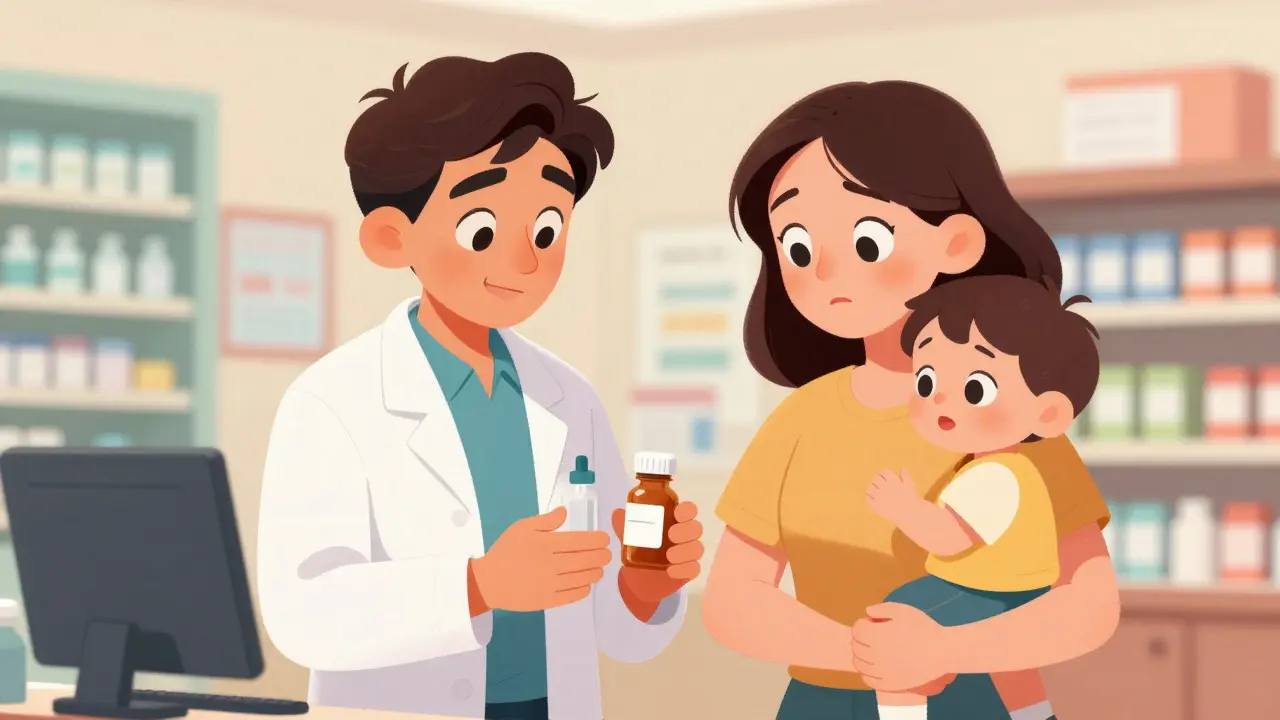
Imagine handing a parent a bottle of medicine for their toddler, only to watch them hesitate. Or picture an elderly patient staring at a pill that looks completely different from the one they’ve taken for years, suddenly questioning if it will work. These are common scenes in pharmacies and clinics today. The shift from brand-name drugs to generic alternatives is standard practice, driven by cost savings and regulatory approval. Yet, for vulnerable groups like children and older adults, this switch can cause confusion, anxiety, and even non-adherence. If you are a healthcare provider, pharmacist, or caregiver, understanding how to communicate this change effectively is not just about following rules-it’s about ensuring safety and trust.
The core issue isn’t the drug itself; it’s the perception of difference. While generics are scientifically equivalent to their brand-name counterparts in active ingredients, their appearance, taste, or inactive components often differ. For a child who refuses a bitter-tasting suspension, or a senior with memory issues who relies on visual cues, these differences matter. This guide breaks down exactly how to talk about generic substitution with these two distinct populations, using evidence-based strategies to build confidence and prevent errors.
Understanding the Basics of Generic Substitution
To explain generics clearly, you first need to understand what they are. A generic drug is a medication that contains the same active ingredient as a brand-name drug but lacks market exclusivity. It must meet strict standards set by regulatory bodies like the FDA. Specifically, generics must demonstrate bioequivalence, meaning they deliver the same amount of active ingredient into the bloodstream within a specific time frame-typically between 80% and 125% of the brand-name drug’s profile.
This 20% variation window is crucial. For most medications, it makes no clinical difference. However, for narrow therapeutic index (NTI) drugs like certain antiepileptics or thyroid medications, even small changes in absorption can lead to serious consequences, such as seizure relapse. When communicating with patients, especially seniors on complex regimens, acknowledging this nuance builds credibility. You aren’t just saying “it’s the same”; you’re explaining that it works the same way for the vast majority of people, while remaining vigilant about exceptions.
| Feature | Brand-Name Drug | Generic Drug |
|---|---|---|
| Active Ingredient | Identical | Identical |
| Bioequivalence Range | N/A (Reference Standard) | 80-125% of brand reference |
| Appearance | Consistent color/shape | May vary significantly |
| Pediatric Formulations | Often available (liquids/chewables) | Limited availability (only 32% vs 68% for brands) |
| Cost | Higher | Significantly lower (saves $373B annually in US) |
Talking to Parents About Pediatric Medications
Children are not small adults. Their physiology, metabolism, and ability to take medication differ vastly. According to the FDA’s 2019 report, a significant gap exists in pediatric labeling for generics. Only 38% of generic drugs have specific pediatric instructions, compared to higher rates for brand names. This creates a unique communication challenge. Parents often worry that a cheaper pill means lower quality or worse taste.
When discussing generic substitution with parents, focus on formulation and adherence. Start by validating their concern. Ask, “Have you noticed any issues with your child taking the previous medication?” Then, explain the science simply. Use the analogy of different brands of milk-they look different, come in different cartons, but provide the same nutrition. Emphasize that the active ingredient is identical.
- Address Taste Aversion: If switching from a brand-name liquid to a generic, warn parents about potential taste differences. One Reddit user noted their 2-year-old refused generic amoxicillin due to bitterness. Suggest mixing it with food or using a flavoring agent if appropriate.
- Highlight Formulation Gaps: Be honest if the generic lacks a chewable or liquid option. If a child needs a crushed tablet, discuss whether the generic version is safe to crush. Never assume equivalence in delivery method.
- Use Visual Aids: Show the new bottle alongside the old one. Point out the label changes. Reassure them that the pharmacy has verified the strength and dosage form match the prescription.
A 2020 Pediatrics study found that 62% of parents express hesitation about generics. By proactively addressing these fears, you reduce discontinuation rates. Remember, for a toddler, refusal to swallow a pill can mean missing a dose entirely. Your role is to equip the parent with tools to manage this transition smoothly.
Communicating with Senior Patients
Senior patients face a different set of challenges. Polypharmacy is common, with the average senior taking 4.8 prescription medications. Cognitive decline, sensory impairments, and established routines make sudden changes disruptive. A 2021 Frontiers in Pharmacology study highlighted the nocebo effect in this group, where 58% of seniors reported perceived side effects after switching to a generic, despite no pharmacological basis. They believed the “cheaper” pill was inferior.
To combat this, timing and clarity are key. Dr. Michael Steinman recommends initiating counseling before the patient notices the change. Don’t wait for them to ask why the pill is blue instead of white. Proactive communication prevents confusion and builds trust.
- Simplify the Message: Use plain language at a 6th-8th grade reading level. Avoid jargon like “bioequivalence” unless you explain it immediately. Say, “This pill works the same way in your body as the last one.”
- Involve Caregivers: If the patient has family support, include them in the conversation. They can reinforce the message and help monitor adherence.
- Provide Written Instructions: Use large-print materials. Highlight the new pill’s appearance, color, and shape. Include a photo if possible. A 2023 University of Florida study showed that medication image recognition apps improved senior confidence by 67%.
- Check Understanding with Teach-Back: Ask the patient to repeat back what they understood. “Can you tell me when you’ll take this new pill and what it looks like?” This reduces medication errors by 29%, according to NIH data.
For seniors, consistency matters. If multiple generics with different appearances are substituted over time, confusion rises. In one case, a 78-year-old stopped taking blood pressure medication because the pill changed three times in six months. Your job is to be the constant anchor in this changing landscape.
Overcoming Common Barriers: The Nocebo Effect and Trust
One of the biggest hurdles in generic substitution is the psychological barrier known as the nocebo effect. When patients expect a negative outcome, they often experience it. This is particularly strong in seniors who have built a routine around a specific brand. They associate the brand’s look and feel with efficacy.
To mitigate this, frame the substitution positively. Focus on benefits like cost savings without compromising quality. For seniors, emphasize that the generic allows them to afford other necessities. For parents, highlight that the generic meets the same rigorous safety standards as the brand name. Transparency is vital. Admit that the pill might look or taste different, but reassure them that the medical effect remains unchanged.
Also, be aware of state regulations. A 2020 JAMA Internal Medicine study found that laws vary widely. Some states require pharmacist notification, others require patient consent. Knowing your local laws helps you navigate these conversations legally and ethically. If a patient strongly prefers the brand name, document their request and explore insurance options together.
Practical Tools for Effective Communication
Effective communication requires more than good intentions; it needs structure. Here are practical tools to implement in your practice:
- The Teach-Back Method: Always verify understanding. Have the patient or parent explain the new medication regimen in their own words. This catches misunderstandings early.
- Visual Comparisons: Keep samples or images of both brand and generic versions. Showing the physical difference demystifies the change.
- Digital Support: Recommend apps that identify pills by image. This empowers seniors to self-manage changes confidently.
- Caregiver Checklists: Provide a simple checklist for parents or caregivers noting the new pill’s color, shape, and dosing schedule.
By integrating these tools, you transform a potentially stressful event into a collaborative process. You show that you care about their individual needs, not just the bottom line.
Are generic drugs less effective than brand-name drugs?
No, generic drugs are required to contain the same active ingredient and meet strict bioequivalence standards (80-125% of the brand-name drug's absorption). For most medications, they are clinically equivalent. However, for narrow therapeutic index drugs, close monitoring is advised due to smaller margins for error.
Why do some children refuse generic liquid medications?
Generic liquids may have different inactive ingredients, leading to variations in taste or texture. Since only 32% of generics offer pediatric-friendly formulations like chewables or palatable suspensions compared to 68% of brands, taste aversion is a common issue. Mixing with food or using flavoring agents can help.
What is the nocebo effect in generic substitution?
The nocebo effect occurs when a patient expects a negative outcome from a treatment, causing them to experience adverse symptoms. In generic substitution, seniors who believe a cheaper pill is inferior may report side effects or reduced efficacy, even though the drug is chemically equivalent.
How can I ensure my senior parent understands a medication change?
Use the teach-back method: ask them to repeat the instructions in their own words. Provide large-print written guides with photos of the new pill. Involve other caregivers in the discussion and consider using medication identification apps to help them recognize the new appearance.
Do all states allow automatic generic substitution?
No, regulations vary by state. Some require pharmacist notification, others mandate patient consent, and some have stricter rules for biologics or narrow therapeutic index drugs. It is important to check local laws to ensure compliance and respect patient preferences.