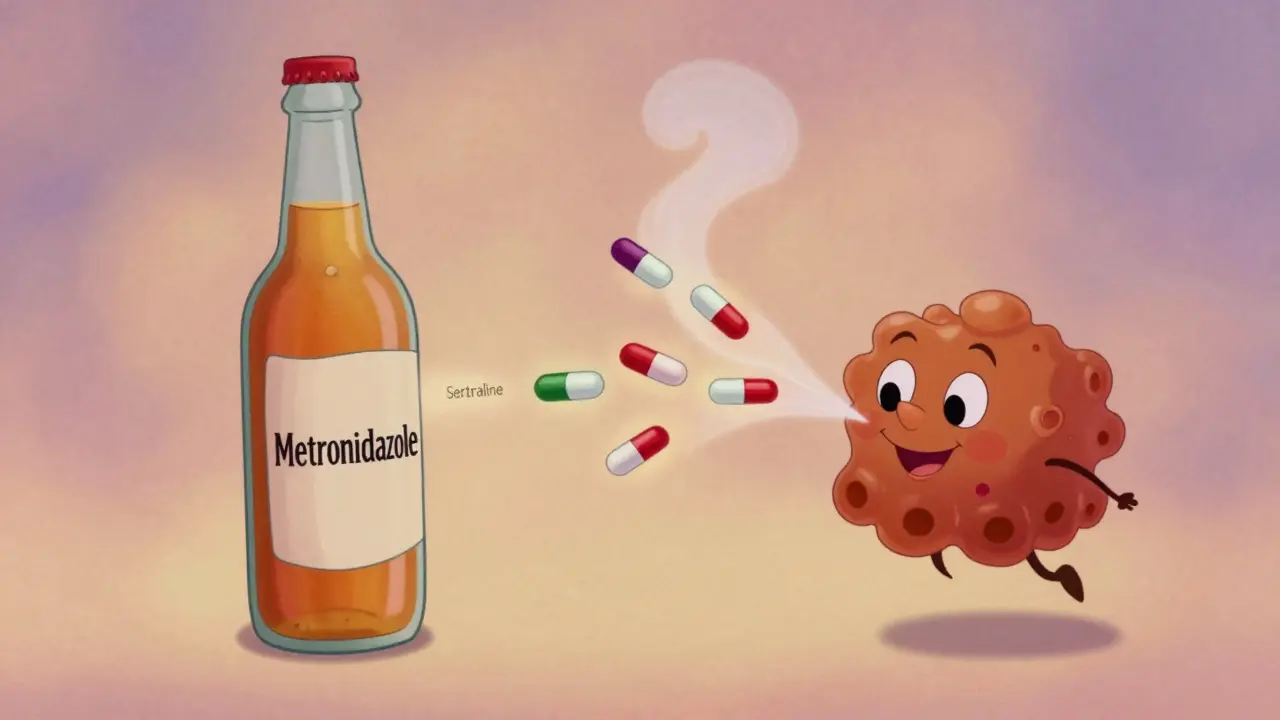
Most people think of kombucha as a healthy, fizzy tea drink packed with probiotics. But if you’re taking certain medications, that small bottle could be hiding a serious risk: alcohol. Even if the label says "non-alcoholic," kombucha can contain enough alcohol to interfere with your pills - and the amount isn’t always the same.
Why Kombucha Has Alcohol at All
Kombucha isn’t brewed like beer or wine. It’s fermented. A living culture called a SCOBY - a mix of bacteria and yeast - eats sugar in sweetened tea and turns it into acids, gases, and yes, alcohol. This isn’t a mistake. It’s how the drink is made. The yeast does its job, and ethanol is a natural byproduct. In commercial kombucha, manufacturers are required by U.S. law to keep alcohol under 0.5% ABV (alcohol by volume). That’s the legal limit for non-alcoholic beverages set by the Alcohol and Tobacco Tax and Trade Bureau (TTB). But here’s the catch: that 0.5% isn’t zero. And for some medications, even that tiny amount matters. Homemade kombucha? That’s a different story. Without strict controls, alcohol levels can jump to 2.5% ABV - close to a light beer. A 2024 Harvard study found that 43% of homebrewed batches exceeded the 0.5% limit, and 12% hit 3.2% ABV. That’s not a splash. That’s enough to trigger reactions in people on sensitive meds.Which Medications Are at Risk?
Not all drugs react the same way to alcohol. But some are especially dangerous when mixed with even trace amounts. The American Pharmacists Association lists 17 major medication classes with documented interactions. Here are the big ones:- Metronidazole and tinidazole - Antibiotics used for infections like UTIs, bacterial vaginosis, and parasitic illnesses. Mixing them with alcohol can cause violent nausea, vomiting, flushing, rapid heartbeat, and even seizures. A 2023 case report in the Journal of Clinical Pharmacy and Therapeutics described a patient who ended up in the ER after drinking homemade kombucha while on metronidazole.
- SSRIs and other antidepressants - Drugs like sertraline, fluoxetine, and escitalopram can have their side effects worsened by alcohol, including dizziness, drowsiness, and increased risk of liver damage. Reddit users have reported dizziness and brain fog after drinking kombucha while on these meds.
- Diabetes medications - Chlorpropamide, glyburide, and even metformin can cause dangerous drops in blood sugar when combined with alcohol. One user on Diabetes Daily reported a 15-point blood sugar crash after drinking kombucha with metformin - leading to an ER visit.
- Benzodiazepines - Medications like lorazepam, alprazolam, and diazepam slow down your central nervous system. Alcohol does the same. Together, they can cause extreme drowsiness, slowed breathing, or even loss of consciousness. Dr. Andrew Huberman from Stanford warned that even 0.5% ABV can amplify these effects through GABA receptor interactions.
- Nitrates for heart conditions - Drugs like nitroglycerin can cause sudden, dangerous drops in blood pressure when combined with alcohol.
Commercial vs. Homemade: The Big Difference
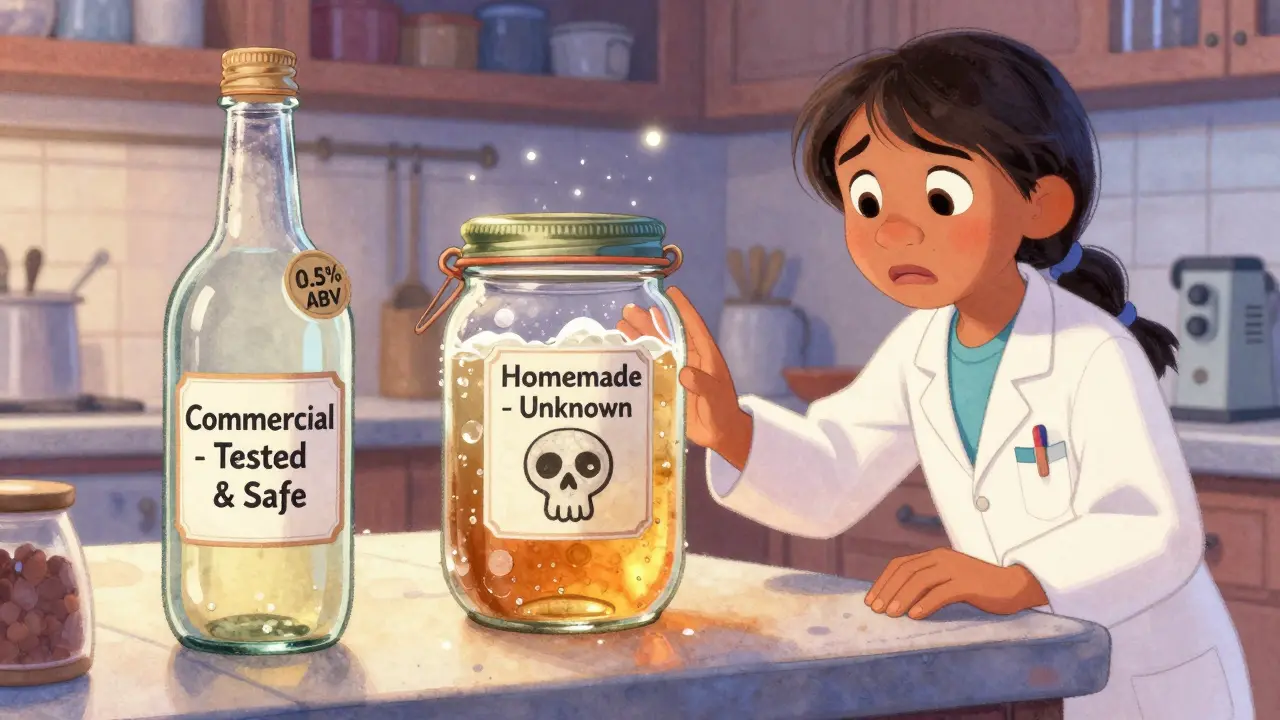
Not all kombucha is created equal - especially when it comes to alcohol content. Commercial brands like GT’s, Health-Ade, and Brew Dr. use pasteurization, filtration, or strict fermentation controls to keep alcohol under 0.5%. They test every batch using HPLC (high-performance liquid chromatography), the same method labs use to measure alcohol precisely. Since 2023, 92% of commercial brands test every batch - a requirement from the Kombucha Brewers International trade group. Homebrewers? Not so much. Only 15% test their batches, according to a 2023 survey. Most rely on taste or time - not science. Temperature, sugar amount, and fermentation length all change the alcohol level. A batch left too long at 80°F can easily hit 2% ABV. And there’s no label warning you. Even within commercial brands, there’s inconsistency. A 2023 ConsumerLab survey found 18% of kombucha drinkers reported medication interactions. Of those, 62% involved antidepressants, and 29% involved antibiotics. Yet only 63% of commercial products even say "contains trace alcohol" on the label - even though the FDA now requires it as of January 2024.Real People, Real Reactions
Behind the data are real stories. On Reddit, u/SarahJ2021 wrote: "I drank Health-Ade while on metronidazole for a UTI. I threw up for three hours straight. I thought I had food poisoning - turns out, it was the kombucha." A pharmacist on Reddit, u/PharmD_Mark, shared: "I’ve had three patients come in dizzy and confused after starting kombucha while on sertraline. They didn’t connect the dots. Neither did their doctors." A 2023 Trustpilot review for Health-Ade said: "No warning about interactions with my blood pressure meds. I ended up in the hospital with a 70/40 reading." These aren’t rare. The MedHelp forum has over 400 documented cases of adverse reactions between kombucha and medications - from fainting to ER visits. And most people had no idea kombucha contained alcohol at all.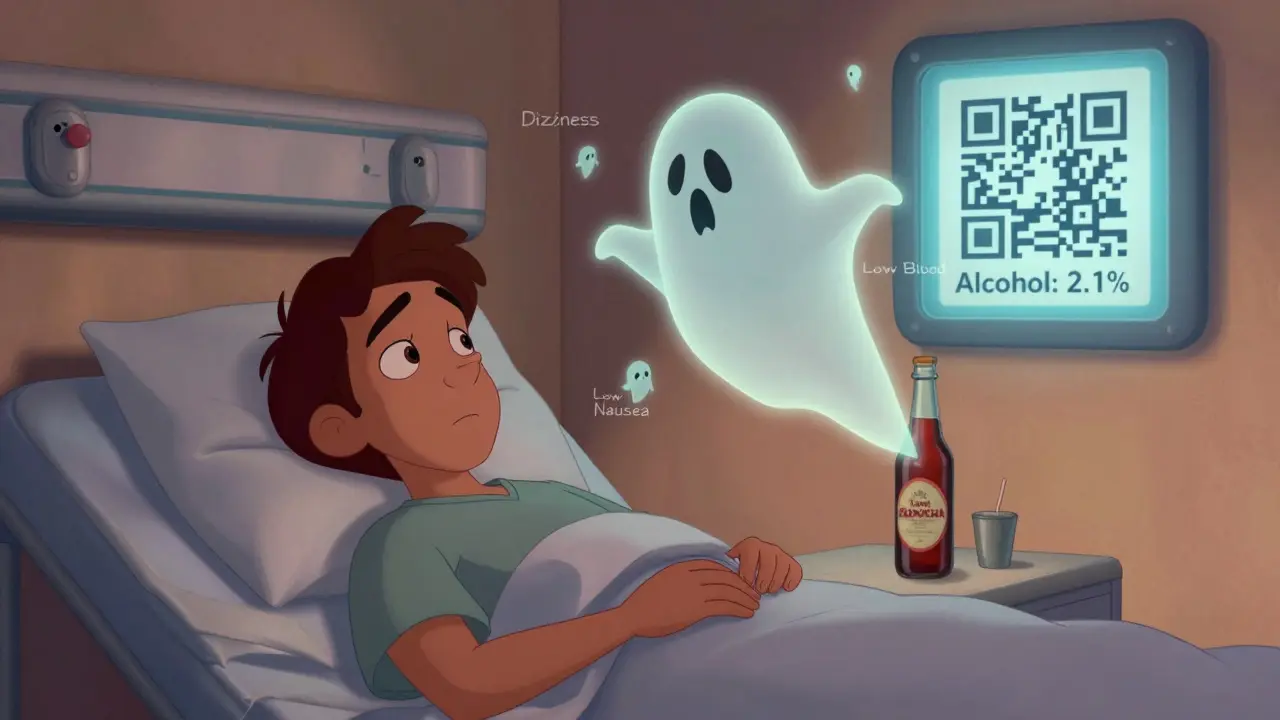
What Should You Do?
If you take any of the medications listed above, here’s what you need to do:- Check your prescription label - Look for warnings about alcohol. If it says "avoid alcohol," that includes kombucha.
- Ask your pharmacist - Most pharmacists still don’t know kombucha is a hidden alcohol source. But 78% of CVS and Walgreens stores added warnings in 2023. Ask specifically: "Does this interact with kombucha?"
- Choose commercial over homemade - At least commercial brands test their alcohol levels. Homemade? No guarantees.
- Wait 48 hours - The Cleveland Clinic recommends avoiding kombucha for at least 48 hours before and after taking alcohol-sensitive meds.
- Look for labels - Since January 2024, all commercial kombucha must say "Contains Trace Alcohol" on the bottle. If it doesn’t, it’s either mislabeled or not legally sold as non-alcoholic.
- Don’t assume "natural" means safe - Just because kombucha is fermented doesn’t mean it’s harmless. Fermentation creates alcohol - and alcohol interacts with your meds.