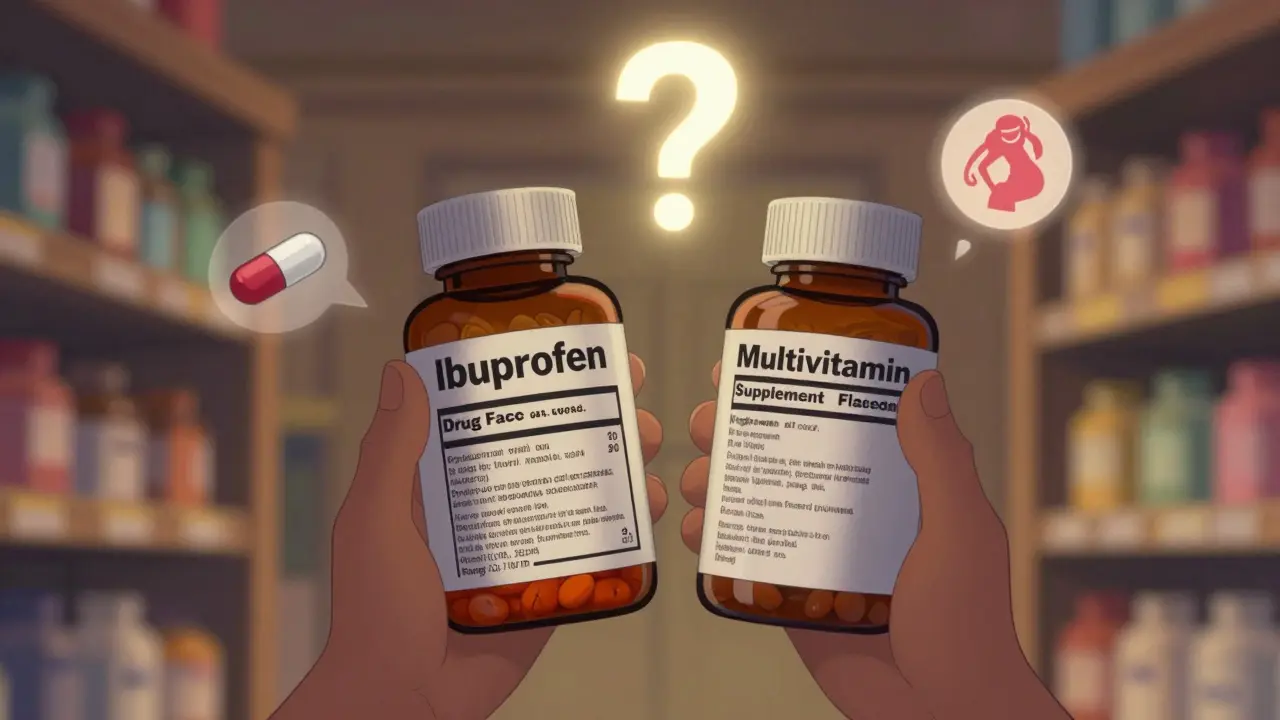
Every time you pick up a bottle of vitamins or supplements from the shelf, you might think you're making a smart, safe choice. After all, it's right there next to the painkillers and antacids in the pharmacy aisle. But here's the truth most people don't realize: OTC vitamins and supplements are not regulated like OTC medications - and that gap in rules can put your health at risk.
Why Your Supplement Label Isn't Like Your Painkiller Label
If you've ever read the Drug Facts label on a bottle of ibuprofen or cold medicine, you know what to expect: active ingredients listed in exact milligrams, clear warnings about side effects, interactions with other drugs, pregnancy risks, expiration dates, and instructions for how much to take and when. It's standardized. It's forced by law. Now look at the label on your multivitamin. It says "Supplement Facts." Looks similar, right? But that's where the similarity ends. While OTC medications must follow strict FDA rules under 21 CFR Part 201, dietary supplements are treated like food under the Dietary Supplement Health and Education Act (DSHEA) of 1994. That means they're not required to prove safety before they hit shelves - and they don't have to give you the same critical information.The Missing Warnings You Need to Know
One of the biggest dangers? Drug interactions. If you're on blood thinners, antidepressants, or even high blood pressure meds, mixing them with certain supplements can be dangerous. But here's the shocker: only 17% of supplement labels warn about these interactions, according to a 2021 JAMA study. Compare that to OTC medications - 100% of them must list potential interactions. That’s not a mistake. It’s the law. Take vitamin K. It can make blood thinners like warfarin useless. But if you’re taking a multivitamin with vitamin K, the label won’t say a word about it. Meanwhile, a prescription or OTC drug with the same active ingredient would have bold warnings printed right on the front. Another blind spot: pregnancy risks. Vitamin A in high doses can cause serious birth defects. The FDA requires OTC acne treatments with retinoids to have multiple pregnancy warnings, pregnancy tests, and even contraception programs. But a vitamin A supplement with 10,000 IU - the same dangerous level - only needs a tiny disclaimer buried in fine print. And here’s the twist: the label might just say "Vitamin A: 10,000 IU" without telling you if it’s from retinol (risky) or beta-carotene (safe). You’re left guessing.Hidden Ingredients and Secret Blends
Ever see a supplement that lists a "proprietary blend"? That’s a red flag. It means the company doesn’t have to tell you how much of each ingredient is actually in there. A 2022 NSF International analysis found that 63% of weight loss supplements and 41% of protein powders use these blends to hide potentially harmful doses. One product might claim "2,000 mg of energy blend" - but if it contains caffeine, yohimbine, or synephrine, you have no idea how much of each you’re getting. That’s not just misleading - it’s dangerous. And it gets worse. Between 2008 and 2020, the FDA found 776 dietary supplements containing unlisted pharmaceutical ingredients - including steroids, antidepressants, and erectile dysfunction drugs. These aren’t accidents. They’re intentional. But because supplements aren’t tested before sale, they slip through. You might be taking a pill labeled "natural energy booster" that actually contains a banned stimulant - and you’d never know from the label.
What About Sodium? Or Allergens?
OTC medications must list sodium content per dose. Why? Because people with heart failure or high blood pressure need to track it. But supplements? No such requirement. A popular calcium supplement might contain 150 mg of sodium per tablet - enough to matter if you’re on a salt-restricted diet. The label won’t say. Same with allergens. If a supplement contains soy, dairy, or gluten, the manufacturer doesn’t have to warn you unless they choose to. Many don’t.Consumer Confusion Is Real - And Dangerous
A 2022 Consumer Reports survey found that 68% of people who take supplements believe the FDA reviews them for safety before they’re sold. That’s false. The FDA doesn’t approve supplements before they go on sale. They only act after someone gets hurt - and even then, it takes an average of 427 days to remove a dangerous product. For OTC drugs? It’s 45 days. Pharmacists are seeing the fallout. Walgreens reported over 14,000 customer questions in early 2023 alone asking why their vitamin D didn’t have the same warnings as their aspirin. Reddit threads like "Why don't vitamin labels warn about interactions like medications do?" have thousands of upvotes and hundreds of comments from people who got sick because they assumed supplements were as safe as medicine.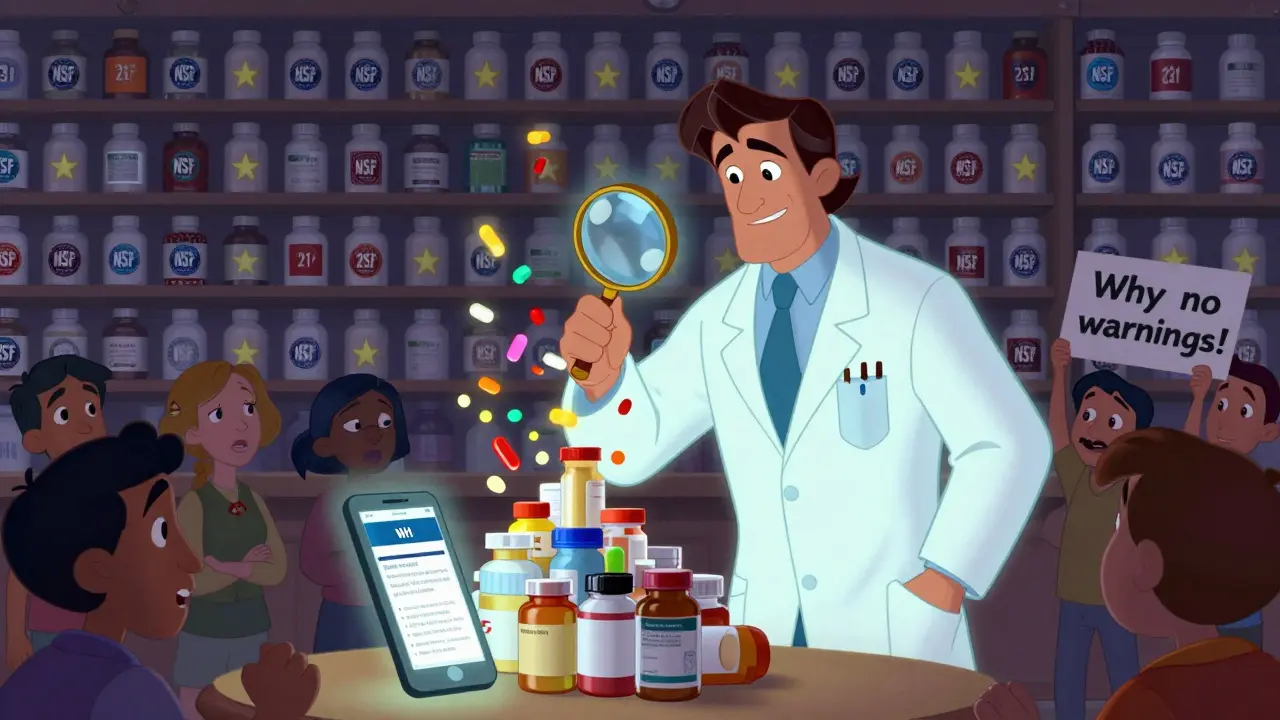
Why This Keeps Happening
The supplement industry made $54.2 billion in 2022. That kind of money buys influence. In 2022 alone, supplement companies spent $8.2 million lobbying Congress to block stricter labeling rules. Meanwhile, the FDA’s power is limited. They can’t require safety testing, can’t demand interaction warnings, and can’t force manufacturers to list exact doses unless they prove the product is harmful - which often happens only after people are hospitalized. Some companies do the right thing. A growing number voluntarily follow NSF/ANSI Standard 173, which certifies ingredient accuracy and purity. As of September 2023, only 2,147 products had this certification - less than 1% of the total market. And even then, it’s optional.What You Can Do
Don’t rely on the label. Here’s how to protect yourself:- Look for third-party certifications like NSF, USP, or ConsumerLab - these test for purity and accurate dosing.
- Search for your supplement on the NIH’s Supplement Label Database - it’s free, updated, and shows exactly what’s in each product.
- Never assume a supplement is safe just because it’s sold next to medicine. Always check with your doctor or pharmacist before taking anything new.
- If you’re pregnant, have a chronic condition, or take prescription drugs, avoid supplements unless they’re specifically recommended.
- Use trusted resources like Examine.com. It’s an independent, science-backed site that breaks down supplement research - used by over 4.7 million people monthly.
The truth is, supplements aren’t inherently bad. But treating them like medicine? That’s where the danger lies. The system was built for profit, not protection. And until the rules change, you’re the one left to figure it out.
Are OTC supplements regulated the same way as OTC medications?
No. OTC medications must follow strict FDA rules that require detailed labeling including active ingredient amounts, drug interactions, pregnancy warnings, expiration dates, and dosage instructions. Supplements are regulated as food under DSHEA, meaning they’re not required to prove safety before sale and don’t need to include most of these warnings. The FDA only steps in after harm occurs.
Why don’t supplement labels warn about drug interactions?
There’s no legal requirement for supplement manufacturers to list drug interactions. Unlike OTC medications, which must disclose all known interactions, supplements can ignore this entirely. A 2021 study found only 17% of supplement labels mention interactions - compared to 100% for OTC drugs. This gap puts people at risk, especially those on blood thinners, antidepressants, or heart medications.
Can supplements contain hidden or dangerous ingredients?
Yes. Between 2008 and 2020, the FDA found 776 supplements containing unlisted pharmaceutical drugs - including steroids, weight-loss agents, and erectile dysfunction medications. These aren’t contaminants; they’re added intentionally to boost effects. Because supplements aren’t tested before sale, these products reach shelves undetected. Labels won’t tell you.
Is it safe to take high-dose vitamin A during pregnancy?
No. High doses of vitamin A (over 10,000 IU per day) from retinol - not beta-carotene - can cause severe birth defects. OTC acne treatments with the same amount are required to carry strong pregnancy warnings and risk management programs. But vitamin A supplements often don’t. Labels may list "10,000 IU" without specifying if it’s retinol (dangerous) or beta-carotene (safe), leaving pregnant women unaware of the risk.
How can I find out what’s really in my supplement?
Use the NIH’s Supplement Label Database, which contains detailed, standardized information on over 65,000 products. Look for third-party certifications like NSF, USP, or ConsumerLab - these verify ingredient accuracy and purity. Avoid products with "proprietary blends" - they hide ingredient amounts. And always check Examine.com for independent, science-backed analysis of supplements.