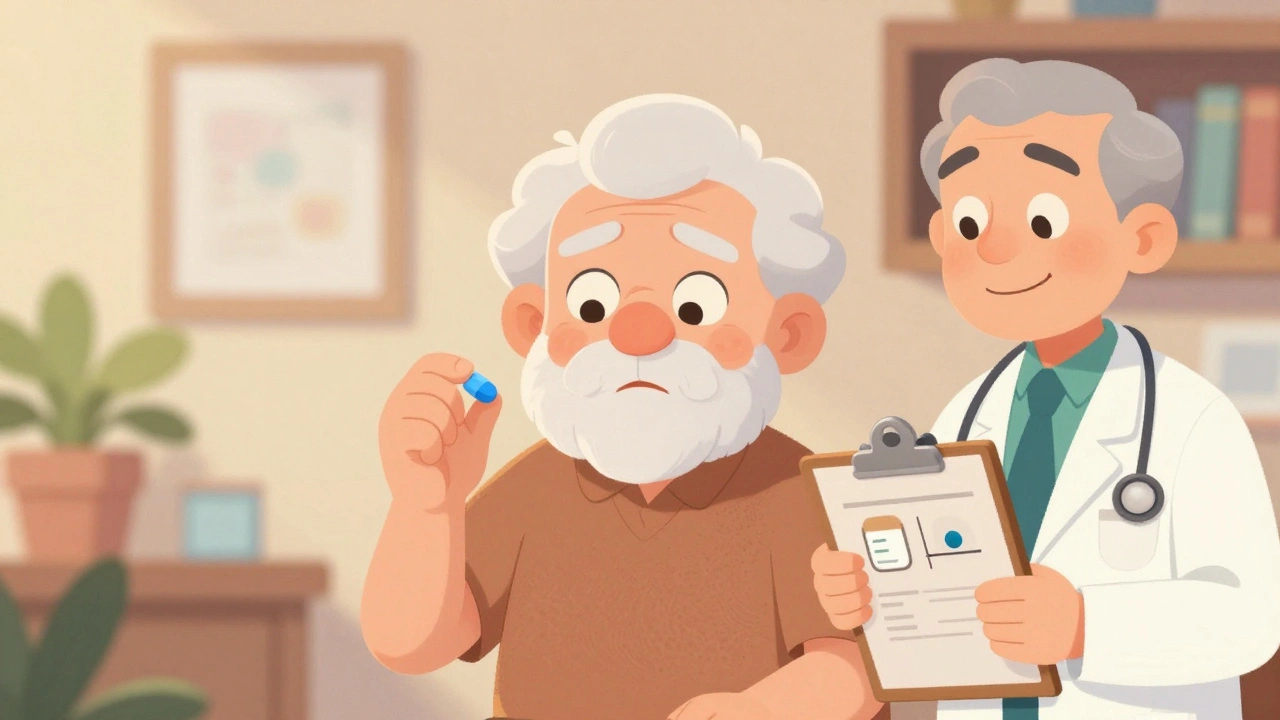
Imagine you’re handed a pill that looks completely different from the one you’ve taken for years. The color is off. The shape is weird. The name on it isn’t the one you recognize. You’re told it’s the same medicine-just cheaper. Do you take it? For millions of people, this isn’t hypothetical. It’s everyday life. And yet, generic medications are just as safe and effective as their brand-name cousins. The problem isn’t science. It’s trust.
Why Do People Doubt Generic Drugs?
People don’t distrust generics because they’re poorly made. They distrust them because they look different. And because they’ve heard stories. A 2024 survey in Greece found that over half of patients believed brand-name drugs were higher quality-even when the active ingredient was identical. In the U.S., where 90% of prescriptions are filled with generics, nearly one in four patients still worry they won’t work as well. Why? Because trust isn’t built on data. It’s built on experience, appearance, and the words of the person handing you the prescription. Many patients assume that if a drug looks different, it must be different. But that’s not how medicine works. The FDA requires generics to deliver the same active ingredient, in the same strength, and at the same rate as the brand. That’s called bioequivalence. It’s not a guess. It’s a test. The drug must work within 80-125% of the brand’s effect. That’s tighter than most over-the-counter pain relievers are regulated. Still, stories stick. Someone on Reddit says their generic Lyrica made them nauseous. A neighbor swears the brand-name Synthroid is the only thing that keeps their thyroid stable. These aren’t lies. They’re real experiences. But they’re often about inactive ingredients-dyes, fillers, coatings-that change how a pill looks or tastes, not how it works in your body.The Real Cost of Distrust
When patients refuse generics, the cost isn’t just financial. It’s health. In the U.S., generic drugs cost 80-85% less than brand-name versions. That’s not a small difference. A Medicare beneficiary switching from Eliquis to generic apixaban can save over $1,200 a year. For someone on a fixed income, that’s groceries, heating, or rent. But if they skip their medication because they’re afraid of the generic, that’s worse than paying more. Studies show that patients who stick with their meds-whether generic or brand-have fewer hospital visits, better control of chronic conditions like diabetes and high blood pressure, and longer lives. When trust breaks down, adherence drops. And that’s where the real harm happens.Who Trusts Generics-and Why?
Trust isn’t random. It’s tied to age, income, education, and who’s doing the prescribing. People over 60 are more likely to trust generics. Why? Because they’ve seen the cost of medicine rise over decades. They remember when a month’s supply of a heart drug cost half their pension. They’re not fooled by marketing. They want results, not logos. Employed people also show higher trust. Why? Because they’ve likely had to make trade-offs. They know what $40 extra a month means. They’ve chosen between medicine and a car repair. They get it. But here’s the twist: people with higher education are *less* trusting. It sounds backwards, but it’s true. The more someone knows about science, the more they overthink it. They dig into forums. They Google side effects. They compare pill images. And they find inconsistencies-like different colors or sizes-and assume it means different quality. Meanwhile, patients with lower education levels are more likely to trust their doctor. Not because they’re less informed. Because they’re more focused on the outcome: “Will this help me?”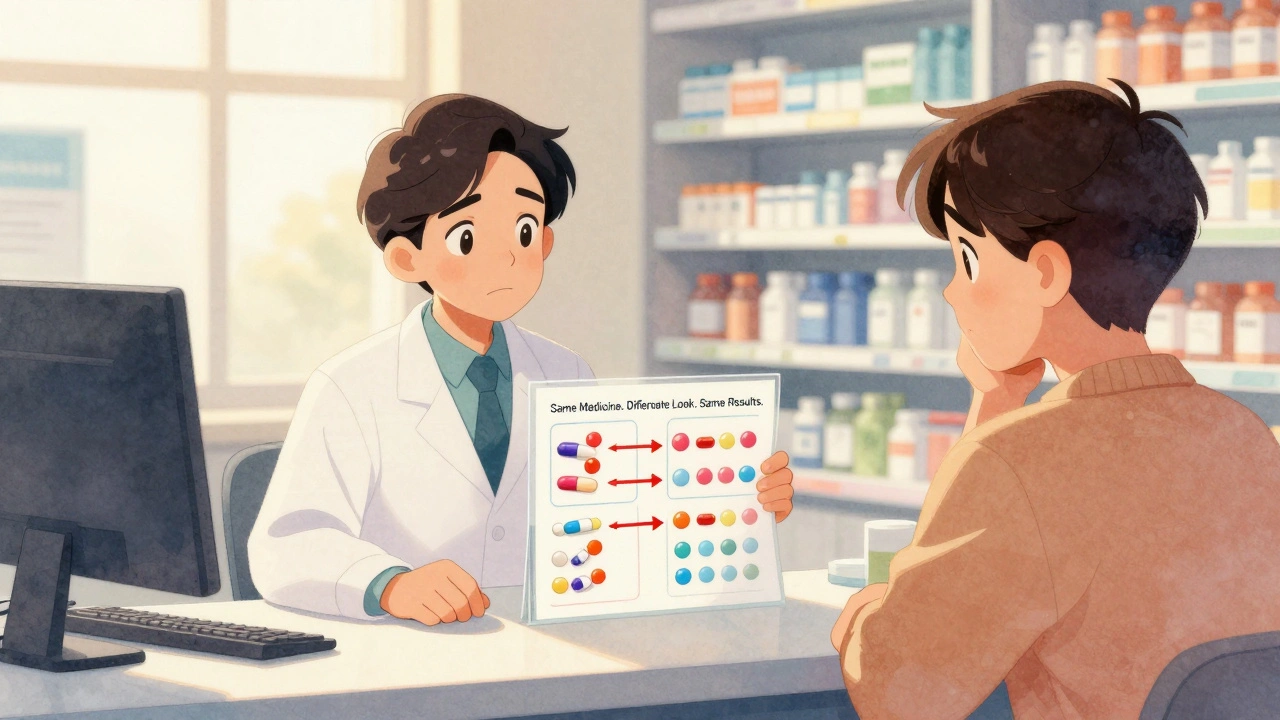
The Doctor’s Role: The Most Powerful Tool
If you want to build trust in generics, start with the prescriber. A 2024 study in PLOS ONE found that when a doctor says, “This generic is just as good and will save you hundreds,” patient acceptance jumps. Not because the patient suddenly understands bioequivalence. Because they trust the person speaking. Doctors don’t need to give a lecture. They need to be clear and calm. “I’ve prescribed this generic to dozens of patients. Their labs haven’t changed. You’ll feel the same. The only difference? Your wallet.” Pharmacists play a huge role too. At Mayo Clinic, 92% of patients reported being satisfied with how generics were explained-because pharmacists sat down with them. Not rushed. Not scripted. Just talked. Asked what they were worried about. Showed them the FDA’s own comparison charts.What About the Pills Looking Different?
This is the biggest hurdle. Generics aren’t clones. They’re alternatives. And that means the fillers, dyes, and coatings can change. That’s why a generic metformin tablet might be blue and oval, while the brand is white and round. It’s not the drug. It’s the shell. But patients don’t know that. They think the color means potency. The shape means quality. Kaiser Permanente fixed this with a simple tool: a visual guide. A one-page handout showing side-by-side images of brand and generic pills, with arrows pointing to the active ingredient-highlighted in red. Below it: “Same medicine. Different look. Same results.” They cut refusal rates by 37% in six months. Simple. Visual. No jargon.
How to Start Using Generics-Without Fear
If you’re considering switching, here’s how to do it right:- Ask your doctor: “Is there a generic version of this? Is it safe for me?”
- Check the label: Look for the active ingredient. If it matches your brand, you’re good.
- Ask your pharmacist: “Will this pill look different? Why?”
- Monitor yourself: Keep track of how you feel for the first 30 days. Take notes. Not just symptoms-sleep, energy, mood.
- Don’t panic over looks: If the pill is a different color, size, or shape, that’s normal. It doesn’t mean it’s weaker.
Comments
Ariel Nichole
I switched my blood pressure med to generic last year and didn’t notice a difference. My doctor said it’s the same stuff, just no fancy packaging. Turns out he was right - my labs are stable and I’m saving $80 a month. Honestly, if your doctor trusts it, you should too.
On December 9, 2025 AT 01:34
john damon
brooo i tried a generic version of my anxiety med and i swear it made me feel like a zombie 😵💫🤯 i went back to brand name and boom - back to normal. maybe it’s just me but i ain’t risking it again. #genericfail
On December 10, 2025 AT 17:48
matthew dendle
lol so now we got a whole essay on why pills look different but still work?? 🤡 the FDA says its fine but i seen people puke after switching. you think i’m gonna trust some blue oval pill that costs 5 bucks when the white one made me feel human? nah. save your lectures and your QR codes
On December 12, 2025 AT 02:20
Monica Evan
As someone who’s been on 7 different generics over the last decade - from thyroid meds to diabetes - I can tell you this: the *only* thing that ever messed with me was a bad filler. One batch made me feel fizzy, like soda in my stomach. Switched back, fine. Next batch, same generic, different maker - no issues. It’s not the drug, it’s the junk they put around it. Talk to your pharmacist. Ask about the manufacturer. Not all generics are made equal, even if the active ingredient is. And yeah, color? Totally irrelevant. My metformin used to be white, now it’s neon green. Looks like a candy. Still works. 🤷♀️
On December 13, 2025 AT 15:00
Taylor Dressler
Monica’s point about filler variability is critical - and often overlooked. The FDA mandates bioequivalence for the active ingredient, but inactive components aren’t standardized across manufacturers. That’s why some people report GI upset or allergic reactions to dyes or lactose in generics. It’s not the medicine failing - it’s the delivery system. The solution? Don’t just accept the first generic your pharmacy dispenses. Ask for the manufacturer name. If you react to one, request the same maker next time. Many pharmacies keep a log of which generics work best for which patients. It’s not about distrust - it’s about precision. And yes, the color change? Totally cosmetic. I’ve had my cholesterol pill go from blue to yellow to purple over the years. Still lowers LDL. Still saves me $150/month. The system’s flawed, but the science? Solid.
On December 15, 2025 AT 09:49
Aidan Stacey
THIS. This right here. The moment a pharmacist sits down with you and says, ‘I know this looks weird. Let me show you the FDA chart’ - that’s the magic. Not the pill. Not the price. That moment. I had a patient cry last week because she’d been skipping her meds for a year because she thought the generic was ‘fake.’ We showed her side-by-side images. She touched the pill. Looked at the active ingredient. Said, ‘So… it’s really the same?’ I said, ‘Yeah. Just cheaper.’ She hugged me. And filled her script. That’s the real breakthrough. Not the science. Not the savings. The human moment. We treat meds like widgets. But they’re not. They’re hope in a capsule. And sometimes, hope just needs to be seen - not explained.
On December 16, 2025 AT 10:17